@Human000000010@AmitManoj5@SaiAbhyankkar Could you also remind me what happened to all the films for which Keeravani composed the Epic Music in the period between Bahubali and RRR and after RRR ?
@Human000000010@AmitManoj5@SaiAbhyankkar Then Chhaava ko Troll keeya ab Chhaava ke liye BEST BGM ka Award Mila.
Ab Ramayana ko Troll kar rahe ho wo kya karega, jinke ghutnon mein akal nahi hai wo jaante hain. Tere liye possibile nahi hai ye sochna.
@Human000000010@AmitManoj5@SaiAbhyankkar Ye kaun se Music School ka degree holder hai.Kal bhi isko daba ke maara tha.Aaj Tak reply nahi de paaya.Tu jin jinka bhejta hai sab ka yahee haal hain. Munh mein takiya daba ke ro rahe hain.Aage ka Mahabharata bhi banega Large Scale mein wahan bhi A.R. Rahman hee Composer rahega.
@Human000000010@nagh_siva@AmitManoj5 Tu phir se aa gaya. Itna nanga keeya maine tujhe phir bhi aajaata hai besharmon ki tarah. Aa hee gaya hai toh ye le.
https://t.co/JfYMs2kWTz
I loved that #Ramayana isn’t melodramatic with over the top acting or chest thumping dialogues or on cue music/BGM to cry. Everything is kept neutral and natural. People expecting melodrama in performances and dialogue baazi are never going to like it.
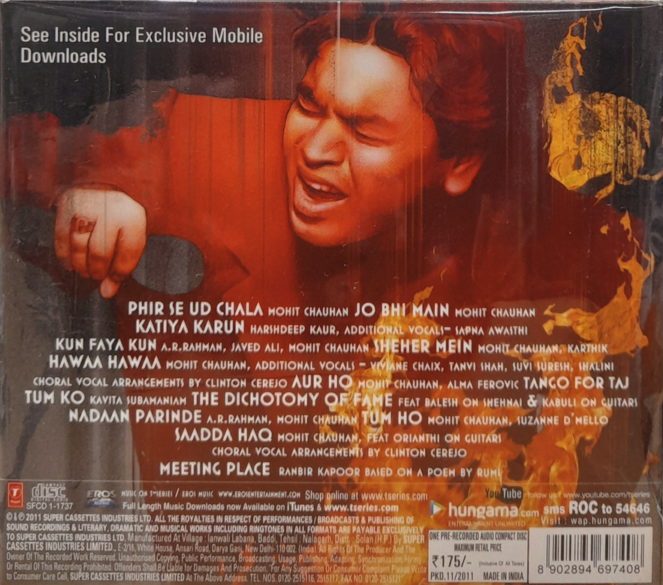
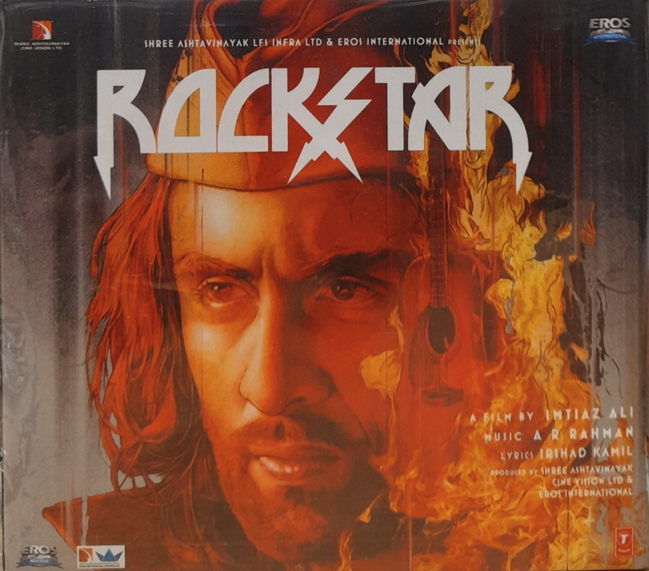
Rockstar album review I wrote 15 years ago, a day or two after the CD was released...
That one can never predict how an A. R. Rahman melody would flow in a song is common knowledge, but even by Rahman’s standards, the flow of the melody in “Phir Se Udd Chala” is stunning. There is no groove to groove to. There is no hook line to hook on to. Not a single phrase unfolds as you would expect it to. There is no comfort for a listener here, only twists and turns, surprises and more surprises. Rahman does give you a hook at some point (“Tu too du”), but by the time you catch it and prepare to settle, the song ends. But, of course, to give us some comfort, there is that riff played on the mandolin/rubab that Rahman introduces right at the beginning, which goes on a loop in the background throughout the song. That is how A. R. Rahman, even when experimenting with melodic structures and patterns, does not completely alienate the listeners.
Who else but A. R. Rahman could have the audacity to use those zany, delicately stacked “Ya Ya Ya” phrases as the sing-along phrase of a rock song in “Jo Bhi Mein”. I cannot yet hum that phrase while I am not listening to the song. Rahman does not leave even the format of the qawwali (“Kun Faya Kun”) untouched. Yet, the deviations in the structure of the song happen not at Rahman’s whim in this song; they seem to have emerged from the demands of the situation in the film. Rahman whips up a divine fervour in every Sufi-qawwali composition in the way only he can. Rahman sound, here, is in the melody. In my opinion, since Minsara Kanavu, the meaning of “Rahman sound” has changed. Rahman sound, now, is not characterized by dense layers of synth loops. Even when he decides to build a soundscape with synth loops, there is no one who does it in the way he does—sample “Aaj Dil” from Blue.
These forever-revealing layers in Rahman’s soundscape are now constructed using acoustic instruments, like he does so brilliantly in the groovy “Hawa Hawa” with multiple layers of all that is tango. The contour of the main melody in the “Hawa Hawa” song has not yet revealed itself entirely to me, but I am instantly hooked and it is not just because of the “Hawa Hawa” hook. The melody, with its short phrases and sudden pauses, has an infectious charm despite the zillion turns it takes on its course. And that “Tango for Taj” is a jaw-dropping amalgamation of Argentinian tango and Mughal music. The other instrumental track “The Dichotomy of Fame” with the jugalbandhi of Balesh’s shehnai and Kabuli’s guitar has a familiar template—“Yeh Jo Des Hai Tera” instrumental version from Swades.
With just one guitar refrain, Rahman Rahmanises even a simple, conventional Punjabi melody (“Katiya Karoon”). When that guitar refrain looms large in volume, in the final act of the song, it is comforting; you feel positive, feel everything is alright in the world at this moment. Nothing could explain Rahman’s process of Rahmanising a song better than the incredibly funny and funky “Sheher Mein”. A composer (Is it Anu Malik?) is teaching a song to the singer, and what the singer does with the basic melody that is given to him is what Rahman does to turn even the most conventional melody into his own.
Have you been longing for a vintage 90s A. R. Rahman song? Then, “Tum Ko” (or “Tum Ho”) is for you. The haunting main motif (Aaaaaaaaaah Aaha Haaha), pristine piano pieces, flute, tinkle bells, breezy strings and soft synth pads come together to take us to a romantic wonderland far away. Want more? There is another version of the song that uses the dulcet registers of Kavita Subramaniam’s voice to its advantage, and with even more enchanting layers of sarangi and tabla.
Rahman’s soundtracks have always been eclectic. I thought Imtiaz Ali would finally make Rahman stick to one genre for the entire soundtrack. But he didn’t. Rockstar is amazingly eclectic. Even within rock, all the rock songs in Rockstar are entirely different from each other.
A. R. Rahman has always maintained that his music is a collective effort, and that his job is to musically realise a director’s vision. Imtiaz Ali’s vision has been triumphantly realised by Rahman in the Rockstar soundtrack. The music, though enjoyable on its own, is connected to the film, which is why you hear a voice whispering the “Tum Ko” melody in a layer under Orianthi Panagaris’s guitar interludes in “Sadda Haq”. A. R. Rahman has come a long way as a “movie” music composer, and that is why he is the darling of all great Indian filmmakers, and he would remain so. Is there any other Indian composer who has remained the most sought after by most of the Indian filmmakers (whose films matter), even in his 20th year in business?
(This is an edited version of my original blogpost, parts of which are too embarrassing for me to read now, to be honest)
I loved that #Ramayana isn’t melodramatic with over the top acting or chest thumping dialogues or on cue music/BGM to cry. Everything is kept neutral and natural. People expecting melodrama in performances and dialogue baazi are never going to like it.
@Human000000010@AmitManoj5@SaiAbhyankkar Toh sun na. Tera kaan kharap hai toh tu sunn Alag song. Jisse sunna hai wo toh sun raha hai aur tum logon pe hag raha hai.
Watched #Ramayana for the 2nd time and incidentally I am an atheist and so this analysis is from a film watcher and not as a ram bhakt
While other reviews grudgingly note its scale and then hedge with “but the soul is missing” or “music could be better ,” etc , what they are missing is that the soul is in the scale and the emotion is in the humongous ambition of all the wonderfully talented people behind the making of this film
@NiteshTiwari22 and @NamitMalhotra have achieved what no one in Indian cinema never even dreamt of.. They have taken the devotional Juice from a well known epic and placed it on a canvas that made me as a viewer feel , the greatest Hollywood films as stage plays.
The opening cosmic battle, Ravana’s ten heads materialising not as a gimmick but as a living expression of knowledge and internal conflicts, the forests that feel more creature like themselves than the creatures they host , and standing high above all the breath stopping climactic Jatayu sequence … these are not mere Vfx effects. They are actually galactic events of the future brightness of Indian cinematic cosmos
This is Namit Malhotra’s slap on the faces and a kick in the crotches of Bollywoodians to wake them up from their lazy slumberness to show them what all is possible it there’s a will
@TheNameisYash ‘s Ravana is not a performance of the year, but it is of many decades .. I say that because I simply can’t remember anything I ever saw with his kind of a electrifying effect ever since I started watching cinema
He does not play a villain. He plays a man who has earned his power through penance, intelligence, and a refusal to bow .. The backstory the trauma, the devotion to Shiva, the ambition that becomes a prison , brilliantly written by #SridharRaghavan has been enacted with a combination of both a crystal clear clarity along with a monstrous force of reaching far beyond an objective destination so colourfully displayed with magnetic precision when he intrinsically ponders with his ten heads before taking the decision of kidnapping Sita ..
Every review that calls him the show stealer is correct, but what they missed is the larger picture that his portrayal made Ravana look like the gravitational centre of Rama
In short there’s no Rama without Ravana
Ranbir Kapoor’s Ram is the necessary counterweight against the worldly evils which anyway was the whole point of his godly status
Critics who wanted constant emoting from Ranbir saying he’s got same expression throughout are flmissing the point that Ram is defined by what he withholds and not by what he expresses
His quiet acceptance of the exile, his controlled violence in the forest sequences, his stillness that so wonderfully contained an absolute certainty is the hardest thing to play for an actor because when he finally acts , it’s not his arrows alone which find their mark , but more than that its his principles which pierce
What I loved about @HansZimmer and @arrahman is that they did not compete with the imagery but they rather flowed with it. The score does not try to reinvent devotion. It just amplifies the existing mass of the specific emotion and more importantly pin points the choices of its characters .. Songs that feel “functional” to some critics are doing the correct job because they do not interrupt the momentum of a three hour epic that is slowly building towards a confrontation
The Tandav energy and the aerial combat cues strike hard with a never before seen or experienced force.
In a film this large, restraint in the music is not a lay back , but It is a volatile high energy concoction of discipline and strategy
In my not so humble opinion what the negative reviews state as problems are actually the film’s real strengths.
The so called length is very necessary because one cannot establish Ravana’s scale and then compress Ram’s exile into just a highlight reel without losing the predicament of an impending inevitability .
I love Tiwari because he refuses to cheapen the moral stakes and turn the story into a masala action drama and the result of that conviction of his is a film that can be watched by families , youngsters , Gen Z etc etc and still hit the front benchers of the small and tiny towns .
This is the first ever Indian film that can stand above each and every large scale international production with its head held high and with an immense pride .
That’s because it does not borrow the language of the Lord of the Rings or Avatar . Instead it takes inspirations to dig into its own rich Indian backyard with the greatest ever stories which have been waiting to be excavated
Reviews might have given 2,3,5 whatever starts but I feel It’s an insult to india and it’s cinema to review this film
The negative reviewers are looking at a mountain and complaining that the path is steep and uneven but that’s because they are too small in comparison to the garangutan architects who built this mountainous Taj Mahal of cinema
Ramayana: Part 1 is the opening statement of a new standard for Indian cinema and whatever film will be made after November 5 th will now be measured against it , and the only thing which will destroy Ramayana part 1 will be Ramayana part 2 🙏🙏🙏
@Human000000010@AmitManoj5@SaiAbhyankkar Aur koi devi devta bache hain?
Ya phir aaj ke tere nanga hone ka quota khatam hua ho toh mein sone ja raha hoon. Agar kuch reh jaaye toh bhej dena subah reply dunga mere style mein.