It’s true: Physical affection supports your baby’s healthy development.
First and foremost, kissing and other affectionate behaviors help to establish secure attachment between parents and their children - reducing stress hormones and releasing oxytocin and other chemicals that support the feelings of safety and security requisite to healthy brain development.
Studies also suggest that affectionate interactions, support (primarily through modeling) everything from language development to problem-solving and even empathy.
So don’t skimp on the affection. It’s impossible to spoil your baby with too much love.
This lovely video was shared to IG to tiffanyhoxie, who posts great parenting content of her own.
Want to nurture your baby’s early language? It’s really not rocket science, but it does require your time and attention.
First, your baby is NEVER too young to be spoken to. It may seem odd to have a conversational partner that can’t yet respond in conventional ways. But your baby is soaking your language up like a sponge.
And never forget they learn language from YOU. Not a screen. Speak face to face with your baby. Make eye contact and light up that developing brain. 🧠
Talk, talk, talk. Engage, engage, engage.
You’ll be amazed by the results - and you will have set your baby on the path toward a lifetime of success.
This adoring father-son exchange was shared to IG by genesiscostner.
Want your child to take an interest in literacy?
Remember that in child development you reap what you sow.
Daily reading (ideally configured face-to-face) is a wonderful way to plant the seeds of language and literacy with your baby from their earliest days.
Not only will reading together substantially boost your child’s vocabulary over time, but it illustrates a powerful lesson: this is something YOU value and enjoy.
And as I’ve written a thousand times, your baby wants nothing more than to be just like you.
Don’t be discouraged as you get started. Infants have very short attention spans and will initially spend more time attuned to you than the book (hence the face to face), and may seek to explore books first with their mouths (which is why sturdy, laminated board books are a great first choice).
Don’t let any of this deter you. Start small. But start. And make reading a part of your daily routine.
As this lovely video shared to IG by sophia.s.playroom illustrates, the benefits can be huge.
We’re in “The Final Countdown” to 2025, but there’s still time to learn the two simple steps of Hands-Only CPR before we leave 2024 behind. If you see a teen or adult collapse, remember:
📲 Call 911
✋ Push hard and fast in the center of the chest.
@tonydokoupil YOUR excitement and energy are delightful! TY for the lesson on the WHY of leap year with @neiltyson IF only all loved the SCIENCE like you do!
.@IAGovernor has announced a new competitive grant that will support Iowa school districts with opportunities to offer a national child development credential for high school students. Applications will be accepted through March 29. https://t.co/ETgn6iiTJN
People often ask me for child development book recommendations. 📚
One of my very favorites, by Allison Gopnik, is called The Scientist in the Crib.
And the title couldn’t be more fitting.
While we sometimes associate the early years with “care” more than learning, this artificial division overlooks decades of brain science.
Indeed, your child begins learning in utero.
And - like scientists - babies employ observation, trial, and error to test their hypotheses about the world from Day One.
Check out this sweet little scientist who has just learned something new about her voice:
By repeatedly cupping her hand over her mouth she can make a new and exciting sound - modulating both the tone and volume of her voice.
These discoveries are happening all day, every day for your baby - helping to build a base of knowledge and create new neural connections in the brain.
Never underestimate what your baby is taking in.
The early years are learning years… so treat them accordingly and prioritize interactions and experiences that will accelerate this learning each day.
_____
This lovely video was shared to IG by _lullaby_luxuries_.
People often ask me for child development book recommendations. 📚
One of my very favorites, by Allison Gopnik, is called The Scientist in the Crib.
And the title couldn’t be more fitting.
While we sometimes associate the early years with “care” more than learning, this artificial division overlooks decades of brain science.
Indeed, your child begins learning in utero.
And - like scientists - babies employ observation, trial, and error to test their hypotheses about the world from Day One.
Check out this sweet little scientist who has just learned something new about her voice:
By repeatedly cupping her hand over her mouth she can make a new and exciting sound - modulating both the tone and volume of her voice.
These discoveries are happening all day, every day for your baby - helping to build a base of knowledge and create new neural connections in the brain.
Never underestimate what your baby is taking in.
The early years are learning years… so treat them accordingly and prioritize interactions and experiences that will accelerate this learning each day.
_____
This lovely video was shared to IG by _lullaby_luxuries_.
Parents/grandparents: this post could save your family hundreds of dollars.
Did you know it’s actually possible for young children to have TOO MANY toys? 🧸 🎁
As we enter the holiday season, grown ups often feel pressured to make the big event “extra special” - which can lead not only to over spending, but to more gifts than your little one is ready to meaningfully engage.
In a 2018 study, researchers observed two different toddler play settings - one with 16 toys and the other with only 4.
What they found was that the children presented with fewer options actually engaged more deeply in play.
They stayed focused longer and used the toys available to them in more imaginative ways.
Which is just what we want, developmentally.
Parents participating in the study were asked, meanwhile, to estimate the number of toys available in their homes. Some self reported 90 or more.
90 different choices! 🤯
This holiday season I want to help both your baby and your credit rating… and assure you that this is a case where LESS can actually be more.
When purchasing toys, focus on quality, not quantity.
Here’s how:
As you consider an item, take a moment to brainstorm a list of its potential uses.
Is it something that your child might, with a little imagination, use in multiple types of play?
Does it lend itself to sustained engagement?
Will it help them to think, build, imagine, create, or problem solve?
If the answer is yes, you have a winner.
If the answer is no, leave it on the shelf.
Your little one doesn’t require dozens of gift wrapped boxes.
And buyer beware: they’re likely to be just as thrilled with the box as the item inside.
Buy less.
Toddler parents, I’d love for you to weigh in here. What toy sustains your little one’s attention the LONGEST? What toy do you see them using in the most ways?
Finally a favor to ask… if this post is pertinent to you and you have the means to do so, please take a little of the money this approach saves you and buy a duplicate toy (or two) for donation to a child who may not be as fortunate as your own this holiday season.
____
This little guy and his favorite plaything were shared by mariavmcauley on TT.
You may not have realized that sharing these songs and fingerplays for preschoolers is a great way to bring math to life.
Math at Your Fingertips: Songs and Fingerplays for Preschoolers https://t.co/6nOYmdoqFy
Happy Labor Day! Education plays an important role in developing Iowa’s workforce, and today, we celebrate the accomplishments of workers across the state!
You may not have realized that sharing these songs and fingerplays for preschoolers is a great way to bring math to life.
Math at Your Fingertips: Songs and Fingerplays for Preschoolers https://t.co/6nOYmdoYv6
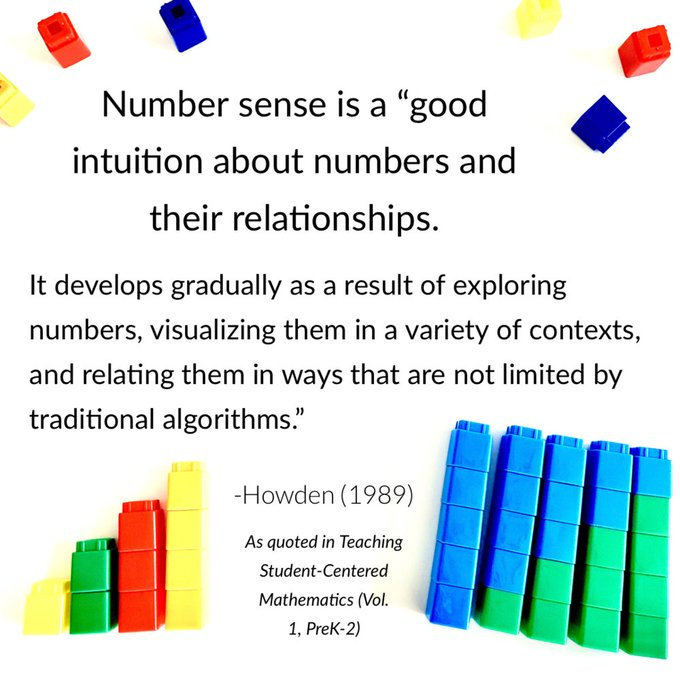
"When children COUNT, they don’t automatically think about how one number is related to another. Their goal is only to match number words with objects until they reach the end of the count."
Developing Early Number Sense:
https://t.co/6pB9Kb0bWD
Data show that when schools are safe, student & school outcomes improve.
Here’s how ED is supporting school safety & student success through our National Center on Safe Supportive Learning Environments: https://t.co/RvzhdCIWzw