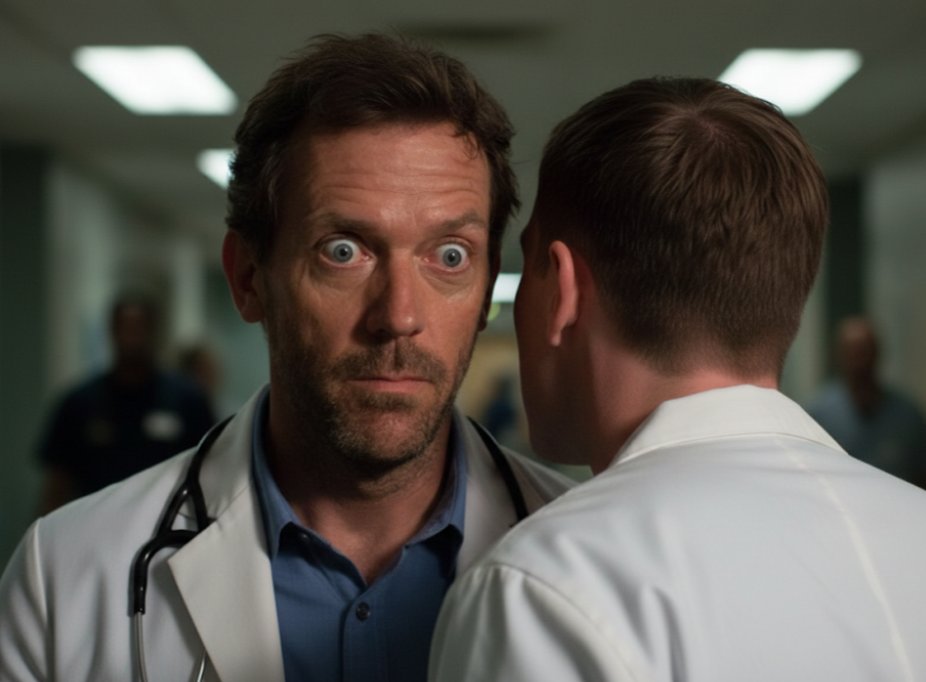
The dark side of “finding the right med for you”
In medicine it has become normalised to prescribe a succession of different meds through trial and error until clinicians “find the right med for you”.
The phrase makes the process sound almost benign: as though there is a particular drug out there uniquely suited to you, and the only task is to keep trying until you find it.
What is discussed far less is the possible cumulative cost of the search itself.
Start a drug. Increase it. Stop it. Start another. Switch again. Add something else. Withdraw that. Try another.
Each individual decision may look perfectly reasonable when considered in isolation. But the patient does not experience these interventions in isolation. The nervous system has to repeatedly adapt to exposure, dose changes, withdrawal, switching and re-exposure , sometimes to several different psychotropic drugs over a remarkably short period.
Yet clinical thinking often seems to treat each new med trial almost as though the patient has returned to baseline and everything that came before has left no trace.
What’s more, the evidence that a particular drug can be effective, or that switching drug can sometimes be clinically useful, is not the same as evidence that repeated rapid switching, withdrawal, augmentation and re-exposure carries no cumulative biological cost.
“We just need to find the right med for you” focuses attention entirely on the destination while obscuring what the journey itself may be doing to the patient.
But human beings are not passive vessels that can be repeatedly pharmacologically tinkered with on the assumption that every intervention begins from a clean slate.
Remember that next time someone suggests that you just need to “find the right med for you”.
@Antidepressed1 It’s hard to see how that’s even a success story. He seems be struggling a lot, has been constantly stopping/switching drugs over the years, and is on a journey of collecting diagnoses (depression+anxiety initially, then ADHD in 2022, OCD in 2025, autism in 2026).
On the contrary. The failure—after several decades of research and billions in expenditure—to identify any specific pathophysiological process in almost any psychiatric diagnosis has only increased the justification for distinguishing the two.
While it may be good for medicine and psychiatry to conflate the two, it would be a category error to do so, and category errors are generally not good for people.
Instead, we might revisit whether the psychological distress and impairment currently under the jurisdiction of psychiatry should, in fact, be medicalised at all.
https://t.co/ekVXSEMgC8
@FndNope@recover2renew To me "trigger" sounds like it's implying an underlying vulnerability. A bit like how drugs are said to "unmask" certain psychiatric conditions (e.g. bipolar).
Sometimes I agree with Tyler, like here.
- Psychiatry is doing just fine. As a business. Business is booming. Mental health at a population level on the other hand is not doing very well at all.
- There is, indeed, no golden age of psychiatry we can look back on.
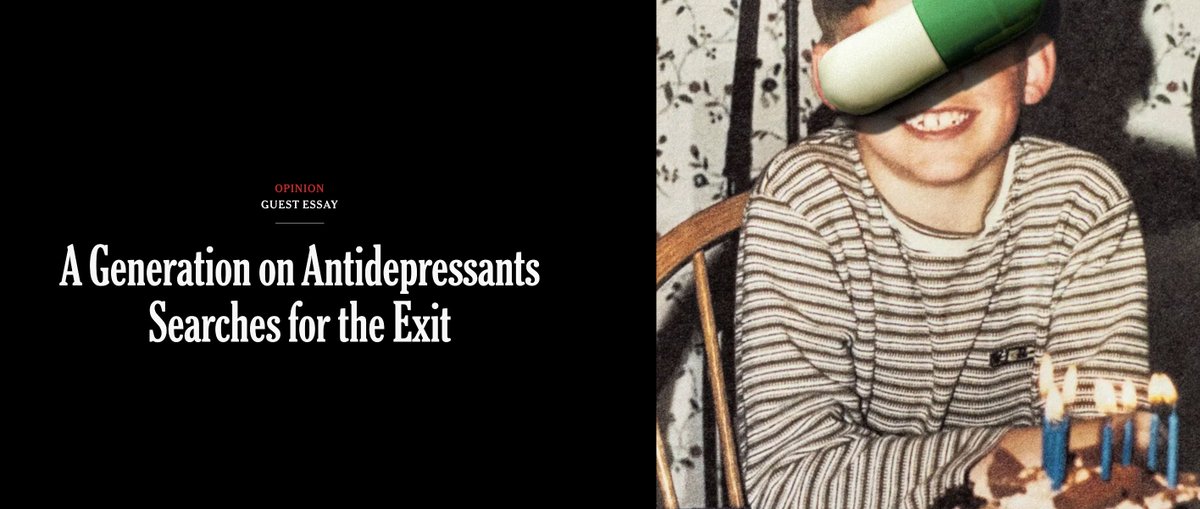
This @nytimes article outlines what happens when people use antidepressants long-term and the difficulties they have when trying to stop
'He would be interested in someone, but the feeling never grew, and after an initial phase of excitement it faded into indifference. He even stopped caring about sex. “Is this what life is?” he asked his sister on the phone.'
Unfortunate inclusion of some industry talking points from the usual suspects but the story of a promising life distorted by long-term drug exposure and withdrawal is clear.
Hopefully Cam's brave testimony will draw other people's attention to the effect of medication and withdrawal in their lives. A heroic fellow.
https://t.co/7Qvbl3Q2js
Until the early-90s the DSM committee framed 'repeated sexual intercourse in a casual relationship' as a symptom of 'antisocial personality disorder'. But by the late-90s the moral mood had changed so the committee voted to drop the idea...
- DSM is a work of culture not science
Aug 3, 2026 – Harvard psychiatrist is asked in Lindsay Clancy’s murder trial how SSRIs work. Her answer essentially: depressed people lack serotonin in the brain, and SSRIs block its reuptake so there’s more available.
Full quote:
“[Selective serotonin reuptake inhibitor. What does that mean?] So oftentimes in depression patients are kind of lacking serotonin in the spaces in their brain… a selective serotonin reuptake inhibitor prevents serotonin being kind of sucked back into the cell, so it allows for serotonin to be more available.”
Psychiatrists frequently suggest that the chemical imbalance theory of depression has been abandoned. Yet, when asked to testify in court, that is pretty much the extent of our explanation. No disrespect to Dr. Shah, she said what many providers would.
Full video in the comments.
Reframing widespread & totally relatable behaviour as symptomatic of ADHD is rife on social media - helping swell the number of young people crying: ‘OMG , that’s totally me!’ This kind of stuff gets 100s of thousands of likes, with any kind of critical scrutiny being shut down.
Social media promotes self-diagnosis in ways that are incredibly validating and now most adults who struggle with organization or intense emotions think it's their "ADHD Brain."
This is a clear example of concept creep. All by design—Big Pharma profits billions from this dynamic.




![BadreNicolas's tweet photo. Aug 3, 2026 – Harvard psychiatrist is asked in Lindsay Clancy’s murder trial how SSRIs work. Her answer essentially: depressed people lack serotonin in the brain, and SSRIs block its reuptake so there’s more available.
Full quote:
“[Selective serotonin reuptake inhibitor. What does that mean?] So oftentimes in depression patients are kind of lacking serotonin in the spaces in their brain… a selective serotonin reuptake inhibitor prevents serotonin being kind of sucked back into the cell, so it allows for serotonin to be more available.”
Psychiatrists frequently suggest that the chemical imbalance theory of depression has been abandoned. Yet, when asked to testify in court, that is pretty much the extent of our explanation. No disrespect to Dr. Shah, she said what many providers would.
Full video in the comments.](https://pbs.twimg.com/media/HO5CNuAbwAEHSqa.jpg)


