A 19-year-old Japanese student built a trading bot with Claude Code in 2 days.
Used his iPad as a second monitor.
First night: $6,732 profit.
Starting capital: $68.
Total profit so far: $750,000.
Here's how it works:
The bot scans over 50 markets simultaneously.
Syncs live BTC data from Binance every second.
Spots price errors before humans even notice.
The edge is pure speed + pattern recognition.
While traders stare at charts trying to predict the next move, his bot is already executing on mispricing across dozens of markets.
No guessing.
No emotions.
No hesitation.
Just Claude Code logic finding gaps that close in seconds.
He built the entire system in 48 hours:
→ Claude Code handles the trading logic
→ Binance API feeds real-time BTC data
→ iPad displays multi-market monitoring
→ Executes trades when arbitrage windows open
The system runs 24/7.
Every price dislocation = profit opportunity.
Most people are still trading manually, refreshing charts, second-guessing entries.
Meanwhile this 19-year-old engineering student turned $68 into $750K by letting Claude Code do what humans can't: process 50 markets instantly and execute without fear.
Why are people still trading manually?
💡 I'm giving away the exact Claude Code setup for free.
24 hours only.
To get it:
1️⃣ Comment "Fable"
2️⃣ Like and Repost
3️⃣ Follow @Faazsh
I'll DM you the complete setup.
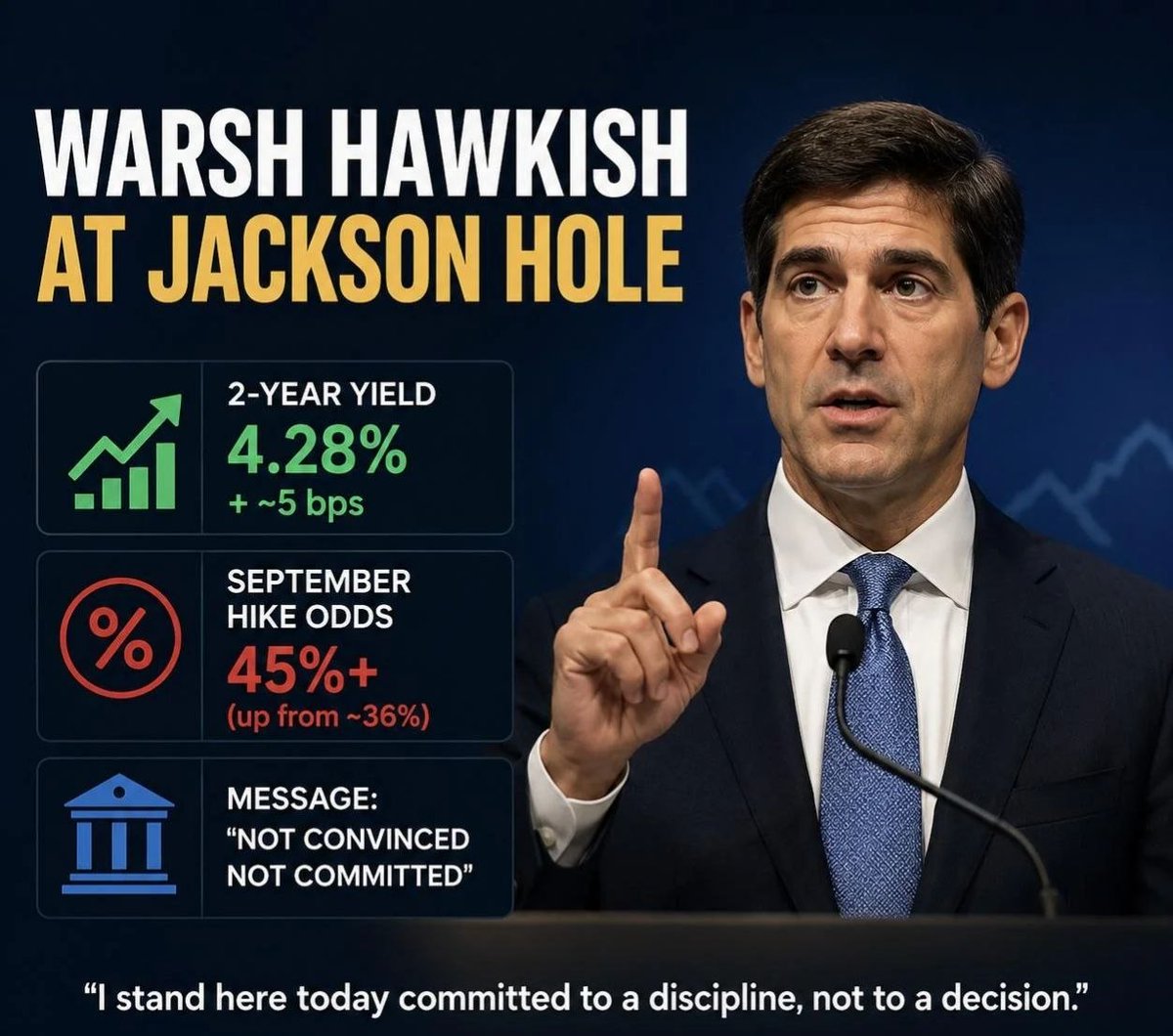
Fed Chair Kevin Warsh delivered a hawkish warning at Jackson Hole.
2% inflation remains a “firm and fixed target,” while he said financial conditions aren’t restrictive.
Markets reacted:
• 2Y yield +5bps to 4.28%
• Sept hike odds >45%
Hawkish Fed = pressure on stocks.
If you make less than 10k per month online it's a skill issue and you should lock in.
AI + social media + digital payments + free traffic + search engine + content.
You have EVERYTHING you need to succeed. It's all in your mind and effort!
11 years ago, @VitalikButerin founded Ethereum.
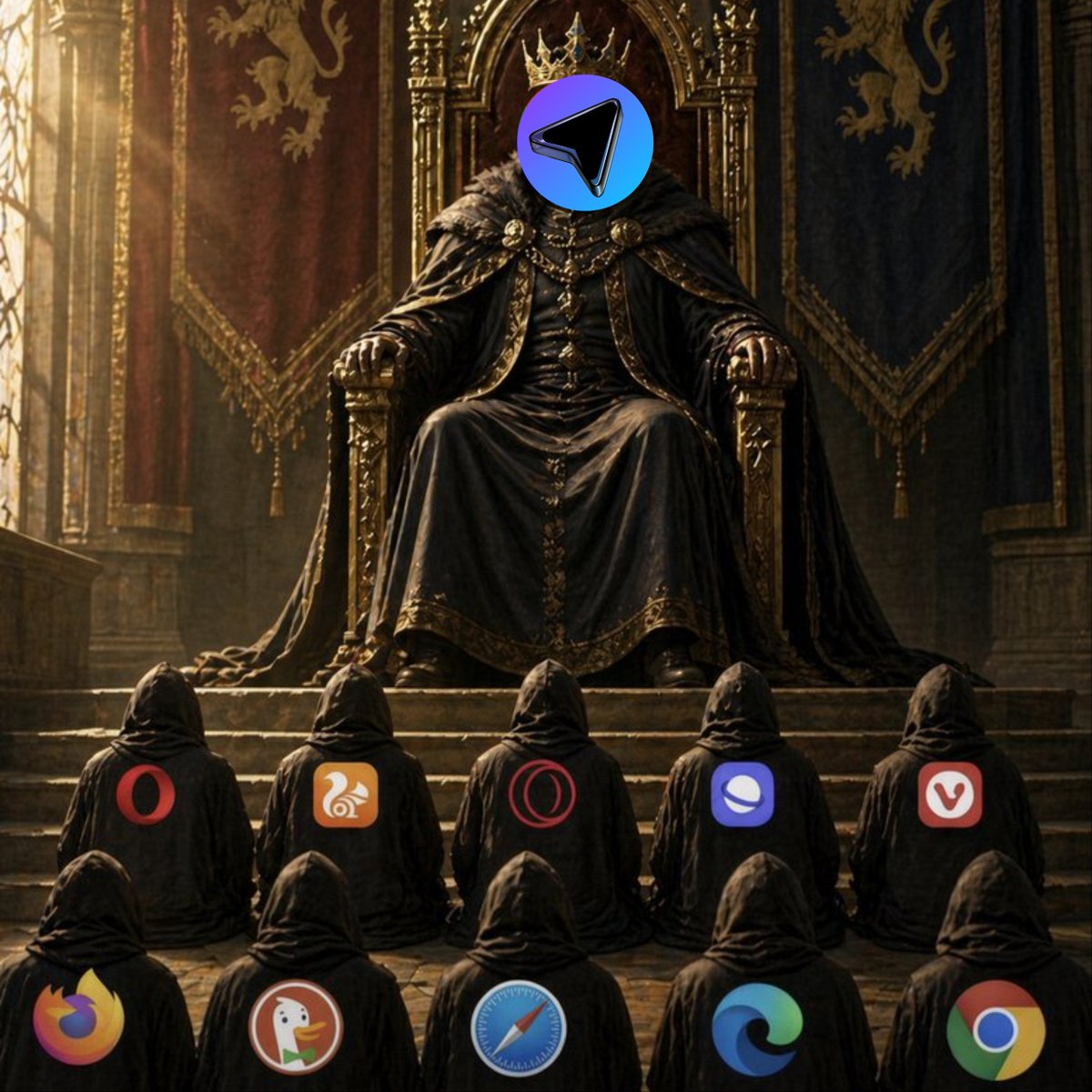
Today, @sp3rick founded @OrivonBrowser@Ethereum challenged how value moves across the internet.
Orivon challenges how people access it.
Every generation of technology establishes a new standard.
The internet had browsers.
Web2 had platforms.
Web3 now has an opportunity to rethink access.
History doesn't move forward by repeating ideas.
It moves forward when someone builds what the previous standard couldn't.
The next evolution of Web3 begins with a simple question: How should people access it?
Instead of asking:
"How do we improve wallet extensions?"
We should also ask:
"What should native Web3 access look like?"
Browsers have always been the gateway to the internet.
Every website, search, and online interaction.
Web3 requires a gateway designed with its principles in mind.
Imagine opening your browser and finding that identity, permissions, privacy, and decentralized access are native parts of the experience.
No additional layers between users and the decentralized web.
Access designed from the beginning.
A new generation of Web3 infrastructure is beginning to rethink where decentralized experiences belong.
The browser has always been the gateway to the internet.
Web3 browsing deserves standards designed for decentralization.
Better infrastructure begins with better questions. What should native Web3 access look like to you?
For years, Web3 has focused on building protocols. The conversation around access deserves equal attention.
Think back to your first Web3 experience.
The process probably looked something like this:
• Install a browser.
• Install a wallet extension.
• Save a 12–24 word seed phrase.
• Connect to a dApp.
• Switch networks.
• Approve signatures.
Access does not require a checklist for people to experience the value of decentralized technology.
He got fired from OpenAI at 22.
Raised $225M. Turned it into $13.7B in under 2 years.
Meet Leopold Aschenbrenner, the guy who wrote the AGI roadmap, then bet everything on it.
His Q1 2026 13F just dropped. Here's what he owns 👇
(Part - 2)
➤ 12. Key Market Narrative (Most Important)
→ Market is not bearish just cooling down
→ April rally led to profit-taking phase
→ Lack of strong catalyst = sideways movement
→ Current Phase =
→ Consolidation before next big move
➤ 11. Security & Risk Factors
→ No confirmed large-scale systemic hack dominating headlines that day
→ But overall market still cautious due to recent industry security concerns
➤ 10. Regulation & Global Developments
→ Ongoing regulatory discussions globally
→ No major new policy shock on April 30
→ However, uncertainty still impacts investor confidence
➤ 8. Institutional Activity
→ Institutions continue to accumulate selectively
→ Focus remains on major assets like BTC & ETH
→ Smart money positioning suggests long-term confidence but short-term caution
➤ 9. Exchange & Industry Trends
→ No major exchange disruptions reported
→ Trading activity stable but not explosive
→ Derivatives market remains active, indicating speculative positioning
➤ 7. Volume & Participation
→ Trading volume slightly declined compared to peak rally days
→ Indicates reduced retail participation
→ Market currently driven more by institutional and large players