@ibn_alhindi لا افهم ماسبب ردك، هذا الأصول المشتركة الحديثة وليس القديمةاو النيوليثية وهذا موقع آخر dnagenics واتفقت النتائج مع كل أبناء جبال الحجر الغربي بمختلف سلالاتهم جنوب شرق الجزيرة العربية الأصليين يزيد عندهم المكون العراقي والشامي هن اقرانهم في الجزيرة
اخيرا : إعادة رسم شجرة الأوراسيين الأوائل
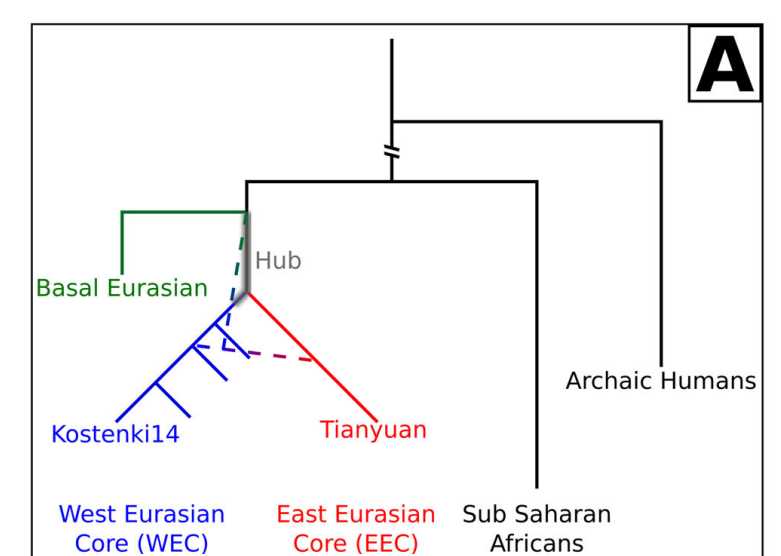
ثم جاءت دراسة Leonardo Vallini et al. (2024) لتقدم أحد أكثر النماذج التكاملية لفهم تاريخ الأوراسيين الأوائل، وذلك بإعادة بناء العلاقات التطورية بين أقدم الجينومات البشرية المعروفة. واستنتج الباحثون أن Basal Eurasian يمثل فرعًا أوراسيًا قديمًا انفصل عن بقية الأوراسيين قبل انقسام الأوراسيين الغربيين(West Eurasian Core; WEC) والأوراسيين الشرقيين (East Eurasian Core; EEC)، وربما حتى قبل تشكل مجموعة الـHub التي انحدرت منها غالبية السلالات الأوراسية اللاحقة.
ويُجسّد الشكل (A) هذا النموذج بوضوح؛ إذ يظهر Basal Eurasian كفرع مبكر ينفصل قبل التباعد بين WEC وEEC، بينما تمثل Hub السلف الذي انحدرت منه معظم المجموعات الأوراسية غير الحاملة لذلك الفرع المبكر.
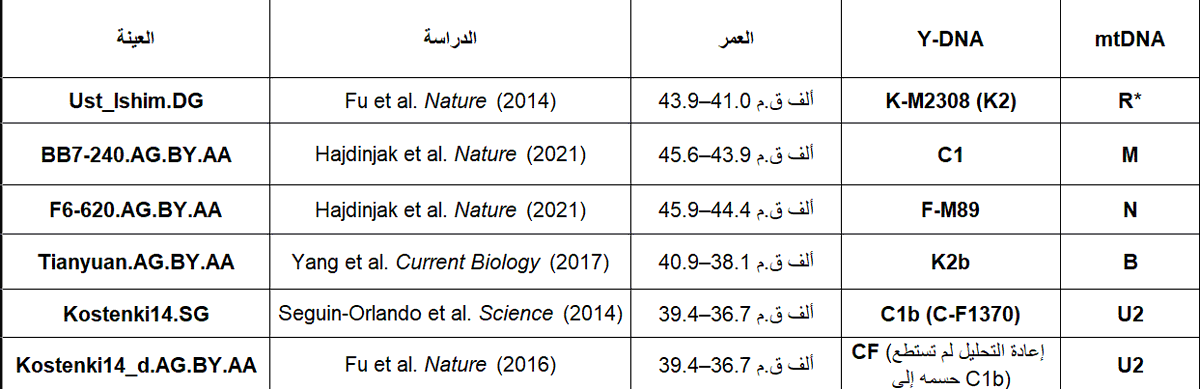
ولبناء هذه الشجرة، اعتمد الباحثون على أقدم الجينومات البشرية المتاحة في الجدول موضحة ببياناتها
ومن الملاحظ أن جميع العينات الممثلة ل HUb تنتمي إلى فروع متفرعة من الجذر CF، مثل F وC وK2، وهي الفروع التي تمثل أوائل الأوراسيين المعروفين في السجل الجيني.
إذ إن العينات المستخدمة لتمثيل فرعي WEC و Kostenki14 EEC و Tianyuan تحمل سلالات أبوية متفرعة من CF بأعمار تفوق 35 الف سنة
ويتوافق ذلك مع النموذج الذي يفترض أن انفصال Basal Eurasian سبق التوسع الذي أعطى لاحقًا هذه السلالات الأوراسية المبكرة.
أما الشكل (B) فيعرض التوزيع الجغرافي المحتمل لكل من Hub وBasal Eurasian.
وتشير الخريطة إلى أن الموقع الأكثر احتمالًا لمجموعة Hub يقع في الهضبة الإيرانية والمناطق المجاورة، في حين يتركز الاحتمال الأعلى لوجود Basal Eurasian في شمال أفريقيا وشبه الجزيرة العربية وبلاد الشام، مع تراجع تدريجي لهذا المكوّن كلما ابتعدنا عن هذه المنطقة.
والأكثر إضحاكاً أن الجميع اختلف معه في نفس الموضوع وبنفس الأسلوب والطريقة فقط يقدم سرد كتبه هندي او اثنان لا أعلم ربما 1.5 يحاولون تعزيز مركزية الهند في المنشأ مثل من حاول منهم سابقا جعل R منهم ومجددا سرد وكأنه فقط أساطير
ببساطة لديكم دليل اطرحوه أرضا
فالحقيقه كالشمس مُنيرة
جاهل يرد على جاهل.....
ومازال الهجين يحاول لفت انتباهي
الدرس الذي تعلمته من هذا الصغير خصوصا في المجال العلمي لاتهدر وقتك مع شخص يرفض الحقيقة المضحك بعد ان رأى ان سَرده لايمكن ان يُثبت وبناءاً على طلبي قدم دراسة، دقائق معدودة وتم نسفها
ثم بدأ ينبح....
Based on the current FTDNA Y-DNA haplotree, SNP diversity within C5 appears to be stronger in the Arabian Peninsula than is often assumed. In the upstream branch C-P92, Saudi Arabia accounts for 42.22% of downstream participants compared to 24.44% for India. Moving further downstream to C-Z5895, both Saudi Arabia and Oman remain strongly represented across the phylogeny, indicating multiple lineages within Arabia rather than an isolated or singular occurrence. This pattern suggests that the Arabian Peninsula should be considered an important region when evaluating the historical diversity and expansion of C5 lineages.
What about other countries not in FTDNA!
Prophets??? Hhhh
You have been caught in a clear trap that reveals your bias. Throughout this debate, I have provided phylogenetic evidence, yet you consistently avoid the facts and repeat the same outdated lines.
Wake up to reality.
Even if the ultimate root of the C-lineage is identified as Ancient Eastern Eurasian, the phylogenetic structure is undeniable: the branches C-P92 and especially C-Z5895 have diversified and expanded within a West Eurasian context. The history of a founder does not dictate the history of its independent branches that split tens of thousands of years ago.
@Aridaman089 Exactly! You just proved my point. If you admit that 'Indians don't test much' and the data is skewed, then you must also reject the 2010 Zhong study which relied on only 16 Indian samples using outdated STR markers.
@hive_ai@Aridaman089@Chadmemon@ibn_alhindi You're misunderstanding my point. I never claimed the image was AI-generated. My criticism is directed at the AI search process itself. These systems rely heavily on information that is readily available online, which can introduce data-availability bias
Two common misconceptions about C-Z5895:
Some claim its presence in the same region as the Magan civilization came via migration from the IVC. But divergence ages of its branches (Arab, Kurdish, etc.) exceed 6,000 years—older than the IVC itself. There’s also no mixed samples between the regions, which rules out recent migrations or any link to groups like Jats.
The deep divergence of its western branches predates C-Z5895, going back to C-P92. For example, the Arab–Turkish branch (C-Y216175) shows ~16,000 years of separation. Its long presence outside India further weakens any connection to East Eurasian populations over the past 15–20k years—even if the lineage had an East Eurasian origin.
#Genetics #AncientDNA #PopulationHistory
The STR-variation age of Hg C5 is notably young (14.2 ± 3.3 KYA), which does not align with the actual antiquity of the lineage and its broad geographic distribution. This discrepancy exists because the current diversity reflects only a recent population expansion rather than the true age of the haplogroup. The study explicitly states that Hg C5 possibly contains unidentified subclades that have yet to be determined, a limitation likely caused by the fact that the added samples were predominantly Indian and limited in number