🚨 @Karpathy predicted the power of the "LLM Wiki." Google just formalized it.
Meet Open Knowledge Format (OKF): a vendor-neutral standard for giving foundation models the curated context they need.
I can genuinely see this replacing Notion, Obsidian, or traditional wikis for developer teams, and the reason comes down to bookkeeping.
Traditional wikis fail because humans inevitably abandon the tedious work of updating them.
As Andrej Karpathy pointed out recently, LLMs don't get bored.
They don't forget to update a cross-reference, and they can touch 15 files in a single pass.
OKF standardizes the interoperability layer so agents can actually do that heavy lifting autonomously.
Because the format is minimally opinionated, it doesn't dictate what you write, it just dictates how it's structured. You get:
→ Human-readable documents that live right alongside your code in version control
→ Cross-links that map out complex entity relationships without needing a graph database
→ A system that survives moving between different tools and organizations
There is no complex compression scheme.
No central registry.
If you can cat a file, you can read it.
If you can git clone a repo, you can deploy it.
This is how we stop rebuilding context pipelines from scratch every time a new model drops.
Announcement + spec file in 🧵↓
Qdrant is a production-ready vector search engine and database built in Rust, designed for high-performance similarity search with extended filtering support.
- Written in Rust for speed and reliability under high load.
- RESTful API with convenient client libraries for Go, Python, and more.
- Supports advanced filtering, quantization, sharding, and hybrid search.
- Available as a self-hosted Docker image or fully managed cloud service with a free tier.
How to effectively run autonomous long-running coding agents?
This is one of the most exciting discussions on agents I've ever had.
I recorded it and am making it freely available.
(bookmark it)
The idea of autonomous long-running agents is a real thing.
We talk about lots of things like /goal, /loop, and dynamic workflows, and what comes next.
One interesting discussion was around how to make the agent run for longer while ensuring it stays on track.
Most models today will struggle to coordinate work effectively. They sometimes pause the work early. Lots of mistakes happen, and lots of weird shortcuts (reward hacking).
What helps is to be extremely clear about the goals it needs to achieve. To clarify the dos and don'ts clearly. Eliminate any assumptions you think the model would make. Deep expertise matters so much in this.
But you can get far through careful planning. My formula currently is to use Opus 4.8 for planning carefully and GPT-5.5 for all executions. For the evaluator (via /goal), I am often using something like Deepseek or the latest models from Qwen, Kimi, and MiniMax, etc.
Another insight we discussed to enforce goals is to provide strong visual cues for the agent to compare with. I found that a multimodal goal is a much stronger goal than a plain text one. And use agents to help you set clear goals.
Watch here: https://t.co/ML3bSwGjUG
传统的RAG已经不够看了,别再用那种“每次都要从头检索”的低效模式了。
GitHub上这个LLM Wiki项目已经突破1万星,它让AI帮你增量构建结构化的知识维基——知识只编译一次,越用越聪明,这才是真正意义上的第二大脑。
几个真正硬核的点:
① 四信号知识图谱,自动建立高质量关联
② Louvain社区检测,帮你发现自己都没意识到的知识盲区
③ Chrome一键剪藏,好网页直接丢进去
④ 完美兼容Obsidian,颜值在线
搞研究、做笔记的朋友,这波必须冲。
🔗 https://t.co/6pKfwiCcoE
You don’t need to spend weeks reading 50 PDFs.
Upload them to NotebookLM, then use Claude to turn that information into insights you can actually use.
Here are 8 prompts that can help compress 200+ hours of research into a single Sunday afternoon.
Bookmark this thread 🧵👇
firewalls can't stop this.
A developer just open sourced a tunnel that smuggles your entire internet through port 53 the port every router on earth is forced to leave open.
It's called MasterDnsVPN. It hides your traffic inside DNS queries, the one type of packet no network can block without breaking itself.
Every firewall on earth has to allow DNS. Schools, airports, hotels, hotel WiFi, entire countries running ISP-level censorship all of them keep port 53 open or nothing on the network resolves. This repo turns that loophole into a full encrypted tunnel.
Here's what makes it different from every other DNS tunnel that came before:
→ Custom ARQ layer gives you TCP-level reliability over UDP DNS, so nothing drops even on garbage networks
→ Sends every packet through up to 12 different resolver paths at the same time, if 11 fail the packet still arrives
→ Auto probes the maximum DNS payload your path can handle, then locks in the fastest MTU possible
→ AES-256-GCM, ChaCha20, AES-128, AES-192 all built in, pick your encryption
→ SOCKS5 proxy on 127.0.0.1:1080 point any browser or app at it and you're through
Killed: $12/mo Mullvad, $10/mo NordVPN, $15/mo Astrill, every commercial DNS tunnel charging monthly fees for the exact same idea.
Pre-built binaries for Windows, Linux AMD64, Linux ARM64, macOS ARM64. No Python install needed. Configure two DNS records, drop in the encryption key, run the executable.
Works in environments where every other VPN protocol is dead on arrival.
MIT License. 100% Opensource.
A Google Cloud engineer just showed how to build a full app with Claude from scratch
he spent 26 minutes live on stage doing what most teams take weeks to do
worth more than any $500 vibe-coding course
here's what he covers:
> zero to deployed app in a single session
> handling five engineering roles alone with Claude
> the exact workflow Google uses internally
> no team, no setup, just Claude and a goal
the people who figure out what Claude can actually do are building things everyone else thinks requires a team
that's exactly why I wrote a step by step guide on how to build your first AI agent
the guide is in the article below
ÇİNLİ BİR ADAM RESMEN PARA BASMA MAKİNESİ OLUŞTURDU.
Github'da 13.000 yıldız almış bir araç var.
Adı moneyprinterturbo.
Bir çinli geliştirici yaptı.
Ücretsiz ve tamamen açık kaynak.
Tiktok, reels, youtube shorts için tam videoları otomatik üretiyor.
Nasıl çalışıyor.
Tek bir iş akışında her şeyi hallediyor.
Senaryo üretimi, seslendirme, altyazı, görsel kaynaklar, düzenleme, hepsi dakikalar içinde.
Yayına hazır video çıkıyor.
Sen hiçbir şeye dokunmuyorsun.
Şimdi neden bu kadar popüler oldu.
Çünkü normalde bu süreç şöyle işliyor.
Senaryo için ayrı araç, seslendirme için ayrı araç, altyazı için ayrı araç, görsel için ayrı araç, düzenleme için ayrı araç.
Her biri ayrı para istiyor, ayrı zaman istiyor, ayrı öğrenme istiyor.
Moneyprinterturbo hepsini tek çatıda birleştirdi.
Ücretsiz, sınırsız ve kategorisindeki en popüler açık kaynak proje haline geldi.
Tiktok shop ve youtube shorts kanalları aylık 6 ila 10 bin dolar kazanıyor.
Bunlar bu süreci kullanıyor.
Fark şu:
Onlar araçlar için para ödüyor.
Sen ödemiyorsun.
Kurulumu 5 dakika.
Github'da ara.
Kur, çalıştır, içerik üret hepsi tamamen senin elinde.
Prompt engineering has been replaced by loop engineering.
What is it? (Explained in 60 seconds)
For the past 2 years we have been prompting agents with individual tasks. That is starting to change.
So far, if you wanted an agent to build a dashboard for a client, you would give it a task, review the output, improve the prompt, and repeat the process until the work was done.
Looping changes that.
Instead of giving an agent individual tasks, you give it a goal and let it work through a recursive loop until that goal is met.
For example:
→ Research
→ Draft
→ Evaluate
→ Test
→ Improve
→ Repeat
The agent keeps cycling through the loop until it reaches the standard you defined.
Within loop engineering there are two main approaches:
1. Open Looping
You give the agent a goal and allow it significant freedom in how it achieves it.
This is powerful, but also expensive and harder to control.
2. Closed Looping
The human defines the architecture, constraints and evaluation criteria.
The agent is then responsible for executing, improving and iterating within those boundaries until the goal is reached.
The next evolution is orchestrated looping.
Instead of a single agent running a loop, one agent breaks the goal into smaller tasks and assigns them to specialist agents.
Each specialist runs its own loop and reports back.
In other words:
You move from one agent improving itself to an entire team of agents iterating together until the goal is achieved.
Docker for AI Agents is officially over 🤯
Pydantic open-sourced a new way to run LLM-generated code that:
- does not need Docker.
- does not spin up containers.
- does not call any cloud sandbox.
- does not cost a cent to run.
It's called Monty.
Instead of spinning up a Docker container every time your agent writes code,
it runs Python directly in your own process, locked down by a tiny Rust interpreter that controls every filesystem, network, and env call.
boots in 0.06ms. ~3,000x faster than a Docker container.
snapshots execution to bytes so you can pause and resume mid-run.
no containers. no images. no daemon.
100% open source.
LangChain just open-sourced Claude Code's architecture.
MIT licensed. Any model. $0.
It's called Deep Agents
Built on LangGraph, ships with everything a coding agent needs
Here's what's inside
📌 Planning first
Before executing anything, the agent writes a structured TODO list
No more random tool calls. It thinks before it acts
📌 Filesystem access
The agent reads, writes, edits, searches files with absolute paths
It can offload large results to files to avoid context window overflow
📌 Subagent delegation
Complex tasks get split across isolated sub-agents with their own context windows
The main agent orchestrates. Subagents execute
📌 Human-in-the-loop built in
You can configure which tools need approval before running
The agent pauses. You decide. It continues
📌 Long-term memory
Files under /memories/ persist across conversations via pluggable backends
User preferences, knowledge bases, research threads, all saved
The whole thing is built on LangGraph so you get streaming, Studio, and checkpointing out of the box
One line to start:
→ pip install deepagents
→ create_deep_agent(tools=[your_tool], system_prompt="...")
what is agent looping
for the last two years we prompted agents one task at a time. that is starting to change
instead of asking an agent to build the landing page and then driving every step yourself, you set up a loop that handles discovery, planning, the work, checking, and iterating until the goal is met
looping is a setup you build. almost any agent harness can run it, it just depends on how you wire it up
at its simplest, looping is one agent working on itself:
> researches
> drafts
> checks the draft against a goal
> fixes what is weak
> runs that cycle again until the work clears the requirements
you are not prompting each step anymore. the agent repeats the cycle for you
the bigger version is a fleet looping. you give an orchestrator agent a goal, it breaks the goal into pieces, hands each piece to a specialist agent, and those specialists hand smaller jobs to their own subagents
the whole tree keeps looping through discovery, planning, execution, and verification until the goal is met
one agent looping is like a person redoing their own draft. a fleet looping is a whole team running a project end-to-end
you create a goal, and the system runs the loop until it finishes within the reqs you set
open and closed looping:
OPEN LOOPING is exploratory. it still has conditions and a goal, but you give the agent or the fleet a wide space to move in. it can try different paths, discover things, build something you did not fully spec out
this is the exciting end, it is what Peter and others are doing, and tbh it is where I want to spend more time
the catch is cost, an open loop with real room to explore burns an insane amount of tokens. for the 90 percent of people without an unlimited budget it is not runnable yet, and pointed at projects with a loose standard it turns into a slop machine
CLOSED LOOPING is bounded. a human designs the end-to-end path first:
> clear goal
> defined steps
> an eval at each step
> a point where it stops or hands back to you (and feeds back performance data)
the agents still loop, but inside framework you built. it gets better every run because each pass feeds the next, and it runs on a normal budget because the path is tight.
for most marketing work, closed is the one that pays off today.
> the orchestrator owns the goal
> the specialists own the steps
> the subagents do the narrow work
> an eval gate make sure its not slop
SeekDB is a MySQL-compatible state store for AI agents that supports hybrid vector, full-text, and scalar search in a single SQL query.
- 1,523 QPS streaming write+search (10x Milvus, 3x Elasticsearch)
- FORK/MERGE sandboxes for safe agent exploration
- Full ACID with MySQL protocol, works with LangChain, LlamaIndex, Dify
- Embedded or server deployment, COW sandbox
Explore it here:
https://t.co/ejAL6WvmWs
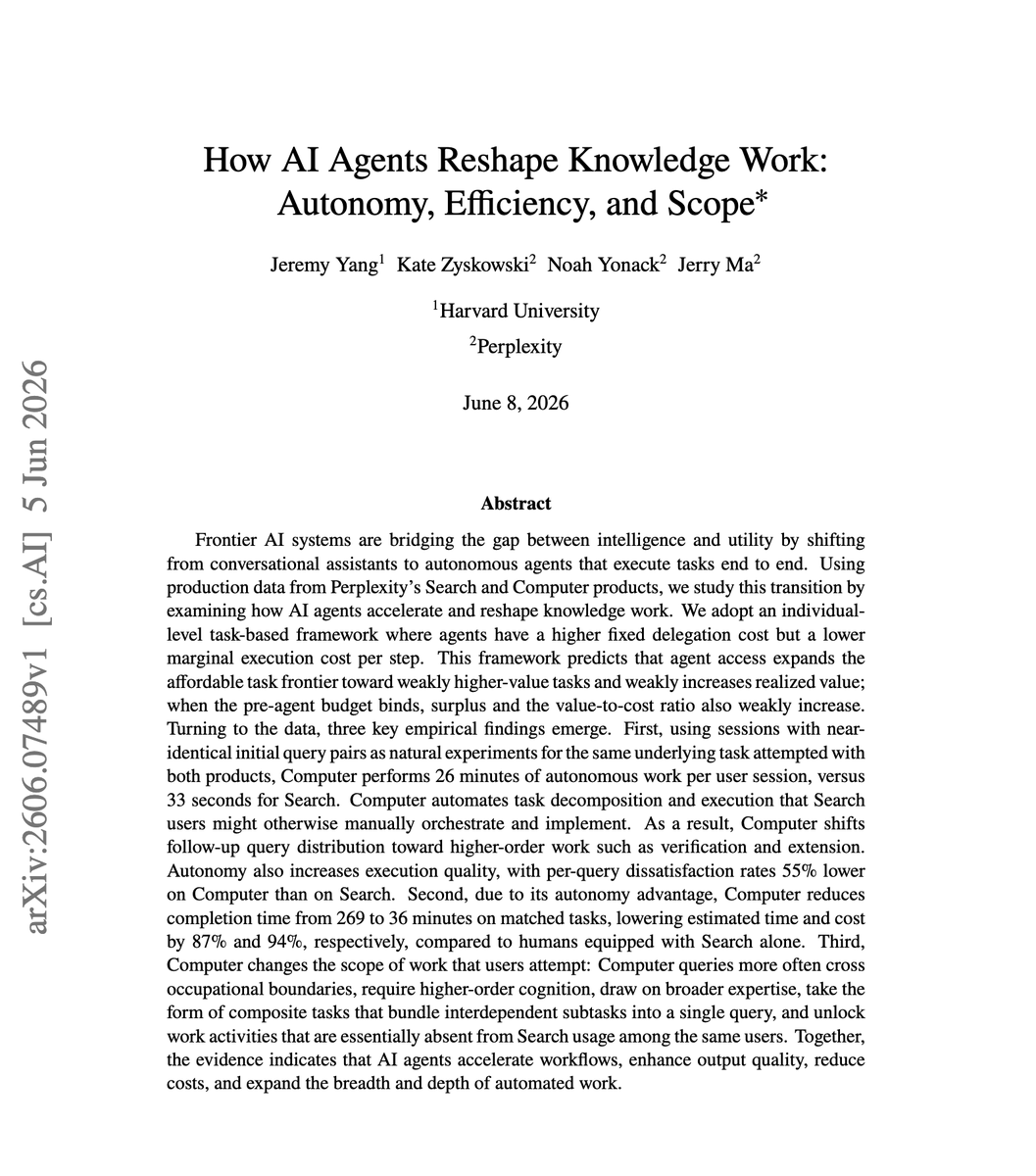
New paper on how AI agents are reshaping knowledge work.
This is a nice economic read on where agents actually change knowledge work to meet that gap directly.
(bookmark it)
It studies agent adoption across three dimensions: autonomy, efficiency, and the scope of tasks workers hand off.
The friction people keep hitting with agents is rarely model quality. It is that almost nobody has been taught how to work this way.
Paper: https://t.co/R4iYoRz3kS
Learn to build effective AI agents in our academy: https://t.co/1e8RZKs4uX
10 GitHub repos so good they shouldn't be free.
1. AutoHedge
An autonomous hedge fund built in Python with four AI agents: a director generates investment theses, a quant validates them, a risk manager decides position size, and an execution agent places orders. Operates live on Solana. With 'pip install -U autohedge', you can start trading immediately.
repo → https://t.co/q22EzesLoD
2. Vibe-Trading
A trading system using a Directed Acyclic Graph (DAG) model, featuring 64 finance skills and 29 preset specialist agent swarms. Includes analysis methods like Ichimoku, Elliott Wave, SMC, Black-Scholes, full Greeks, and risk parity. Its crypto desk provides liquidation heatmaps and token unlock tracking. You can observe agents debating strategies in real time.
repo → https://t.co/LZ5CYGMC1W
3. Fincept Terminal
A Bloomberg Terminal replacement that runs on your laptop. CFA levels 1, 2, and 3 analytics. 20+ investor AI agents (Buffett, Dalio, Soros). 100+ data connectors, including Polygon, World Bank, and IMF. Bloomberg charges $24,000 a year. This is free.
repo → https://t.co/dMM1WZxrw9
4. LibreChat
Every model ChatGPT runs, plus Claude, Gemini, DeepSeek, and 20 more. Self-hosted. Native MCP support. You own the data, the history, the infrastructure. OpenAI charges $20/month to use their wrapper. This costs nothing to use your own.
repo → https://t.co/457utdZUIF
5. Open Higgsfield AI
A self-hosted cinema studio with 200+ AI models. Flux, Midjourney, Sora, Kling, Veo, GPT-4o, SDXL all in one interface. Text to image. Image to video. Cinema mode with pro camera controls. No subscription. Your data stays local.
repo → https://t.co/WHCzBSFBW4
6. Open-LLM-VTuber
A Live2D AI companion that runs offline, sees your screen, hears your voice, and never forgets. Inner thoughts are shown as a separate text layer, so you watch the reasoning happen before words come out. Pet mode floats it on your desktop. Swap the LLM in one config line.
repo → https://t.co/5XVKUPr35X
7. Claude Ads
A free Claude Code skill that runs 190 audit checks across Google, Meta, YouTube, LinkedIn, TikTok, and Microsoft Ads. 6 parallel subagents firing at once. Consolidates into a single Ads Health Score ranked by revenue impact. Agencies charge $4,000 a month for this.
repo → https://t.co/AJRfpSB7B6
8. Agentic Inbox
Cloudflare just open-sourced an email client where an AI agent reads your inbox and drafts your replies. Runs entirely on Cloudflare Workers. Each mailbox lives in its own Durable Object. Your email never leaves your Cloudflare account. One click deploys it.
repo → https://t.co/QEEMtzoliV
9. Camofox Browser
An open source headless browser that makes AI agents invisible to bot detection. Spoofs navigator properties, WebGL, AudioContext, and WebRTC at the C++ level. The browser does not look modified because it genuinely is not. Accessibility tree output drops token cost by 90%.
repo → https://t.co/95d0V3o7vO
10. Hyperframes
HeyGen open-sourced a video framework that does everything Remotion does without React, without JSX, without teaching your AI agent a new format. The agent writes HTML. The framework renders MP4. GSAP, Lottie, and Three.js all work. Same HTML always produces the same file.
repo → https://t.co/ekquvYvTNC
These are not toys. Each one replaces a paid product you're still being charged for.
Pick one. Install it. Plug it into your workflow.
100% free. 100% open source.
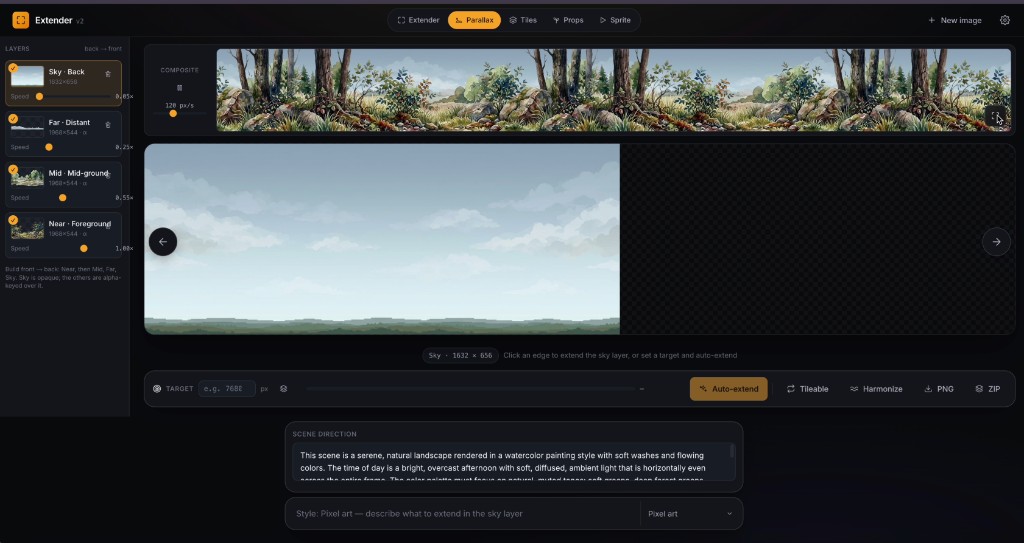
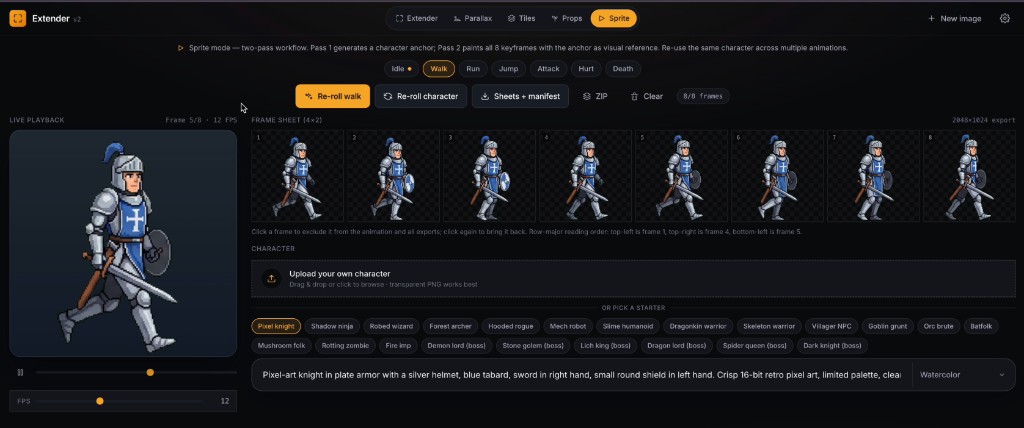
Open Source: Started as an AI image extender tool. It's now a full 2D game-art studio.
From one prompt: parallax backgrounds, 13-tile autotile sets, sprite animations, and an endless prop library, all engine-ready.
Open source. Fork it and build your own modes 👇 https://t.co/uLuEwasZSz
#gamedev #indiegame







![itsharmanjot's tweet photo. LangChain just open-sourced Claude Code's architecture.
MIT licensed. Any model. $0.
It's called Deep Agents
Built on LangGraph, ships with everything a coding agent needs
Here's what's inside
📌 Planning first
Before executing anything, the agent writes a structured TODO list
No more random tool calls. It thinks before it acts
📌 Filesystem access
The agent reads, writes, edits, searches files with absolute paths
It can offload large results to files to avoid context window overflow
📌 Subagent delegation
Complex tasks get split across isolated sub-agents with their own context windows
The main agent orchestrates. Subagents execute
📌 Human-in-the-loop built in
You can configure which tools need approval before running
The agent pauses. You decide. It continues
📌 Long-term memory
Files under /memories/ persist across conversations via pluggable backends
User preferences, knowledge bases, research threads, all saved
The whole thing is built on LangGraph so you get streaming, Studio, and checkpointing out of the box
One line to start:
→ pip install deepagents
→ create_deep_agent(tools=[your_tool], system_prompt="...")](https://pbs.twimg.com/media/HKX8XuTaAAAt6po.jpg)