Ssemujju Kassim was attacked by robbers on July 7th. He survived brain surgery at Mulago Hospital but can't speak or walk.
Now at Mengo Hospital he needs physiotherapy yet bills have drained everything. Any donation helps him heal and return to his loved ones.
Magistrate Ms. Gloria Atim who granted Hon. Miria Matembe bail has been transferred to Kiboga District. Ivan Ssenoga who granted Timothy Kalyegira bail has also been sent to Luweero. In 2025, William Muwonge had just been posted to Kawempe (January) when he gave 21 NUP ... 1/2
Ann Widdecombe:
"No one has the right to live their lives being protected from offence or hurt feelings - it is an occupational hazard of living in a society. If you can't take it, become a hermit."
May she forever rest in peace.
On June 26, I was arrested and driven in an SFC drone to a basement.
Reason? "Why do you hate the First Family?"
On July 1, my friend Odrek Rwabwogo visited me at Luzira prison and also brought greetings from his wife Patience, President Museveni's daughter.
So, there we are.
HOW TOURISM WORKS
In tourism, we have majorly 2 seasons, high season and what’s called shoulder season and both seasons are between 6-7 months.
HIGH SEASON
Starts June every year and ends September though for uganda October has started showing good signs as well.
SHOULDER SEASON
Shoulder season starts around the 15th of December and ends mainly end of February every year.
WHAT INFLUENCES THAT?
The high season is influenced majorly by the western world summer holidays where schools are on a long holiday.
Families and individuals tend to save up for this particular season and depending on the country, the holiday times vary from 14 days to months sometimes.
The low season is pushed my the winter seasons in the western world, the weather can be very tough forcing people to look for the warmer world like Uganda.
The baby boomers are those born soon after the Second World War and are generally retired have more time and money to travel anytime of the year.
Due to inheritances taxes in the western world, many retirees are preferring to spend on multi general family travels.
WHY WE FIGHT?
The lead time for most international tourism is between 9 to 12 months though some people book 2 to 3yrs in advance!
For about 6yrs now, when we are about to cash in, we have had disease outbreaks announcements from ministry of health or rebel stories which has reduced now.
The cashing comes after massive efforts invested in traveling around the world looking and convincing potential spenders about our potential.
When ministry of health announces disease outbreak in May like this year, Ofcourse we refund money paid in advance.
That too kills a year of business and the little that continues comes can’t sustain a business reason companies lay off staff and others close shop.
That too discourages efforts by entrepreneurs who either give up or choose other countries if they have the capacity to do so.
Like I have said before, entrepreneurs grow the economy not the politicians unless a politician is both but they are generally consumers.
And yes, like I have said again and again, there isn’t such a thing as political freedom without economical freedom, you can take that to the bank.
Therefore, the real engine of growth for countries are the entrepreneurial class, who risk everything to improve situations for themselves and for the country.
Poor countries are simply a summation of poor individuals and the rich country is a summation of rich individuals. Rich individuals in big numbers make a rich country.
DOMESTIC TOURISM
I will write about DOMESTIC TOURISM this week and how consumption or purchasing power can be enhanced.
Justice in Uganda: A Study in Contrast
+FRAME ONE: The Rights of a Killer
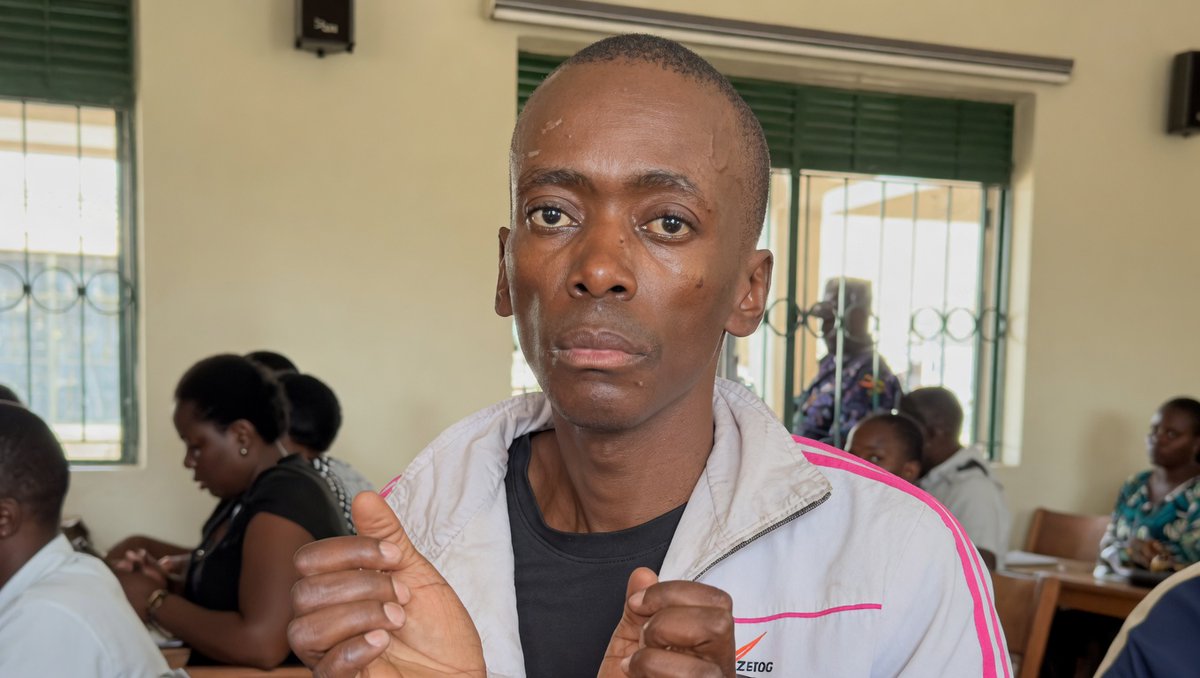
+The Incident: Christopher Okello Onyun (in photo) attacks a nursery school, stabbing four innocent children to death.
≠The Response: As an angry mob gathers to seek immediate retribution, the police intervene to save him from being lynched. Good.
-The Outcome: Despite the horrific nature of his crimes, Onyun is granted his constitutional right to a fair trial in a civilian court, as he should.
+FRAME TWO: The Fate of the Peaceful
+The Incident: Opposition supporters stage a pro-democracy protest. They carry nothing but placards; not a single stone is thrown, and no one is physically harmed.
≠The Response: These peaceful citizens are set upon by the very same police force that protected a child killer. They are subjected to brutal beatings at the scene.
-The Outcome: The "justice" system takes a darker turn for the protestors:
•The Disappeared: Some vanish entirely, never to be seen again.
•The Tortured: Others reappear weeks later, bearing the physical scars of severe torture.
•The Jurisdiction: Unlike the child killer, these peaceful civilians are denied a civilian trial. Instead, they are processed through a Military Court.
¡The Verdict
Demanding democracy is treated as a greater threat to the social order than the murder of children. Good luck making sense of it.
#LongPostAlert I #ExpertOpinion
Dear @UgandaMediaCent, here is some free (but expensive-sounding) advice on patching your brand before attempting to fix ‘brand Uganda’.
To be honest. Right now, the centre feels more like a notice board. In a world where governments are building media ecosystems, the centre still issues statements and communicates as if it’s 2003. Here are 10 expert suggestions for how you can fix it.
1⃣. The centre has no identity, or does it? If it does, it’s a borrowed identity. The national emblem is not your logo in its entirety. It’s everyone’s logo. If you want to be taken seriously as a modern communications institution, build a distinct visual identity, including colours, fonts, templates, and brand elements (that can easily be associated with Uganda). You need to start thinking less of the “coat of arms” and be cleaner, sharper, and more recognisable. Even the central banks and revenue authorities have distinctive identities.
2⃣. What exactly are you as a media centre? Are you an NRM government mouthpiece? A national information hub? A media liaison? President Museveni’s personal media dissemination centre? Right now, you’re trying to be everything and, honestly, landing nowhere. Clear positioning builds trust. Without it, you are just another voice in an already noisy government choir.
3⃣. The media centre needs to communicate like humans. Like Ugandans! Not like circulars. Ugandans don’t read statements. A majority of today’s news consumers scroll on their phones. If your communication sounds like it was drafted by three government committees and approved by ten people, it’s already lost. Simplify. Be direct. Be understood. Also, your press releases are a little too frequent. Your press conferences are too long. You might need to review that.
4⃣. Your digital presence needs an urgent revamp. Let’s not sugarcoat it. Your digital platforms feel scattered, inconsistent, and underwhelming. Your website is not befitting. It’s ugly. You have a paltry 7K followers on Instagram, and your Instagram page looks like a content-dumping ground. You have no strong LinkedIn presence (you’re missing out on engaging policymakers, professionals, and global stakeholders). There is an unbranded YouTube channel for a certain Uganda Media Centre with a paltry 700 subscribers (they should at least be double that). Visibly, there is no real YouTube content strategy beyond numerous clips of press briefings. No Flickr presence, your visual assets and depository. No Tik Tok. Visual identity? Inconsistent at best. Meanwhile, globally, over 60% of people now consume news via social media. That means your first impression is digital, and right now, it’s your weakest entry.
Here is what you (could) need:
▪️A cohesive visual system across platforms.
▪️A content strategy, not just uploads. Invest in a studio setup and podcast format (owned and managed by Uganda Media Centre).
▪️Create some engaging formats featuring Ugandan voices from business, tourism, sports, and culture. Uganda is not short of interesting personalities for this. You have @wekesa_amos for tourism, and Joshua Baraka (currently a major export of Ugandan music). You have @rkabushenga et al. You can also partner with leading clean podcasters in the diaspora. The idea is for you to create a community. Please note that news narratives are no longer sourced; they are now scripted and produced.
5⃣. Not everything warrants a press briefing. The weekly podium-style media engagement format (with shabby banners in the background) needs to evolve. It’s tired and boring. Shouldn’t the media centre be a centre of excellence? Shouldn’t it be a brand custodian for the whole country? To break away from, or at least mix in with, these many press briefings, start by turning lesser-known policies into short videos, infographics, and explainers. That recent AI-generated video from filmmaker Loukman Ali was a weak attempt at content creation. For example, the recent copyright law that provoked debate among different stakeholders could have been fodder for the kind of content the media centre can break down for the public. What can you tell a 22-year-old Ugandan about it? If a Gen-Z doesn’t find your press briefings impressive in 30 seconds, you’ve lost an entire generation.
6⃣. Once again, media relations are not necessarily about hosting press conferences. Journalists don’t need an open-tent gathering every now and then; they need a partner. Build relationships. Visit newsrooms. Engage and cultivate media influencers. Recognise them monthly. Rethink the idea of media awards. Blogger awards. The most influential TikToker or YouTuber. Work with credible digital voices. Better yet, train and empower emerging media creators. If you don’t shape the narrative ecosystem, the naysayers will, and they already are.
7⃣. How ready are you for crisis communication? Uganda’s PR challenge is not breaking news, and we all know what is missing. ‘Bad news from Uganda’ is beginning to seem normal. The centre needs structured responses, including up-to-date fact sheets, rapid-response messaging, and consistent alignment among spokespersons. Recently, we were in a crisis over news that Uganda would send troops to Iran to defend Israel. This was triggered by X tweets from top officials. A Ugandan UN ambassador responded differently. A foreign affairs official responded differently. A friend of the top official involved in the debacle responded as well, differently. Uganda Media Centre didn’t pronounce itself on the matter. The centre was silent. The silence on such issues creates confusion and erodes reputation.
8⃣. Too many voices, no single message! With Uganda’s PR and communications today, the Uganda Police say one thing, the parliament’s spokesperson says another, the judiciary adds spice, and the Minister of Youth voices yet another opinion. The result? Confusion and, most times, global embarrassment. The Uganda Media Centre should coordinate messaging rather than compete with it.
9⃣. Not All Audiences Are the Same (And that’s the point). Gen Z, foreign investors, foreign diplomats, and foreign media are all different. And yet the Media Centre should be designed to speak to all of them using different tones. How does one respond to an article in The Economist, a professor at Harvard, a would-be Chinese investor, or a disgruntled youth in the Middle East? Segment your communication. Tailor your tone.
🔟. Lastly, the big question is: Who trusts you?
Have you ever measured your credibility? The Uganda Media Centre needs to carry out surveys and perception audits, gather feedback loops (from the Ugandans it serves), and, from this, build thought leadership by publishing insights, issuing newsletters, hosting experts, inviting scholars, and creating a network of credible voices tied to its platform.
This article is originally published on the Business Insights Africa I @Afro_Insights website here [link] https://t.co/SNHHPlvydn
#BrandUganda
Uganda’s proposed Sovereignty Bill is the ONLY law in the world openly attempting something this sweeping: it legally turns its own citizens abroad into “foreigners”.
The Bill is explicit. A “foreigner” includes “Ugandan citizens residing abroad”.
That single clause redraws the boundary of citizenship. It means diaspora money, relationships, and even family support can fall under foreign control rules.
So the implications are not abstract.
-A mother in Mbale receiving school fees from her son in London.
-A boda boda rider in Gulu financed by a brother in Dubai.
-A small shop in Mbarara stocked using capital sent from Boston.
All could, in theory, fall under foreign influence rules.
Then the net widens.
The definition of an “agent of a foreigner” includes anyone “directly or indirectly… financed or subsidised” by a foreigner.
Not directed. Not controlled. Simply funded.
-A journalist paid by a locally registered outlet that receives donor support.
-A researcher on a project with partial foreign grants.
-An NGO worker whose salary traces back, however distantly, to external funding.
All can be classified as “agents”.
Clause 22 then imposes a hard ceiling: “a cap on foreign funding of approximately UGX 400 million within any twelve-month period”, beyond which ministerial approval is required.
So:
-A private hospital built with diaspora investment.
-A school supported by an international foundation.
-A construction firm using a foreign loan.
Then comes the sharpest edge.
-Clause 13 creates the offence of economic sabotage, criminalising anyone who “publishes information… that weakens or damages the economic system”.
So:
-A newspaper reporting a currency slide.
-An analyst warning about debt stress.
-A civil society group highlighting inflation pressures.
Even if accurate, such reporting could fall foul of the law.
Finally, Clause 5 prohibits activities that promote foreign interests “against the interests of Uganda”, a phrase the law does not define.
Put together, these clauses do something unprecedented.
-They do not just regulate foreign influence.
-They redefine who is foreign.
-They extend control from politics into everyday economic and social life.
In most countries, including Ethiopia and Ethiopia, sovereignty laws manage outsiders.
Here, Uganda redefined outsiders to include its citizens, basically rewriting the 1995 constitution. Of course it’s in the preparatory and consultation stage and could change for better - or WORSE!
Today’s court decisions force a return to a sobering truth once articulated by @RKirunda years ago: the law is not light—it is a weight under which lives are shaped, or shattered.
Two moments, same system. In the sentencing of Agnes Nandutu, the law appears firm, purposeful—an instrument of accountability. But in the denial of bail to Waisswa Mufumbiro to bury his wife, it feels less like justice and more like burden without mercy.
I am reminded of that old exchange on @SemweyaMusoke's Capital Gang, where Kirunda argued the law can be a “double crosser.” Not because it is flawed in design, but because its application determines whether it protects dignity or strips it away.
The law, properly exercised, is civilization’s anchor. But when it bends away from humanity, it risks becoming the very weight that crushes the innocent while claiming to uphold order.
That tension—between justice and its application—is exactly what today laid bare.
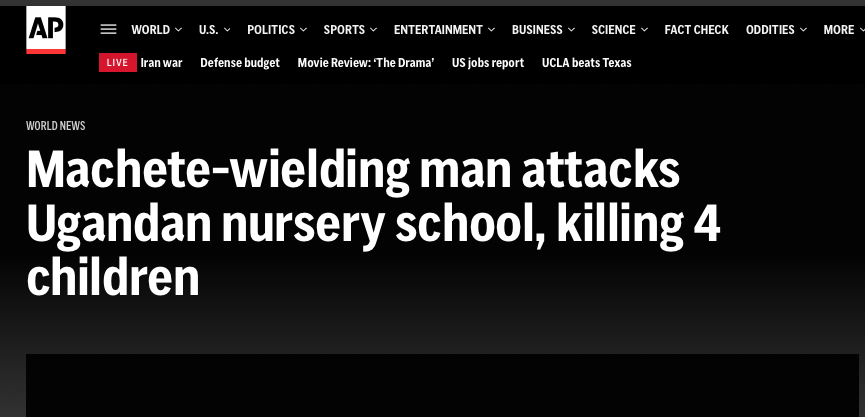
This story and headline is a perfect example of how racist politics and narratives are subtly deployed in media. Blink and you miss it. On Thursday, a man killed four children in an attack inside a nursery school in the Ugandan capital of Kampala on Thursday.
It was the most horrific attack on a kindergarten school in Uganda in recent memory. The attacker “brutally stabbed and killed four juveniles,” with a knife police said. Nearly all Uganda media reports said the murderer used a knife. However, in AP’s telling, he became a “machete wielding” attacker.
It doesn’t make the tragedy any less, but the
the word "machete" often carries cultural baggage in Western (and sometimes global) media framing. It often evokes images of chaotic violence in tropical or African settings –think the "wild savage" trope from colonial-era storytelling –more readily than a "knife" does for similar attacks elsewhere. And thus it conjures up an image of Kampala, or Uganda for that matter, as a place with menacing “natives” walking around with deadly machetes, rather than an individual who might be been mentally ill. Surprising how strong the instinct to fall back on these tropes remains.
Half the men acting tough today were emotionally sponsored by a mother who refused to give up on them. Most women wake up at 4am, cook, pray, hustle, fix family drama, and still show up smiling like nothing happened.
So, let’s be honest… some fathers were strict but the real security system in many homes was a mother’s prayers at 4am. Some of the toughest humans walking this planet learned discipline from a woman who could stretch one meal into three.
Happy Women’s Day
Many people in Africa can't speak up against the evil Terrorism acts US is committing against Iranians because of fear to be denied Visas, So to you US visa is more important than the 160 innocent children that US killed in cold blood.
I want to tell you that you are very STUPID!
May God judge you all.
Uganda's case backlog is currently at over 46,000 cases.
A case becomes backlogged after spending 2yrs in the judicial system without being heard or determined.
#UgandaJudiciaryExhibition
Over 1000 cases have spent 10yrs and above in our judicial system!!?
Olemwa






![kezio_musoke's tweet photo. #LongPostAlert I #ExpertOpinion
Dear @UgandaMediaCent, here is some free (but expensive-sounding) advice on patching your brand before attempting to fix ‘brand Uganda’.
To be honest. Right now, the centre feels more like a notice board. In a world where governments are building media ecosystems, the centre still issues statements and communicates as if it’s 2003. Here are 10 expert suggestions for how you can fix it.
1⃣. The centre has no identity, or does it? If it does, it’s a borrowed identity. The national emblem is not your logo in its entirety. It’s everyone’s logo. If you want to be taken seriously as a modern communications institution, build a distinct visual identity, including colours, fonts, templates, and brand elements (that can easily be associated with Uganda). You need to start thinking less of the “coat of arms” and be cleaner, sharper, and more recognisable. Even the central banks and revenue authorities have distinctive identities.
2⃣. What exactly are you as a media centre? Are you an NRM government mouthpiece? A national information hub? A media liaison? President Museveni’s personal media dissemination centre? Right now, you’re trying to be everything and, honestly, landing nowhere. Clear positioning builds trust. Without it, you are just another voice in an already noisy government choir.
3⃣. The media centre needs to communicate like humans. Like Ugandans! Not like circulars. Ugandans don’t read statements. A majority of today’s news consumers scroll on their phones. If your communication sounds like it was drafted by three government committees and approved by ten people, it’s already lost. Simplify. Be direct. Be understood. Also, your press releases are a little too frequent. Your press conferences are too long. You might need to review that.
4⃣. Your digital presence needs an urgent revamp. Let’s not sugarcoat it. Your digital platforms feel scattered, inconsistent, and underwhelming. Your website is not befitting. It’s ugly. You have a paltry 7K followers on Instagram, and your Instagram page looks like a content-dumping ground. You have no strong LinkedIn presence (you’re missing out on engaging policymakers, professionals, and global stakeholders). There is an unbranded YouTube channel for a certain Uganda Media Centre with a paltry 700 subscribers (they should at least be double that). Visibly, there is no real YouTube content strategy beyond numerous clips of press briefings. No Flickr presence, your visual assets and depository. No Tik Tok. Visual identity? Inconsistent at best. Meanwhile, globally, over 60% of people now consume news via social media. That means your first impression is digital, and right now, it’s your weakest entry.
Here is what you (could) need:
▪️A cohesive visual system across platforms.
▪️A content strategy, not just uploads. Invest in a studio setup and podcast format (owned and managed by Uganda Media Centre).
▪️Create some engaging formats featuring Ugandan voices from business, tourism, sports, and culture. Uganda is not short of interesting personalities for this. You have @wekesa_amos for tourism, and Joshua Baraka (currently a major export of Ugandan music). You have @rkabushenga et al. You can also partner with leading clean podcasters in the diaspora. The idea is for you to create a community. Please note that news narratives are no longer sourced; they are now scripted and produced.
5⃣. Not everything warrants a press briefing. The weekly podium-style media engagement format (with shabby banners in the background) needs to evolve. It’s tired and boring. Shouldn’t the media centre be a centre of excellence? Shouldn’t it be a brand custodian for the whole country? To break away from, or at least mix in with, these many press briefings, start by turning lesser-known policies into short videos, infographics, and explainers. That recent AI-generated video from filmmaker Loukman Ali was a weak attempt at content creation. For example, the recent copyright law that provoked debate among different stakeholders could have been fodder for the kind of content the media centre can break down for the public. What can you tell a 22-year-old Ugandan about it? If a Gen-Z doesn’t find your press briefings impressive in 30 seconds, you’ve lost an entire generation.
6⃣. Once again, media relations are not necessarily about hosting press conferences. Journalists don’t need an open-tent gathering every now and then; they need a partner. Build relationships. Visit newsrooms. Engage and cultivate media influencers. Recognise them monthly. Rethink the idea of media awards. Blogger awards. The most influential TikToker or YouTuber. Work with credible digital voices. Better yet, train and empower emerging media creators. If you don’t shape the narrative ecosystem, the naysayers will, and they already are.
7⃣. How ready are you for crisis communication? Uganda’s PR challenge is not breaking news, and we all know what is missing. ‘Bad news from Uganda’ is beginning to seem normal. The centre needs structured responses, including up-to-date fact sheets, rapid-response messaging, and consistent alignment among spokespersons. Recently, we were in a crisis over news that Uganda would send troops to Iran to defend Israel. This was triggered by X tweets from top officials. A Ugandan UN ambassador responded differently. A foreign affairs official responded differently. A friend of the top official involved in the debacle responded as well, differently. Uganda Media Centre didn’t pronounce itself on the matter. The centre was silent. The silence on such issues creates confusion and erodes reputation.
8⃣. Too many voices, no single message! With Uganda’s PR and communications today, the Uganda Police say one thing, the parliament’s spokesperson says another, the judiciary adds spice, and the Minister of Youth voices yet another opinion. The result? Confusion and, most times, global embarrassment. The Uganda Media Centre should coordinate messaging rather than compete with it.
9⃣. Not All Audiences Are the Same (And that’s the point). Gen Z, foreign investors, foreign diplomats, and foreign media are all different. And yet the Media Centre should be designed to speak to all of them using different tones. How does one respond to an article in The Economist, a professor at Harvard, a would-be Chinese investor, or a disgruntled youth in the Middle East? Segment your communication. Tailor your tone.
🔟. Lastly, the big question is: Who trusts you?
Have you ever measured your credibility? The Uganda Media Centre needs to carry out surveys and perception audits, gather feedback loops (from the Ugandans it serves), and, from this, build thought leadership by publishing insights, issuing newsletters, hosting experts, inviting scholars, and creating a network of credible voices tied to its platform.
This article is originally published on the Business Insights Africa I @Afro_Insights website here [link] https://t.co/SNHHPlvydn
#BrandUganda](https://pbs.twimg.com/media/HGHPKJEWoAAnrk4.jpg)