■ When I think of how great the world could be, I see too much goodness wasted on inconsequentialities.
■Accidental Optimist ■Architect ■Islam ■Agripreneur
I have friends who are older and very fit because of their lifestyle. They don't drink or smoke and exercise daily. They also have the most unfit kids who don't follow their example. This has always worried me as I am raising young children. I have also seen families with hard-working and wealthy parents who raise the laziest and most entitled children.
We always want our children to do better than us, but when and where does this go wrong for most people? I think it comes from the time and attention we personally give our kids and the lapses we allow.
My wife and I are early risers. I have a particular sleep problem I am still trying to solve, but my kids can sleep all day on vacation if you let them. A friend with an older son who had just graduated and was back home, jobless, used to tell me how alarmed he was that the son would go out all night, come back early in the morning, and sleep all day.
I told him then that if he didn't force him to change that habit, he would remain jobless and stay with his parents longer. They eventually forced him to change, and he moved out. He has a job now and struggles a lot. His parents are concerned that he isn't thriving. He is now almost 30, and I think about this all the time. At 25, I was a beast and had started many businesses.
While we want our kids and young adults to experience life on their own terms in a world vastly different from the one we grew up in, we can't help but notice that others whose children were more disciplined are thriving better. One indicator I have seen that correlates with success in younger people is fitness.
A friend’s son started going to the gym regularly, and he even inspired his cousins to do so. I checked on LinkedIn recently, and he is doing exceptionally well as a lawyer and investment banker without any family connections or assistance. His younger cousins, who are looking up to him, are following in his footsteps. I decided to get my kids to spend more time with him.
The role models our children need may be closer to their age than ours. It is why we need to amplify the lifestyles of young, disciplined, and successful people more. Not every person will make it through creative pursuits. I stress this to my kids all the time. There are billions of YouTube channels, but there is only one MrBeast or IShowSpeed.
Social media is highlighting more unrealistic role models than the most useful ones. My daughter is likely one of the most intelligent young children that I know, but because she doesn't want to be seen as a nerd, she is adapting to popular culture to blend in, in a way that scares me. This sometimes affects the way she learns. While I don't want to restrict her now from experiencing the world, I have realized that she needs different role models.
My son’s role models are nerds, and he nerds out in ways that surprise me and it is also worrying. We can be watching a movie, and he goes online to research it and summarise the plot so he can leave to code. He is not experiencing life enough outside the internet.
They will either eventually be ok in a world very different from ours or struggle in a world that becomes worse than ours, without the skills to build personal resilience and strong social skills.
I recently had a personal experience that made me realize I was fortunate to have left home early and to have different role models from my parents. Having a broken home led to different outcomes for my siblings and me, but the fact that I had strong personalities like my mother’s uncle and the uncles I grew up around helped me learn a lot more about life and priorities.
The world is a very complex place, and life is not a bed of roses. While we want the best outcomes for our kids, we have to finally admit that they will learn far more from others than they will ever learn from us. The best thing we can do for them is expose them to the right kind of people early enough, then hope and pray that we didn't misread those people.
Dear Hustlers,
Private Equity is one of the fastest ways billionaires create wealth, yet most people never learn how it works.
In 2007, Blackstone acquired Hilton Hotels in a deal worth about $26 billion.
They spent years improving operations, expanding the brand globally, and increasing profitability.
When Hilton returned to the stock market, Blackstone gradually sold portions of its stake over several years, ultimately generating tens of billions of dollars in value from the investment.
Now imagine the same model in Nigeria.
Buy a private school for ₦70 million.
Invest ₦50 million in new classrooms, a computer lab, school buses, better teachers, and marketing.
Enrollment grows from 400 to 1,500 students.
Five years later, the school is valued at ₦950 million.
Or buy a neighborhood restaurant for ₦18 million, renovate it with ₦30 million, expand to three branches, and sell it for ₦650 million.
Or acquire a small bakery for ₦50 million, improve production and distribution, and later sell it for ₦350 million.
That's private equity.
Buy.
Improve.
Grow.
Exit.
The biggest fortunes are not built by trading businesses.
They are built by transforming businesses into more valuable assets.
Are you learning?
The thing most people will never tell you about wealth is that most wealthy people hardly form attachments to most of their property. Everything is transient. It is that mindset that helps compounding.
A car is meant to be used and sold or kept for sale in the future if it is a supercar that appreciates. Houses are meant to be bought and sold or used as collateral for more leverage. Every asset serves a purpose and if they are not appreciating, they are disposed of.
After I sold a car last year, I noted how much it was in dollars and looked at how much it could have appreciated if I put that money in the US stock market, and I now want to sell every car or every asset that I am not utilizing fully.
An apartment I was offered for £85k in 2007 is now £450 today in Salford. It was a rent-to-buy deal but the problem I had then was moving money across borders. So, I put the money back into the business and lost everything. Rich people don't get too attached to one business as well. It is why they invest and move assets around.
Wealth management is a game of information and access. Keeping liquidity is not because of flexing or enjoyment but for the purposes of multiplication. This is why I cringe when I hear that stupid Nigerian term “Money na Water.” It shows that some people are devoid of ideas.
“Money no be water, money na bullet.” Load your weapon and aim wisely.
We admire people who achieve things that “we think” we cannot, because either we have been told it is hard, or we tried a bit of it and found it difficult. We then give up and praise those whom we think are better than us. They may seem better because they have found a hack that others haven't discovered yet.
Nobody can be better than you at something when you consistently try to improve on previous attempts. That is what sets the high achievers apart from those who achieve less. It is something we must learn from within and turn into a habit. Excellence is a habit. Achieving excellence is not easy, but you can “hack yourself” into it.
I had a conversation with @bernard_parah yesterday over lunch, and he reminded me of the Y Combinator interview question: “Give an example of a time you hacked something.” It kept ringing in my head as I drove around Accra. I knew I hacked things daily, but I was trying to remember the first time I did it and turned it into a habit.
I thought it was at age 11 when I had to find a way to survive the long holiday and was broke, but I realized I could wash my neighbor’s poultry for 1 Naira 50kobo. That money became the capital I used to start a business selling canned tomatoes, and I made more money than other boys in the market by being better dressed and selling to people still in their cars by the road.
They were more affluent, and they would rather buy from a clean, polite, well-spoken, and well-dressed young boy than the rough hawkers who didn't care about their appearance. They also likely bought the premium brand then called “De Rica,” and I had found the main importer in the market of original De Rica tomatoes with embossed expiry dates.
I outsold all of the other hawkers and ended up getting canned Derica tomatoes on credit from the supplier because of my volumes. I was doing this during the holidays and did better than those who did it daily to survive. I did better because I figured out the market and hacked it.
The thing is that it wasn't the first time I hacked something. I went back into my memories and realized that the very first time was when I was 7 years old, when I hacked my time by doing tasks early and defeating procrastination. The key was to look beyond the tasks and not the tasks themselves.
If I had to read for exams, I looked forward to the holidays afterward and the club sandwich my parents gave me as a reward for being first in my class. I made sure I did well in those exams by preparing early and listening attentively in class. I hacked and organized myself at age 7.
My parents also gave me motivation. This is the same Jedi mind tricks I now also use on my kids. It is not blackmail, it is motivation. You can always hack yourself and any situation to achieve optimal outcomes.
I will have to turn this into a proper article and share it with my kids. That is part of the hacking process. I need to find out whether De Rica is publicly listed and buy their shares. They were the first luxury product that I sold.
In March, I saw something that has refused to leave me.
We had an accident in Lekki. It was around 10pm. One of us was injured, and in that moment nothing else mattered except getting him help. You assume that once you get to a hospital, the worst is behind you. You assume someone will take over.
But that is not what happened.
We rushed to the first hospital. They looked at us and referred us elsewhere. No urgency, no attempt to stabilise him, just directions to go somewhere else. We got to the general hospital, hoping things would change. Instead, we were told they do not treat emergency cases. At that point, it felt unreal. A hospital… saying they do not handle emergencies.
We asked for an ambulance. There was none.
So at about 11pm, we stood outside, trying to book a ride like it was a normal night, except it wasn’t. Someone was in pain, and we were running out of options.
We got to the Federal Medical Centre. This time, we thought, surely this is it. But we waited. And waited. Over two hours, no one attended to us. When someone finally came out, they told us there was no bed.
No bed.
We left again. Another hospital. Same pattern. Delay. Indifference. Movement with no progress.
The accident happened at 10pm. He was not admitted until about 7am.
Seven hours of moving from place to place. Seven hours of hoping. Seven hours of wondering if we were about to lose someone simply because we could not find a system that would take responsibility.
And the most painful part is this: if the injuries had been internal, if it was something we could not see, that delay could have been the difference between life and death.
You start to ask yourself uncomfortable questions. What exactly are you supposed to do in an emergency? Where do you go? Who is actually responsible for saving a life in that moment?
That night stripped away any illusion I had about how things work. It showed me how exposed we really are.
And it also explains something else. Why people hold on to faith so tightly. Because when you cannot trust that a hospital will save you, you turn to God and hope He will.
But it should not be this way. It should never get to the point where survival depends more on hope than on a functioning system.
The truth is simple, and it is painful: in this country, one health emergency can change everything. And sometimes, it is not the injury that takes you, it is the delay.
Before I left home for church yesterday afternoon, my son came to me with a problem he needed to solve. He wanted to connect a controller to his Mac to test the game he was building. We finally figured it out with a Nimbus SteelSeries I had bought for the Apple TV Arcade games.
He “conned” me with that maneuver into getting him an Apple developer account for $99 a year. I was laughing as I left home.
I had taken our cleaner who I discovered recently was the Cathechist of a local Catholic church to his own church in a neighborhood I had never been to in Togo. It was an eye-opening experience. I saw people living as we used to live in Nigeria some decades ago. This was another part of Africa we don't show online in the suburbs of a city. The boundary between rural and urban life.
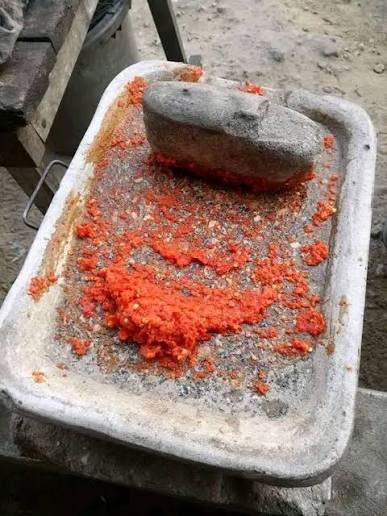
The thing that took my memory back to my early days in Nigeria was a shop selling granite and concrete grinding stones outside. I had not used one of those things since the 1980s. I was shocked that they were still being sold in a city with constant electricity.
My first thought was, these are stone-age cooking implements still being used likely by another child at home in an Africa where my son was also able to build online games for the world. Then I remembered that I still had a small manual stone grinding mortar at home that I used for some meals like Afang. It was more traditional than stone age.
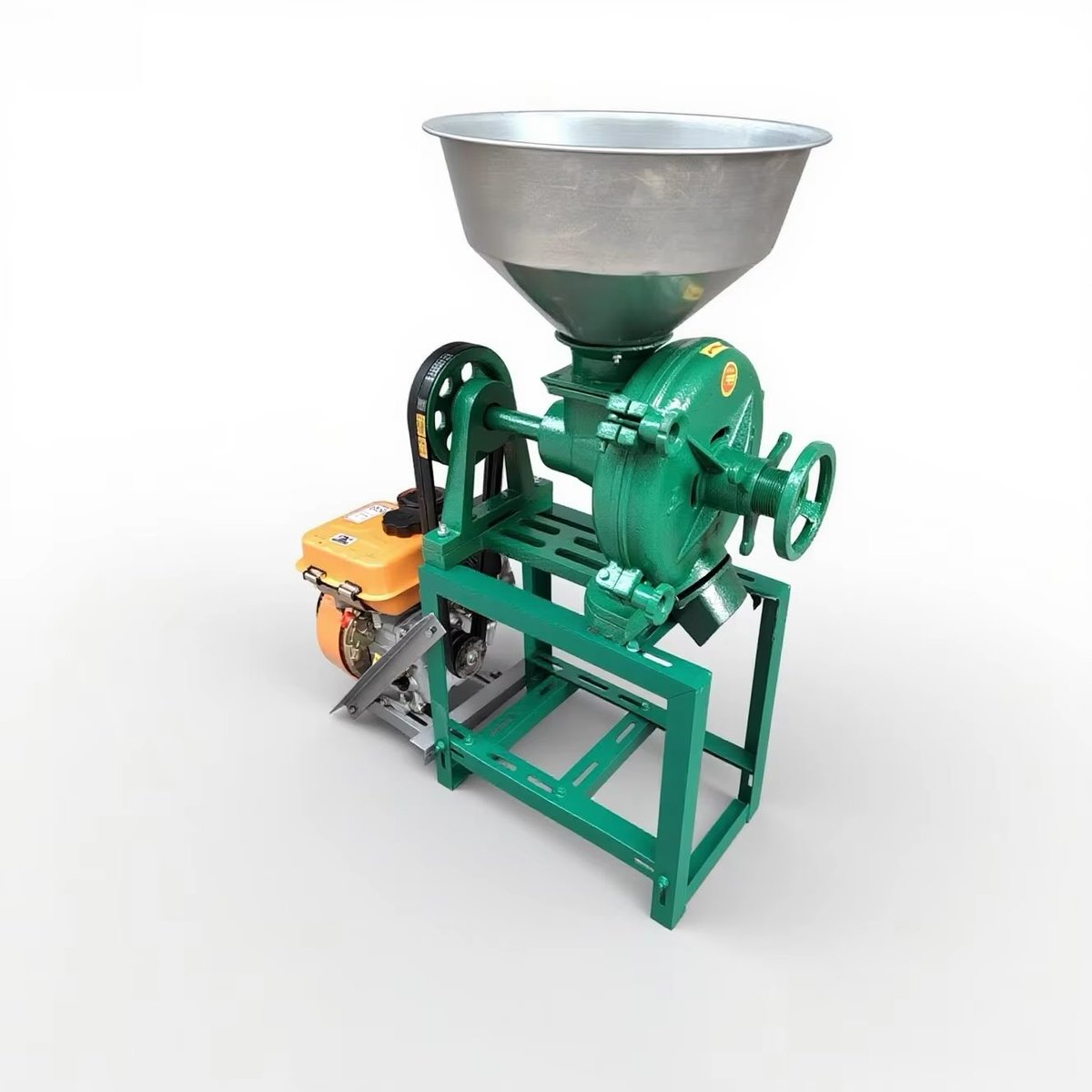
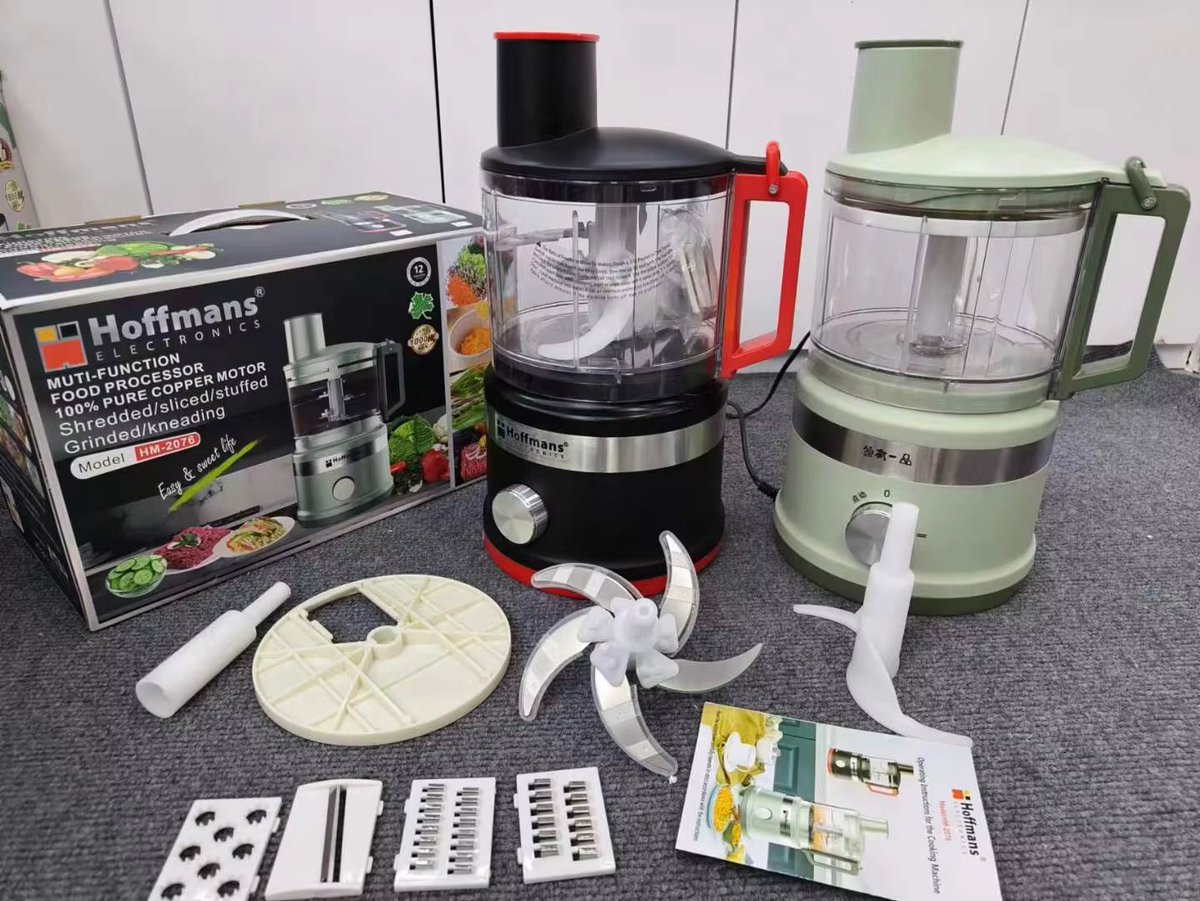
It still bothered me though. The people who likely bought and used these things didn't so so out of choice but necessity. As I moved further, I saw bigger grinding mills that were engine-driven being sold. They were still crude and a far cry from my electric Ninja blender at home. The good thing was that they were locally engineered and manufactured. We at least moved forward a bit.
The crazy thing is that while the electric blender is now very cheap at China Mall in Lome, these crude local grinding and food processing machines are more widely used because of the sheer demand for food and their durability. It took me into another rabbit hole again on what we need to build for the market.
While my son was using an app called Blender at home to make animations and games, another kid who didn't have access to a blender would be using a grinding stone and both are still living in the same city. I started wondering how both could share experiences and context? Then it occurred to me that I was the bridge. I had experienced both worlds.
I have used the grinding stone to cook and I helped build tech companies that have raised millions of dollars. I can help my son and also help the boy whose parents can only afford a grinding stone. I think I am now changing churches again and will be going with my kids to the my cleaner/cathechist’s church.
I also need my kids to experience what life is like in most of Africa and not get lost into a virtual existence while being unaware of the reality all around them.
Africa will grow and move forward but it will not do so until then grinding stone becomes largely replaced by the electric blender and then every kid has the opportunity to be able to build online with software tools like Blender.
We bought a land.
We paid in full.
We have all documents.
We are building 4 simple rooms on the land.
The Baale of the area sends his boys to stop the work and ask my husband to come and see him.
He demands 20million Naira.
My husband has taken everyone he knows to go and beg him, he declined.
He finally insists on 10million.
The wood and cement we bought, we had to quickly carry them away to safety.
This is past 2am, my husband is sitting outside and deeply sad. He hasn't slept a wink.
A fellow man, who the Heavens gave leadership chooses to use his role to weaponize the people.
Just a mean land grabber, who takes people's lands or makes them pay huge amounts to him before they can build.
We have offered to pay 2.5m, he refused.
We have offered 5m, he refused.
A man whom we owe nothing.
A man whom we did nothing to.
A man whom kingship was given to protect the people.
I havent seen my husband break down like this in a long time.
He is so sad.
His blood pressure is off the roof.
I watched him drop tears like a baby. The pain cuts soooo deep.
This is what a man does to another.
Dear Lord, you say the heart of a king is in your hands and you can do with it what you wish, please dont let this king take my husband's life with such brutality.
I know we are helpless and we cannot fight him.
But you say you are the God who fights for those without chariots. Please show mercy from above.
The cost of building the 4 small rooms is less than what he is even demanding.
Two people's land before us, he has grabbed fully.
They say if you beg him harder, he grabs it completely and takes away the option to pay the 10million.
Dear Lord, show up.
Show up.
Show up for me please.
Don't let an earthly king consume my husband like this.
Please show up!
#chiomaifeanyieze
My dad once told me that when he moved to Lagos in 1988, the first house he rented at 101 Powerline Orile-Agege was owned by a man named Mr. Ajakaye.
Instead of giving him a fixed rent, the landlord simply asked, “How much do you have?” my dad was shocked.
It didn’t stop there. Anytime my dad had a new child, this man would waive the rent for that month and the next two months. In fact, from the moment he heard my dad was planning to move into his own house in 1996, he stopped collecting rent entirely.
I often wonder if that kindness is what shaped my dad’s own generosity. He ran his house like a form of charity while he was alive and I’ve continued that legacy. For almost 8 years now, I haven’t increased the rent for the tenants in his house, despite how much things have changed.
The internet is a big place, but I just want to say thank you to that man Mr. Ajakaye. He was truly special, and I hope this message somehow reaches his children.
Yes!!! I used to be an Uber driver.
At that time, life was seriously tossing me up and down. I didn’t even know what else to do again. After thinking about it for a while, I called a few friends and told them I wanted to start e-hailing business, and that the problem was that I didn’t have enough money to buy a car.
Those guys surprised me. They contributed some money for me, and I withdrew the last kobo in my account and bought a Nigerian used 2004 Corolla.
I did the work diligently and professionally, but the car was always embarrassing me. Sometimes I'd just be praying it behaves itself in front of passengers.
So one day, I picked up a man from the airport. I was neatly dressed as usual and everything was going smoothly. Less than 10 minutes into the ride, the gear suddenly refused to select. My heart just sank. I had to pull over immediately and politely explained the situation to the man. I told him to kindly book another ride and that he shouldn’t bother paying me for the ongoing trip.
The man then asked me “will Uber charge you for this ride?” I said yes.
He asked for my account number and sent me more than five times his fare. I was shocked 😲😳.
He collected my number, ordered another ride and left. I thought that was the end of it, but no it wasn't.
The next day by exactly 5:30pm, he called me and gave me a location, asking me to come immediately. When I got there, he simply introduced me to his friend Chief Emeka Nnabuife of blessed memory and told him “fix this young man up.”
I didn’t even spend up to 15 minutes there. But my life changed that night. Till today, I've not stopped praying for the soul of Chief Emeka Nnabuife to continue to rest in peace.
Have you been helped by a total stranger before? I'd be glad to hear your story too.
🇳🇬 As a soldier who has buried too many brothers, let me tell you this:
You're absolutely right. I've seen bandits who can recite Surah Al-Fatiha better than some imams and still slit a man's throat for ₦5,000. I've seen them fast in Ramadan and feast on ransom money at iftar. Don't confuse ritual with righteousness.
They don't care about your prayers. They don't care about your tears. They care about money, power, and the terror they spread. Some masquerade as "repentant" only to return to the bush with more weapons.
I've knelt beside dying soldiers who whispered Shahada with their last breath. And I've watched the men who killed them celebrate with stolen cattle.
This isn't a religious war. It's a war against evil dressed in rags. And the only language they understand is what we speak through the barrel of a gun.
Pray if you want. But keep your rifle close. Because when they come, they're not counting your beads they're counting your bullets.
“My dad gave me this advice a long time ago when I moved into my first apartment. He even came out and changed the screws for me as soon as I moved in. Someone else recently posted about it and I thought I would share!
A good home security tip that you may have never thought about.... Most contractors install the plates with the supplied screws which are only a half inch long and come out with one kick by a burglar. He installed 4 inch screws in their place that go through the door frame and into the framing of the house. They can kick for a long time before they get tired! You can see in the picture the screw in his hand is the screw supplied with the door hardware. Making a burglar make a bunch of noise and be foiled in their initial plan can not only give you time to arm yourself but they will most likely move on to an easier target.”
~Nino Razmadze
The safest way to travel is by plane. Do you know why?
Because they crash.
A few months ago, I learned a concept called Black Box Thinking which is a system that defines how entire industries respond to failure.
In aviation, when a plane crashes, they don't just look for who to blame.
They find a device called a Black Box, retrieve the data, and then ask what went wrong with the system.
And there is a reason for this.
To explain this, there is a famous story of a crash involving an Asian airline years ago.
When investigators listened to the recording from the black box, they found the engine didn't just fail on its own, the junior pilot actually noticed a mistake.
But because of a cultural hierarchy in Asia that demanded absolute respect for elders, he didn't question his senior pilot.
Instead, he hinted and spoke softly and the plane crashed.
That tragedy changed aviation safety forever.
It moved the focus from "Who made the mistake?" to "Why did the system allow this mistake?"
As we stand on the 29th of December, looking back at 2025, I want you to adopt this strategy of Black Box Thinking.
Most of us look at our failures this year and feel shame.
We hide the crash, and blame the economy, government, or something that does not exist.
But Black Box thinking demands a harder question: "How did I contribute to this problem?"
Did I stay silent when I should have spoken up?
Did I rely on motivation instead of a system?
Did I ignore the data because of my ego?
Don't bury your failures of 2025.
Open the box and analyze it.
Because that is the only way to fly safer in 2026.
This tax matter again?
I didn’t expect anyone sensible to tweet like this sincerely, all cos they support a particular government.
But for your own good, I will school you @OgbeniAdugbo
I paid 250k as tax monthly in Nigeria but NEVER for once got any benefit for that tax, NOT ONCE SINGLE BENEFIT.
Infact the local government will always go to my wife’s pharmacy to harass her for taxes again.
Instead, I provided my water & light, rode on horrible roads that made me change shocks every year or there about, I queued to get fuel I would pay for every other month, etc.
However, My first job in the same Canada you highlighted, I paid almost $1,000 as tax monthly. But guess what…
— the government gives my 2 kids $1,100 monthly for just being kids (the more the kids, the more the money @ about $550 per child);
— I see the doctor for FREE each time & whenever I see the doctor
— my wife gets free antenatal care, scans and free hospital delivery when she gets pregnant
— the roads are so good, I may not have to change my tyres in 7 years, not the shocks or get damaged by roads
— if you lose your job, you get paid $2,500 monthly for being jobless pending you get another job
These are just a few among many others.
So never ever in your life compare the tax & the benefits of other good countries with that of Nigeria, Never.
This is a subject that should never even come up for discussion ever again.
And until Nigeria gets it right in leadership, taxes will continue to be paid by Nigerians & the corporations, & stolen by people in power.
Selah
Nigerians often view everything as a form of competition, which is why they rarely innovate with original ideas and build build large companies. You need to be “one of one” to be massive.
One big reason MTN succeeded wildly in Nigeria and Opay is also doing so is because they were not chasing others. They chased the market and kept coming up with innovative products.
The few startups like @piggyvest and @investbamboo who have followed this formula have also grown quite rapidly within their niches.
Someone said PayPal is coming to compete with Opay, nah! PayPal was always in competition with cash and regulations. The FX regulations have eased up and that is why they are returning. They have never chased others but the market. That is why they became massive.
Their risk aversion may have hurt us in Nigeria in the past and it may still do so again, there is, however, no denial that they have a phenomenal product and they are ridiculously simple to use. They got remittance licenses in all 50 US states before anyone knew that remittances were a thing. I respect them a lot. Now, they want to become a bank.
Don't think of competing with PayPal, think of doing better for the market, and you will be rewarded like Opay and MTN.
Let me explain in plain English why every Nigerian industry and Government must start funding university researches.
Imagine your company wants innovation.
You hire 4 researchers.
You pay ₦1 million per month each.
That’s ₦4 million monthly
₦48 million yearly
For 4 brains.
Now pause.
With just ₦20–30 million as a research grant, you could engage:
• 20 PhDs
• 50 MSc students
• Multiple professors
• Labs + peer review
• Global validation
Inside a university.
More brains.
More ideas.
Less cost.
Better results.
This is why industries fund universities abroad.
Tesla doesn’t do all research alone.
Apple doesn’t.
Shell doesn’t.
Pfizer doesn’t.
They pay universities to think.
Universities produce:
• Patents
• Prototypes
• Breakthroughs
• Spin-off companies
Industries take the IP.
They scale it.
They make billions.
Everyone wins.
So why do foreign governments fund university research?
Because research = economic weapon.
The US funds universities →
Patents →
Companies →
Exports →
Global dominance.
China funds universities →
Factories →
Technology transfer →
World market control.
Germany funds universities →
Engineering breakthroughs →
Industrial supremacy.
Now compare Nigeria.
Our universities are idle.
Lecturers are broke.
Labs are empty.
Students are underused which pushed the to join cults.
Yet industries are crying:
“innovation no dey”
“foreign tech is expensive”
“we can’t compete globally”
How will you compete when you don’t invest in thinking?
We turned universities into glorified secondary schools.
No serious grants.
No serious research.
No serious industry collaboration.
This must change.
If Nigerian industries redirect even 10% of HR & R&D budgets to university research:
• Universities get busy
• Students become inventors
• Lecturers become innovators
• Industries get cheaper innovation
• Nigeria gets patents
• Nigeria gets relevance
This is not charity.
It’s smart capitalism.
No serious country develops without industry-driven university research.
Until Nigerian industries wake up,
we will keep importing ideas
and exporting our talents and future.