Our work on base editing for correction of pathogenic variants causing #ADPKD is now published at @MolTherapy
https://t.co/sRWn2hzwt9
Since the pre-print, we added some new interesting findings. Brief thread (1/3)👇
🚨 Our new paper just dropped !!! Proteomic risk score for early prediction of kidney disease progression in individuals with APOL1 high-risk genotypes https://t.co/4WCXVKst5S
🚨 Kidney + AI milestone 🚨
Never been more excited to share!!!
We built Nephrobase Cell+, the first multispecies, multimodal kidney foundation model:
Trained on ~40M cells
Across 4 species (human, mouse, rat, pig)
From 5 modalities (scRNA, snRNA, snATAC, CosMx, Xenium)
Kidney biology finally has its own GPT moment.👇
It started by chance: in our all-women lab, only urine from 2 pregnant colleagues grew renal progenitors. Why? After 10 yrs, the answer is now in Science. Grateful to our brilliant first author @CarolinaConte5 from @UNI_FIRENZE who led the way! 👏 https://t.co/P2ATMuUCa6
Many thanks to our first authors Antonia Ibel & Rishi Bhardwaj @rishipu89, and the entire team. Joint effort with Sorin Fedeles @YaleMed and Matteus Krappitz @CUAnschutz
Our work on base editing for correction of pathogenic variants causing #ADPKD is now published at @MolTherapy
https://t.co/sRWn2hzwt9
Since the pre-print, we added some new interesting findings. Brief thread (1/3)👇
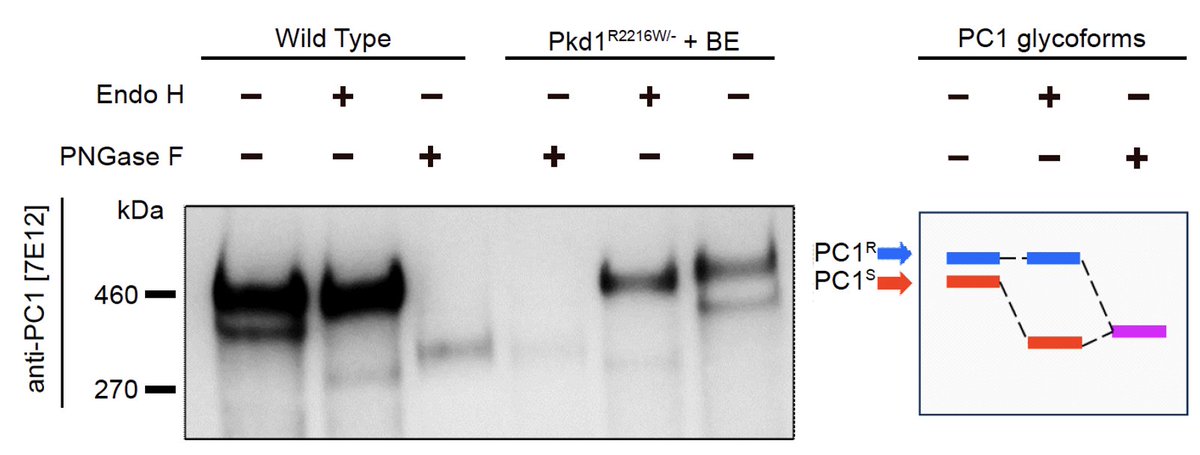
Deglycosylation analysis of PC1 showed similar fractions of mature (>90%, Endo H-resistant) and immature (Endo H-sensitive) glycoforms in treated vs. control cells, indicating rescue of the mature isoform by base editing. (3/3)
@ChariteBerlin Base editing corrected the R2216W variant in primary cells, restoring polycystin-1 and reducing ER stress. In vivo correction reduced liver cysts, highlighting the potential of ADPKD reversibility & addressing extrarenal complications unmet by #Tolvaptan. (3/3)
Happy to share our new preprint on in vivo #CRISPR base editing in #ADPKD. Joint effort with Rishi Bhardwaj & Sorin Fedeles @YaleMed and Matteus Krappitz @CUAnschutz. Brief thread 👇 (1/3)
https://t.co/xKgKJWyizV
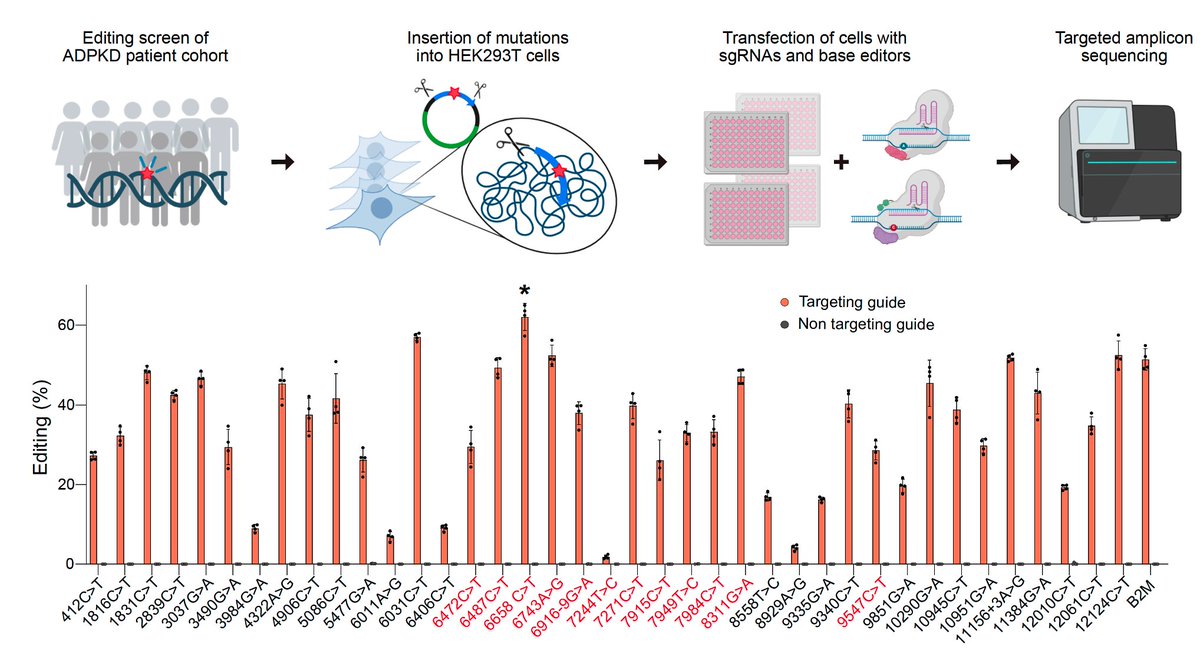
#ADPKD, the most common genetic kidney disorder, affects 10M+ peopleworldwide. Using #CRISPR base editing, we corrected pathogenic PKD1 variants from a @ChariteBerlin patient cohort with high efficiency in vitro. (2/3)
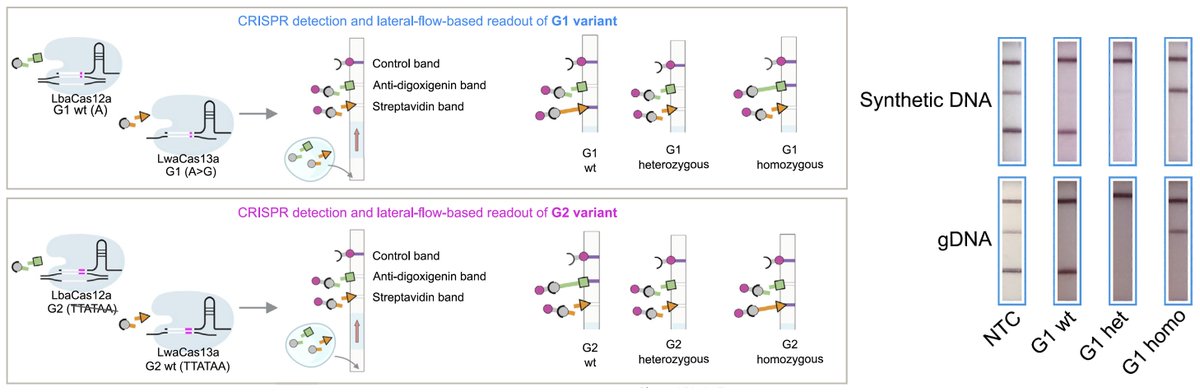
Excited to share our new @EmboMolMed paper on #CRISPR diagnostics for multiplexed point-of-care genotyping of #APOL1 variants. Many thanks to our collaborator @LVRiella@MGH. Brief thread 👇(1/5)
https://t.co/WuyfPWXE4K
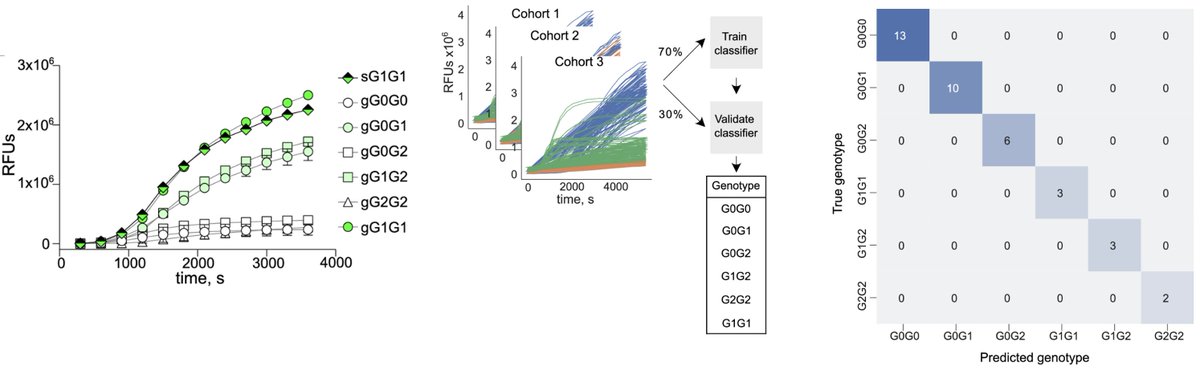
Genotyping based on fluorescence readouts is reproducible at different clinicalcenters through normalization to a synthetic standard and a machine-learning-based analysis (4/5).