Most Spring Boot tutorials skip JPA Specifications not sure why, but it's quite useful.
It helped me to solve one of my messiest real-world problems.
I had a property search API. Users could filter by city, price range, status, category, rating, date, and availability — 7 filters, all optional.
The problem? Any combination could arrive. A user might send all 7. Or just 1. Or none. This I have seen in filters of https://t.co/cur79gfGwA and https://t.co/lVYtZNJpLO
Without Specifications, you essentially write a different query for every possible combination. That's potentially 128 different query paths in your brain — and your codebase.
JPA Specifications flip this completely. Instead of thinking in full queries, you think in small, independent conditions — "filter by city IF city is present" or "filter by price IF price is present" and they snap together automatically at runtime.
Only city came in? One block. City + price + status? Three blocks. Nothing came in? No blocks, return everything.
Your code stays the same regardless. The query builds itself.
This is exactly the kind of thing that doesn't show up in "Build a CRUD app in 30 minutes" videos — but the moment you work on any real search feature, you need it.
Less code. Zero query explosion. And it actually scales when filters grow from 7 to 15.
https://t.co/PT6uiCJlQN
here's the BEST mobile app stack
frontend:
> expo. build and deploy react native apps easily.
> nativewind. tailwind css but for react native
> react native reanimated. smooth lightweight animations
> lottiefiles. micro-interactions and visual polish
backend:
> supabase. database, auth, storage, edge functions, realtime. everything in one place
> resend. transactional and marketing emails
> openai. plug in ai features fast
marketing:
> apple search ads. easiest paid channel to start with
> sanity. cms for blog content
> pallyy. social scheduling
> screen studio. clean screen recordings of your computer and phone
> x, instagram, tiktok. organic content is still the best free growth channel
development:
> claude code. main dev tool. worth every penny
> figma. branding and visual design
> willow voice. speech-to-text on mac to prompt ai faster
> vercel + next.js for building your landing page
payments:
> revenuecat. app store subscriptions and paywalls handled
analytics:
> posthog. best analytics tool
> singular. ad attribution tracking
> apptweak. app store optimization. seo but for the app store
> sentry. error tracking
what did i miss?
here's how to actually make money from building startups
(and what most people get wrong)
1\ stop selling your tool. sell the time it saves.
"i'll automate your lead gen" = ignored.
"your team wastes 15 hrs/week on this. i can cut it to 2" = conversion.
same exact product. completely different response.
2\ show them the math. don't be vague.
"your admin spends 20 hrs/week at $25/hr = $2,000/month. my service is $500/month."
that's a conversation a business owner will actually have with you. no convincing needed.
3\ stop pitching solopreneurs.
they will always say "i can do that myself." every single time.
target businesses with 10-50 employees. they have the problems and the budget.
4\ warm leads destroy cold lists.
go to your competitors' social media. look at who's commenting and engaging. those people already care about your space.
way better than buying some random list and blasting 1000 emails no one reads.
5\ manual outreach works better than automation right now.
everyone automated everything. inboxes are full of junk now.
one founder stopped the mass outreach. started checking forums one by one. reading comments. finding people with real problems.
it's slow. it's annoying. but when he messaged someone, they actually replied. because they could tell a real person wrote it.
trust is the only thing small builders have. don't throw it away on spam.
6\ build boring b2b. not cool b2c.
one guy built a fitness app. couldn't get people to pay $9.99/month.
then he built an ugly inventory tool for a warehouse. looked like windows 95. owner paid $500/month without blinking. because it saved $2,000/month in lost stock.
businesses spend money to make money. consumers hate paying for anything.
7\ you can literally call your b2b customers.
find 50 plumbing companies on google maps. email them. call them.
now try calling users for your "ai dating coach." you can't.
that's the difference.
8\ you only need 80 customers.
find a business using excel to manage something complex. build a saas that replaces that spreadsheet. charge $100/month.
80 customers = six figures.
most people are building for millions of users when they just need 80 who actually pay.
stop overcomplicating it.
The first $100K/month solo founder with zero employees is coming.
Not next year. Soon.
Here's what this means:
• No payroll, just API costs
• No management, just monitoring
• No hiring delays, instant scaling
• No office politics, pure execution
Entire businesses running on autopilot.
The one-person empire isn't a dream anymore.
the FASTEST way to make $10k/month right now is with B2C apps
here's the exact playbook top earners are using:
1/ find a proven niche (don't innovate)
look for apps with:
- 100k+ downloads
- 3.1-3.9 star ratings (room to improve)
- charging $5-50/month
- simple core functionality
habit trackers, journaling apps, photo editors, productivity tools.
boring niches = predictable money.
2/ reverse engineer the winner
> download the top 3 competitors.
> screenshot every screen.
> document their onboarding flow.
> note their pricing strategy.
> understand what hooks users.
you're stealing and you're learning what already works.
3/ find the gaps through complaints
> read their 1-2 star reviews religiously.
> copy paste common complaints into a doc.
> "too expensive" = opportunity for better pricing
> "confusing UI" = opportunity for simplicity
> "missing X feature" = your differentiator
20 negative reviews will tell you exactly what to build.
4/ build the simplest MVP possible
> copy competitor's core features only + their onboarding (IMPORTANT)
> paywall INSTANTLY
> add 2-3 thing users complained about
> use Rork to vibe code the entire thing
> basic UI is fine, functionality matters more
2-3 weeks max. if it takes longer, you're overbuilding.
launch on the App Store ONLY.
$99 Apple is your total investment.
5/ social stalking
> follow your competitors on tiktok/instagram.
> like all their content (algorithm will show you similar)
> save their top performing posts.
> screenshot their ad creatives.
> note which influencers they work with.
their marketing playbook = your starting point.
6/ algorithm training before launch
spend 2-3 days prepping your account:
- 15 minutes daily scrolling your niche
- like every competitor video you see
- save posts similar to what you'll create
- watch complete videos (don't skip)
the algorithm learns what you care about.
feed it your niche = it feeds you customers.
liking competitor videos = tiktok/instagram shows you:
- what's trending in your space
- which sounds are working
- what hooks get views
- your exact target audience
by launch day, your fyp page should be 90% your niche.
that's when you know the algorithm understands your market.
7/ copy what converts
> start off with slideshows
> take competitor's top performing ones.
> extract the text for each slide.
> use grok to generate realistic images for your own posts
> copy ALL slides and add the 2-3 features your competitors DON'T have at the start
> same hook, same music, different app.
if it got them 1M views, it'll work for you too.
8/ scale with micro influencers
once you hit $5k/month:
> find creators with 10k-100k followers
> offer $200-300 per post depending on their performance
> give them your proven scripts from competitors
> let them create in their style
1 influencer post = 1000 organic posts.
real example i watched happen:
> guy copied a meditation app.
> added one feature users begged for (offline mode).
> copied viral tiktok slideshows with AI.
> hit $12k/month in 60 days.
> total investment: $500.
the truth:
innovation is overrated in B2C.
execution on proven concepts wins.
find what works.
make it 10% better.
market it 10x harder.
that's the entire game.
stop building unique apps nobody wants.
start building better versions of apps people already pay for.
$10k/month is 2,000 users at $5/month.
that's one viral tiktok away.
what are you waiting for?
As a backend engineer.
Please learn:
- DB
- System Design
- Algorithms
- API design
- API Security
- CI/CD
- DS
- Docker/ Kubernetes
- Caching
- Messaging
Stop jumping from one language to the other
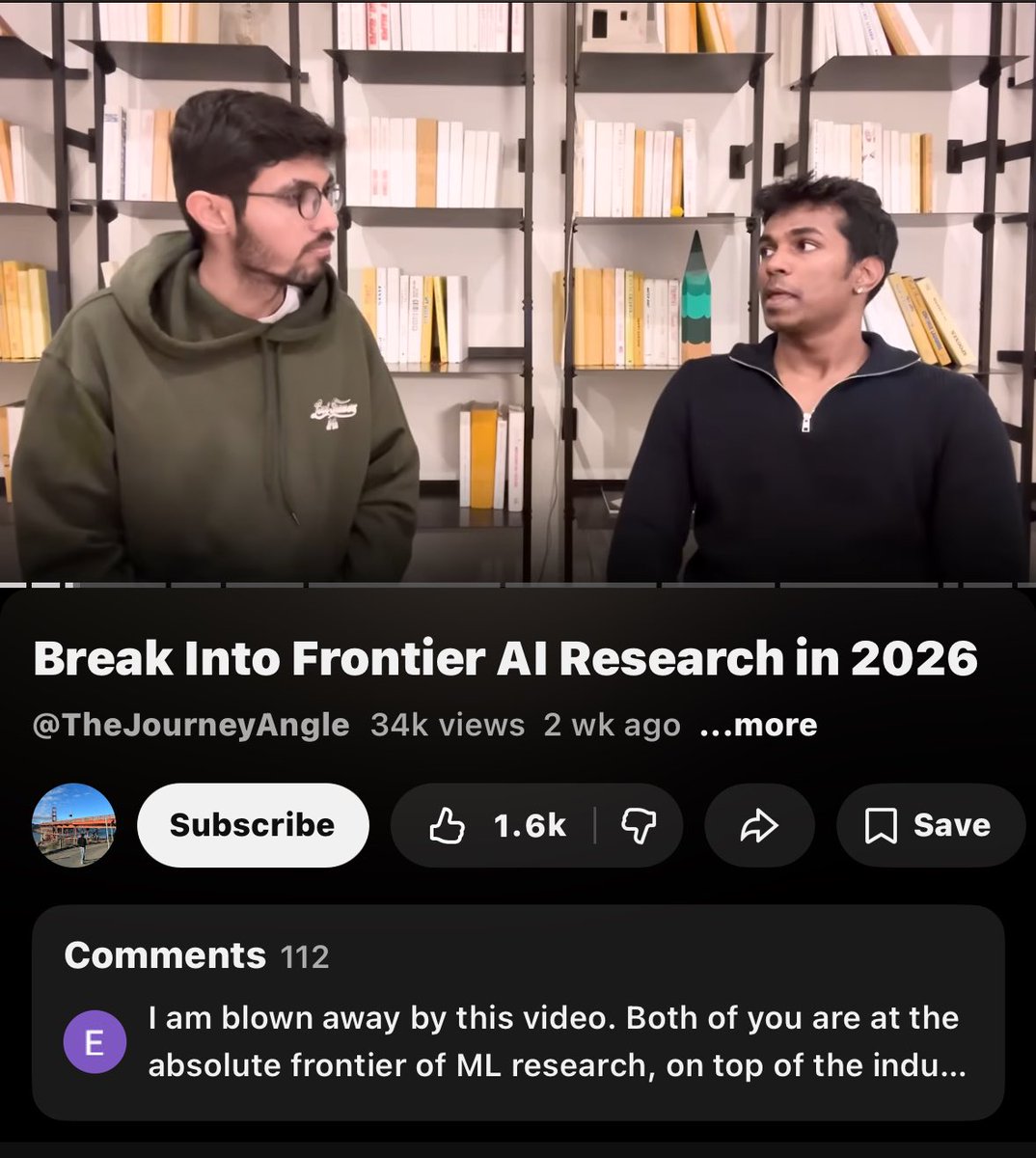
he’s a research engineer from the Google Gemini team and he explained practically everything to know about breaking into frontier AI research in 2026 in just 40 minutes. here are the main points:
> how to get started?
take courses on ML and DL. could be uni or online. learn undergrad level math. no need to master all at once, you’ll keep visiting them. then switch to reading papers. this helps you build a “mental map” of the field.
> how to read papers efficiently:
it’s a skill you get better at as you read more papers. start with the abstract, then jump to the main section.
> how do you find related papers when researching about something?
read a well cited paper on the topic, then go to its citations to go back in time, or find papers that cite it to go forward in time.
> how to jump from reading to starting your own research?
find a related paper that has public code. download the code and the dataset and play with it a little. try new parameters, benchmarks, etc.
it’s not about implementing papers from scratch, but building on the work of other authors.
> how much math do you actually need?
you need math but not all at once and not all of math. if you’re a theoretical researcher you must know advanced math. empirical researchers mostly need math to understand.
> reach out to more senior phd students, professors, or authors of related papers to seek guidance/mentorship or if you can contribute to any of their projects.
> finding research roles is a lot about recommendations more than other roles.
> industry job without PhD?
AI residency is a great intermediate for this. you can get hands-on experience and get your career started.
Working on your side project (your future start-up) daily, along with working on the DSA skills, then office works should be completed too,
Then at the end of day many thoughts come in your mind like starting a youtube channel, or now is the best time to dive in MBA. through all the noise in media outlets and colleagues, now a days it's very hard to ignore, specially by the grace of Social Media
Then my day dies down, and I sleep
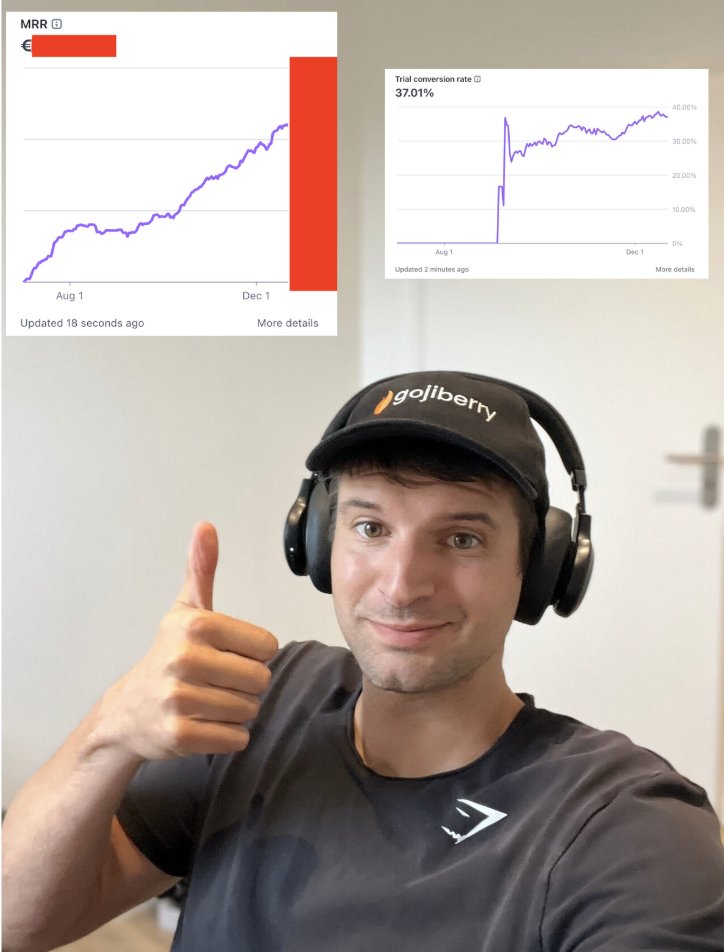
This is how you can reach $20k MRR fast.
No hacks. Just aggressive distribution, every single day.
- Reddit: 3 posts per week in SaaS subreddits.
Cost : $0
- LinkedIn outbound on multiple accounts. Reach only people showing buying intent. 600 invitations per week.
Cost : 99$/month with https://t.co/5nFyO2J42O
- Cold email : 3000 emails per day. You will need 30 domains.
Cost : 400$ (use instantly)
- LinkedIn inbound with daily posts. Go viral, push a lead magnet, start conversations. Post 7x per week.
Cost : $0
- YouTube for long tail keywords. Tutorials and comparisons that compound over time. Do 5 videos per week.
Cost : $0
- B2B influencers on LinkedIn : 2 post per month
Cost : $500
- Twitter/X: post daily, build in public.
Cost : $0
-Seo : one article per day with Outrank from @tibo_maker
Cost : $99
- Affiliate program : offer a lifetime revenue for affiliates
Growth does not come from one channel.
It comes from doing all of them consistently.
Total cost : $1099 per month on marketing.
What would you add ?
our YC f25 batch just wrapped demo day
5 companies that stood out to me
1. @tornyolsystems
a drone that hunts and kills mosquitoes
completely unhinged in the best way
@ClovisPiedallu@alextoussss
2. clad labs
ads inside the ide
earn free tokens while agents write code
@xkevin_le@zzzbuggg
3. @sorcejobs
tinder for jobs
swipe right to apply
@marvy_101, @davidalade, @therealdajayi
4. icarus
solar stratospheric drones that stay up for weeks
satellite power without satellite cost
@kingofstrato
5. @Selfin_app_
ai bank that manages your money for you
decisions, not dashboard
@paulaguti_12 @joeltp_
bonus: @bolna_dev
voice ai for india
built for india's scale, language diversity, and cost
@maitreya_wagh and @xan_ps
the batch is absurdly strong
either massive problems or ideas nobody else would touch
both matter
@ycombinator f25 isnt playing it safe
theyre building things that make you say wait, you can do that
congrats to all of f25, it was an honor to build alongside you
the real work starts now
@besartcopa@DominicMadori This is the first ever monster which is not harming but helping people create self-caring routine, you have your own monsters INC
Paul Graham (Y Combinator) gives the least sexy answer, and it’s the right one: start by making something small for someone specific.
Not a vision.
Not a startup.
Not a brand.
One real problem.
One real person.
One embarrassingly simple solution.
Then:
– build it fast
– show it early
– listen without defending
– fix the obvious pain
– repeat“Starting” isn’t a ceremony.
It’s the moment you stop asking how and pick what, even if it’s wrong.
Wrong direction beats no direction every time.
Best skills to have in 2026: AI & ML
If I have to pick ONLY THREE Courses to learn these from scratch,
❯ CS229 - ML
❯ CS230 - DL
❯ CS336 - LLM
These courses could easily cost $20K individually. But Stanford has made them available for FREE on YouTube: