🔥great news🔥
FDA approves lirafugratinib for previously treated, unresectable, locally advanced or metastatic cholangiocarcinoma
https://t.co/u4Mr4ijEcu
👉expanding options for patients with FGFR2 fusions!
@myESMO@ASCO@ILCAnews@EASLedu
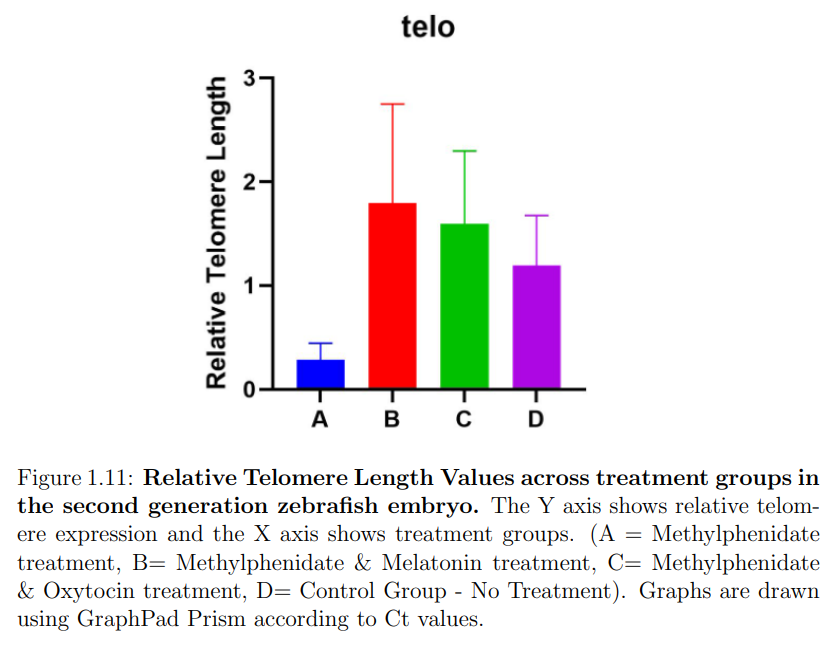
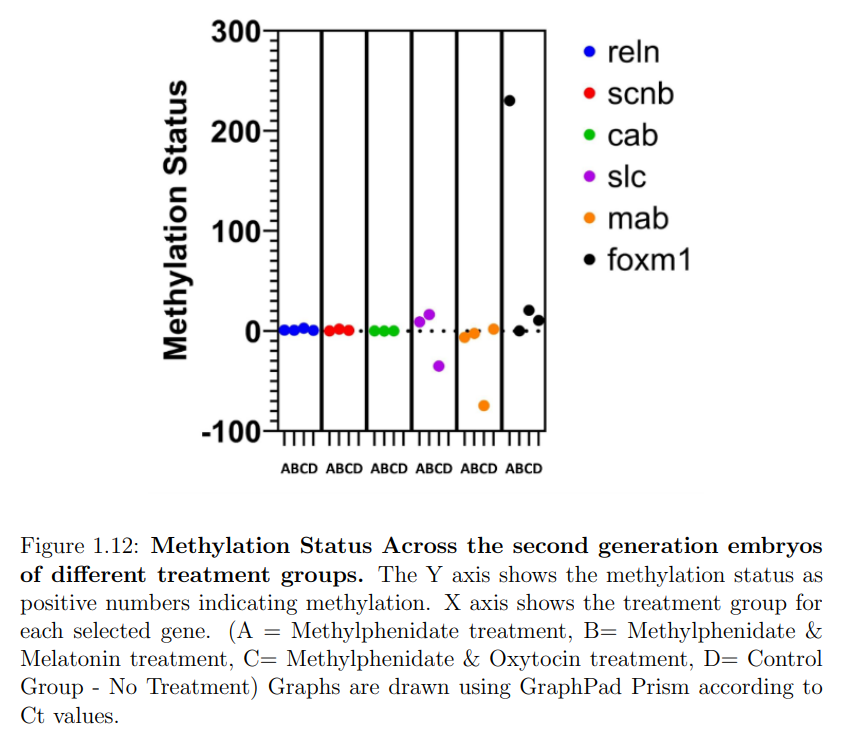
Los fármacos con metilfenidato usados para el TDAH podrían desregular el ritmo circadiano, causar neuroinflamación y dejar marcas epigenéticas que se transmitirían a los hijos, los cuales nacerían con telómeros más cortos, indicadores de envejecimiento celular.
Men with the most magnesium in their blood were 40 percent less likely to die from any cause, and half as likely to die from cancer, over 18 years. The data came from 4,035 middle-aged men in the Paris Prospective Study 2.
Researchers at INSERM and the Pasteur Institute of Lille measured magnesium, zinc, and copper in blood samples from men aged 30 to 60, then followed them for 18 years. During that time, 339 men died, 176 of them from cancer. The top quarter of men for each mineral was compared with the bottom quarter. Epidemiology published the study in 2006.
After adjusting for other risk factors, the top magnesium group had a 40 percent lower risk of dying from any cause and a 50 percent lower risk of dying from cancer. Their risk of heart-related death looked 40 percent lower too, but with only 56 such deaths, that result was too uncertain to count.
Men with the highest blood copper had a 50 percent higher risk of dying from any cause. Men with low zinc combined with high copper had 2.6 times the risk.
Magnesium was measured once, in a single blood sample, and blood holds only a tiny share of the body's magnesium. This observational study included men only, so it can't show that magnesium supplements lower cancer deaths. In these 4,035 men, those with the most magnesium in their blood were the least likely to die over 18 years. https://t.co/5IcbhkBddt
🚨 Can carboplatin work in HRR-mutated mCRPC?
Our prospective phase II CIPHER trial evaluated single-agent carboplatin in men with metastatic castration-resistant prostate cancer harboring germline or somatic HRR alterations.
📊 39 patients treated
• PSA50 response: 41.0%
• Median rPFS: 4.53 months
• ORR: 32.3% among radiographically assessable patients
• Median duration of response: 6.93 months
🧬 Response varied by genotype:
• BRCA2: PSA50 63%
• BRCA1: 33%
• ATM: 22%
• PALB2: 100% (2/2)
An interesting exploratory signal:
Germline HRR alterations had higher PSA50 responses than somatic alterations: 62.5% vs 26.1%.
Take-home: Carboplatin showed meaningful activity in molecularly selected HRR-altered mCRPC, particularly in BRCA-associated disease, and may offer a pragmatic option where access to PARP inhibitors is limited.
📄 CIPHER | ESMO Open 2026
@ESMO_Open@oncoalert@ASCO
#ProstateCancer #mCRPC #PrecisionOncology #CIPHER
DISTAL WEAKNESS IN DERMATOMYOSITIS — look beyond the usual proximal pattern
IIM classically presents with proximal muscle weakness.
But what if a patient has:
• Typical DM cutaneous manifestations
• Established proximal weakness
• Significant distal weakness
• Contractures
This is not automatically IBM.
Think of an anti-NXP2 dermatomyositis phenotype, particularly when distal weakness accompanies contractures, calcinosis, edema, muscle atrophy or dysphagia.
Why NXP2?
Anti-NXP2 DM can have more extensive muscle involvement than conventional DM.
Reported adult associations include:
• Distal arm weakness ~35%
• Distal leg weakness ~25%
• Dysphagia ~62%
• Subcutaneous edema ~36%
• Calcinosis ~30%
Contractures are an especially important clue in juvenile/young-onset disease, where severe myositis, muscle atrophy and calcinosis may coexist.
A practical approach
DM rash + proximal AND distal weakness + contractures
→ Define the exact weakness pattern
→ Look for calcinosis, edema, atrophy, neck weakness and dysphagia
→ CK/aldolase/LDH + MSA/MAA, including anti-NXP2
→ MRI: assess proximal + relevant distal compartments
→ EMG/NCS if neuropathy is a competing possibility
→ Targeted biopsy when phenotype and serology are discordant
If the course is unusually chronic, contractures are disproportionate, CK is unexpectedly low or treatment response is poor, reconsider inherited/structural myopathy and other neuromuscular mimics.
Clinical pearl
Distal weakness ≠ IBM.
In established dermatomyositis, proximal + distal weakness with contractures should trigger a careful search for the anti-NXP2 phenotype.
Phenotype first. Antibody in context.
#Dermatomyositis #Myositis #NXP2 #IIM #Rheumatology
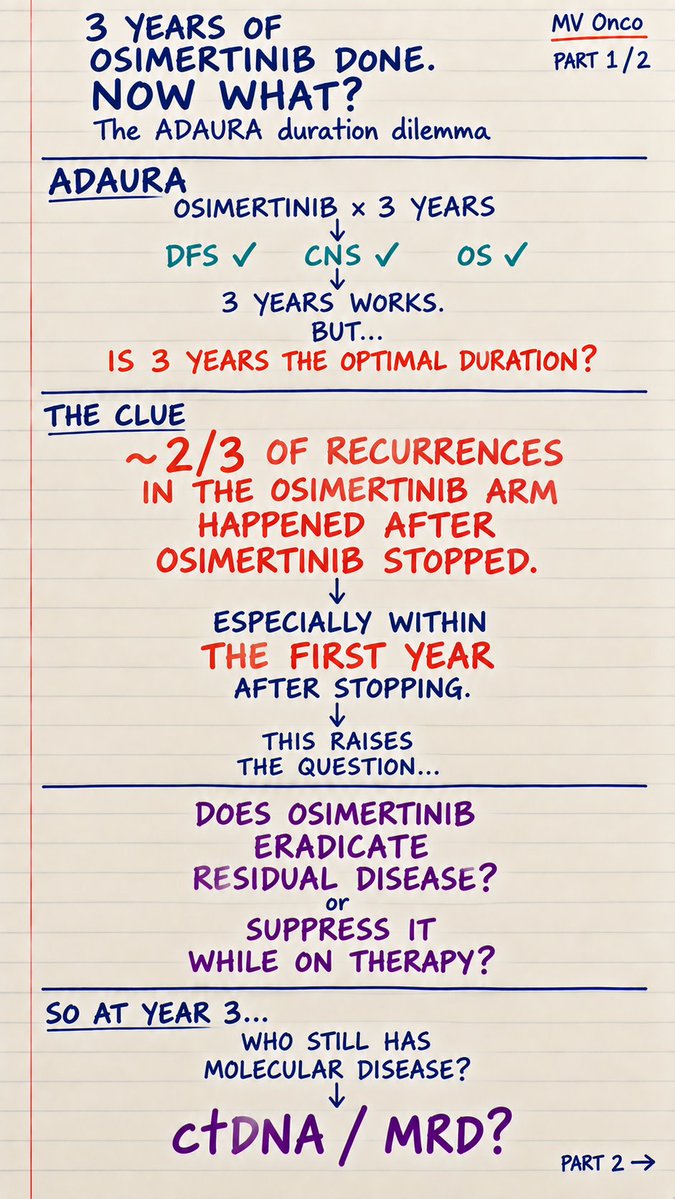
Beyond 3 Years of Adjuvant Osimertinib: Can ctDNA Guide Duration?
3 years works—but is it optimal for everyone?
Eradication or suppression? The ADAURA recurrence pattern raises the question.
Could ctDNA/MRD individualise duration? An intriguing strategy, but not yet standard of care.
Ref: Tsuboi M, et al. N Engl J Med. 2023;389:137–147.
#ADAURA #EGFR #Osimertinib #ctDNA #MRD #LungCancer #MVOnco
Europe's biggest cancer conference, ESMO, is coming soon!
The 'late-breaking abstracts' at the plenary are the biggest clinical trials to be presented - here are the details on all 12:
🆙 #ESMO26 Proffered Paper I: #LCSM Mets
🔥OptiTROP-Lung04: Final OS Analysis of Sacituzumab Tirumotecan (Sac-TMT) Versus Platinum-Based Chemotherapy in EGFR-Mutated NSCLC After Progression on EGFR-TKI
🎙️Dr. Li Zhang
🔢LBA67
☑️NCT05870319
🔗 https://t.co/uGHKJfjhvW
@OncoAlert@Larvol@myESMO@IASLC@EGFRResisters
The #FDA has approved Elevar Therapeutics’ #lirafugratinib for previously treated advanced cholangiocarcinoma with an FGFR2 fusion or rearrangement. REFOCUS showed a 46% response rate and 11.8-month median response duration in a single-arm trial.
#Cholangiocarcinoma#FGFR2
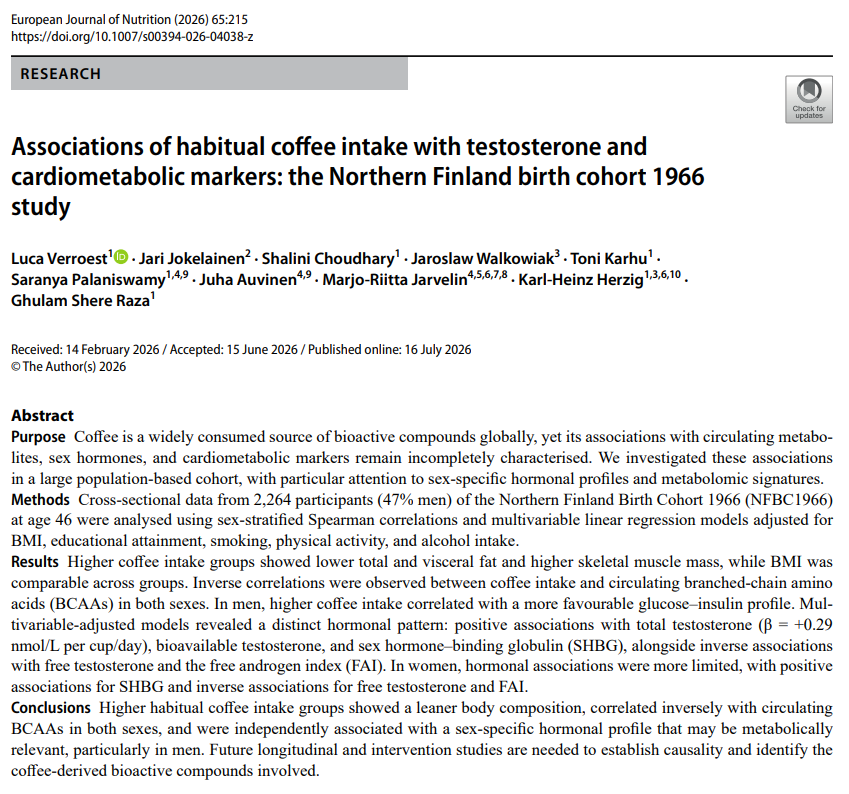
People who drank more coffee had less body fat, less visceral fat, and more lean mass than less-frequent or non-drinkers.
The biggest benefit was seen at 5 or more cups per day.
And for men, every extra cup per day was associated with a ~10 ng/dL higher total testosterone. Higher coffee intake was also associated with better glucose and insulin regulation in men.
This was an observational study, but mechanistic and experimental evidence actually supports coffee's benefits on metabolic and hormonal health. I'm willing to believe there's a real link here rather than draw a conclusion such as "coffee drinkers live healthier lives in general."






![MarlonVFZR's tweet photo. 🩸👣𝐍𝐞𝐮𝐫𝐨𝐩𝐚𝐭𝐢́𝐚 𝐩𝐞𝐫𝐢𝐟𝐞́𝐫𝐢𝐜𝐚 𝐝𝐢𝐚𝐛𝐞́𝐭𝐢𝐜𝐚 (𝐃𝐏𝐍)💊🔰
@bmj_latest
👇🏼👇🏼👇🏼👇🏼
📑🔗🔑🔓
https://t.co/89ht2mBRSA
⬇️⬇️⬇️⬇️
🧵👇
La DPN afecta hasta al 𝟓𝟎% de las personas con diabetes y puede causar:
🔹 pérdida sensitiva
🔹 alteración de la marcha
🔹 úlceras y amputación
🔹 dolor neuropático crónico
🔥 Hoy se reconoce que 𝐡𝐢𝐩𝐞𝐫𝐠𝐥𝐮𝐜𝐞𝐦𝐢𝐚 + 𝐨𝐛𝐞𝐬𝐢𝐝𝐚𝐝 + 𝐝𝐢𝐬𝐥𝐢𝐩𝐢𝐝𝐞𝐦𝐢𝐚 + 𝐫𝐞𝐬𝐢𝐬𝐭𝐞𝐧𝐜𝐢𝐚 𝐚 𝐢𝐧𝐬𝐮𝐥𝐢𝐧𝐚 participan en su desarrollo.
🧬 𝐄𝐥 𝐧𝐞𝐫𝐯𝐢𝐨 𝐟𝐚𝐥𝐥𝐚 𝐩𝐨𝐫 𝐮𝐧 𝐩𝐫𝐨𝐛𝐥𝐞𝐦𝐚 𝐛𝐢𝐨𝐞𝐧𝐞𝐫𝐠𝐞́𝐭𝐢𝐜𝐨 𝐲 𝐚𝐱𝐨𝐠𝐥𝐢𝐚𝐥
Mecanismos clave:
⚡ disfunción mitocondrial
🔥 estrés oxidativo
🧪 vía del poliol y hexosamina
🧬 AGEs/RAGE
🩸 lesión vascular
🧠 inflamación
🧱 disfunción de células de Schwann
Además, ↓ transporte de lactato Schwann→axón → ↓ ATP → degeneración nerviosa.
🔥 La DPN es una enfermedad 𝐦𝐞𝐭𝐚𝐛𝐨́𝐥𝐢𝐜𝐚 𝐝𝐞𝐥 𝐚𝐱𝐨́𝐧 𝐲 𝐬𝐮 𝐬𝐨𝐩𝐨𝐫𝐭𝐞 𝐠𝐥𝐢𝐚𝐥.
🔍 𝐃𝐢𝐚𝐠𝐧𝐨́𝐬𝐭𝐢𝐜𝐨: 𝐞𝐧 𝐥𝐚 𝐦𝐚𝐲𝐨𝐫𝐢́𝐚, 𝐥𝐚 𝐜𝐥𝐢́𝐧𝐢𝐜𝐚 𝐬𝐢𝐠𝐮𝐞 𝐬𝐢𝐞𝐧𝐝𝐨 𝐬𝐮𝐟𝐢𝐜𝐢𝐞𝐧𝐭𝐞
Patrón típico:
🧦 pérdida sensitiva distal simétrica
🔥 parestesias/dolor
📉 reflejos disminuidos
🦶 progresión longitud-dependiente
Evaluación:
✅ monofilamento 10 g → riesgo de úlcera
✅ vibración 128 Hz
✅ pinprick/temperatura
🚫 EMG y MRI 𝐧𝐨 𝐬𝐨𝐧 𝐫𝐮𝐭𝐢𝐧𝐚𝐫𝐢𝐨𝐬.
Úselos si hay:
⚠️ asimetría
⚠️ predominio motor
⚠️ curso agudo/subagudo
⚠️ patrón no longitud-dependiente.
💊 𝐃𝐨𝐥𝐨𝐫 𝐧𝐞𝐮𝐫𝐨𝐩𝐚́𝐭𝐢𝐜𝐨: 𝐯𝐚𝐫𝐢𝐚𝐬 𝐜𝐥𝐚𝐬𝐞𝐬 𝐟𝐮𝐧𝐜𝐢𝐨𝐧𝐚𝐧, 𝐧𝐢𝐧𝐠𝐮𝐧𝐚 𝐝𝐨𝐦𝐢𝐧𝐚 𝐜𝐥𝐚𝐫𝐚𝐦𝐞𝐧𝐭𝐞
Primera línea:
✅ tricíclicos
✅ SNRI
✅ gabapentinoides
✅ bloqueadores de canales de sodio
📌 OPTION-DM mostró eficacia similar entre amitriptilina, duloxetina y pregabalina.
Si respuesta parcial:
➡️ 𝐜𝐨𝐦𝐛𝐢𝐧𝐚𝐫 𝐜𝐥𝐚𝐬𝐞𝐬 puede mejorar el control.
También:
🧴 capsaicina
🩹 lidocaína
🧠 terapia cognitivo-conductual
🚫 Evitar opioides crónicos, incluidos tramadol y tapentadol.
🎯 𝐄𝐥 𝐠𝐫𝐚𝐧 𝐩𝐫𝐨𝐛𝐥𝐞𝐦𝐚: 𝐬𝐞𝐠𝐮𝐢𝐦𝐨𝐬 𝐬𝐢𝐧 𝐮𝐧𝐚 𝐭𝐞𝐫𝐚𝐩𝐢𝐚 𝐫𝐞𝐚𝐥𝐦𝐞𝐧𝐭𝐞 𝐦𝐨𝐝𝐢𝐟𝐢𝐜𝐚𝐝𝐨𝐫𝐚 𝐝𝐞 𝐞𝐧𝐟𝐞𝐫𝐦𝐞𝐝𝐚𝐝
Hoy, la estrategia es:
📉 optimizar glucemia
⚖️ reducir peso
🏃 ejercicio
🩺 controlar presión arterial
🧪 tratar dislipidemia
El control glucémico previene DPN mucho mejor en 𝐃𝐌𝟏 que en 𝐃𝐌𝟐.
📌 ADA 2026 recomienda tamizaje:
✅ al diagnóstico de DM2
✅ a los 5 años de DM1
✅ luego anualmente
🔥 𝐌𝐞𝐧𝐬𝐚𝐣𝐞 𝐟𝐢𝐧𝐚𝐥: la neuropatía diabética no debe verse como una simple complicación de HbA1c elevada, sino como una enfermedad metabólica compleja donde importan 𝐠𝐥𝐮𝐜𝐨𝐬𝐚, 𝐥𝐢́𝐩𝐢𝐝𝐨𝐬, 𝐨𝐛𝐞𝐬𝐢𝐝𝐚𝐝, 𝐫𝐞𝐬𝐢𝐬𝐭𝐞𝐧𝐜𝐢𝐚 𝐚 𝐢𝐧𝐬𝐮𝐥𝐢𝐧𝐚 𝐲 𝐬𝐚𝐥𝐮𝐝 𝐚𝐱𝐨𝐧𝐚𝐥.
📌𝙂𝙪𝙖𝙧𝙙𝙖 𝙥𝙖𝙧𝙖 𝙩𝙪 𝙥𝙧𝙤́𝙭𝙞𝙢𝙖 𝙜𝙪𝙖𝙧𝙙𝙞𝙖❤️
📚📖 Más en 𝕏 @MarlonVFZR y en el blog 👉 [https://t.co/xVyL5KWy9l]
‼️Si te sirve: ❤️ Me gusta | 🔁 Repost | ➕ Follow para más👇🏼👇🏼👇🏼👇🏼
📚📖#ClubCrit👨🏻⚕️👨🏻🏫🧠🫶
#DiabeticNeuropathy #DPN
#FOAMed #FOAMcc #CriticalCare #CriticalCare #CuidadoCritico #MedTwitter #MedX #IntensiveCare #MedXCommunity #MedED](https://pbs.twimg.com/media/HS5zgILWMAAWFwp.jpg)
![MarlonVFZR's tweet photo. 🩸👣𝐍𝐞𝐮𝐫𝐨𝐩𝐚𝐭𝐢́𝐚 𝐩𝐞𝐫𝐢𝐟𝐞́𝐫𝐢𝐜𝐚 𝐝𝐢𝐚𝐛𝐞́𝐭𝐢𝐜𝐚 (𝐃𝐏𝐍)💊🔰
@bmj_latest
👇🏼👇🏼👇🏼👇🏼
📑🔗🔑🔓
https://t.co/89ht2mBRSA
⬇️⬇️⬇️⬇️
🧵👇
La DPN afecta hasta al 𝟓𝟎% de las personas con diabetes y puede causar:
🔹 pérdida sensitiva
🔹 alteración de la marcha
🔹 úlceras y amputación
🔹 dolor neuropático crónico
🔥 Hoy se reconoce que 𝐡𝐢𝐩𝐞𝐫𝐠𝐥𝐮𝐜𝐞𝐦𝐢𝐚 + 𝐨𝐛𝐞𝐬𝐢𝐝𝐚𝐝 + 𝐝𝐢𝐬𝐥𝐢𝐩𝐢𝐝𝐞𝐦𝐢𝐚 + 𝐫𝐞𝐬𝐢𝐬𝐭𝐞𝐧𝐜𝐢𝐚 𝐚 𝐢𝐧𝐬𝐮𝐥𝐢𝐧𝐚 participan en su desarrollo.
🧬 𝐄𝐥 𝐧𝐞𝐫𝐯𝐢𝐨 𝐟𝐚𝐥𝐥𝐚 𝐩𝐨𝐫 𝐮𝐧 𝐩𝐫𝐨𝐛𝐥𝐞𝐦𝐚 𝐛𝐢𝐨𝐞𝐧𝐞𝐫𝐠𝐞́𝐭𝐢𝐜𝐨 𝐲 𝐚𝐱𝐨𝐠𝐥𝐢𝐚𝐥
Mecanismos clave:
⚡ disfunción mitocondrial
🔥 estrés oxidativo
🧪 vía del poliol y hexosamina
🧬 AGEs/RAGE
🩸 lesión vascular
🧠 inflamación
🧱 disfunción de células de Schwann
Además, ↓ transporte de lactato Schwann→axón → ↓ ATP → degeneración nerviosa.
🔥 La DPN es una enfermedad 𝐦𝐞𝐭𝐚𝐛𝐨́𝐥𝐢𝐜𝐚 𝐝𝐞𝐥 𝐚𝐱𝐨́𝐧 𝐲 𝐬𝐮 𝐬𝐨𝐩𝐨𝐫𝐭𝐞 𝐠𝐥𝐢𝐚𝐥.
🔍 𝐃𝐢𝐚𝐠𝐧𝐨́𝐬𝐭𝐢𝐜𝐨: 𝐞𝐧 𝐥𝐚 𝐦𝐚𝐲𝐨𝐫𝐢́𝐚, 𝐥𝐚 𝐜𝐥𝐢́𝐧𝐢𝐜𝐚 𝐬𝐢𝐠𝐮𝐞 𝐬𝐢𝐞𝐧𝐝𝐨 𝐬𝐮𝐟𝐢𝐜𝐢𝐞𝐧𝐭𝐞
Patrón típico:
🧦 pérdida sensitiva distal simétrica
🔥 parestesias/dolor
📉 reflejos disminuidos
🦶 progresión longitud-dependiente
Evaluación:
✅ monofilamento 10 g → riesgo de úlcera
✅ vibración 128 Hz
✅ pinprick/temperatura
🚫 EMG y MRI 𝐧𝐨 𝐬𝐨𝐧 𝐫𝐮𝐭𝐢𝐧𝐚𝐫𝐢𝐨𝐬.
Úselos si hay:
⚠️ asimetría
⚠️ predominio motor
⚠️ curso agudo/subagudo
⚠️ patrón no longitud-dependiente.
💊 𝐃𝐨𝐥𝐨𝐫 𝐧𝐞𝐮𝐫𝐨𝐩𝐚́𝐭𝐢𝐜𝐨: 𝐯𝐚𝐫𝐢𝐚𝐬 𝐜𝐥𝐚𝐬𝐞𝐬 𝐟𝐮𝐧𝐜𝐢𝐨𝐧𝐚𝐧, 𝐧𝐢𝐧𝐠𝐮𝐧𝐚 𝐝𝐨𝐦𝐢𝐧𝐚 𝐜𝐥𝐚𝐫𝐚𝐦𝐞𝐧𝐭𝐞
Primera línea:
✅ tricíclicos
✅ SNRI
✅ gabapentinoides
✅ bloqueadores de canales de sodio
📌 OPTION-DM mostró eficacia similar entre amitriptilina, duloxetina y pregabalina.
Si respuesta parcial:
➡️ 𝐜𝐨𝐦𝐛𝐢𝐧𝐚𝐫 𝐜𝐥𝐚𝐬𝐞𝐬 puede mejorar el control.
También:
🧴 capsaicina
🩹 lidocaína
🧠 terapia cognitivo-conductual
🚫 Evitar opioides crónicos, incluidos tramadol y tapentadol.
🎯 𝐄𝐥 𝐠𝐫𝐚𝐧 𝐩𝐫𝐨𝐛𝐥𝐞𝐦𝐚: 𝐬𝐞𝐠𝐮𝐢𝐦𝐨𝐬 𝐬𝐢𝐧 𝐮𝐧𝐚 𝐭𝐞𝐫𝐚𝐩𝐢𝐚 𝐫𝐞𝐚𝐥𝐦𝐞𝐧𝐭𝐞 𝐦𝐨𝐝𝐢𝐟𝐢𝐜𝐚𝐝𝐨𝐫𝐚 𝐝𝐞 𝐞𝐧𝐟𝐞𝐫𝐦𝐞𝐝𝐚𝐝
Hoy, la estrategia es:
📉 optimizar glucemia
⚖️ reducir peso
🏃 ejercicio
🩺 controlar presión arterial
🧪 tratar dislipidemia
El control glucémico previene DPN mucho mejor en 𝐃𝐌𝟏 que en 𝐃𝐌𝟐.
📌 ADA 2026 recomienda tamizaje:
✅ al diagnóstico de DM2
✅ a los 5 años de DM1
✅ luego anualmente
🔥 𝐌𝐞𝐧𝐬𝐚𝐣𝐞 𝐟𝐢𝐧𝐚𝐥: la neuropatía diabética no debe verse como una simple complicación de HbA1c elevada, sino como una enfermedad metabólica compleja donde importan 𝐠𝐥𝐮𝐜𝐨𝐬𝐚, 𝐥𝐢́𝐩𝐢𝐝𝐨𝐬, 𝐨𝐛𝐞𝐬𝐢𝐝𝐚𝐝, 𝐫𝐞𝐬𝐢𝐬𝐭𝐞𝐧𝐜𝐢𝐚 𝐚 𝐢𝐧𝐬𝐮𝐥𝐢𝐧𝐚 𝐲 𝐬𝐚𝐥𝐮𝐝 𝐚𝐱𝐨𝐧𝐚𝐥.
📌𝙂𝙪𝙖𝙧𝙙𝙖 𝙥𝙖𝙧𝙖 𝙩𝙪 𝙥𝙧𝙤́𝙭𝙞𝙢𝙖 𝙜𝙪𝙖𝙧𝙙𝙞𝙖❤️
📚📖 Más en 𝕏 @MarlonVFZR y en el blog 👉 [https://t.co/xVyL5KWy9l]
‼️Si te sirve: ❤️ Me gusta | 🔁 Repost | ➕ Follow para más👇🏼👇🏼👇🏼👇🏼
📚📖#ClubCrit👨🏻⚕️👨🏻🏫🧠🫶
#DiabeticNeuropathy #DPN
#FOAMed #FOAMcc #CriticalCare #CriticalCare #CuidadoCritico #MedTwitter #MedX #IntensiveCare #MedXCommunity #MedED](https://pbs.twimg.com/media/HS5zgGuWIAA5s8G.jpg)
![MarlonVFZR's tweet photo. 🩸👣𝐍𝐞𝐮𝐫𝐨𝐩𝐚𝐭𝐢́𝐚 𝐩𝐞𝐫𝐢𝐟𝐞́𝐫𝐢𝐜𝐚 𝐝𝐢𝐚𝐛𝐞́𝐭𝐢𝐜𝐚 (𝐃𝐏𝐍)💊🔰
@bmj_latest
👇🏼👇🏼👇🏼👇🏼
📑🔗🔑🔓
https://t.co/89ht2mBRSA
⬇️⬇️⬇️⬇️
🧵👇
La DPN afecta hasta al 𝟓𝟎% de las personas con diabetes y puede causar:
🔹 pérdida sensitiva
🔹 alteración de la marcha
🔹 úlceras y amputación
🔹 dolor neuropático crónico
🔥 Hoy se reconoce que 𝐡𝐢𝐩𝐞𝐫𝐠𝐥𝐮𝐜𝐞𝐦𝐢𝐚 + 𝐨𝐛𝐞𝐬𝐢𝐝𝐚𝐝 + 𝐝𝐢𝐬𝐥𝐢𝐩𝐢𝐝𝐞𝐦𝐢𝐚 + 𝐫𝐞𝐬𝐢𝐬𝐭𝐞𝐧𝐜𝐢𝐚 𝐚 𝐢𝐧𝐬𝐮𝐥𝐢𝐧𝐚 participan en su desarrollo.
🧬 𝐄𝐥 𝐧𝐞𝐫𝐯𝐢𝐨 𝐟𝐚𝐥𝐥𝐚 𝐩𝐨𝐫 𝐮𝐧 𝐩𝐫𝐨𝐛𝐥𝐞𝐦𝐚 𝐛𝐢𝐨𝐞𝐧𝐞𝐫𝐠𝐞́𝐭𝐢𝐜𝐨 𝐲 𝐚𝐱𝐨𝐠𝐥𝐢𝐚𝐥
Mecanismos clave:
⚡ disfunción mitocondrial
🔥 estrés oxidativo
🧪 vía del poliol y hexosamina
🧬 AGEs/RAGE
🩸 lesión vascular
🧠 inflamación
🧱 disfunción de células de Schwann
Además, ↓ transporte de lactato Schwann→axón → ↓ ATP → degeneración nerviosa.
🔥 La DPN es una enfermedad 𝐦𝐞𝐭𝐚𝐛𝐨́𝐥𝐢𝐜𝐚 𝐝𝐞𝐥 𝐚𝐱𝐨́𝐧 𝐲 𝐬𝐮 𝐬𝐨𝐩𝐨𝐫𝐭𝐞 𝐠𝐥𝐢𝐚𝐥.
🔍 𝐃𝐢𝐚𝐠𝐧𝐨́𝐬𝐭𝐢𝐜𝐨: 𝐞𝐧 𝐥𝐚 𝐦𝐚𝐲𝐨𝐫𝐢́𝐚, 𝐥𝐚 𝐜𝐥𝐢́𝐧𝐢𝐜𝐚 𝐬𝐢𝐠𝐮𝐞 𝐬𝐢𝐞𝐧𝐝𝐨 𝐬𝐮𝐟𝐢𝐜𝐢𝐞𝐧𝐭𝐞
Patrón típico:
🧦 pérdida sensitiva distal simétrica
🔥 parestesias/dolor
📉 reflejos disminuidos
🦶 progresión longitud-dependiente
Evaluación:
✅ monofilamento 10 g → riesgo de úlcera
✅ vibración 128 Hz
✅ pinprick/temperatura
🚫 EMG y MRI 𝐧𝐨 𝐬𝐨𝐧 𝐫𝐮𝐭𝐢𝐧𝐚𝐫𝐢𝐨𝐬.
Úselos si hay:
⚠️ asimetría
⚠️ predominio motor
⚠️ curso agudo/subagudo
⚠️ patrón no longitud-dependiente.
💊 𝐃𝐨𝐥𝐨𝐫 𝐧𝐞𝐮𝐫𝐨𝐩𝐚́𝐭𝐢𝐜𝐨: 𝐯𝐚𝐫𝐢𝐚𝐬 𝐜𝐥𝐚𝐬𝐞𝐬 𝐟𝐮𝐧𝐜𝐢𝐨𝐧𝐚𝐧, 𝐧𝐢𝐧𝐠𝐮𝐧𝐚 𝐝𝐨𝐦𝐢𝐧𝐚 𝐜𝐥𝐚𝐫𝐚𝐦𝐞𝐧𝐭𝐞
Primera línea:
✅ tricíclicos
✅ SNRI
✅ gabapentinoides
✅ bloqueadores de canales de sodio
📌 OPTION-DM mostró eficacia similar entre amitriptilina, duloxetina y pregabalina.
Si respuesta parcial:
➡️ 𝐜𝐨𝐦𝐛𝐢𝐧𝐚𝐫 𝐜𝐥𝐚𝐬𝐞𝐬 puede mejorar el control.
También:
🧴 capsaicina
🩹 lidocaína
🧠 terapia cognitivo-conductual
🚫 Evitar opioides crónicos, incluidos tramadol y tapentadol.
🎯 𝐄𝐥 𝐠𝐫𝐚𝐧 𝐩𝐫𝐨𝐛𝐥𝐞𝐦𝐚: 𝐬𝐞𝐠𝐮𝐢𝐦𝐨𝐬 𝐬𝐢𝐧 𝐮𝐧𝐚 𝐭𝐞𝐫𝐚𝐩𝐢𝐚 𝐫𝐞𝐚𝐥𝐦𝐞𝐧𝐭𝐞 𝐦𝐨𝐝𝐢𝐟𝐢𝐜𝐚𝐝𝐨𝐫𝐚 𝐝𝐞 𝐞𝐧𝐟𝐞𝐫𝐦𝐞𝐝𝐚𝐝
Hoy, la estrategia es:
📉 optimizar glucemia
⚖️ reducir peso
🏃 ejercicio
🩺 controlar presión arterial
🧪 tratar dislipidemia
El control glucémico previene DPN mucho mejor en 𝐃𝐌𝟏 que en 𝐃𝐌𝟐.
📌 ADA 2026 recomienda tamizaje:
✅ al diagnóstico de DM2
✅ a los 5 años de DM1
✅ luego anualmente
🔥 𝐌𝐞𝐧𝐬𝐚𝐣𝐞 𝐟𝐢𝐧𝐚𝐥: la neuropatía diabética no debe verse como una simple complicación de HbA1c elevada, sino como una enfermedad metabólica compleja donde importan 𝐠𝐥𝐮𝐜𝐨𝐬𝐚, 𝐥𝐢́𝐩𝐢𝐝𝐨𝐬, 𝐨𝐛𝐞𝐬𝐢𝐝𝐚𝐝, 𝐫𝐞𝐬𝐢𝐬𝐭𝐞𝐧𝐜𝐢𝐚 𝐚 𝐢𝐧𝐬𝐮𝐥𝐢𝐧𝐚 𝐲 𝐬𝐚𝐥𝐮𝐝 𝐚𝐱𝐨𝐧𝐚𝐥.
📌𝙂𝙪𝙖𝙧𝙙𝙖 𝙥𝙖𝙧𝙖 𝙩𝙪 𝙥𝙧𝙤́𝙭𝙞𝙢𝙖 𝙜𝙪𝙖𝙧𝙙𝙞𝙖❤️
📚📖 Más en 𝕏 @MarlonVFZR y en el blog 👉 [https://t.co/xVyL5KWy9l]
‼️Si te sirve: ❤️ Me gusta | 🔁 Repost | ➕ Follow para más👇🏼👇🏼👇🏼👇🏼
📚📖#ClubCrit👨🏻⚕️👨🏻🏫🧠🫶
#DiabeticNeuropathy #DPN
#FOAMed #FOAMcc #CriticalCare #CriticalCare #CuidadoCritico #MedTwitter #MedX #IntensiveCare #MedXCommunity #MedED](https://pbs.twimg.com/media/HS5zgE6XgAA7RYl.jpg)







![MarlonVFZR's tweet photo. 🩸👣𝐍𝐞𝐮𝐫𝐨𝐩𝐚𝐭𝐢́𝐚 𝐩𝐞𝐫𝐢𝐟𝐞́𝐫𝐢𝐜𝐚 𝐝𝐢𝐚𝐛𝐞́𝐭𝐢𝐜𝐚 (𝐃𝐏𝐍)💊🔰
@bmj_latest
👇🏼👇🏼👇🏼👇🏼
📑🔗🔑🔓
https://t.co/89ht2mBRSA
⬇️⬇️⬇️⬇️
🧵👇
La DPN afecta hasta al 𝟓𝟎% de las personas con diabetes y puede causar:
🔹 pérdida sensitiva
🔹 alteración de la marcha
🔹 úlceras y amputación
🔹 dolor neuropático crónico
🔥 Hoy se reconoce que 𝐡𝐢𝐩𝐞𝐫𝐠𝐥𝐮𝐜𝐞𝐦𝐢𝐚 + 𝐨𝐛𝐞𝐬𝐢𝐝𝐚𝐝 + 𝐝𝐢𝐬𝐥𝐢𝐩𝐢𝐝𝐞𝐦𝐢𝐚 + 𝐫𝐞𝐬𝐢𝐬𝐭𝐞𝐧𝐜𝐢𝐚 𝐚 𝐢𝐧𝐬𝐮𝐥𝐢𝐧𝐚 participan en su desarrollo.
🧬 𝐄𝐥 𝐧𝐞𝐫𝐯𝐢𝐨 𝐟𝐚𝐥𝐥𝐚 𝐩𝐨𝐫 𝐮𝐧 𝐩𝐫𝐨𝐛𝐥𝐞𝐦𝐚 𝐛𝐢𝐨𝐞𝐧𝐞𝐫𝐠𝐞́𝐭𝐢𝐜𝐨 𝐲 𝐚𝐱𝐨𝐠𝐥𝐢𝐚𝐥
Mecanismos clave:
⚡ disfunción mitocondrial
🔥 estrés oxidativo
🧪 vía del poliol y hexosamina
🧬 AGEs/RAGE
🩸 lesión vascular
🧠 inflamación
🧱 disfunción de células de Schwann
Además, ↓ transporte de lactato Schwann→axón → ↓ ATP → degeneración nerviosa.
🔥 La DPN es una enfermedad 𝐦𝐞𝐭𝐚𝐛𝐨́𝐥𝐢𝐜𝐚 𝐝𝐞𝐥 𝐚𝐱𝐨́𝐧 𝐲 𝐬𝐮 𝐬𝐨𝐩𝐨𝐫𝐭𝐞 𝐠𝐥𝐢𝐚𝐥.
🔍 𝐃𝐢𝐚𝐠𝐧𝐨́𝐬𝐭𝐢𝐜𝐨: 𝐞𝐧 𝐥𝐚 𝐦𝐚𝐲𝐨𝐫𝐢́𝐚, 𝐥𝐚 𝐜𝐥𝐢́𝐧𝐢𝐜𝐚 𝐬𝐢𝐠𝐮𝐞 𝐬𝐢𝐞𝐧𝐝𝐨 𝐬𝐮𝐟𝐢𝐜𝐢𝐞𝐧𝐭𝐞
Patrón típico:
🧦 pérdida sensitiva distal simétrica
🔥 parestesias/dolor
📉 reflejos disminuidos
🦶 progresión longitud-dependiente
Evaluación:
✅ monofilamento 10 g → riesgo de úlcera
✅ vibración 128 Hz
✅ pinprick/temperatura
🚫 EMG y MRI 𝐧𝐨 𝐬𝐨𝐧 𝐫𝐮𝐭𝐢𝐧𝐚𝐫𝐢𝐨𝐬.
Úselos si hay:
⚠️ asimetría
⚠️ predominio motor
⚠️ curso agudo/subagudo
⚠️ patrón no longitud-dependiente.
💊 𝐃𝐨𝐥𝐨𝐫 𝐧𝐞𝐮𝐫𝐨𝐩𝐚́𝐭𝐢𝐜𝐨: 𝐯𝐚𝐫𝐢𝐚𝐬 𝐜𝐥𝐚𝐬𝐞𝐬 𝐟𝐮𝐧𝐜𝐢𝐨𝐧𝐚𝐧, 𝐧𝐢𝐧𝐠𝐮𝐧𝐚 𝐝𝐨𝐦𝐢𝐧𝐚 𝐜𝐥𝐚𝐫𝐚𝐦𝐞𝐧𝐭𝐞
Primera línea:
✅ tricíclicos
✅ SNRI
✅ gabapentinoides
✅ bloqueadores de canales de sodio
📌 OPTION-DM mostró eficacia similar entre amitriptilina, duloxetina y pregabalina.
Si respuesta parcial:
➡️ 𝐜𝐨𝐦𝐛𝐢𝐧𝐚𝐫 𝐜𝐥𝐚𝐬𝐞𝐬 puede mejorar el control.
También:
🧴 capsaicina
🩹 lidocaína
🧠 terapia cognitivo-conductual
🚫 Evitar opioides crónicos, incluidos tramadol y tapentadol.
🎯 𝐄𝐥 𝐠𝐫𝐚𝐧 𝐩𝐫𝐨𝐛𝐥𝐞𝐦𝐚: 𝐬𝐞𝐠𝐮𝐢𝐦𝐨𝐬 𝐬𝐢𝐧 𝐮𝐧𝐚 𝐭𝐞𝐫𝐚𝐩𝐢𝐚 𝐫𝐞𝐚𝐥𝐦𝐞𝐧𝐭𝐞 𝐦𝐨𝐝𝐢𝐟𝐢𝐜𝐚𝐝𝐨𝐫𝐚 𝐝𝐞 𝐞𝐧𝐟𝐞𝐫𝐦𝐞𝐝𝐚𝐝
Hoy, la estrategia es:
📉 optimizar glucemia
⚖️ reducir peso
🏃 ejercicio
🩺 controlar presión arterial
🧪 tratar dislipidemia
El control glucémico previene DPN mucho mejor en 𝐃𝐌𝟏 que en 𝐃𝐌𝟐.
📌 ADA 2026 recomienda tamizaje:
✅ al diagnóstico de DM2
✅ a los 5 años de DM1
✅ luego anualmente
🔥 𝐌𝐞𝐧𝐬𝐚𝐣𝐞 𝐟𝐢𝐧𝐚𝐥: la neuropatía diabética no debe verse como una simple complicación de HbA1c elevada, sino como una enfermedad metabólica compleja donde importan 𝐠𝐥𝐮𝐜𝐨𝐬𝐚, 𝐥𝐢́𝐩𝐢𝐝𝐨𝐬, 𝐨𝐛𝐞𝐬𝐢𝐝𝐚𝐝, 𝐫𝐞𝐬𝐢𝐬𝐭𝐞𝐧𝐜𝐢𝐚 𝐚 𝐢𝐧𝐬𝐮𝐥𝐢𝐧𝐚 𝐲 𝐬𝐚𝐥𝐮𝐝 𝐚𝐱𝐨𝐧𝐚𝐥.
📌𝙂𝙪𝙖𝙧𝙙𝙖 𝙥𝙖𝙧𝙖 𝙩𝙪 𝙥𝙧𝙤́𝙭𝙞𝙢𝙖 𝙜𝙪𝙖𝙧𝙙𝙞𝙖❤️
📚📖 Más en 𝕏 @MarlonVFZR y en el blog 👉 [https://t.co/xVyL5KWy9l]
‼️Si te sirve: ❤️ Me gusta | 🔁 Repost | ➕ Follow para más👇🏼👇🏼👇🏼👇🏼
📚📖#ClubCrit👨🏻⚕️👨🏻🏫🧠🫶
#DiabeticNeuropathy #DPN
#FOAMed #FOAMcc #CriticalCare #CriticalCare #CuidadoCritico #MedTwitter #MedX #IntensiveCare #MedXCommunity #MedED](https://pbs.twimg.com/media/HS5zgIzWEAI2zB4.jpg)


