🚨 Our new study on 14,641 gut metagenomes:
🧬 Women have 9% more antibiotic resistance genes (ARGs) than men
🌍 Difference not observed in LMICs
🧑 ARG differences appear in adulthood
📖 https://t.co/sZZ9KcFbD0
#AMR#GenderHealth#Microbiome#GlobalHealth
The Relationship Between Gut Microbiota During Pregnancy and the Level of Postpartum Adiposity - Houttu - 2025 - MicrobiologyOpen - Wiley Online Library https://t.co/7myhpAkTxe
Using wastewater surveillance to investigate community-level differences in antibacterial resistance in a major urban center, USA | Applied and Environmental Microbiology https://t.co/TuwlN7eALr
Our article in @NatureComms released in July! What socio-demographic, #microbiome, and health variables associate with higher #AMR?
1) Being a woman & high-income class
2) Poultry and salad
3) #Antibiotic use is most important
Read the full article here:
https://t.co/YY1F18k5WK
Happy to share my latest paper published @VanSinderenLab@Pharmabiotic
Full article: Breastfeeding and the milk resistome shape the establishment and transmission of antibiotic resistance genes in the infant gut microbiome https://t.co/g2Jn32nOJ5
✨ Job Alert: Bioinformatician & Data Manager ✨
Support our research on milk, microbiomes & child health!
📍Remote (within 🇨🇦) or In-person
💵 $74K–$107K + benefits
⏱️ Full Time
🎓 MSc & 4+ yrs experience req'd
Apply at: https://t.co/bJVLrURUqZ (#38485)
Pls share! 🙏🏻
9/9 Take home message! Recognizing gender and age-specific differences in AMR is essential for research and for creating fair healthcare strategies. For more details, data, and code, read the full study here: https://t.co/tpWfSm0MiG
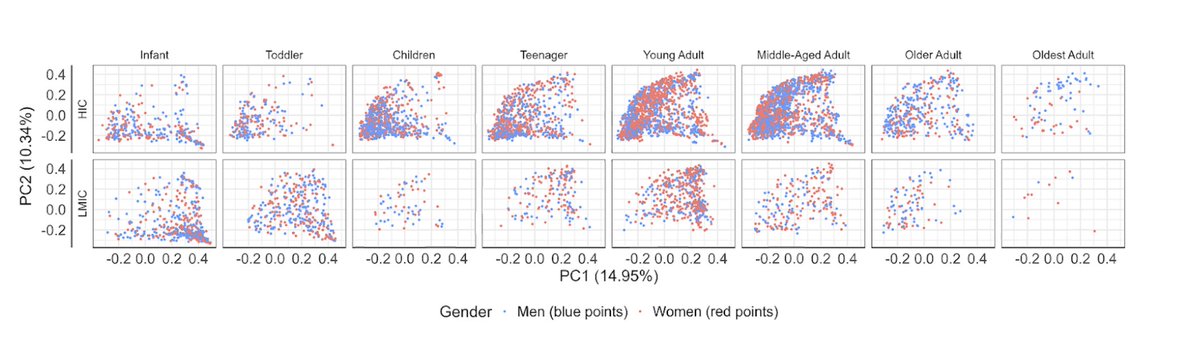
8/9 Age and geography were significant factors associated with resistome composition, with infants and the elderly showing higher ARG loads and diversity. This pattern underscores the impact of life stages on AMR. https://t.co/BfehpkT9ZJ
7/9 Genders share similar ARGs despite the difference in their abundance. Region and age explained far more variation in ARG composition than gender. https://t.co/BfehpkT9ZJ
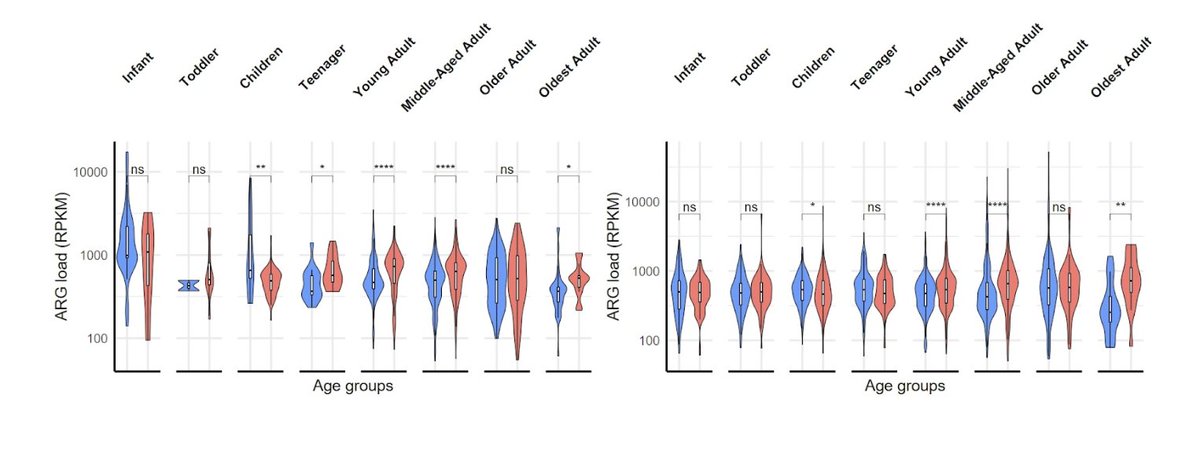
6/9 Gender differences in ARG abundance emerged in adulthood, indicating that gender-associated lifestyle, biological, or healthcare-related factors in adulthood may be linked to antibiotic resistance. https://t.co/tpWfSm0MiG
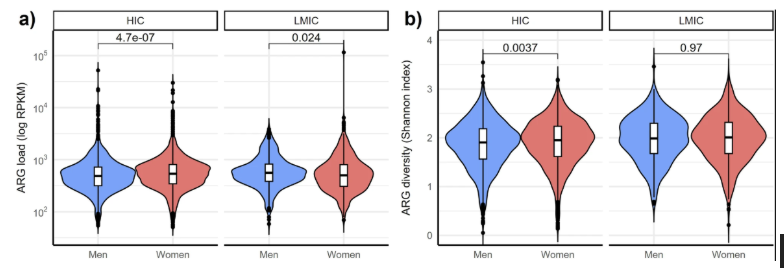
5/9 In LMICs, limited data indicated that when accounting for confounding factors such as age and socio-economics, the difference between men and women was not significant. https://t.co/BfehpkT9ZJ
4/9 Women in HICs also showed slightly higher ARG diversity than men, suggesting a broader range of resistance genes present in their gut microbiome. https://t.co/BfehpkT9ZJ
3/9 In high-income countries (HICs), women had 9% higher ARG abundance compared to men. This suggests that women in HICs may be more exposed to or carry more antibiotic-resistant bacteria. In low-income countries (LMICs), the trend was reversed. https://t.co/tpWfSm0MiG
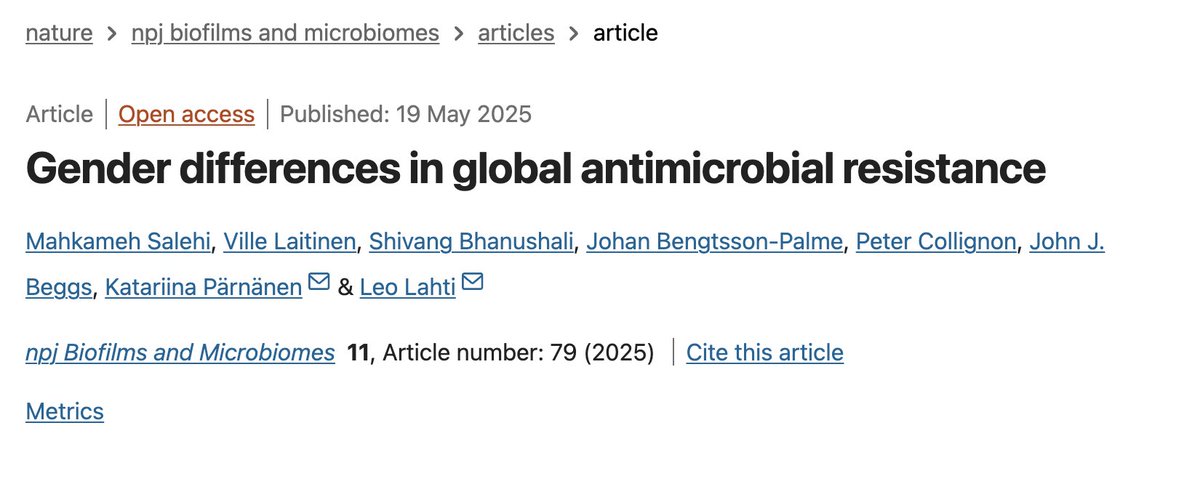
2/9 Antimicrobial resistance #AMR is a major #globalhealth threat. How does it vary between genders? We analyzed 14,641 open human gut #metagenomes from 32 countries to investigate gender differences in #antibioticResistance genes (ARGs). https://t.co/tpWfSm0MiG
1/9 Did you know that the female #microbiome is unique in many ways, and antibiotic resistance in the gut microbiome varies between genders? See npj Biofilms and Microbiomes special issue, Women and their microbes, to learn more! https://t.co/9Jpa1mPMDx
🚨 Our new study on 14,641 gut metagenomes:
🧬 Women have 9% more antibiotic resistance genes (ARGs) than men
🌍 Difference not observed in LMICs
🧑 ARG differences appear in adulthood
📖 https://t.co/sZZ9KcFbD0
#AMR#GenderHealth#Microbiome#GlobalHealth