@DemocraticWins@marynlm Y’all didn’t believe there would be a Project 2025.
It’s all going as the Dems warned it would.
It wasn’t dramatics.
And he’s not finished. Trump’s only just getting started.
I remember the day my dad got laid off.
He came home early. Sat at the kitchen table.
Didn’t say anything for a long time.
28 years at the same company.
$52,000 a year.
Same desk. Same commute.
Same handshake every Christmas party.
They called him into HR on a Tuesday morning and handed him a folder.
2 weeks severance. $2,000.
A COBRA packet at $1,400 a month he couldn’t afford and a thank you for your service.
He was 54.
Too young for Medicare.
Too old to start over.
Too proud to tell us how scared he was.
He spent the next 4 years working part time jobs at $14 an hour.
Not to retire comfortably.
Not to build anything.
Just to keep health insurance so a hospital bill wouldn’t finish what the layoff started.
28 years.
$1.4 million in value given to that company.
And they never called to check on him once.
I will never forget that kitchen table moment.
That’s when I learned that no company will ever love you back.
HR: We lost another senior employee today.
CEO: What happened?
HR: He resigned after receiving an external offer.
CEO: That makes no sense. We could have matched it.
HR: That is the issue. We were willing to pay a stranger 70% more for the same role, but would not give our existing employee even a 20% raise.
CEO: External hiring is different. That is market pricing.
HR: He noticed that too.
CEO: We appreciated his loyalty. He had been here for years.
HR: Yes. And during those years, he consistently exceeded expectations while being told to “wait for the next review cycle.”
CEO: But budgets are complicated for internal employees.
HR: Apparently not for external candidates. The new hire budget was approved in three days. His raise request sat for eight months.
CEO: We had to stay competitive in the hiring market.
HR: He was part of that same market. The only difference is that another company valued him before we did.
CEO: So he left over salary?
HR: Not just salary. He left because he realized loyalty was being rewarded less than leaving.
CEO: That is unfortunate.
HR: Yes. Companies will sometimes trust a candidate after a 45-minute interview more than an employee who already proved themselves for five years.
CEO: So what are you saying?
HR: If companies only recognize employee value after a resignation letter appears, then eventually employees will stop waiting to be appreciated internally.
Sometimes the fastest way for an employee to get market value is to stop being your employee.
She Was 37. Broke. Dying. And She Made 30 Million People Laugh Every Week. Erma Bombeck didn’t have an office. She had a typewriter on a wood plank in her bedroom. She didn’t have time. She had three kids and a disease that was killing her.
Ohio. 1965.
Erma was 37, a mom in Centerville, Ohio. Laundry never ended. Kids destroyed the house daily. Dishes reappeared like magic. Everyone said motherhood was “sacred.” “The highest calling.”
Erma thought it was also messy. Loud. And funny as heck.
So she walked into a tiny local paper and asked to write the truth. Not the perfect mom version. The real one. They said, “We’ll pay you three dollars per column.”
She said yes.
She went home, put a typewriter on a plank between two cinder blocks, and got to work. No desk. No fancy setup. Just her and the chaos.
She wrote about the septic tank exploding during dinner. About trying to get three kids to school without losing her mind. About “the beautiful absurdity of a life spent making other people's lunches”.
Three weeks after a bigger paper found her, she went national. Soon, “At Wit's End” ran in 900 newspapers. “Thirty million readers. Twice a week. Every week.”
Erma became the most-read humor writer in America.
Why? Because she said what no one else would. “She told the truth about motherhood when polite society insisted it must remain perfect.” She joked about selling her kids. Told moms to “lock the bathroom door and hide from their families for five minutes of peace.”
Thirty million women read it and thought: “Oh my God. Someone finally said it.”
Phil Donahue was her neighbor. He said, “Motherhood was sacred. Mothers were put on pedestals. Then Erma wrote, 'I'm going to sell my kids.' She punctured that pretense and was suddenly speaking for millions.”
But here’s the part nobody knew: Erma was dying the whole time.
At 20, doctors told her she had polycystic kidney disease. Incurable. They said she’d never have kids. She adopted a daughter. Then somehow had two sons.
For decades, she did dialysis and came home to write. “She made America laugh while quietly fighting to stay alive.” She never complained. Never asked for pity. “She just kept writing.”
She grew up poor in Dayton. Dad died when she was nine. At 13, she wrote for her school paper. At 15, she got a job at the Dayton Herald. A professor told her: “You can write.” So she did. For 31 years. Over 4,000 columns. 15 books. Nine bestsellers. 15 million copies sold. Eleven years on Good Morning America.
She wrote survival guides disguised as jokes. Titles like The Grass is Always Greener Over the Septic Tank. If Life is a Bowl of Cherries, What Am I Doing in the Pits?
She beat breast cancer in 1992. Finally told the world about her kidney disease in 1993. Got a transplant on April 3, 1996. Wrote her last column 14 days later. Died five days after that. April 22, 1996. She was 69.
She’s buried in Dayton under a 29,000-pound boulder from Arizona. Big as the laughs she gave us.
Think about it. She started at 37 — when the world says women are done. For three dollars a week. On a plank. While on dialysis. While dying. “And she never stopped being funny.”
Because “humor isn't the opposite of pain. It's how you survive it.”
She once wrote, “Success is outliving your failures.” She did.
Not because she got famous. But because 30 million people picked up a paper and felt less alone. She told them: Motherhood is hard. You’re tired. You’re not failing. You’re human.
“Before Erma, mothers were supposed to be saints. After Erma, they were allowed to be people.”
She was 37 when she started. Dying the whole time. Wrote till five days before she died.
Erma Bombeck (1927-1996). A housewife. A typewriter. Three dollars. Thirty million readers. And the belief that ordinary lives are worth writing about.
“Not despite their ordinariness. Because of it.”......................
October 9, 1974.
Oskar Schindler collapsed on a street in West Germany.
When authorities searched his apartment, they found almost nothing:
unpaid bills, old letters, and money sent from Israel.
For the last years of his life, the Jews he saved during the Holocaust were paying his rent and buying his food.
Because Oskar Schindler died broke.
And he was broke for one reason:
he spent his fortune saving people.
The strange part is that Schindler didn’t start as a hero.
He was a Nazi Party member.
A war profiteer.
A heavy drinker.
A serial adulterer.
In 1939, when Germany invaded Poland, Schindler saw opportunity.
He took over a Jewish-owned factory in Kraków and got rich producing enamelware for the German military using cheap Jewish labor.
At first, survival wasn’t the goal.
Profit was.
Then he witnessed the liquidation of the Kraków Ghetto in 1943.
He watched SS troops shoot civilians in the streets.
Children ripped from parents.
People hunted like animals.
Something changed in him after that.
Schindler began using his factory differently.
He bribed Nazi officers constantly — with cash, alcohol, jewelry, anything they wanted — to keep his Jewish workers alive.
He built a subcamp at his factory where conditions were far safer than the concentration camps nearby.
He smuggled food.
Bought medicine on the black market.
Protected workers from deportation.
Every bribe cost money.
He kept paying anyway.
Then came 1944.
The Nazis started emptying camps and sending prisoners to Auschwitz.
Schindler knew his workers would be killed if they stayed behind.
So he made “the list.”
1,200 names.
Men.
Women.
Children.
The elderly.
He claimed they were all essential workers needed for the war effort.
It was a lie.
But it saved 1,200 lives.
When one train carrying the women was accidentally sent to Auschwitz, Schindler personally traveled there and bribed officials until they were released.
By the end of the war, he had burned through his entire fortune.
Everything was gone.
After Germany collapsed, Schindler failed at almost every business he tried.
Argentina failed.
Farming failed.
A cement company failed.
Eventually he ended up alone, bankrupt, and forgotten in a small apartment in Frankfurt.
Except by the people he saved.
The “Schindlerjuden” supported him for the rest of his life.
They mailed him money every month.
Paid his bills.
Kept him alive.
And when he died in 1974, they buried him in Jerusalem.
Not because he was perfect.
He wasn’t.
He began as a profiteer inside one of history’s worst regimes.
But at some point, Oskar Schindler made a choice:
keep the money,
or save people.
He chose people.
And 1,200 descendants are alive today because he did.
I applied for a job I had absolutely no business applying for.
The posting asked for:
• 10+ years of experience
• Leadership background
• Certifications I’d never even heard of
I had three years.
And a lot of audacity.
I applied anyway.
The rejection email arrived the next morning.
“After careful consideration, we’ve decided to move forward with candidates whose experience more closely matches the role.”
That should have been the end of it.
Instead, I sent one more email.
I thanked the recruiter for reviewing my application.
Told her I genuinely admired the company.
And asked:
“What skills would I need to develop to become a serious candidate for a role like this in the future?”
I wasn’t asking for a second chance.
I was asking for direction.
She replied within an hour.
“Would you be available for a quick call tomorrow?”
That call lasted 20 minutes.
At the end, she said:
“We have another position that hasn’t been posted publicly. It’s a much better fit.”
Two interviews later, they offered me the job.
Better pay.
A clear growth path.
And a company I thought would never look twice at me.
Sometimes the opportunity isn’t in the application.
It’s in the follow-up.
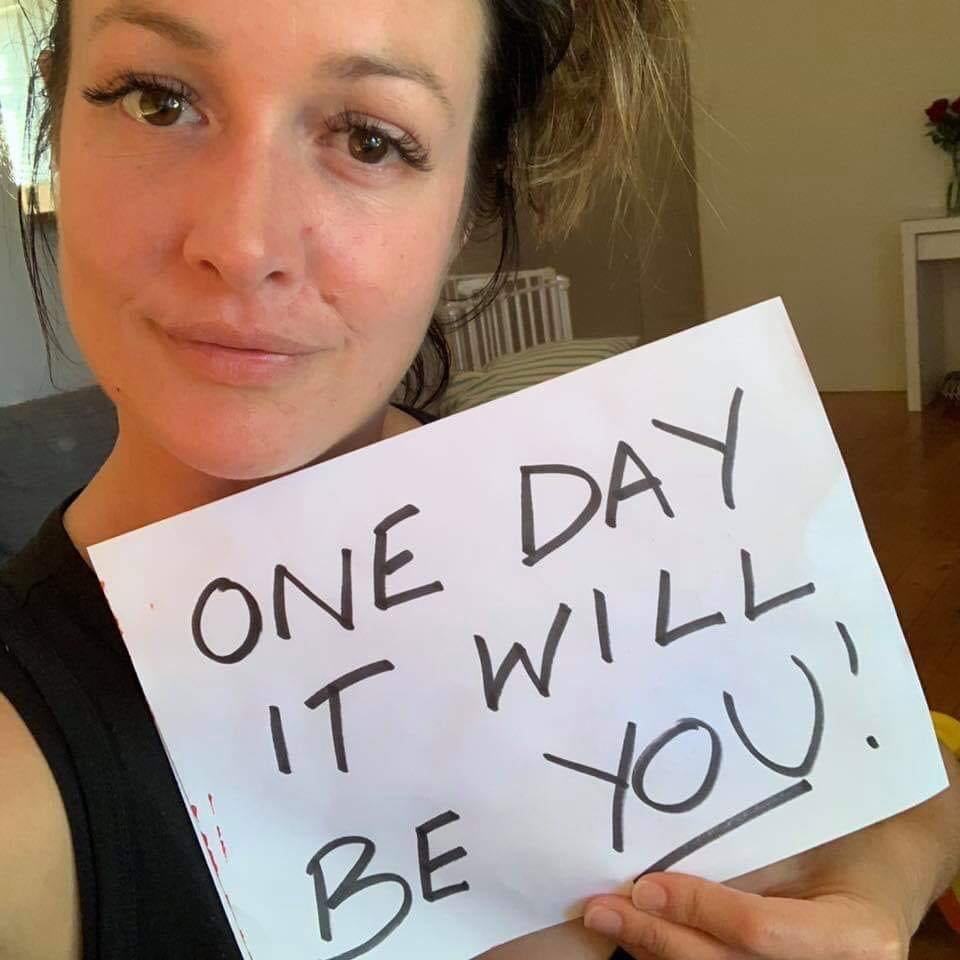
Wise words from this young woman!
“Twice this week, I have watched an elderly individual, fade into the busy life in which we all live. One man just needed Panadol for his wife but the shop assistant simply said it’s in aisle ‘6’. But he struggled to navigate the supermarket and as I watched him go in the wrong direction, I left all my groceries and took him where he needed to go.”
“Today, I watched an elderly man struggle in the heat, who had obviously had a fall with a huge scrape and blood on his leg. He walked past people in the cafe, while he slowly made his way to his car. Not one person stopped. Or looked. Or acknowledged him. I took him to his car and checked he was ok. He told me he had a fall and wasn’t sure how the air con worked in his car so he just didn’t use it. I sat with him, until his air con kicked in and heard him talk about the old frail body that he is in, that fails him now, every single day.”
“When you see an elderly person walking down the street, searching in the supermarket or struggling to their car, take a minute out of your busy schedule and ask them if they need a hand. Think about your grand parents and your parents and how pissed you would be if someone didn’t stop to help them. But more, think of them as you.”
“Once upon a time they were you. They were busy, they had work, they had children, they were able. Today, they are just in an older body that is not going as fast as it used to and this busy life is confusing. They deserve our utmost respect and consideration. One day it will be you, it will be us. I wish more people gave a shit about them and acknowledged them for their admirable existence and jeez I hope someday, not that far away, someone does it for me.”
Thanks to the author, Adele Renee. ♥️
April 1944.
Two little girls arrived at Auschwitz holding hands.
Andra was 4 years old.
Tatiana was 6.
They wore matching gray coats with yellow stars stitched onto them. To the guards on the Birkenau ramp, they looked like twins.
That mistake saved their lives.
The sisters, Andra and Tatiana Bucci, came from Fiume — a city that was Italian at the time and is now part of Croatia. Their father was Catholic. Their mother, Mira, was Jewish.
For years, they lived an ordinary childhood.
Then came the racial laws.
Then the arrests.
On March 28, 1944, soldiers came for the family.
The girls, their mother, grandmother, aunt, and young cousin Sergio were all taken away and eventually forced onto a cattle train headed for Auschwitz-Birkenau.
When they arrived, Dr. Josef Mengele stood on the selection ramp deciding who would live and who would die.
Most small children were sent directly to the gas chambers.
But Mengele was obsessed with twins for his experiments.
Andra and Tatiana were not twins — they were two years apart — but dressed alike, they appeared to be.
So they were spared.
Their grandmother and aunt were murdered almost immediately.
The girls were tattooed with numbers:
76483.
76484.
In Auschwitz, names were meant to disappear.
But their mother refused to let that happen.
At night, Mira secretly visited the children’s barracks whenever she could.
She risked beatings and death just to whisper the same words to her daughters over and over:
“Never forget your names.”
Not prayers.
Not promises.
Just their names.
“Andra Bucci.”
“Tatiana Bucci.”
In a place designed to erase identity, remembering who you were became an act of resistance.
The girls later said they didn’t fully understand the horror around them. They were too young. Auschwitz became their version of normal life.
But they remembered fear.
They remembered children disappearing.
Doctors in white coats would come into the barracks and take children away.
Most never returned.
One day, a prisoner warned the sisters that someone would soon ask which children wanted to see their mothers.
“Do not move,” she told them.
“No matter what.”
The girls obeyed.
But their cousin Sergio stepped forward.
He missed his mother.
The sisters watched him leave.
He was later murdered after being used in medical experiments along with other children.
Andra and Tatiana survived partly because they stayed silent and invisible.
Then, in January 1945, the camp suddenly changed.
The guards vanished.
The barking dogs stopped.
And Soviet soldiers entered Auschwitz.
One of them handed the girls a piece of salami.
Liberation had arrived.
But freedom did not instantly heal anything.
The sisters spent months in orphanages, moving between countries, speaking broken mixtures of German, Czech, and other languages.
For a time, they even forgot Italian.
Then, in England, someone showed them a photograph.
It was their parents’ wedding picture.
“Your mother and father are alive,” they were told.
Their mother had survived.
Their father had survived.
And they had spent months searching for their daughters across postwar Europe.
When the girls were finally reunited with their mother in Italy, they cried.
Not because they were happy.
Because they no longer recognized her.
Trauma had stolen even that.
Slowly, over time, they rebuilt their lives.
For decades, they rarely spoke publicly about Auschwitz.
Then in the 1990s, they decided silence was no longer enough.
Since then, Andra and Tatiana Bucci have spent years speaking to students and returning to Auschwitz to tell people what happened there.
Today, they are among the youngest surviving people with living memories of Auschwitz.
And after everything that camp tried to erase, two things survived:
Their names.
And their mother’s whisper in the darkness:
“Never forget who you are.”
In May 1860, she kissed her six children goodbye. She thought about the dinner she would cook later. She thought about the laundry. She thought about the quiet life of a mother in Illinois.
She had no idea that when the front door clicked shut, it would stay locked for three long years.
Her husband, Theophilus Packard, was a respected minister. To the neighbors, he was a man of God. But inside their home, he was a man who could not stand a wife who thought for herself. Elizabeth Packard liked to read.
She liked to debate religion. She had her own opinions about life and faith. In the 19th century, for a woman to have a brain was considered a danger.
Theophilus decided to end the argument once and for all. He didn’t need a crime. He didn't need a witness. In those days, the law in Illinois said a man could commit his wife to an insane asylum without any evidence or a public hearing. He simply had to say she was "disturbed."
One morning, a group of men arrived at her home. They didn't listen to her logic. They didn't care about her tears. They dragged her away to the Jacksonville Insane Asylum. Elizabeth was 43 years old, perfectly sane, and suddenly a prisoner.
When she entered the asylum, she expected to see people who needed medical help. Instead, she found a warehouse of "inconvenient" women. There were wives who had argued with their husbands about money. There were daughters who refused to marry men they didn't love. There were women who were simply too loud or too independent.
"This is not a hospital," Elizabeth realized. "It is a cage for the unwanted."
The doctors tried to break her spirit. They told her that if she just admitted her husband was right and she was wrong, she could go home. They wanted her to say she was crazy for wanting her own thoughts. Elizabeth looked them in the eye and said, "I cannot buy my liberty by a lie."
She didn’t give up. Instead, she started to write. She hid scraps of paper in the linings of her clothes. She tucked notes under floorboards. She recorded every abuse, every scream in the night, and every story of the women around her. She became a secret journalist inside a living nightmare.
After three years, she was finally released, but her husband locked her in a room at home. He planned to move her to another asylum in a different state. This time, Elizabeth’s friends helped her get a message to a judge.
A trial was finally ordered to determine if she was actually insane.
The courtroom was packed. Theophilus was confident. He brought "experts" to say that her religious doubts proved her mind was broken. But then, Elizabeth stood up.
She didn't shout.
She spoke with the calm power of the truth. She explained her beliefs. She showed the jury that having a different opinion is not a disease.
The jury only needed seven minutes. They came back with a single word: Sane.
Elizabeth walked out as a free woman, but she found that her husband had taken everything. He had sold their furniture, taken her money, and disappeared with their children. She was alone and penniless.
Most people would have disappeared into the shadows. Elizabeth did the opposite. She spent the next forty years traveling the country. She stood before the legislature and demanded new laws.
She said, "A woman's mind is her own, and the law must protect it."
Because of her, states changed their laws. They made it illegal to lock a person away without a fair trial and a medical exam. She turned her private pain into a public shield for thousands of other women.
She proved that even if you take away a woman’s home, her money, and her children, you can never truly take away her voice.
Follow us Lost in Yesterday
Roald Dahl on Measles: Olivia, my eldest daughter, caught measles when she was seven years old. As the illness took its usual course I can remember reading to her often in bed and not feeling particularly alarmed about it. Then one morning, when she was well on the road to recovery, I was sitting on her bed showing her how to fashion little animals out of coloured pipe-cleaners, and when it came to her turn to make one herself, I noticed that her fingers and her mind were not working together and she couldn’t do anything.
'Are you feeling all right?' I asked her.
'I feel all sleepy,' she said.
In an hour, she was unconscious. In twelve hours she was dead.
The measles had turned into a terrible thing called measles encephalitis and there was nothing the doctors could do to save her. That was...in 1962, but even now, if a child with measles happens to develop the same deadly reaction from measles as Olivia did, there would still be nothing the doctors could do to help her. On the other hand, there is today something that parents can do to make sure that this sort of tragedy does not happen to a child of theirs. They can insist that their child is immunised against measles.
...I dedicated two of my books to Olivia, the first was ‘James and the Giant Peach’. That was when she was still alive. The second was ‘The BFG’, dedicated to her memory after she had died from measles. You will see her name at the beginning of each of these books. And I know how happy she would be if only she could know that her death had helped to save a good deal of illness and death among other children.
Your vote is precious. Today millions of people across Wales, Scotland and England are voting in the hope that their choice will improve their lives. I hope it will.
Politicians are servants of the people. Today they are asking for your vote; it grants power and removes it.
Use it and remind them never to take you for granted.
The little bald guy who voices the dinosaur in Toy Story is the same guy yelling "INCONCEIVABLE!" in Princess Bride. Wallace Shawn went to Harvard, then Oxford, then to India on a Fulbright scholarship. He's also one of America's most respected playwrights. He took the goofy roles on purpose to fund the writing.
He was supposed to be a diplomat. At 23, while still at Oxford in 1967, he wrote a play instead and never stopped.
His father, William Shawn, ran The New Yorker magazine for 35 years. When Wallace told him he wanted to be a writer, his father's advice was simple: "If you want to be a writer, don't get a good job."
So Wallace took the easiest job he could find. He started doing small comedy roles in 1979, debuting at 35 as Diane Keaton's ex-husband in Woody Allen's Manhattan. The casting director for Princess Bride loved how he said "inconceivable" in an earlier film and gave him Vizzini. Pixar called next, and Rex the dinosaur was born. He's voiced Rex in every Toy Story since and returns again in Toy Story 5 this June.
In his own words: "I was never faced with the choice of leading a sub-bourgeois life." Acting paid the bills. The plays were the work.
The Fever is a 90-minute one-man play in which a rich man realizes his good intentions have done nothing for the world's poor. Shawn first performed it in the apartments of his wealthy friends, because they were the audience he most wanted to confront. Aunt Dan and Lemon is about how comfortable, decent people slowly come to support violent governments.
He's 82 now. He's still performing The Fever off-Broadway in New York and just opened a new play in March, directed by Andre Gregory, his theater partner of 55 years. British theater critics have placed him alongside Arthur Miller as one of the great playwrights of his generation.
The dinosaur voice and the "inconceivable" guy were always the day job. The plays were the actual career, funded by the bit parts the whole time.
She was never meant to matter.
Just a pretty young translator in the room.
But in 1940, after German forces took control of France, Jeannie Rousseau’s father put his 21-year-old daughter forward to work as an interpreter for Nazi officers in Brittany. She spoke flawless German. She was elegant, warm, and disarming. The officers relaxed around her. Relaxed enough to speak openly, even when they shouldn’t have.
Jeannie listened.
At first, she kept everything in her head. Then she began passing along what she heard to the French Resistance.
In 1941, the Gestapo arrested her on suspicion of spying. Her case went before a military tribunal. But the German officers in Dinard who knew her defended her fiercely. They swore she was innocent. She was released, but ordered to leave the coastal area.
So she went to Paris. And got another job as a translator.
This time, she worked for a French industrial organization that regularly interacted with German military leadership. Then, during a chance encounter on a night train, she ran into an old university classmate named Georges Lamarque. That meeting changed everything. Through him, she joined a spy network known as The Druids. Her codename: Amniarix.
Lamarque remembered her from the University of Paris, where she had graduated top of her class and shown an extraordinary gift for languages. He asked her to work for the network.
She agreed without hesitation.
Her technique was brilliant because it seemed so harmless. She listened carefully. She asked innocent-sounding questions. And when German officers described things that sounded unbelievable, she acted doubtful.
In 1943, some of the same officers she had known in Dinard began discussing a terrifying new weapon. Rockets that could travel enormous distances. Faster than any aircraft. A weapon of terror that could reshape the war.
Jeannie widened her eyes and played the skeptic.
“That can’t be real,” she told them. “You must be exaggerating.”
They pushed back. Said it was true.
She kept doubting them. Again and again.
“What you’re saying is impossible,” she insisted. Over and over, maybe a hundred times.
And that worked.
They became so determined to convince her that one officer actually showed her technical sketches of the rockets. Full details. Plans. Information about the testing site — Peenemünde, on the Baltic coast.
Jeannie wasn’t an engineer. She didn’t fully understand the science.
But she had one gift the officers never suspected:
an almost photographic memory.
She memorized it all. The figures. The dimensions. The descriptions. Every important detail. Then she repeated everything, word for word, to her Resistance contacts. Those reports were passed to British intelligence in London.
What she uncovered was staggering.
Germany was developing the V-1 and V-2 rockets — weapons capable of striking British cities from hundreds of miles away. Weapons that could slaughter thousands of civilians.
British intelligence officer R. V. Jones received her reports. When he asked who the source was, he was told only that it came from “a young woman, the most remarkable of her generation.”
And her information changed the course of the war.
In August 1943, Britain sent 560 bombers to attack Peenemünde. The strike disrupted the Nazi rocket program. It slowed production. It interrupted testing. And it saved thousands of lives.
Jeannie kept working through 1944. She traveled deep into Germany with French industrialists, watching, listening, and reporting everything back. British intelligence was so impressed by her accuracy that they arranged to bring her to London for an in-person debrief. They called her a “human tape recorder.”
The extraction was set for spring 1944, from the town of Tréguier in Brittany. But the French agent assigned to guide the team through the minefields was captured at the rendezvous point.
The mission collapsed.
Her cover was blown.
The Gestapo arrested her and sent her to Ravensbrück concentration camp. Then to Torgau. Then to yet another camp, each worse than the one before. She spent the final year of the war being moved through three concentration camps.
And still, she said nothing.
She never revealed what she had done. Never gave up the intelligence she had gathered. Not as her body weakened. Not as tuberculosis consumed her. Not as starvation brought her close to death.
When the Swedish Red Cross liberated her in 1945, she was barely alive.
She slowly recovered in a sanatorium in Sweden. There she met Henri de Clarens, a survivor of both Buchenwald and Auschwitz. They later married and had two children.
After the war, Jeannie worked as a freelance interpreter for the United Nations and other organizations. She stayed away from attention. She avoided journalists. She avoided historians. For decades, most people barely knew her story.
In 1993, she accepted the CIA’s Agency Seal Medal. In 1998, she finally agreed to speak with Washington Post journalist David Ignatius. It was the first time she had truly opened up to a reporter.
He asked her why she had done it.
Why she had risked everything when so many others kept their heads down.
She seemed almost puzzled by the question.
“It wasn’t a choice,” she said. “It was what you did. At the time, we all thought we would die. I don’t understand the question. How could I not do it?”
France had already made her a member of the Legion of Honor in 1955. In 2009, she was elevated to grand officer. She also received the Resistance Medal and the Croix de Guerre.
Jeannie Rousseau de Clarens died in August 2017 at 98 years old.
For most of her life, she insisted her role had been small.
“I was one small stone,” she said.
But that small stone helped stop rockets from raining down on London.
That small stone helped save thousands of lives.
That small stone was a 21-year-old woman who pretended not to believe what she was hearing — and then remembered every word.
So if you’ve ever wondered what a person does when courage is the only path left, Jeannie gave the answer long ago:
You do what must be done.
You don’t stop to ask why.
You just do it.
She found what was described as a severed penis in her lab coat pocket. It was her male classmates’ idea of a joke. She waited until class ended, held it up, and asked calmly: “Did one of you lose this?”
1908. University of the Republic.
Paulina Luisi was one of the very few women in medical school. Uruguay had hundreds of male doctors and only a handful of women. She was about to become one of them.
Her classmates did not want her there. They mocked her in lectures. They questioned her intelligence. They “explained things again for the lady.” They sabotaged her equipment. They spread rumors about her character.
The severed organ in her pocket was meant to humiliate her. It was meant to prove women were too fragile for medicine.
She refused to give them that win.
Paulina had been fighting her whole life. Born in 1875 to immigrant parents, she grew up in a family of educators and activists. At 15, she earned her teaching degree. Years later, she became the first woman in Uruguay to complete a bachelor’s level education.
Then she did what many thought was impossible. She enrolled in medical school.
Professors argued about whether women even belonged there. Some believed female brains were not suited for science. Others feared she would “distract” male students. They admitted her reluctantly, expecting her to quit.
She did not.
In 1908, she graduated as Uruguay’s first female physician and surgeon.
But the degree was only the start.
Working in gynecology, Paulina saw women suffering. Untreated diseases. Unsafe abortions. Preventable infections. Ignorance was costing lives.
She realized medicine alone was not enough. Women needed education.
In 1916, she publicly called for ‘sex education in schools’. The backlash was immediate. Newspapers called her immoral. Religious leaders condemned her. Critics said she would corrupt children.
She kept speaking.
For years, she pushed for curriculum reform. Her proposals and projects helped bring sex education into teacher training, and later into broader education planning in Uruguay.
At the same time, Paulina was building movements. She founded ‘Uruguay’s National Women’s Council’ and connected activists across the Americas. She fought for suffrage, labor rights, reproductive rights, and protections against trafficking.
She represented her country internationally, becoming one of the first Latin American women to serve as a government delegate at global conferences.
In 1932, Uruguay granted women the right to vote. Paulina had spent many years fighting for that victory.
She never stopped organizing. She hosted radio programs urging women to stay politically active. She opposed fascism. She ran for office. She mentored younger generations.
By the time she died in 1950, she had transformed her country.
They tried to shame her into silence.
Instead, Paulina Luisi changed the rules of education, politics, and medicine in Uruguay and helped spark feminism across Latin America.
Calm.
Unshaken.
Unmovable.
They wanted her to quit.
She built a revolution instead.
In Nazi-occupied Athens, a Gestapo officer sat across from a small woman in a nun’s habit.
He asked his question.
She stared back with a blank, uncomprehending expression.
He asked again, sharper this time.
She tilted her head, straining as if the words were slipping away from her.
Still nothing.
Frustrated, he raised his voice, leaning in close. She watched his lips with the same helpless confusion.
Finally, the officer gave up in disgust, gathered his papers, and stormed out.
What he never knew—what almost no one in Athens knew—was that this woman was Princess Alice of Battenberg, great-granddaughter of Queen Victoria, born at Windsor Castle into the beating heart of European royalty.
She had been profoundly deaf since childhood. But her royal family had refused to hide her. Instead, they taught her to lip-read in English, German, French, and Greek. She became one of the finest lip-readers in Europe.
She understood every single word the Gestapo officer said.
And at that very moment, she was hiding a Jewish family—Rachel Cohen and her two children—in her home.
Princess Alice had already lived a life few royals could imagine.
During the Balkan Wars and the First World War, she left palace comforts behind to nurse the wounded near the front lines, earning the Royal Red Cross from King George V.
She married Prince Andrew of Greece and gave birth to five children, including a son named Philip, born on a kitchen table in Corfu in 1921.
But revolution, exile, poverty, and heartbreaking betrayal followed. Her husband abandoned the family.
At forty-five, she suffered a severe mental breakdown and was forcibly committed to a Swiss sanatorium.
When she finally emerged, she returned alone to Athens, converted to Greek Orthodoxy, and lived as a nun—dressed in simple gray, serving the poor with quiet devotion.
Then came the German occupation in 1941.
When the Nazis began rounding up Greek Jews for deportation and death, Princess Alice did not hesitate. She opened her door to the Cohen family, old friends of the Greek royal house. For over a year, she sheltered Rachel, Tilde, and Michael in her small residence while the terror outside grew ever closer.
She sold her last pieces of jewelry to buy food—not only for those she hid, but for starving neighbors as well. In her nun’s habit, she moved through the city like a ghost, working with the Red Cross to deliver aid, all while protecting her secret guests with calm, unshakable resolve.
When suspicion finally brought the Gestapo to her door, Princess Alice performed her greatest act of courage. The woman who could read lips in four languages sat silently before the officer, pretending to be nothing more than a frail, confused old nun.
She said nothing.
And because of that sacred silence, the Cohen family survived until Athens was liberated in 1944.
Years later, in 1947, she stood quietly at her son Philip’s wedding to the future Queen Elizabeth II—thin, dressed in gray, a figure of sacrifice amid the royal splendor.
She spent her final years in Athens, founding a nursing order and giving away everything she had. When a military coup forced her to leave Greece in 1967, she reluctantly joined her son at Buckingham Palace. She died there in 1969 at the age of eighty-four, leaving behind no possessions—only a legacy of love and quiet bravery.
Her final wish was fulfilled in 1988 when her remains were laid to rest in Jerusalem, on the Mount of Olives.
In 1994, Prince Philip accepted Israel’s highest honor on her behalf: Righteous Among the Nations. He later reflected that it never occurred to his mother that what she had done was extraordinary. To her, helping those in mortal danger was simply what a human being—especially one who feared God more than the Nazis.
Princess Alice of Battenberg, born into the grandeur of Windsor Castle, chose instead the path of radical compassion. When the Gestapo came looking for the truth, they found only silence.
BRAVA!❤️
Durante una clase en la universidad, el bebé de una estudiante comenzó a llorar sin poder calmarse. Pensando que estaba molestando, la joven madre se levantó para salir del aula.
Pero el profesor Sydney Engelberg se acercó a ella, tomó al bebé en sus brazos, lo calmó suavemente... luego continuó dando su clase sin perder una sola nota, caminando por el aula con el niño contra él.
Engelberg permite que sus estudiantes vengan a clase con sus hijos, e incluso que amamanten durante la lección.
Su filosofía es simple, pero profundamente humana:
Ninguna madre debería tener que elegir entre su educación y su hijo.
Este gesto, capturado en una foto, rápidamente dio la vuelta al mundo. Se convirtió en un símbolo de empatía, inclusión y humanidad en el mundo universitario.
Un simple momento...
pero una gran lección de respeto y compasión.
Tom Hanks learned a secret about Fred Rogers that no camera ever captured—and it changed everything he thought he knew about kindness.
In Joanne Rogers's living room in Pittsburgh, she told Hanks something the world had never heard. Her husband carried a folded piece of paper in his wallet every single day of his adult life. On it were names. Teachers who saw something in him. Mentors who corrected him. Friends who stayed. Family who shaped him. Colleagues who challenged him.
The list was written in Rogers's own hand. It was not short.
Every morning, Fred Rogers took out that paper, unfolded it, read each name in silence, refolded it, and put it back. No one watched. No one knew. He didn't tell stories about it. He didn't post about it. He simply did it. Daily. For decades.
When Joanne found his wallet on February 27, 2003, the list was still there. The paper was worn translucent at the creases. The folds were permanent. Some names had been added over the years. None had been crossed out.
Hanks didn't write any of this down during their conversation. He told reporters later that this single detail unlocked the entire role. Rogers wasn't performing kindness for children on PBS. Kindness was the architecture of his private life. The list was his blueprint.
Hanks wore Rogers's actual cardigans during filming. He studied the deliberate slowness of Rogers's speech—slower than any voice on television because Rogers believed children needed time to understand what they heard, not just hear it.
He learned Rogers swam every day. That he chose his words the way other people choose routes on a map—carefully, with the person on the other end in mind.
When "A Beautiful Day in the Neighborhood" premiered in 2019, Joanne Rogers attended. She told reporters that Hanks hadn't impersonated her husband. He'd captured what Fred did when no one was looking.
The cameras showed a man in a cardigan asking children how they felt. The wallet showed a man who never stopped asking himself who made him possible.
The list is a reminder: We are not self-made. We are name-made. Built by people who gave us something we didn't have—and remembered by whether we remember them.
Fred Rogers remembered. Every single day. Until the last one.
EVERY COMPANY: We'd like to promote mental health in the workplace.
EMPLOYEES: How about hiring more people so we feel less pressured & increase our pay so we can keep up with the spiraling cost of living so we're not so stressed out.
EVERY COMPANY: No not like that. Try Yoga.