We💙membrane proteins! Using biochem, structural bio & C.elegans to study cell-cell communication, physiology & behavior, pain sensing & more @cornellmolmed
This study puts forth a mechanism by which c-terminal cleavage liberates the CAD causing the repositioning of the N terminus to promote Panx1 channel opening.
Could not be more exciting to share our latest findings about the mechanism of ATP release via the Pannexin 1 ion channel! Check it out 👉 The C-terminal activating domain promotes pannexin 1 channel opening | PNAS https://t.co/LH4HN3kqhD
Our structural studies revealed that when exposed, the cytoplasmic domain, dubbed the c-terminal activating domain (CAD) can compete with the N-terminus to occupy a cytosolic pocket, which forces the N-terminus to reorient into the pore.
We analyzed the electrostatic free energy of the cytosolic NTD, finding a positively charged region inside the pore that could accumulate negatively charged anions like ATP. In the reoriented NTD conformation this negative region is diminished reducing accumulation of ions there.
Check out our latest paper about glutaminase filament on @NatureComms! In this paper, we used #CryoEM and light scattering to show that the filament formation of glutaminase is coupled with its activity. https://t.co/67plY4EwbH
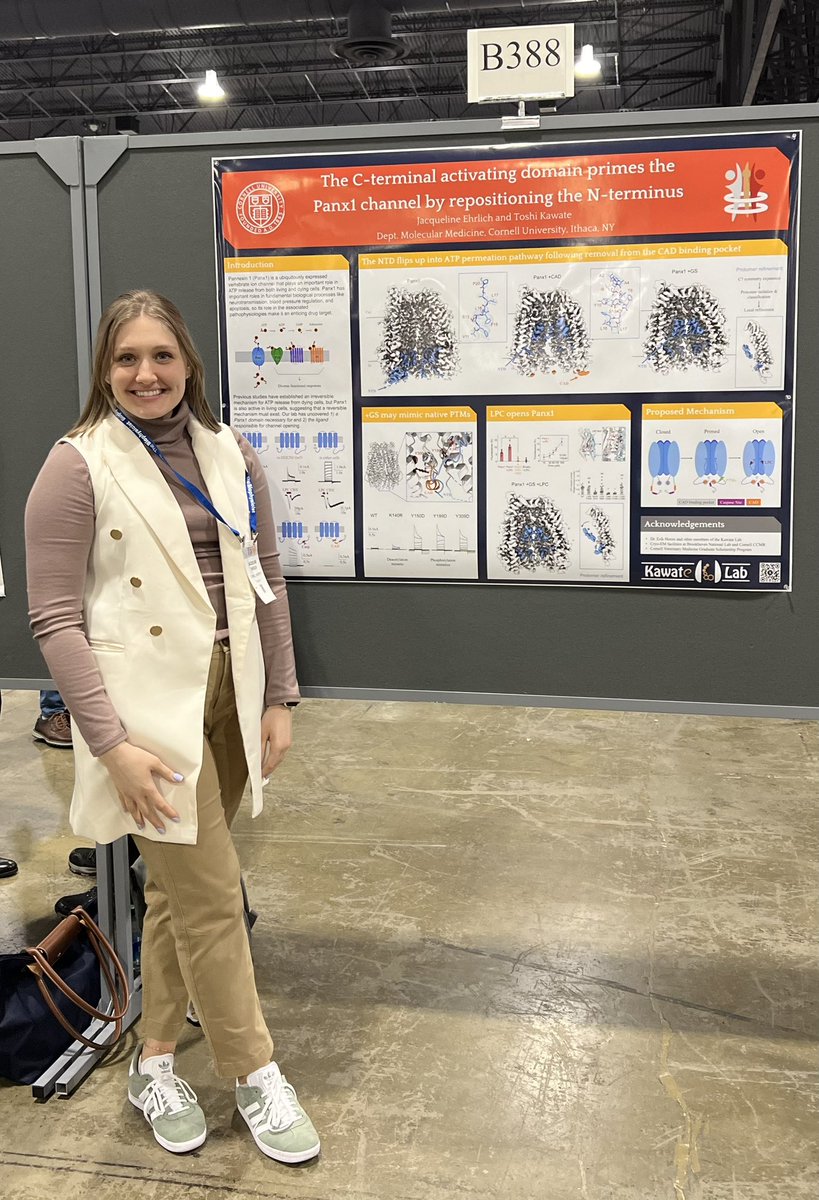
We got our Philly (fill-y lol) ! Always a pleasure to share our work with the #BPS community. Headed back to 📍Ith feeling inspired & refreshed 💆♀️
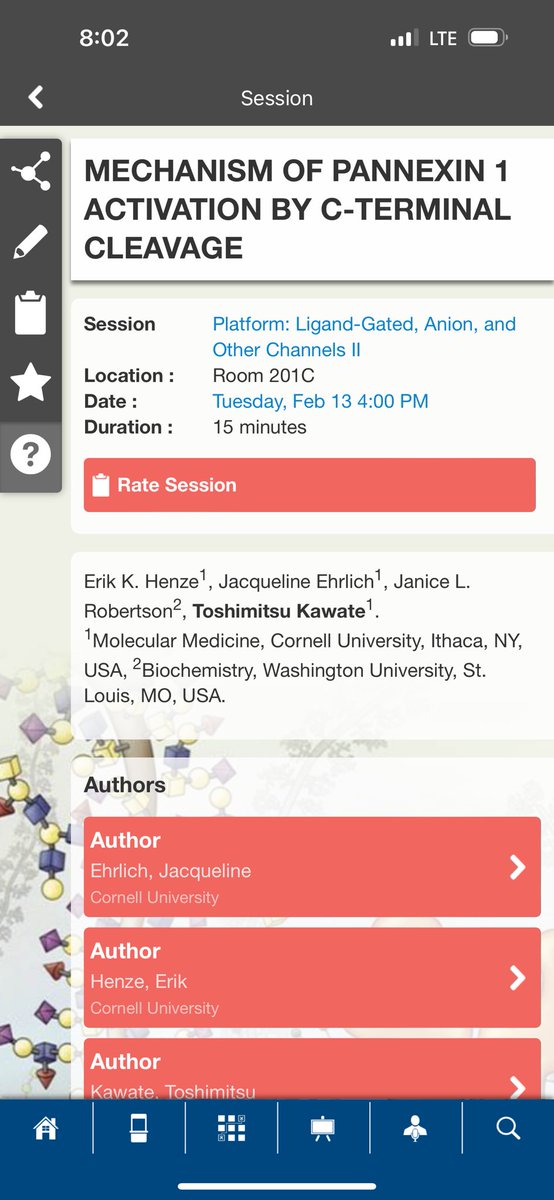
Kawate lab is en route to #BPS2024! Let’s talk about Pannexins at Toshi’s platform session on Tuesday & @jacqueline_ehr poster presentation on Monday 🤜🤛