My waiter had dementia and forgot my order.
I visited a cafe in Japan that ONLY hires people with Dementia. It's called the Cafe Of Mistaken Orders.
Sometimes the servers bring you the wrong food, never bring your order, or sit down and join you instead.
But the point of this cafe is to be a place for dementia patients to feel needed and have purpose.
And this cafe is working. Japan has discovered that being socially connected actually slows down the progression of dementia.
So now there are 8,000 dementia cafes all over Japan!
The U.S. should be more like Japan. We should keep elders out of nursing homes, find ways to give them purpose, and part of society until their last days.
Some nursing homes struggle to attract visitors. One in the Netherlands chose to invite roommates instead.
In the Dutch city of Deventer, a retirement home called Humanitas introduced an idea that would eventually gain attention around the world.
Rather than accepting loneliness as a normal part of aging, they approached it as something that could actually be solved.
For over ten years, Humanitas has allowed university students to live inside the nursing home rent free.
In return, the students spend about thirty hours each month connecting with residents. Sometimes that means sharing meals, having conversations, helping with technology, joining activities, or simply keeping someone company during a quiet afternoon.
They are not nurses or employees. They are simply part of the community.
At first, the idea sounded like a smart response to expensive student housing.
But the real impact appeared in the lives of the residents. Reports from outlets such as PBS NewsHour and AARP described seniors becoming more social, more active, and less isolated once younger people became part of everyday life.
What makes the story even more meaningful is that many students chose to spend far more time there than the agreement required.
Some even stayed connected after graduating. Over time, casual interactions turned into genuine friendships.
Humanitas didn’t really create something new. It brought back something many societies once had naturally: different generations living side by side instead of separately.
Maybe the issue was never aging itself. Maybe it was the distance we created between generations.
Sometimes the most powerful ideas are simply old human connections rediscovered.
Farmers have figured out that the cheapest pesticide is a strip of flowers.
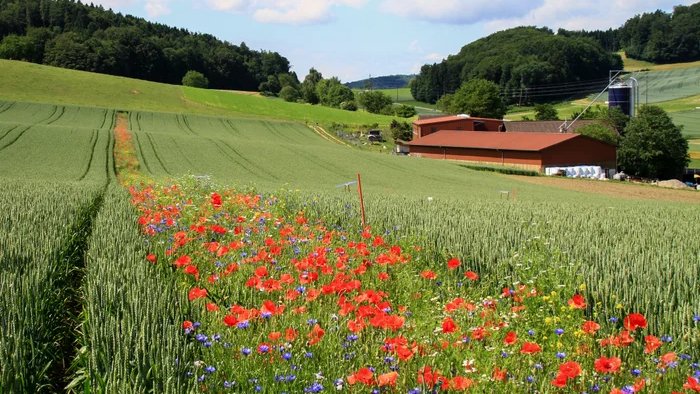
When you plant wildflowers through a crop field, not just around the edge but in strips running through the middle, you get ladybugs, lacewings, hoverflies, and parasitic wasps living in the field instead of visiting it.
They eat the aphids, the caterpillars, and the mites for free, all summer long.
In controlled trials, fields with tailored flower strips had leaf-beetle numbers 40 to 50% lower and crop damage cut by around 60%, enough to drop below the threshold where spraying was even considered worth it.
The flowers attract a standing army to our fields.
We spent decades engineering chemicals to kill the insects eating the crop, when the insects that eat those insects would have worked for the price of seed.
She was 60 years old when the knock came. A quiet Quaker teacher. Retired. Broke. Living with her bedridden mother and disabled sister in a cramped Berlin apartment.
It was late 1942. The deportations had begun. Her Jewish friends were vanishing. Every day another name gone. Every day another family erased.
Elisabeth made a choice that would cost her everything—or nothing, depending on what you believe a life is worth.
She opened her door.
At first, it was just friends. Then friends of friends. Then desperate strangers who had heard whispers: There's a teacher in Tempelhof. She helps.
She hid them in closets. Behind walls. In her sister's room. Sometimes one person. Sometimes five. The risk was absolute. Nazi neighbors watched her building. The Gestapo had her file marked: Politically unreliable. One search, one discovered face, and she'd be executed. Her mother too. Her sister.
But the door stayed open.
She sold her family's jewelry to smuggle a young man named Jizchak to safety in Switzerland. She skipped her own meals so hidden children could eat. She taught them history and languages in whispers, so they wouldn't forget who they were while the world tried to erase them.
Every Friday, she gathered them around her table for Sabbath dinner. One survivor wrote: "For two hours we could forget we no longer lived like human beings."
She didn't give them hope. She gave them dignity.
For three years—1942 to 1945—she did this. Every day. Every streetcar ride. Every forged paper. Every shared meal. Every moment risking her life.
When the war ended, approximately 80 people walked into the sunlight because one retired teacher refused to accept that she was powerless.
She didn't write a book about it. Didn't give speeches. Didn't seek recognition.
When asked why she did it, she said it was nothing. The natural thing. Anyone would have done the same.
Almost no one had.
In 1967, Yad Vashem named Elisabeth Abegg Righteous Among the Nations. A tree was planted in her honor in Jerusalem.
She continued teaching. Continued living. Continued being visited by the people she had saved—now grandparents themselves, their children and grandchildren alive because she opened a door.
Elisabeth Abegg died in 1974, surrounded by family. Some of them people she had hidden. Some of them children born after the war, existing only because she believed that one person, in one small apartment, with courage as her only real resource, could matter.
Here's what her life means for you and me:
We tell ourselves we're powerless. The problems are too big. The systems too entrenched. The obstacles too many.
Elisabeth Abegg had three rooms.
She had no money. No connections. No protection. No authority. No platform. No followers.
She had three rooms and she changed the world with them.
Not for millions. Not for nations. But for 80 people whose great-grandchildren are alive today because she said yes when fear said no.
The question isn't whether you're big enough to change the world.
The question is: What's in your three rooms?
What do you have? Really have?
And what are you willing to do with it?
I hope this isn’t true. There are times when it’s more important to put country before party. This is one of them. Burnham’s longstanding commitment to a fairer voting system could transform our democracy & counter dire threat of a Reform UK government https://t.co/PNfl5GnB0X
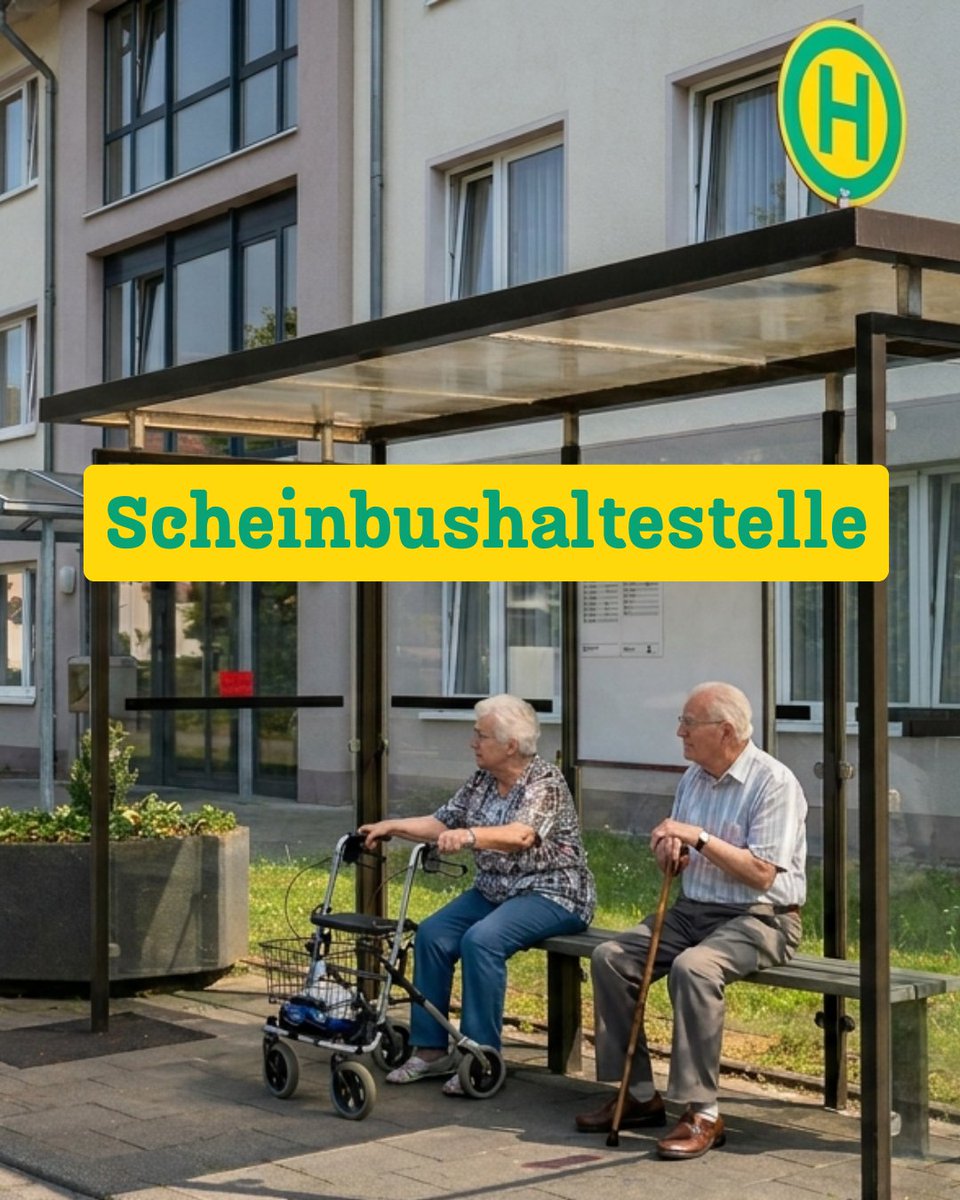
Outside a senior care home in Düsseldorf, Germany, there’s a bus stop with a green and yellow sign, a bench, and a printed timetable on the post. It looks exactly like every other bus stop in the city. No bus has ever stopped there.
The home built it around 2006, with the help of the local transit authority. The residents have dementia. Many of them, when the confusion gets bad, become certain they need to go home, even though the home they’re remembering is one they left decades ago. They’d walk out the front door looking for a way back. Sometimes they made it onto real buses. One woman was eventually found at the address of her childhood, where strangers were now living.
So the staff built a bus stop that goes nowhere. When a resident wanders out and sits down on the bench, a nurse comes over after a few minutes and says the bus is running late, and would they like to come inside for a coffee. By the time the coffee is poured, the urge to leave has usually passed.
The replica was so convincing that for the first few weeks, neighbours kept showing up to wait for actual buses. The nurses had to explain.
Dementia eats short-term memory first and works backwards in time. The part of the brain that holds new memories goes early, but the older memories, childhood, a first home, a young family, can stay vivid for years after. The bus stop works because it doesn’t argue with that. It meets people in the reality they’re actually living in, lets the moment pass, and brings them back inside.
Versions of it now exist in care homes across Germany, the Netherlands, the UK, and the United States.
You will need photo ID to vote in the local elections on 7 May.
If you don't have an accepted form of photo ID you can apply for a free voter ID document, known as a Voter Authority Certificate.
Apply by 28 April here:
https://t.co/7zRYlcTQFb
When simulation becomes the norm, it weakens the human capacity for discernment. As a result, our social bonds close in upon themselves, forming self-referential circuits that no longer expose us to reality. We thus come to live within bubbles, impermeable to one another. Feeling threatened by anyone who is different, we grow unaccustomed to encounter and dialogue. In this way, polarization, conflict, fear and violence spread. What is at stake is not merely the risk of error, but a transformation in our very relationship with truth.
This is brilliant and important work by @BylineTimes exposing the networks of Orban money sluicing through the British right-wing media. Hopefully there will soon be plenty more detail to come
🔴 EXPOSED: How Viktor Orbán Bankrolled the Network Around Reform UK
As Hungary’s Prime Minister suffers a historic electoral defeat, Byline Times maps out how his government’s funding arm channelled hundreds of thousands of pounds into organisations at the heart of Britain’s hard right.
https://t.co/9IFdHy1zT1
Whilst I don't see eye to eye with Rory Stewart on every issue, I admire his sympathetic view of the world, backed by his travels, open mind, meeting of people, cultural curiosity. There are a few angles in this interview we rarely hear as the facts of war dominate the headlines.