What if one framework could explain everything that happened to Haiti, from 19th century land reform, to 2010 earthquake, to why the currency is appreciating right in the middle of an existential crisis. Introducing my Totally Accurate Model of What Happened to Haiti. No less!
After a long break, I'm back to devposting! I argue that the development econ focus on "institutions" was a mistake – not (just) because the evidence was bad, but because the concept of "good institutions" is tautological and uninformative for policy.
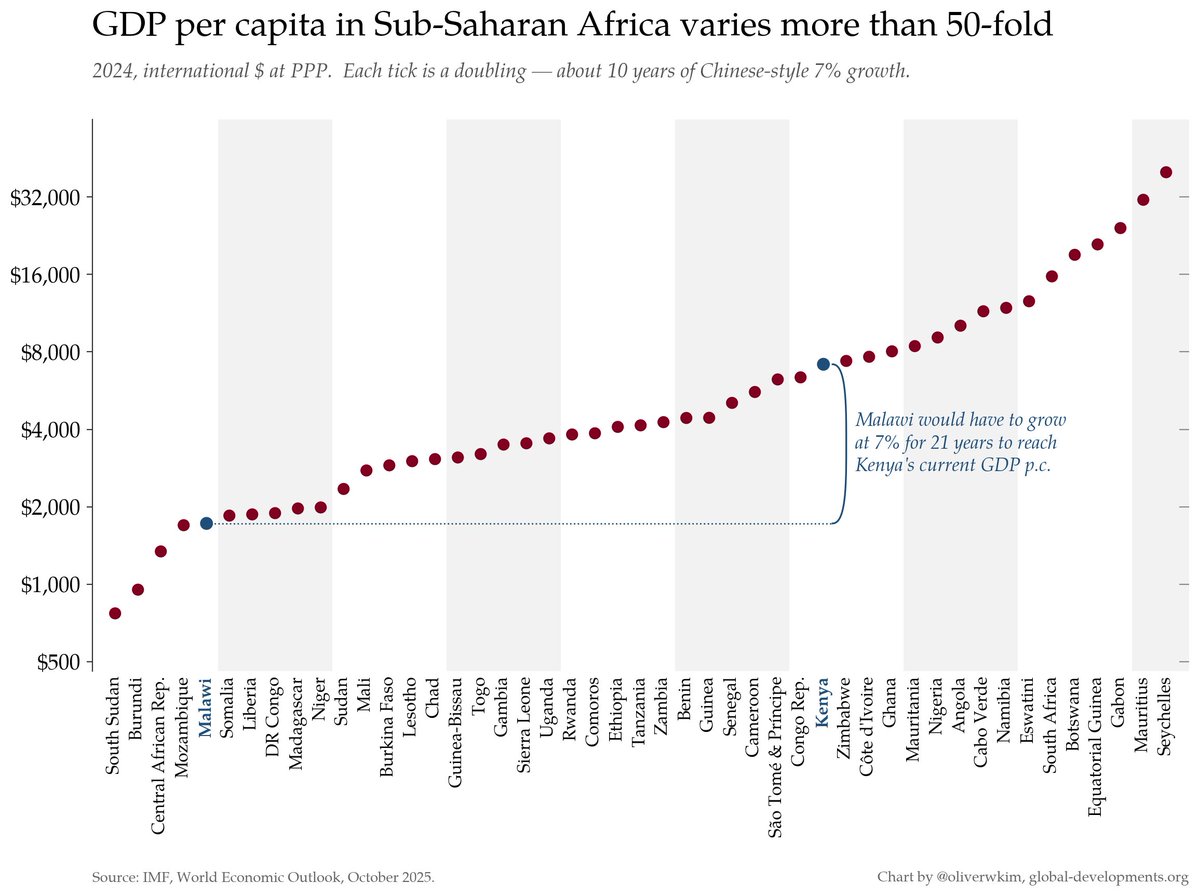
It will take Malawi 21 years of Chinese-style 7% growth to reach Kenya's current GDP per capita.
There's huge variation in incomes within Sub-Saharan Africa, which often goes ignored.
@whyvert@BrankoMilan Officially ~40 African countries with GDP per capita (ppp) higher than Haiti. Even after removing the likes of Seychelles and Oil exporters there are so many doing better. Understanding why and what can be done about it could improve the lives of millions. Thanks.
The IQ explanations say nothing about why Haiti is doing worse than Benin or why there wasn't a big income gap between Haiti and many countries in the region until early 20th century. Also, foreign aid to Haiti has steadily declined since 2014. But I do appreciate the calm, measured tone with which you explain how 12 million people are living on handouts and crime.
An excellent post by Carl-Henri Prophete
(Haiti should be one of the most interesting countries to study: its decline from relative prosperity, early independence, and high land ownership to poverty and export of labor is a great study case in what went wrong.)
My Totally Accurate Model of What Happened to Haiti
https://t.co/8oU732EdEA
What if one framework could explain everything that happened to Haiti, from 19th century land reform, to 2010 earthquake, to why the currency is appreciating right in the middle of an existential crisis. Introducing my Totally Accurate Model of What Happened to Haiti. No less!
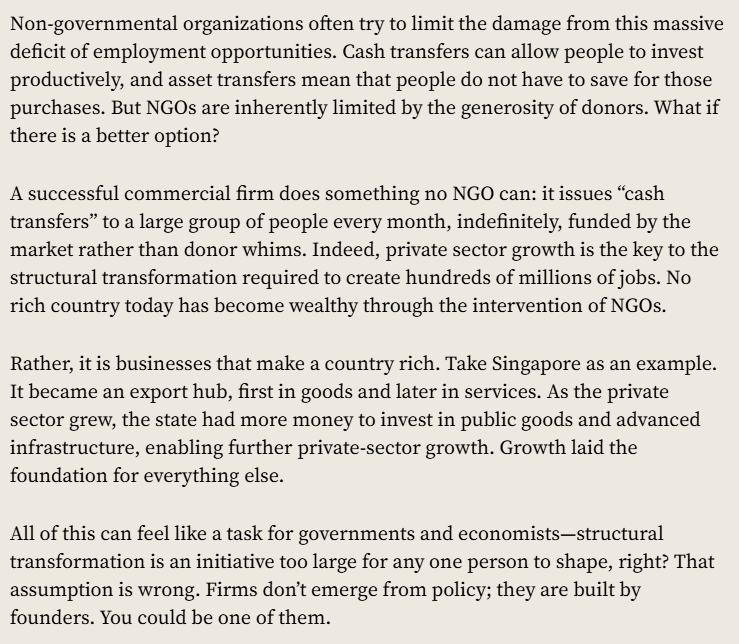
Excellent piece on how export-led growth can help the world's poorest.
"But consider what the world actually needs: not more development consultants, but more exporters without borders—people willing to trade the conference circuit for the factory floor, who go to places where formal employment barely exists and build the supply chains that bring it into being."
https://t.co/ydSC1Uwmj8
@DoubleEph Interesting. Can we say that the difference in results is mostly due to the technological gap between the country being attacked and its aggressors? The smaller the gap, the greater the chance for the victim to reform itself and chose modernization...
Vietnam is a great example.
Vietnam used to be a command economy, but during the 1980 & 1990 Doi Moi reforms, while still socialist, Vietnam took 2 IMF loans (including a structural adjustment in 94), made market reforms, and is now a fast growing "Market Socialist" economy.
I enjoyed chatting with Feyi and Tobi on the @1914Reader podcast. We discussed: The current situation in Haiti, the good and dark side of remittances, high labor costs in Africa and much more. https://t.co/yFvTqGBGTC
In this piece, I collaborate with Africatalyst on the distinction between aesthetic modernity (visible highways) vs Institutional modernity (invisible sewage systems)
https://t.co/4OaKnyUQzf