We are deepening our EU-Kazakhstan strategic partnership.
At today’s meeting with President @TokayevKZ, we reaffirmed our ambition to strengthen our ties under the Enhanced Partnership and Cooperation Agreement, focusing on critical raw materials, energy, transport, digitalisation and emerging technologies.
We also welcomed progress on the Trans-Caspian Transport Corridor and visa facilitation, and in particular the signing of the Horizontal Aviation Agreement.
Together, we reaffirmed our shared commitment to peace, security and stability, and to the principles of the UN Charter.
Read our joint statement ↓
https://t.co/uGc0xuiJfL
Kazakların ve Türkistan’ın büyük şairi #MağjanJumabay’ın bugün ölüm yıldönümü (19 Mart 1938).
Mağjan’ın, Türkistan’ın bağımsızlık mücadelesi verdiği yıllarda Çanakkale şehitlerine ithaf ettiği #AlıstağıBavrıma#Uzaktakikardeşime şiiri, Kazakistan-Türkiye kardeşliğinin sembolüdür…
#Kazakhstan’s diplomacy in 2025 marked a year of strategic recalibration, balancing global partnerships, reaffirming regional ties and advancing its role on the world stage.
https://t.co/iwVq2XyyKZ
🔹 Statement of Intent Between the Governments of the Republic of Kazakhstan, the Kyrgyz Republic, the Republic of Tajikistan, Turkmenistan, the Republic of Uzbekistan and the United States of America on Economic Cooperation
https://t.co/jK525VhMyK
A 2500 year-old mass grave in Himera, Sicily 🇮🇹 has shattered our understanding of ancient Greek warfare...
Once thought to be filled with heroic citizen-soldiers, this grave tells a different story. DNA analysis reveals a diverse group of mercenaries from far-off lands, including warriors from steppes of Ukraine and beyond. Their journey to fight in Sicily during the Carthaginian invasion of 480 BC, highlights the complex realities of loyalty and survival in ancient times.
#drthehistories
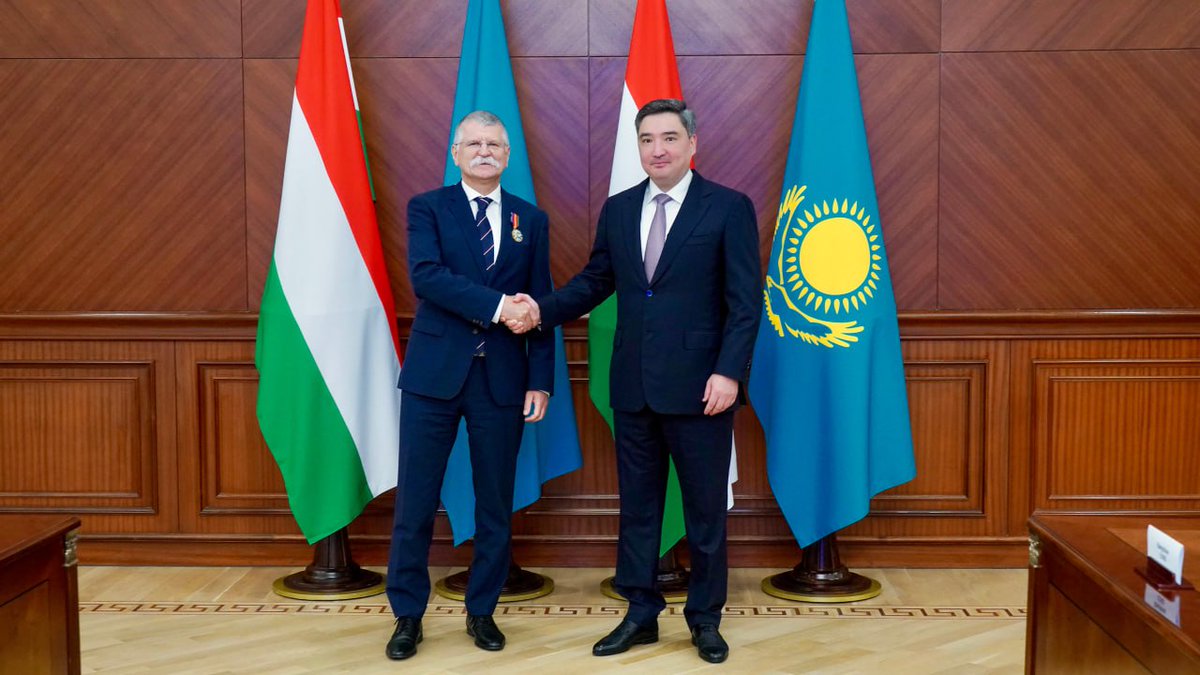
📌 #ОлжасБектенов обсудил с председателем Госсобрания Венгрии Ласло Кевером вопросы двустороннего сотрудничества
Обсуждены направления развития партнерства в торговле, образовании, культуре и инвестициях.
#Казахстан#Венгрия#Сотрудничество
https://t.co/V9MQmAI4AV
A pyramid that dates back 3400 years has been discovered in Kazakhstan 🇰🇿. The pyramid was unearthed by archaeologists from Karaganda University during a four-year excavation in the Shet district of Karaganda. It is situated on a hill that overlooks the Taldy River.
According to the researchers, the pyramid served as a mausoleum complex for a ruler belonging to Begazı Dandibay culture. This culture thrived during late Bronze Age, specifically during the final phase of the Andronovo period (2000–1150 BC).
The structure itself is a stepped mausoleum designed in a pyramidal shape. It was built in an area of Sari Arka steppes where rulers and elite were laid to rest. In addition to its funerary purpose, pyramid also served as a sacred space for religious ceremonies.
Carbon dating analysis of artifacts discovered within the structure has provided evidence that it dates back to 14th-12th Centuries BC.
#drthehistories
🇰🇿 TÜRKSOY Genel Sekreteri Sultan Raev ve Macaristan Ulusal Parlamentosu Başkan Yardımcısı, dünyaca ünlü yazar ve oyun yazarı Sándor Lezsák, Aktau’da Kazakistan Cumhuriyeti Mangıstau Bölge Valisi Nurdaulet Kılıbay ile bir görüşme gerçekleştirdi.
The ethnogenesis process of the Cumans & Kipchaks shown on the map with the G25 model;
>Cumans & Kipchaks = ~53% Xiongnu + ~35% Sarmatians + ~12% Slavic Peoples
The Cuman–Kipchak Confederation, one of the most powerful nomadic groups of the Medieval Eurasian steppes and distinguished by their original and cool helmets, was influential across a vast area north of the Black Sea, stretching from the Kazakh steppes to the Danube plains, from the 10th to the mid-13th centuries. These Turkic tribes, mentioned by various names in Byzantine, Russian, Arabic and Latin sources, were organized as autonomous unions and became decisive in the balance of power in Eastern Europe through plundering warfare, alliances and trade.
Recent archaeological and genetic data reveal the complex origins of this confederation more clearly. Genetic analyses of Cuman-Kipchak individuals from Ukraine and its surrounding regions reveal dominant Siberian and East Asian components through Xiongnu origin, thought to be among the earliest Turkic peoples, as well as a significant West Eurasian contribution through Sarmatian and Slavic origin. This confirms that these people are not comprised solely of a single ethnic origin, but rather a combination and ethnogenesis of elements of diverse Eurasian origin. Due to this West Eurasian genetic influence, the blondness of the Cumans and Kipchaks is prominent, as mentioned in various historical sources. All these findings are consistent both with the correlations found in historical sources and with the diversity of Kipchak-speaking peoples throughout history.
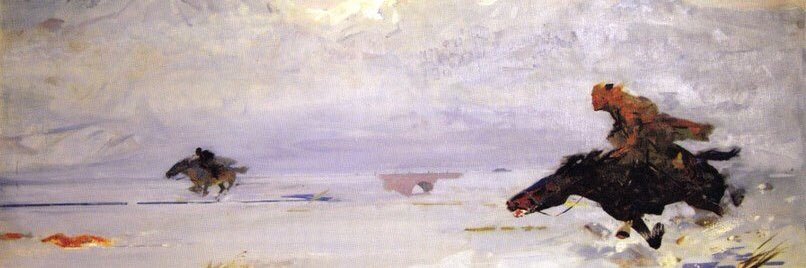
Horse remains, original armor, and weapons taken from kurgans reveal the Cumans' and Kipchaks' nomadic warrior character, while genetic data clearly demonstrate that these Turkic tribes served as a bridge between the eastern and western parts of the steppe. The Cuman and Kipchak economies were based on sheep, goat, horse, and cattle herding, in keeping with the steppe system, and trade through Black Sea port cities provided a significant source of income. The slave trade, frequently mentioned in Russian and Byzantine sources, both made them rich and made them a constant threat to other peoples in the region. The mercenary Cuman-Kipchak warriors serving the Kingdom of Georgia and the alliances established with Byzantium demonstrate that they were not simply nomadic raiders but also influential tribes in diplomacy.
Some of the Cumans and Kipchaks, whose unity was destroyed by the Mongol raids of the 1200s, were absorbed into the Golden Horde, while others migrated into Europe, leaving a lasting mark in Hungary and the Balkans.
Please note that all images used are representative and that the rates are approximate and may change with new data.
I am open to criticism and corrections.
---------------
#cuman #kipchak #turkic