𝗕.𝗔𝗜 𝗩𝗦 𝗢𝗣𝗘𝗡𝗥𝗢𝗨𝗧𝗘𝗥: 𝗧𝗛𝗘 𝗦𝗔𝗠𝗘 𝗦𝗖𝗔𝗟𝗘, 𝗧𝗪𝗢 𝗦𝗣𝗘𝗘𝗗𝗦
OpenRouter has become one of the most recognized AI routing platforms in the market.
Now https://t.co/78WJXEDEeP is entering that same infrastructure conversation with a remarkable growth trajectory.
https://t.co/78WJXEDEeP’s daily token throughput has broken through 1.11 trillion tokens.
And according to the data, it reached that order of magnitude in roughly 4 months, compared with about 2 years and 9 months for OpenRouter.
That’s roughly 7× faster.
But what does that actually mean?
Why does throughput matter?
And what does the https://t.co/78WJXEDEeP vs OpenRouter comparison tell us about the future of AI infrastructure?
Try https://t.co/78WJXEDEeP Here: https://t.co/ihCBIE9v3U
Let’s break it down. 🧵👇
11/
𝗧𝗛𝗘 𝗥𝗘𝗔𝗟 𝗟𝗘𝗦𝗦𝗢𝗡
DeFi isn't only about finding ways to earn more.
It's also about understanding where your money is going.
Energy is part of the cost structure behind TRON smart contract interactions.
If you use TRON regularly, learning how to obtain, manage, and optimize your Energy can help you make more informed decisions about your transactions.
You don't have to blindly burn TRX every time you need Energy.
Understand your options.
Understand your requirements.
Then choose the approach that fits your activity.
Have you used JustLend Energy Rental before?
Do you normally rent Energy or burn TRX?
𝗛𝗢𝗪 𝗧𝗢 𝗢𝗕𝗧𝗔𝗜𝗡 𝗘𝗡𝗘𝗥𝗚𝗬 𝗙𝗢𝗥 𝗧𝗥𝗢𝗡 𝗦𝗠𝗔𝗥𝗧 𝗖𝗢𝗡𝗧𝗥𝗔𝗖𝗧 𝗧𝗥𝗔𝗡𝗦𝗔𝗖𝗧𝗜𝗢𝗡𝗦 𝗪𝗜𝗧𝗛𝗢𝗨𝗧 𝗦𝗧𝗔𝗞𝗜𝗡𝗚 𝗢𝗥 𝗕𝗨𝗥𝗡𝗜𝗡𝗚 𝗧𝗥𝗫
Every smart contract interaction on TRON comes with a resource requirement. And when your wallet runs short of Energy, TRX can be burned to cover the difference.
But there's another way to approach these costs.
With JustLend Energy Rental, you can obtain the Energy needed for your transactions without having to stake large amounts of TRX.
How does it work? How much Energy should you rent? And what should you check before confirming a rental?
Let's walk through the process, step by step, so you can understand how to manage your Energy more efficiently.
🧵👇
➡️ https://t.co/9SIY7UenIX
@DeFi_JUST@justinsuntron #TRONEcoStar
10/
𝗟𝗘𝗧'𝗦 𝗠𝗔𝗞𝗘 𝗜𝗧 𝗥𝗘𝗔𝗟
Imagine you're about to make several USDT transactions on TRON.
Your wallet doesn't have enough Energy.
One option is to let the network burn TRX to cover the Energy requirement.
Another option is to plan ahead.
Estimate your Energy needs.
Rent the amount required.
Complete your transactions.
Then manage the rental afterward.
That's the real value of understanding Energy.
You're not just reacting to a transaction cost.
You're planning around it.
𝗪𝗔𝗧𝗖𝗛 𝗔 𝗩𝗜𝗗𝗘𝗢 𝗕𝗘𝗙𝗢𝗥𝗘 𝗜𝗧 𝗙𝗜𝗡𝗜𝗦𝗛𝗘𝗦 𝗗𝗢𝗪𝗡𝗟𝗢𝗔𝗗𝗜𝗡𝗚
Waiting for a large video file to finish downloading before pressing play isn't always convenient.
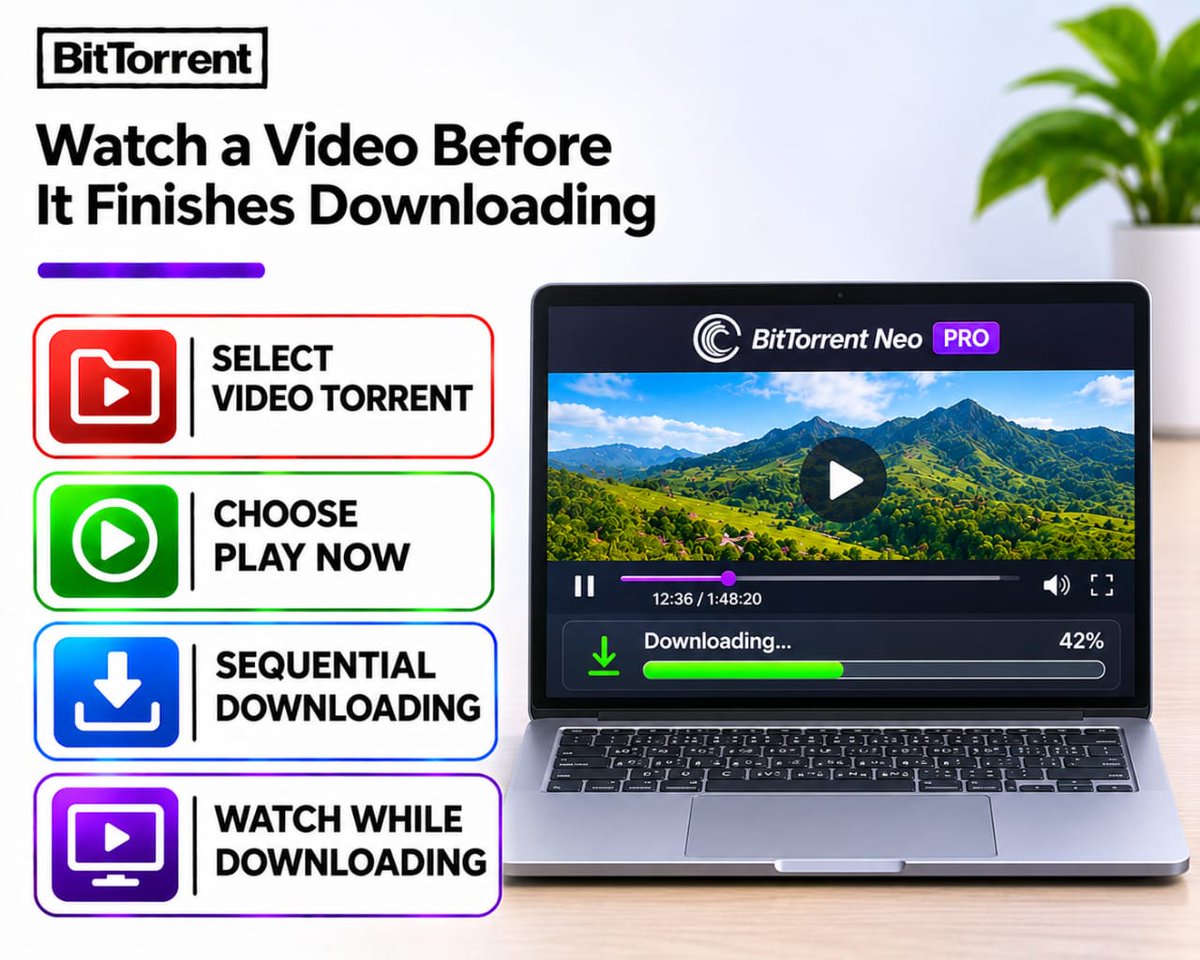
BitTorrent Neo PRO offers another option through its Play Now feature.
It uses sequential downloading to prioritize the beginning of a video so playback can start while the remaining data continues downloading.
Here's the experience:
➡️ Select a video torrent in BitTorrent Neo.
➡️ Choose Play Now.
➡️ Neo switches to sequential downloading and prioritizes the data needed first.
➡️ Start watching in the built-in player while the rest of the file continues downloading.
The practical benefit is simple: downloading and playback can happen at the same time.
There is one important consideration. Playback still depends on the connection keeping up with the video. If data arrives too slowly, buffering or interruptions can occur.
This feature doesn't make the download disappear. It changes the order in which data is retrieved so users can access the beginning sooner.
A useful convenience for anyone dealing with large video files.
Play Now is included in BitTorrent Neo PRO.
@BitTorrent@justinsuntron #TRONEcoStar
𝗪𝗛𝗔𝗧 𝗛𝗔𝗣𝗣𝗘𝗡𝗦 𝗪𝗛𝗘𝗡 𝗗𝗔𝗧𝗔 𝗥𝗘𝗔𝗖𝗛𝗘𝗦 𝗧𝗛𝗘 𝗕𝗟𝗢𝗖𝗞𝗖𝗛𝗔𝗜𝗡 𝗧𝗢𝗢 𝗟𝗔𝗧𝗘?
A price can be correct at one moment and outdated the next.
That difference is important in decentralized finance.
Imagine an asset experiencing a sudden market decline. A lending protocol still has an earlier price recorded by its oracle.
The number may have been accurate when it was first delivered, but it may no longer represent current market conditions.
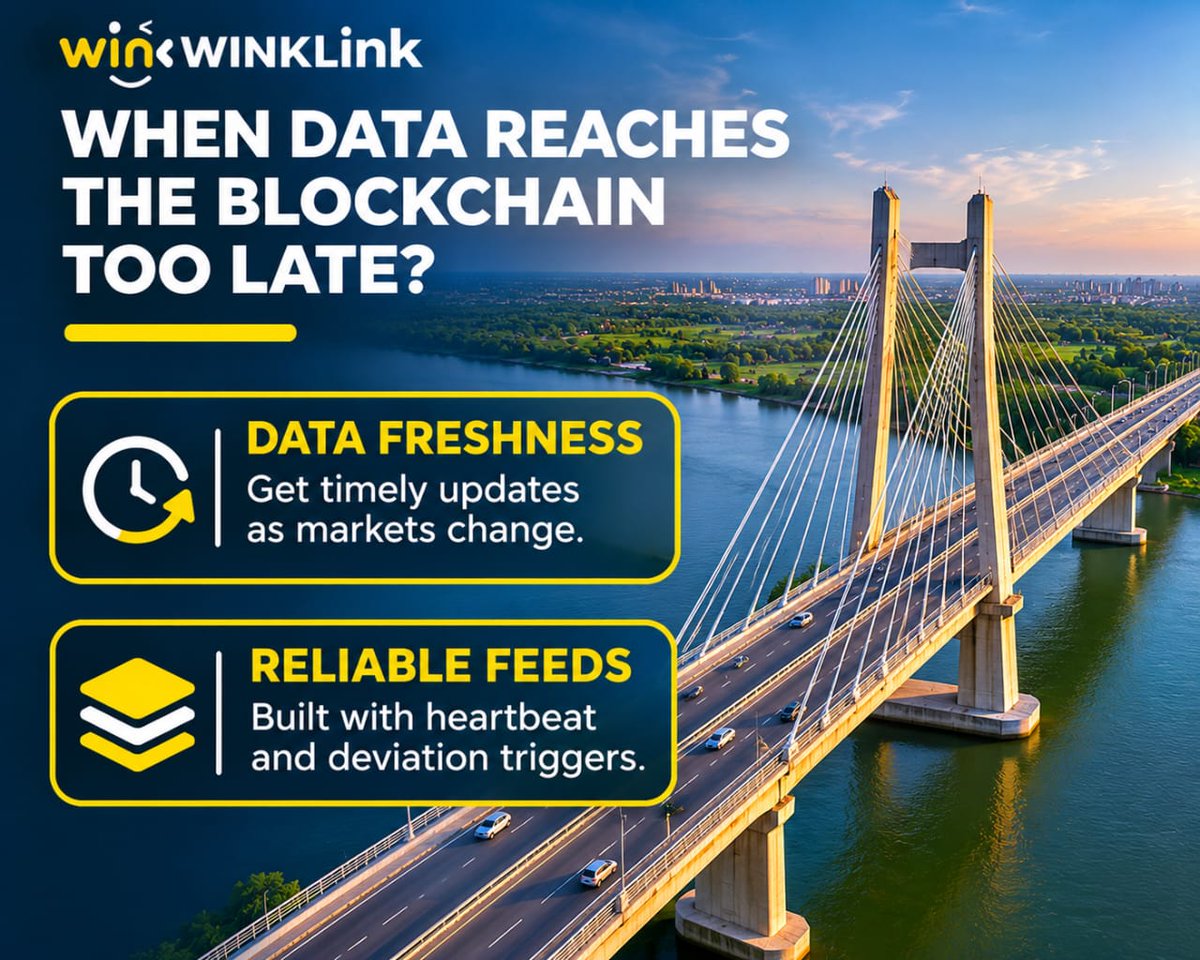
This creates a data freshness problem.
For applications that depend on external information, three questions are especially important:
➠ Is the data accurate? Does it represent the information being requested?
➠ Is the data fresh? Was it updated recently enough for the application's requirements?
➠ Is the data available? Can the application obtain an update when it needs one?
WINkLink's oracle infrastructure uses reporting mechanisms such as heartbeat intervals and deviation thresholds to support price-feed updates.
But developers also have responsibilities.
They should check timestamps, define acceptable data-age limits, handle unavailable feeds and avoid executing sensitive financial operations using stale information.
A dependable oracle integration requires both a suitable data service and careful application design.
This is a useful reminder that receiving a number is not enough.
The number must also be relevant to the moment when the smart contract uses it.
Explore: https://t.co/PXnDCv5Kn6
@justinsuntron@WinkLink_Oracle #TRONEcoStar
𝗛𝗢𝗪 𝗪𝗜𝗡𝗞𝗟𝗜𝗡𝗞 𝗧𝗨𝗥𝗡𝗦 𝗠𝗨𝗟𝗧𝗜𝗣𝗟𝗘 𝗗𝗔𝗧𝗔 𝗢𝗕𝗦𝗘𝗥𝗩𝗔𝗧𝗜𝗢𝗡𝗦 𝗜𝗡𝗧𝗢 𝗢𝗡-𝗖𝗛𝗔𝗜𝗡 𝗥𝗘𝗣𝗢𝗥𝗧𝗦
When several oracle nodes retrieve information independently, their observations need to be coordinated before the result reaches a smart contract.
Submitting every individual observation separately can create unnecessary on-chain reporting overhead.
WINkLink addresses this through Off-Chain Reporting (OCR).
Here is the basic idea.
➠ Independent observations: Participating oracle nodes collect information from their configured sources.
➠ Off-chain coordination: Nodes communicate and coordinate their observations before submitting a report.
➠ Report preparation: The participating nodes work toward a consolidated result.
➠ Cryptographic signatures: The report includes signatures that support verification of participating observations.
➠ On-chain submission: A consolidated report is submitted to the blockchain for processing.
The advantage is that multiple observations can be coordinated without requiring every node to submit an individual report on-chain.
This helps reduce on-chain transaction overhead and supports more efficient oracle reporting.
Why should developers care?
Because oracle infrastructure must balance data reliability with the cost and efficiency of delivering information.
OCR is an important part of that balance.
It does not eliminate the need to evaluate data sources, node participation or reporting assumptions. Instead, it provides a more coordinated way to deliver oracle observations.
WINkLink combines decentralized data collection with efficient reporting to support applications on TRON.
Explore: https://t.co/PXnDCv6icE
@justinsuntron@WinkLink_Oracle #TRONEcoStar
𝗪𝗛𝗬 𝗕𝗜𝗧𝗧𝗢𝗥𝗥𝗘𝗡𝗧 𝗚𝗜𝗩𝗘𝗦 𝗥𝗔𝗥𝗘 𝗙𝗜𝗟𝗘 𝗣𝗜𝗘𝗖𝗘𝗦 𝗦𝗣𝗘𝗖𝗜𝗔𝗟 𝗣𝗥𝗜𝗢𝗥𝗜𝗧𝗬
Not every piece of a file is equally available across a BitTorrent swarm.
Some pieces may be held by many peers, while others might exist in only a few copies.
This difference matters.
If an uncommon piece is held by very few participants, its availability could become a bottleneck, especially if those peers disconnect.
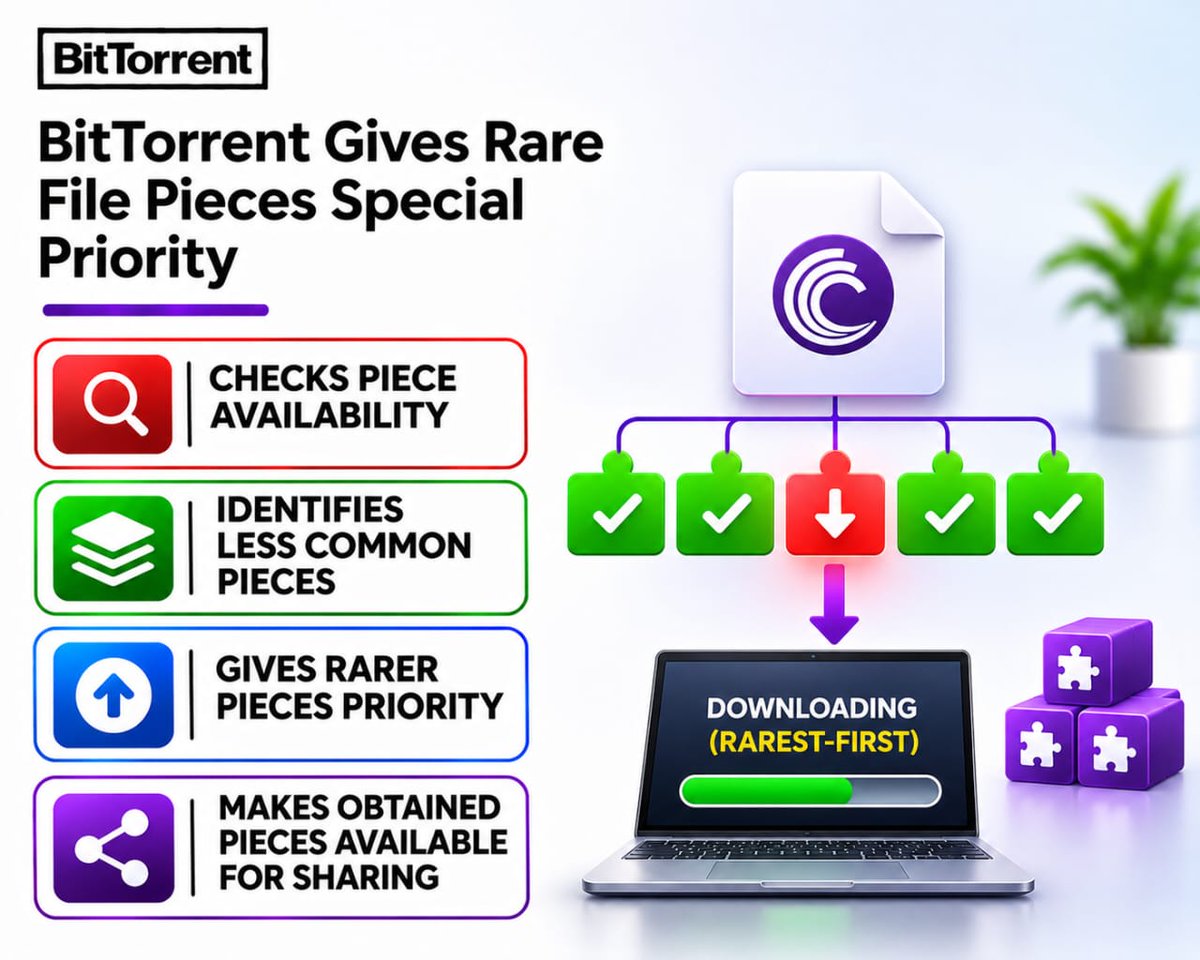
BitTorrent addresses this with a piece-selection strategy known as rarest-first.
Here's the basic idea:
➡️ The client checks which pieces are available from connected peers.
➡️ It identifies pieces that appear less frequently.
➡️ It gives those rarer pieces priority when selecting what to download.
➡️ Once obtained, the pieces can become available for sharing with other peers.
Why is this useful?
It helps spread less common pieces throughout the swarm instead of allowing them to remain concentrated among a small number of participants.
This can support better piece availability and reduce the risk that uncommon data becomes difficult to obtain.
The principle is simple: efficient distribution isn't only about downloading quickly. It's also about making sure the pieces needed to complete a file remain available across the network.
@BitTorrent@justinsuntron #TRONEcoStar
𝗢𝗡𝗘 𝗗𝗔𝗧𝗔 𝗦𝗢𝗨𝗥𝗖𝗘 𝗖𝗔𝗡 𝗕𝗘 𝗔 𝗕𝗜𝗚 𝗣𝗥𝗢𝗕𝗟𝗘𝗠 𝗙𝗢𝗥 𝗪𝗘𝗕𝟯
Imagine a decentralized application that gets every price update from one external provider.
What happens if that provider becomes unavailable?
What if its information is delayed, inaccurate or temporarily manipulated?
The application may continue operating, but the information guiding its decisions could be compromised.
This illustrates one of the risks of depending on a single data source.
Decentralized oracle infrastructure takes a different approach.
WINkLink uses multiple data providers and oracle nodes to support external data collection and delivery.
The objective is to reduce dependence on one individual source or reporting participant.
There are several benefits to this approach:
➠ Multiple sources provide observations that can be compared and aggregated.
➠ Distributed node participation reduces reliance on one operator.
➠ Aggregation can limit the influence of unusual individual observations.
➠ On-chain reporting makes the delivered information available to smart contracts.
WINkLink's documented price-feed configuration uses seven nodes with median aggregation.
However, having multiple sources does not automatically guarantee that every observation is independent. If providers share the same underlying data, their errors may also be correlated.
That is why source diversity, node independence and aggregation design all matter.
Decentralization is not simply about increasing the number of participants. It is about reducing unnecessary concentration of trust.
Explore: https://t.co/PXnDCv5Kn6
@justinsuntron@WinkLink_Oracle #TRONEcoStar
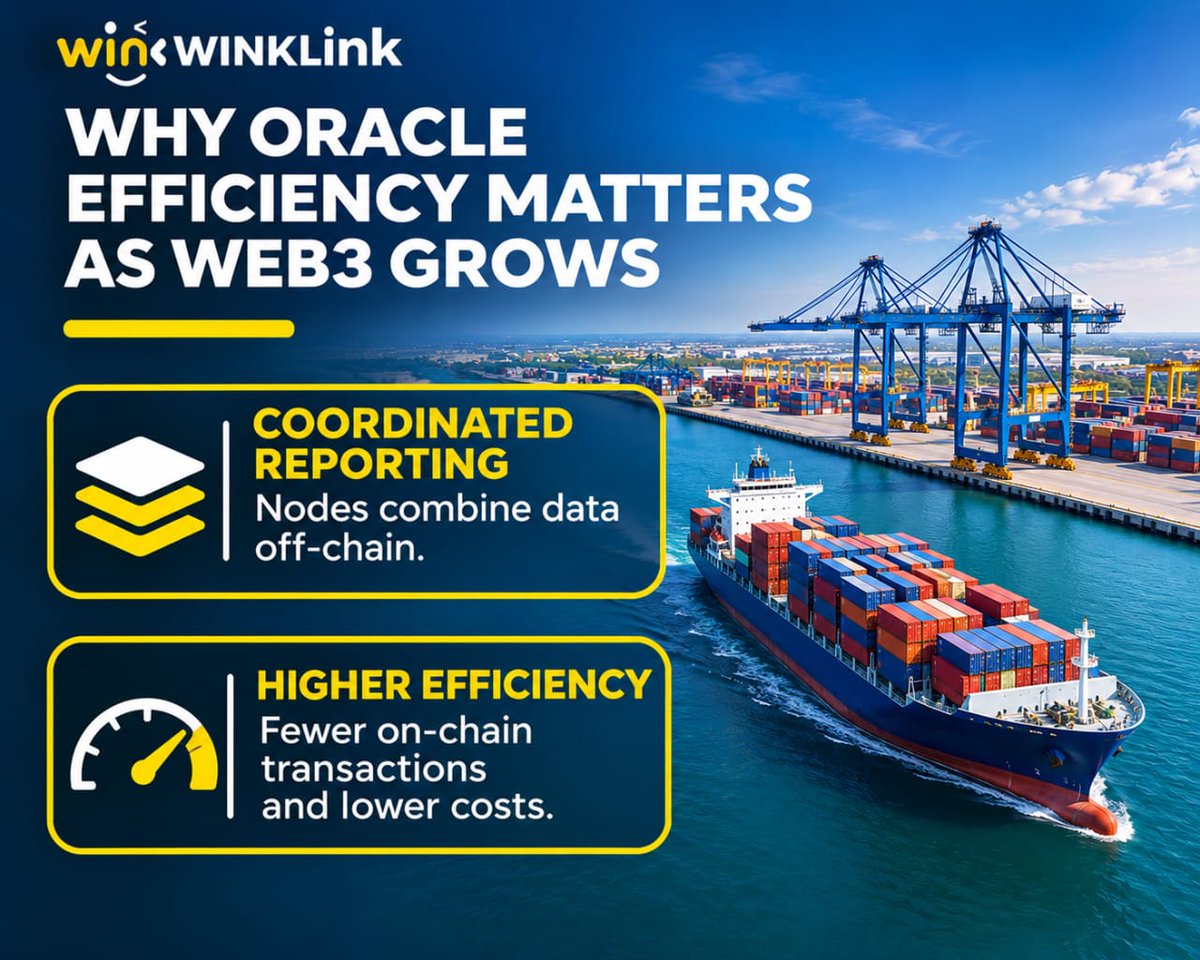
𝗪𝗛𝗬 𝗢𝗥𝗔𝗖𝗟𝗘 𝗘𝗙𝗙𝗜𝗖𝗜𝗘𝗡𝗖𝗬 𝗠𝗔𝗧𝗧𝗘𝗥𝗦 𝗔𝗦 𝗪𝗘𝗕𝟯 𝗚𝗥𝗢𝗪𝗦
As decentralized applications become more sophisticated, the demand for external information also increases.
More applications need price updates, external API responses, automated execution and other data-dependent services.
But delivering information reliably is only one part of the challenge. The process must also be efficient.
This is where WINkLink's Off-Chain Reporting architecture becomes relevant.
Traditional individual reporting can require multiple oracle nodes to submit separate transactions.
OCR changes the reporting workflow by allowing participating nodes to coordinate their observations off-chain before submitting a consolidated report.
This offers several important advantages:
➠ Reduces the need for individual node submissions for every reporting round.
➠ Helps lower on-chain transaction overhead.
➠ Coordinates observations from multiple participating nodes.
➠ Supports more efficient oracle reporting.
Why does that matter?
Every unnecessary on-chain operation can contribute to additional network activity and costs.
A more efficient reporting design can help oracle infrastructure serve applications without requiring every observation to become a separate on-chain transaction.
Efficiency does not replace the need for reliable data sources or sound security assumptions. It complements them.
As Web3 applications expand, infrastructure must be designed around both reliability and operational efficiency.
WINkLink's OCR architecture is one example of how oracle networks can approach that challenge.
Explore: https://t.co/PXnDCv5Kn6
@justinsuntron@WinkLink_Oracle #TRONEcoStar
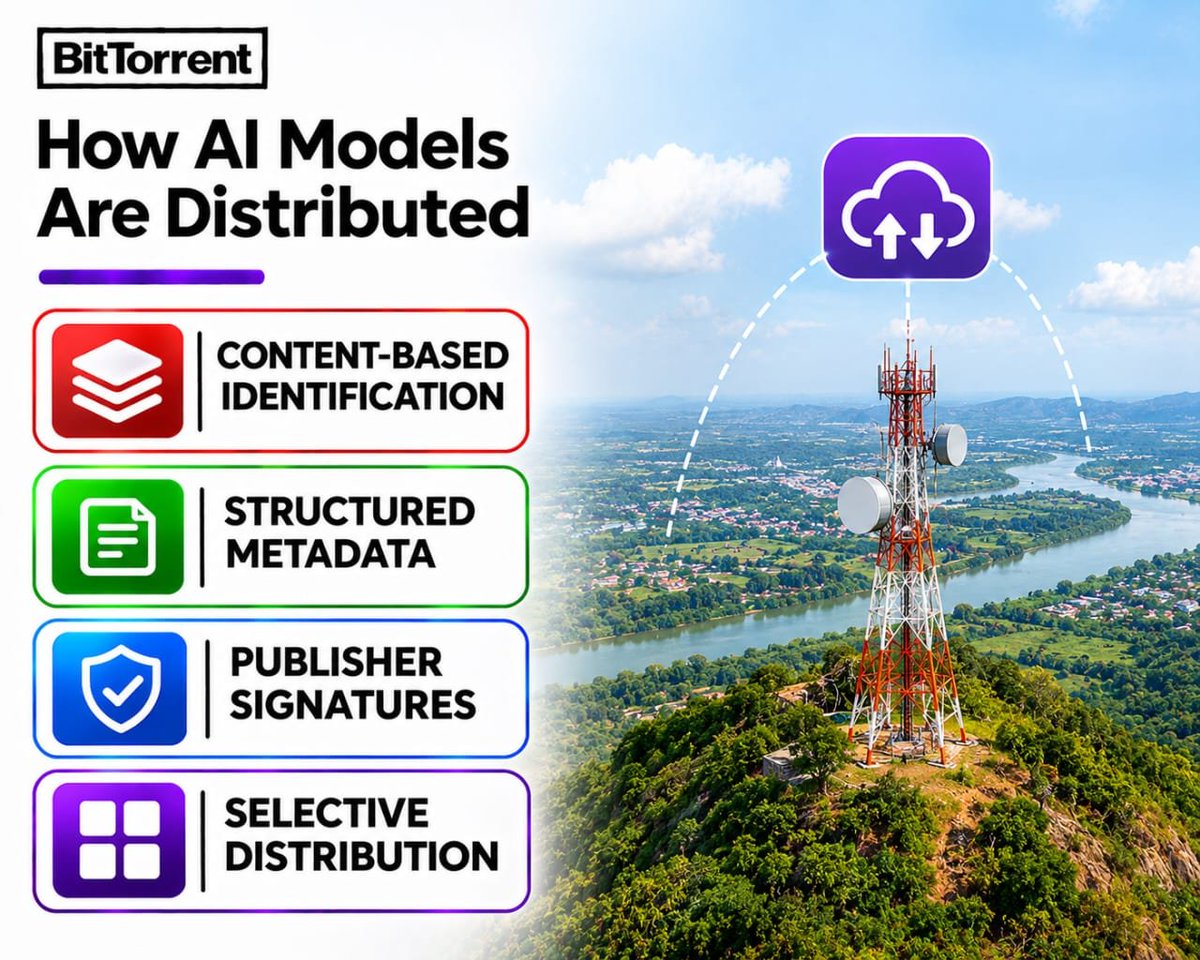
𝗛𝗢𝗪 𝗔𝗥𝗧𝗜𝗙𝗔𝗖𝗧 𝗧𝗢𝗥𝗥𝗘𝗡𝗧 𝗖𝗢𝗨𝗟𝗗 𝗖𝗛𝗔𝗡𝗚𝗘 𝗛𝗢𝗪 𝗔𝗜 𝗠𝗢𝗗𝗘𝗟𝗦 𝗔𝗥𝗘 𝗗𝗜𝗦𝗧𝗥𝗜𝗕𝗨𝗧𝗘𝗗
AI models and datasets can be large.
Getting these resources to developers, researchers and infrastructure providers is an important part of the AI ecosystem.
BitTorrent's whitepaper describes Artifact Torrent as an approach to using peer-to-peer distribution for AI-related resources.
The concept goes beyond simply sharing a large file.
It considers several important elements:
Content-based identification
Artifacts can be referenced through identifiers based on their content, helping distinguish specific resources and versions.
Structured metadata
Model cards, dataset cards and licensing information can provide context about the resources being distributed.
Publisher signatures
Digital signatures can help users verify whether an artifact comes from an expected publisher.
Selective distribution
The design considers distributing individual resources or components rather than requiring every participant to retrieve an entire collection.
Why is this interesting?
AI development depends on access to models, datasets and supporting files. A peer-to-peer distribution approach could offer another way to move these resources across a network.
It's important to note that Artifact Torrent is a proposed direction described in the whitepaper, not a claim that every capability is already generally available.
Still, applying BitTorrent's distribution experience to AI infrastructure is an interesting development.
@BitTorrent@justinsuntron #TRONEcoStar
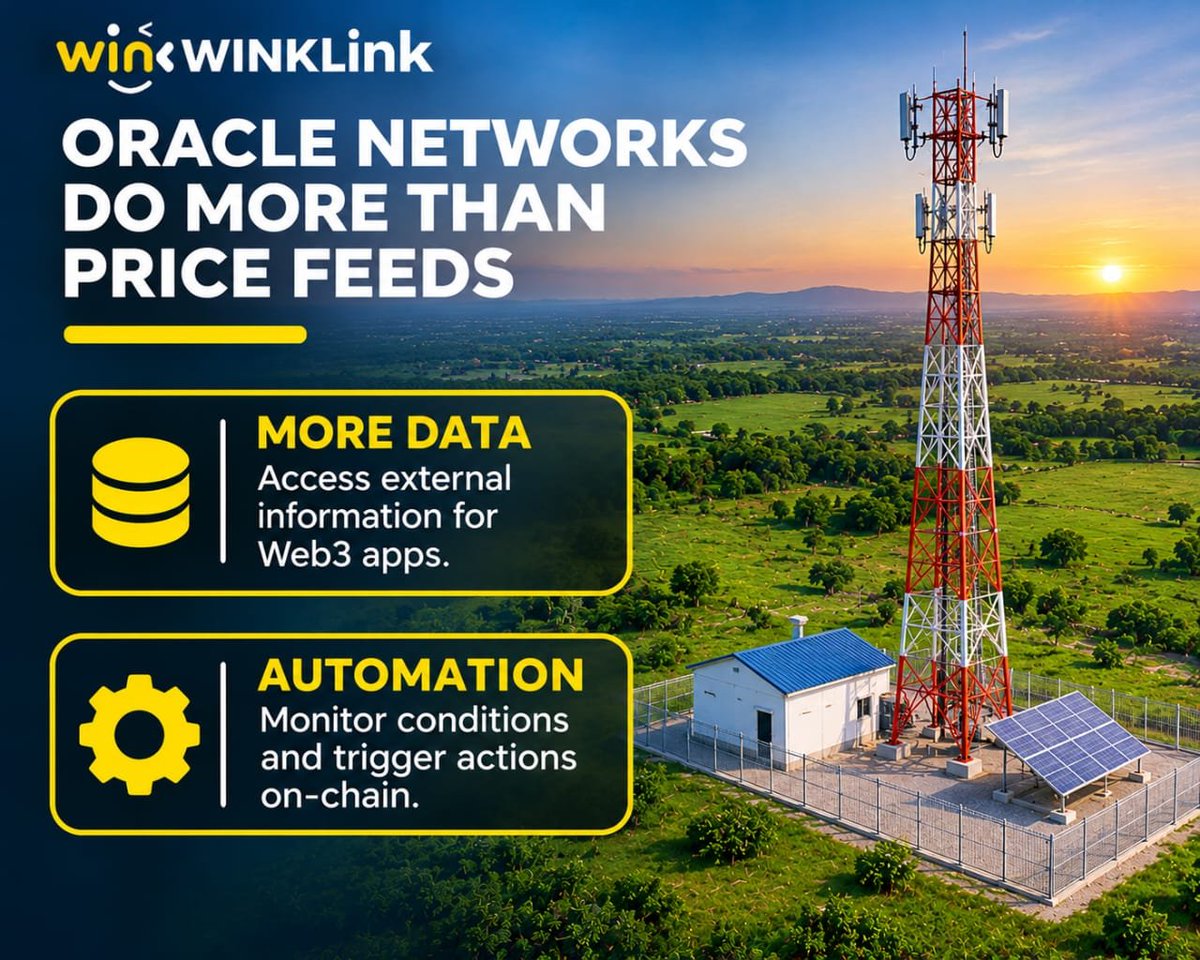
𝗧𝗛𝗘 𝗥𝗘𝗔𝗟 𝗩𝗔𝗟𝗨𝗘 𝗢𝗙 𝗢𝗥𝗔𝗖𝗟𝗘 𝗡𝗘𝗧𝗪𝗢𝗥𝗞𝗦 𝗚𝗢𝗘𝗦 𝗕𝗘𝗬𝗢𝗡𝗗 𝗣𝗥𝗜𝗖𝗘 𝗙𝗘𝗘𝗗𝗦
When people discuss oracle networks, price feeds are often the first thing that comes to mind.
That makes sense. DeFi applications need external prices for trading, lending, borrowing and collateral management.
But oracle infrastructure can support much more than market prices.
WINkLink provides several services that address different information and automation requirements.
Price Services
Deliver external price information to applications that need market data.
AnyAPI
Allows smart contracts to request configured information from external APIs.
Verifiable Random Function
Provides random outputs accompanied by cryptographic proofs that can be verified on-chain.
Automation
Supports monitoring predefined conditions and triggering corresponding smart-contract functions.
These services address different problems.
A gaming application may need verifiable randomness. A lending protocol may require external asset prices. Another application may need information from an external API or automated execution when a condition is satisfied.
The common requirement is a reliable connection between blockchain applications and capabilities they cannot independently access or perform.
This is why oracle infrastructure should not be viewed only as a price-delivery tool.
It is part of the wider infrastructure that helps developers build applications with more sophisticated external data and automation requirements.
WINkLink's services give TRON developers different tools for that purpose.
Explore: https://t.co/PXnDCv5Kn6
@justinsuntron@WinkLink_Oracle #TRONEcoStar