@jsteelefx@Datavault_ai Scilex is suing a NY bank over those 96m DVLT shares that were sold without their permission or knowledge lol. Do better research
@Mateovkc86@LateNightDD@NateX112756 What has he lied about? The fact that you said "pretty much everything" means that the answer is actually nothing lol
@Datavault_ai@NateX112756 Don't understand why people are so negative because they didn't "get rich quick". Never seen such a hard working CEO 💪🏼💪🏼💪🏼 the pieces of the puzzle are coming together, and some puzzles take more time than others to complete. Real investing takes time. GO NATE!! 🙌🏼
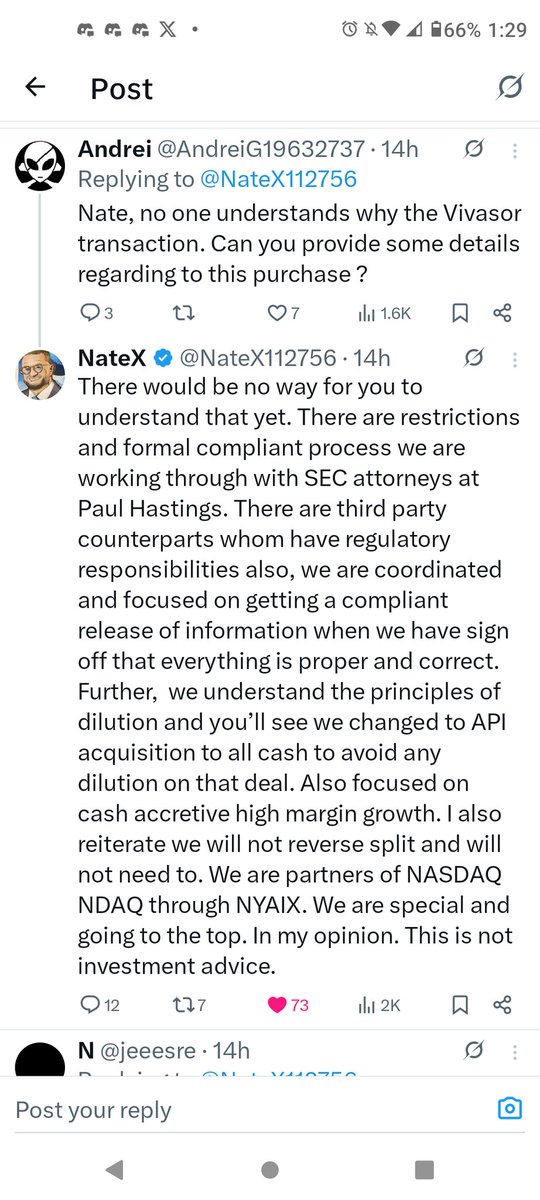
@dwarf_co@Datavault_ai@TheDCW_X It's a reply directly to somebody asking about the Vivasor acquisition. Click the screenshot to see the question that was asked, or look at the post yourself, and you'll see
Nobody is talking about what the helium shortage means for quantum computing.
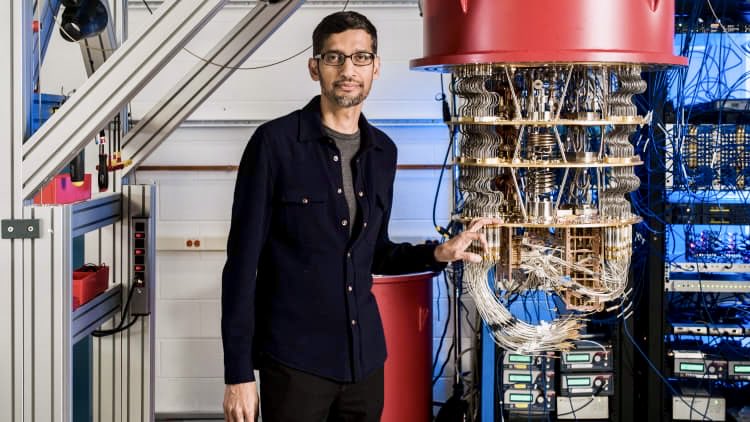
Every superconducting quantum computer on earth, every system at IBM, Google Quantum AI, and Quantinuum, operates inside a dilution refrigerator cooled to approximately 10 to 20 millikelvin. That is colder than outer space. The cooling mechanism relies on the phase separation of a helium-3 and helium-4 mixture below 0.87 kelvin, where helium-3 atoms continuously cross the boundary between two quantum phases, absorbing heat in the process. There is no substitute for this mechanism at scale. It is the physics that makes superconducting qubits possible.
Qatar produces one-third of the world’s helium as a byproduct of LNG processing at Ras Laffan. Iranian missiles hit Ras Laffan on March 18 and 19. QatarEnergy declared force majeure. Repairs will take three to five years. Helium spot prices have doubled. Approximately 200 specialized cryogenic containers worth roughly $1 million each are stranded in the Middle East, and their cargo begins boiling off after 35 to 48 days.
The Quantum Computing Report and Nature flagged on March 27 that US quantum labs have begun implementing rationing protocols for helium-3 and helium-4 mixtures used in dilution refrigerators. Delayed cooldown cycles are being reported at IBM Quantum and Quantinuum facilities. The potential impact: 6 to 18 months of delays in qubit scaling timelines and post-quantum cryptography testing.
Modern closed-cycle “dry” dilution refrigerators significantly reduce liquid helium consumption, and labs maintain months of inventory with recycling rates above 80 percent. Trapped-ion platforms like IonQ have minimal helium dependency. No quantum lab has shut down. The counterarguments are real and must be stated at full strength: quantum computing uses a tiny fraction of global helium supply, roughly 0.1 to 0.5 percent, and rationing prioritizes critical applications.
But the second-order effects are what matter for trillion-dollar allocators.
If qubit scaling delays by 6 to 18 months, then post-quantum cryptography standards migration slows by the same interval. That means the window during which current encryption remains vulnerable to future quantum attack extends. Every central bank, every sovereign wealth fund, every institution holding assets secured by RSA or elliptic-curve cryptography has a direct exposure to this timeline.
And helium-3 is also the working fluid in the dilution fridges used for fusion energy research. The same shortage rationing quantum labs is rationing the facilities developing the energy source that could eventually replace the fossil fuels flowing through the strait that caused the shortage. The circularity is total.
Follow the chain. Iranian missiles hit a Qatari gas plant. The gas plant produced helium as a byproduct. The helium cooled quantum computers to temperatures colder than deep space. The quantum computers were developing the encryption standards that protect the global financial system. The financial system runs on energy that transits the strait that Iran just blockaded.
One missile. Six domains. Every node connected through a single element that weighs four atomic mass units, cannot be manufactured, and has no substitute.
The market priced the oil. It has not priced the helium. And it has not begun to price the quantum.
https://t.co/32ixeQpN7N