My husband pulled a small envelope from his pocket.
Inside was a key.
He placed it on the table.
“Your father left something in his old storage unit before he died.”
I stared at the key.
My sister finally spoke.
“He left a box of documents there.”
My husband nodded.
“Your sister found out there was a life insurance policy in your father's name that neither of us knew about.”
I looked at my sister.
“You knew?”
She started crying again.
“I found the papers weeks ago.”
“Why didn't you tell me?”
She couldn't answer.
My husband finally said:
“Because she was going to take the policy money and disappear.”
I looked at my sister.
She whispered:
“I was scared.”
Then my husband said something that made the entire room go silent.
“The policy is worth $180,000.”
I couldn't believe what I was hearing.
My sister had known for weeks.
My husband had known.
And somehow, both of them had kept it from me.
I picked up the key.
Then I asked the question neither of them expected:
“Whose name is on the policy?”
My sister started crying harder.
My husband looked at the floor.
And nobody answered.
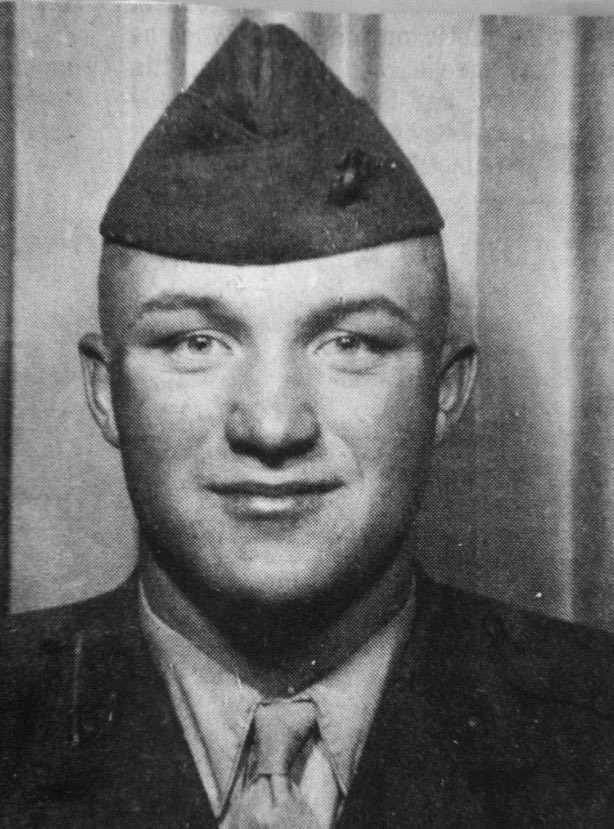
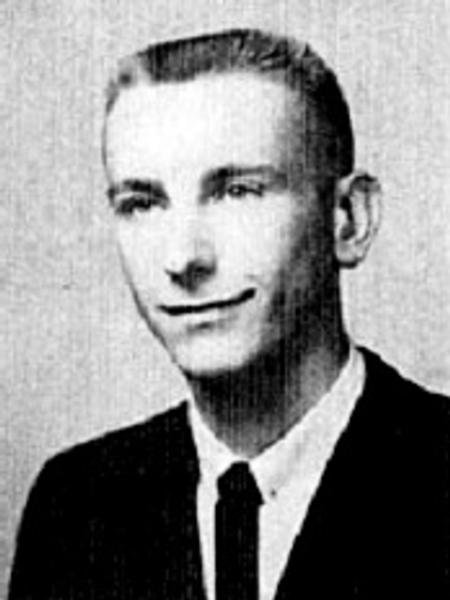
U.S. Marine Corps Corporal Sheldon Dale Hoskins selflessly sacrificed his life in the service of his country on October 7, 1968 in Quang Nam Province, South Vietnam. For his extraordinary heroism and bravery that day, Sheldon was awarded the Silver Star. He was 20 years old.🇺🇸
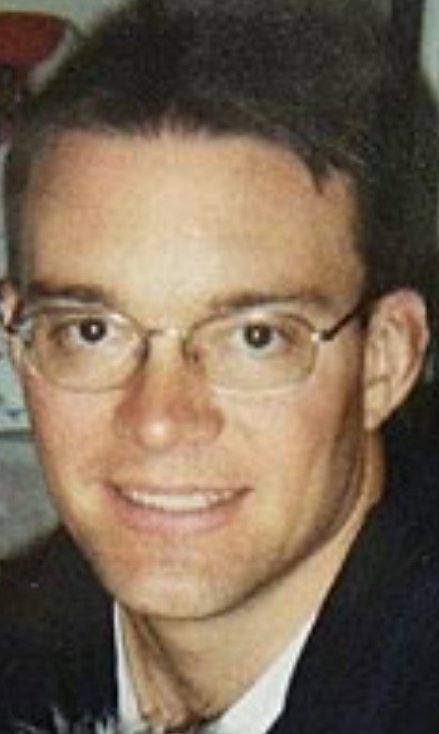
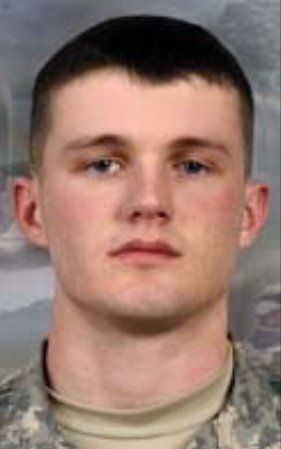
DEAN, CHRISTOPHER P., SILVER STAR RECIPIENT
The President of the United States takes pleasure in presenting the Silver Star Medal to Christopher P. Dean, First Lieutenant (Armor), U.S. Army, for conspicuous gallantry and intrepidity in action while serving with Company C, 2d Battalion, 37th Armored Regiment, 1st Armored Division, during combat operations in support of Operation IRAQI FREEDOM, on 4 April 2004, in Baghdad, Iraq. When a patrol from 1st Cavalry Division was ambushed in the city, First Lieutenant Dean rolled out immediately with four tanks under his charge. Traveling at top speed, they headed to the grid coordinates given by the besieged patrol. As soon as they arrived, the Quick Reaction Force was hit by a barrage of gunfire and one man was killed. Lieutenant Dean then led a seven-tank attack back into the engagement area to find the ambushed patrol. The .50-caliber machine gun was taken out by enemy fire, leaving him atop the vehicle with only his M4 rifle. He was hit by shrapnel from a rocket-propelled grenade blast. Reaching the ambushed patrol, the Quick Reaction Force dismounted to help get the patrol out. Under heavy enemy fire they pulled out the dead and wounded and put them inside the tanks, then used one of Lieutenant Dean's tanks to push two damaged vehicles out of the area. First Lieutenant Dean's leadership ensured the success of the company mission to evacuate 19 infantrymen isolated and surrounded by the enemy. First Lieutenant Dean's exceptional bravery while under intense fire during a four-hour attack despite wounds is in the highest traditions of the 2nd Cavalry Regiment, the 1st Armored Division and the United States Army.
On June 6, 1944, Brigadier General Theodore Roosevelt Jr., age 56, landed with the first wave of infantry on Utah Beach during the Allied invasion of Normandy.
Roosevelt was the assistant division commander of the 4th Infantry Division. He suffered from arthritis and had a heart condition. He walked with a cane. Despite this, he personally requested to go ashore with the first wave of troops. His request was approved.
When Roosevelt landed, he immediately realized that the landing craft had drifted nearly 2,000 yards south of their assigned beach. The units were scattered. The beach was under fire. Shells landed nearby. German machine guns swept the shoreline. Officers and men were disoriented. Command structure was breaking down.
Roosevelt made a decision. He walked up and down the beach under fire. He located commanders. He assessed the terrain. He determined the new location could still support the mission. He ordered the troops to press forward from that point. He said, “We’ll start the war from right here.”
Throughout the morning and afternoon, Roosevelt moved across the sand and the sea wall, personally directing units, grouping scattered soldiers, and assigning objectives. He organized columns and pointed them toward exits from the beach. He made contact with naval gunfire units and adjusted fire on enemy positions inland.
He repeatedly exposed himself to enemy fire while moving between positions. He brought up reinforcements and guided them through minefields and along cleared paths. At multiple points, he led troops directly through enemy zones to ensure progress inland. His leadership stabilized the beachhead and enabled the division to achieve its initial objectives with fewer casualties than expected.
Roosevelt remained on the beach all day. He never sought cover. He refused to rest. He coordinated with both division staff and regimental units as they established a foothold in enemy territory.
One month later, on July 12, 1944, while serving in France, Roosevelt died of a heart attack. He was buried at the Normandy American Cemetery. His grave lies next to that of his younger brother Quentin Roosevelt, a pilot killed in World War I.
For his actions on June 6, 1944, Brigadier General Theodore Roosevelt Jr. was posthumously awarded the Medal of Honor.
Army Maj. Mathew E. Schram, 36, of Brookfield, Wis.; assigned to the Headquarters & Headquarters Troop Support Squadron, 3rd Armored Cavalry Regiment, Fort Carson, Colo.; killed by enemy fire May 26, 2003 in Hadithah, Iraq.
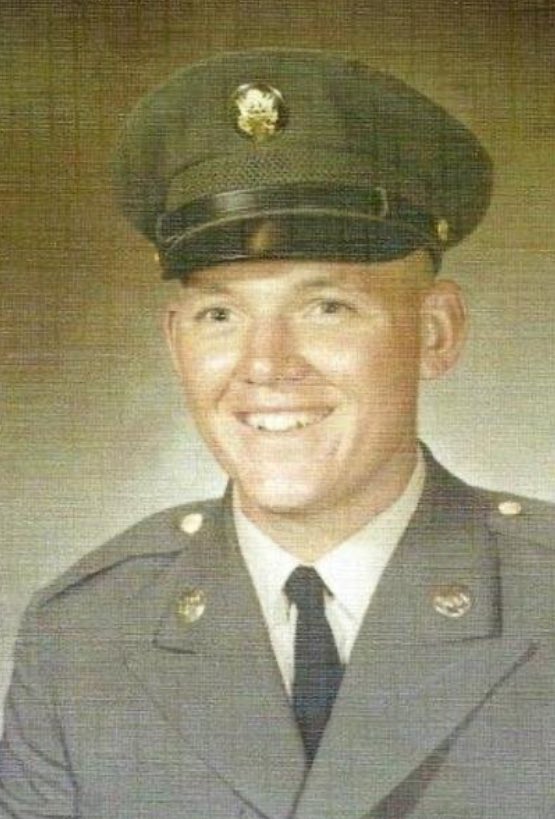
U.S. Army Captain Richard David Hulse was killed in action on March 23, 1970 in Thua Thien Province, South Vietnam. Richard was a 24 year old helicopter pilot from Flagstaff, Arizona. B Battery, 4th Bn, 77th Artillery, 101st Airborne Division. Remember Richard today. Leader. Hero.🇺🇸
U.S. Marine Corps Capt. Joshua C. Watson was awarded the Navy and Marine Corps Medal for saving lives of service members during a MV-22B Osprey crash on Melville Island, Australia, that resulted in the deaths of three Marines.
Watson received the medal — which honors individuals who distinguish themselves in a non-combat environment — during a ceremony hosted by Marine Aviation Training Support Group 21 at Naval Air Station Pensacola.
https://t.co/IPQw9WqMmu
U.S. Army Second Lieutenant James Harry Taylor was declared Missing in Action on February 15, 1971 after a mission in Laos. James was a 25 year old helicopter pilot from Oroville, California. C Company, 159th Aviation Bn, 101st Airborne Division. Sadly, James has not made it home. American Hero.🇺🇸
PO3 Terry L. Beck of Linesville, PA. was declared MIA on this day in 1969 in South Vietnam. He was enlisted with the US Navy and served with VF-143, CVW-14, USS Constellation, TF 77, 7th Fleet.
We will never forget you, brother.
Cpl. Jason D. Hovater, 24, of Clinton, Tenn.; assigned to the 2nd Battalion, 503rd Infantry Regiment, 173rd Airborne Brigade Combat Team, Vicenza, Italy; died 13Jul08 of wounds sustained when his outpost was attacked by small-arms fire from enemy forces in Wanat, Afghanistan.