I did say we'd be releasing our models periodically...introducing Gemini 4 Carbon, our next frontier model.
Following Argon's release just two weeks ago, Carbon shows the pace at which we’re pushing the frontier, it ranks #1 on the recently updated v5.0 of @ArtificialAnlys Intelligence Index at 59. It also leads across key cybersecurity evaluations scoring 88.2% on SEC-bench Pro for finding vulnerabilities, 54.8% on ExploitGym for exploitation, and 71.0% on CWE-bench for patching.
We’re seeing significant improvements in long-horizon tasks even compared to Argon, and we’ve strengthened frontier safeguards.
As we did with Argon, we’re going to roll it out gradually + responsibly. Some trusted cyber defenders will get access starting this week. We'll be expanding it to more partners through our Fairwind Program, ahead of wider availability soon, so hang tight!
At @IsomorphicLabs, researchers are using Gemini 4 Argon as a partner to accelerate drug discovery and design research 🧬
Argon quickly synthesizes complex PDFs and patents to extract pertinent information, reducing a process that typically takes weeks into just hours.
Google Beam can make you feel as though you’re in the same room as someone far away. For military service members, that’s more than just a nice-to-have—it helps them feel more connected with family members thousands of miles away.
That’s why we’re bringing @HP Dimension with @Google Beam to 20 USO locations globally.
More on how it works and what it means to service members here → https://t.co/OkjtL2Eq0j
Did you catch Sundar’s interview with @Kantrowitz?
They covered a lot of ground, including the future of agents, safety, and the defining goal behind the work we’re driving: To make the human condition better.
When technology adapts to you, harnessing it becomes easier, and the possibilities become virtually limitless.
New: I spoke with @sundarpichai about Google's commitment to the AI frontier, how close we are to RSI, balancing DeepMind's compute needs vs. Google Cloud profits, and much, much more.
Full Big Technology Podcast episode here -->
Chapters:
0:00 Introduction
1:14 Google’s Frontier AI Strategy
3:47 Do Frontier Models Really Matter?
6:35 The Future of AI Agents
7:39 Recursive Self-Improvement
12:58 World Models and the Path to AGI
14:56 Google’s Compute Dilemma and AI Infrastructure
19:36 Is AI Overbuilt?
23:35 The Future of the AI Interface
31:42 Google’s Answer to Muse and Dots
35:03 Apple, Space Data Centers, and AI Coding
41:42 Optimism and AI’s Future
“While we are the first browser to make this change, we hope that other browsers will join us in enabling these protections to make the web safer for everyone.” +1
https://t.co/FaNkAwNcEG
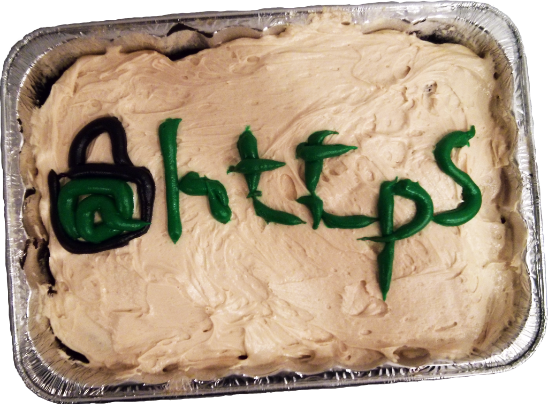
Waaaaayy back in 2016, we shared a roadmap to mark HTTP as "Not Secure" and help nudge the web toward HTTPS by default: https://t.co/mNObCrcPzu
Here is a picture of our kick-off cake! 🔐🍰
A decade later, HTTPS is the standard—and today @googlechrome is enabling proactive warnings before insecure HTTP connections. 🧵
Protect yourself from popular scams, social engineering attacks, phishing, and more with Safe Browsing’s Enhanced Protection mode in Chrome. Enhanced Protection mode makes you more than 10 times safer from scams.
Here’s how to turn it on in @googlechrome:
Settings > Privacy and security > Security > ✅ Enhanced protection
At this year’s #GPSSummit, public sector leaders met in Washington, DC to showcase tangible examples of how new tools and technologies are making government more efficient and effective.
Google Public Sector's Karen Dahut shares more: https://t.co/uQ1YCKTRo5
In the first 72 hours of our Gemini 4 Argon launch, we processed nearly 25T tokens, about 3x what we processed in the same time frame for Gemini 3. See more from @SundarPichai’s conversation with @Kantrowitz on Big Technology Podcast ⬇️
Quantum computers make frequent errors, limiting what they can do. Now Google Research says that cultivating “magic states” could offer a solution.
https://t.co/iNlZ9eNX6x
Meet the 17 recipients of the https://t.co/v8JuMlFtzl Impact Challenge. These teams are taking on some of science's hardest problems, from disease prevention to mapping the natural world.
Learn how they're unlocking scientific breakthroughs: https://t.co/ZJ8KVUr1FB
Some magical progress towards "magic state" in quantum!
Our @GoogleQuantumAI team has demonstrated "magic state cultivation" on physical hardware for the first time. The result is a 40x error reduction on our Willow processor vs. previous methods, achieving a state-of-the-art 99.99% logical fidelity.
It's another step towards useful, error-corrected quantum computers to help solve the hardest problems. The result is published in Science today, watch the video below to see how it works
I am proud to share that SynthID has been recognised by @TIME as one of the Best Inventions of 2026.
When we first began developing this technology @GoogleDeepMind, the goal was to find a robust, imperceptible way to watermark AI-generated media directly at the moment of creation, without compromising content quality.
It was no small research challenge. But three years into its use, SynthID has already watermarked over 180 billion images and videos, alongside 240,000 years of audio. We’ve also recently extended these watermarking principles to biology with SynthID Bio.
SynthID isn't a silver bullet for misinformation and this isn't a challenge any one company can solve alone; but it does represent a step toward a more transparent information ecosystem.
A sincere thank you to the teams across @Google for their contributions to making SynthID a reality, and also for the support the team has received from @demishassabis, @sundarpichai and the rest of the Google leadership on this journey.
You can try the SynthID Universal Detector at https://t.co/DLhzDIJ2wS.
Read more: https://t.co/g4f888rLh1
Today @TIME named Google SynthID one of the Best Inventions of 2026.
Congrats to the team for this incredible achievement.
More here → https://t.co/edin0mFwAE
25 years ago our first Google employee started in Hamburg. Today our EU footprint spans 26 offices and 17 member states.
A lot has changed over the years, but as our new Economic Impact Report makes clear, our commitment to Europe remains steadfast. https://t.co/jjHOP625lZ
Quantum computing will transform science and technology. It will also fundamentally rewrite how we protect digital information.
Why PQC preparedness is the priority: https://t.co/AfKqJvK09Z
Some great use cases from Googlers building with Gemini 4 Argon 🧵
It has a much stronger grasp of coding and multi-step tool use - starting from a raw Pixel CAD file in Google Antigravity, Argon created this exploded-view animation, lighting, camera choreography, and audio through Blender MCP.
It ran 1,000 rounds of iterative loops to check its own renders and refine the code along the way.
Gemini 4 Argon is here.
It’s available globally today for developers and enterprises in the paid tier of the Gemini API and the Gemini platform, for Ultra subscribers in Google Antigravity, and Ultra and Pro subscribers in the Gemini app and Search.
Hope you all enjoy it!
Today @TheLancet published our AMIE study with @BIDMC_Medicine, the first prospective study of patient-facing conversational diagnostics in a real clinic.
AMIE is a research system people can chat with before doctors appointments. Testing AMIE outside the lab with real urgent care patients showed how technology can help gather medical histories safely. Clinicians reported that the summaries helped them prepare for visits in 75% of cases and influenced their approach to care in more than half. AMIE’s differential diagnoses also matched the doctors’ final diagnoses 90% of the time giving clinicians more time to focus on patient care.
It’s Google’s first-ever paper in The Lancet’s main journal!
Great to be with 700+ @googlecloud customers at the historic NASA Hangar One for Gemini at Work!
Today, we introduced the new Gemini agent, a single, universal agent for work that has all of your business context and answers your questions, handles your knowledge work, creates your images and media, and writes and runs code - all from a single prompt box. It is connected to your personal workflows, your systems of record, and your enterprise controls.
It’s built around a few core architectural principles:
Unified Agent: Gemini can answer questions, do knowledge work and generate code from a single prompt box.
Access: Gemini is web-based and can be accessed from any device and integrated into third-party applications. It can also operate without a dedicated user interface.
Persistent Execution: It runs in the cloud, which means it maintains a single set of memories, context and one personalization graph no matter where you access it.
Multi-Agent Orchestration: Gemini can create sub-agents to tackle multi-step tasks and can also act as a coworker agent with a defined role and its own dedicated identity
Context: Gemini knows your tools, data, and work history and learns how you work the more you use it.
Model Choice Flexibility: It orchestrates across multiple models to deliver optimal quality and lower your costs.
Read more in our blog: https://t.co/bd1ekBR74Q