A lobby group has moved to court to stop the proposed Kenya-US mining deal at Mrima Hill, citing lack of public participation.
The group adds that key details of the Sh9.7 trillion project remain undisclosed.
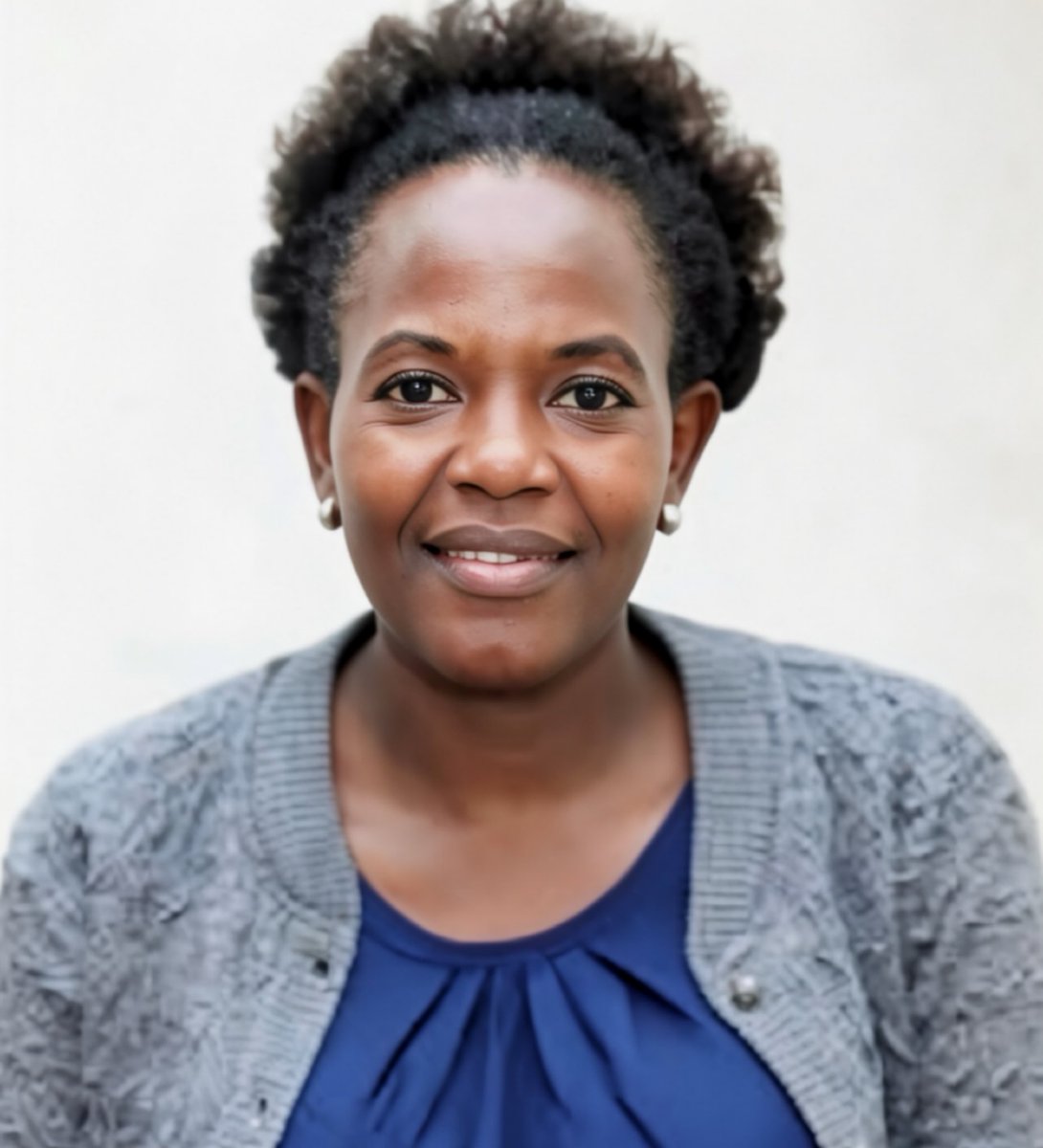
My people of Kiambu County:
Here is an application for a job.
I ask you for the honour of a lifetime to serve you as Governor.
Sincerely,
Bonnie Mwangi
https://t.co/73MtWMPGCX
David Maraga: I have never been associated with any corruption scandal. I am ready to declare on oath, my assets and give a full account of how I acquired each piece. I challenge every presidential aspirant, starting with Ruto, to do the same and account for everything they own.
MISSING PERSON: Ms Esther Wairimu Keige, Manager Legal Services, Kenya Forest Service (KFS)
Did she raise red flags about the ongoing and wanton illegal forest excisions, countrywide - from Karura to Meru? Did she refuse to sign off on something?
The @dci_kenya must account for her whereabouts and produce her safely to her family
Enforced disappearances will not be normalised. #FindEstherKeige @KeForestService@DeborahMlongo@Environment_Ke@IG_NPS
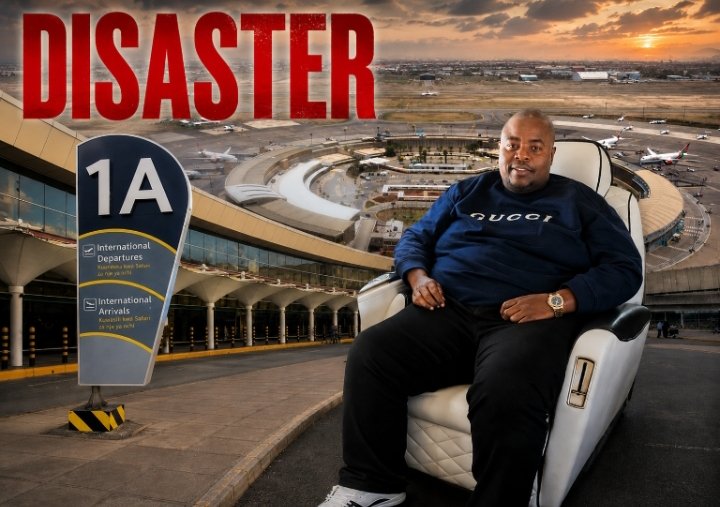
DISASTER: When we say Kenya is being led by the worst possible criminals, some people think we are exaggerating.
First, they tried handing JKIA to Adani. Kenyans rejected it.
Now we are being told the project is linked to Wicknell Chivayo, a man whose name has repeatedly appeared in major corruption controversies.
Of all the companies in the world, why him?
And here's the question nobody is answering:
The Adani proposal was reportedly around KSh 1.8 billion. Now the figure being discussed is over KSh 2.5 billion.
How does the cost suddenly jump by hundreds of millions?
Who is pocketing the difference?
When you look at Chivayo's history and then look at the numbers, the questions practically ask themselves.
We deserve answers.
Ruto Must Go.
Can we get a clear explanation as to why salaried Kenyans are compelled to contribute to the Housing Levy to finance the construction of houses on public land, land held in trust for all citizens only to then be required to purchase those same houses from intermediaries who profit from public contributions despite adding no discernible value?
If workers provide the capital through mandatory deductions and the land is already publicly owned, what exactly justifies the additional profit margin imposed on the final buyer?
What legal, economic, or policy rationale supports a system in which citizens are taxed to build housing and then required to buy that housing back at market prices?
NEW: Forestry PS Gitonga says construction of the Imenti Forest State Lodge, airstrip, and golf course will continue despite a court order.
Once again, we are seeing the hallmark of this government: court orders seem to apply to everyone except those in power.
But beyond the court order, there is something else that doesn't make sense.
Why this obsession with building inside forests?
The same government that tells Kenyans to protect forests is building a State Lodge, an airstrip, and a golf course in a forest.
Why couldn't this be built on open land?
And why are taxpayers being asked to fund another State Lodge when Sagana State Lodge already exists?
In fact, why on earth would they be building a State Lodge for someone who is always out of the country?
At a time when Kenyans are struggling with high taxes, unemployment, and an economic downturn, this project seems more like a political luxury than a national priority.
And let's be honest. This looks more like a political project aimed at creating a second centre of power in Mt Kenya.
If that is not the intention, then the government should explain why another State Lodge is needed just a few kilometres from Sagana.
PS Gitonga says the first aircraft could land at the airstrip within days.
Maybe I'm missing something, but what exactly is the public benefit here?
From where many Kenyans are sitting, this looks like public money being used to build prestige projects for politicians while ordinary citizens are told to tighten their belts.
Forests should be protected, not sacrificed for political projects. Stop the waste of public funds.
Kenyans need to start asking harder questions about this unexplained money economy.
Many of you have walked into certain hotels, clubs, restaurants, lounges and car yards and found almost no serious business going on. A hotel has empty rooms, an empty restaurant, bored waiters and barely any movement, but if you are told that same hotel deposits millions of shillings every day as sales, even you will be shocked.
That is how dirty money enters the financial system. The money cannot remain in suitcases forever. At some point it must be given a business story. It must be called hotel sales, club sales, restaurant sales, consultancy income, car sales or real estate payments.
In serious jurisdictions, investigators do not just admire cash in suitcases and issue statements. They follow the money into the businesses that are used to clean it. If a club has no customers but claims huge daily sales, if a hotel has no guests but deposits millions, if a restaurant sells one cup of tea in a day but takes Ksh5 million to the bank in the evening, that is where the real investigation begins.
Banks already know these things because banks ask questions when deposits do not match the business reality. The question is why Kenyan authorities are not cracking down harder when everyone can see that some people are not running businesses, they are washing money.
This is why the Ksh65 million allegedly recovered in the Patrick Analo matter should not end as a suitcase story. Authorities must ask where such money was going next, which businesses would have received it, which banks would have accepted it, which assets would have absorbed it and who else is helping this dirty money look clean.
Kenya is full of businesses with no customers but huge money. That is not entrepreneurship but laundering with a business permit.
The @GreenBeltMovmnt condemns plans to excise part of Imenti Forest for an airstrip, golf course & State Lodge. Imenti is a critical water tower & biodiversity haven.
Sign the petition and demand its protection: https://t.co/WzxJt6fxuN
#HandsOffImentiForest#SaveOurForests
A group of local mechanics along Lang’ata Road voluntarily sealed and repaired a dangerous open manhole to prevent road accidents. This comes after the county government, MP, and MCA ignored their concerns.
Gilgil Level 4 Hospital does not have a functional X ray machine.
Yes, you heard me. That's a level 4 hospital.
Gilgil is in Nakuru County.
The governor is the mother of surrogate babies who seeks medical attention in the U.S
We must stop laughing around with these politicians.
Kenyans we need to be rough!
An update for Mombasa County, based on FY 2024-2025
County Facts:
County has received KSH 83.1 billion in transfers from the National Government since 2014.
Has 43 MCAs.
Budget is KSH 14 billion annually.
The 43 MCAs consume about 10% of the entire budget, by themselves.
Travel budget: KSH 294 million.
Catering budget for those in government: KSH 287million.
Bursaries: KSH 334 million.
Education budget: KSH 760 million for the entire county.
Auditor General Main Findings:
Unsupported Revenue Collection Commissions – KSh 158 Million Unverified
The county paid out KSh 157.99 million in revenue collection commissions at a rate of 5% of collections, but could not provide supporting documents including invoices, revenue collection reports, transfer certificates, and schedules showing the revenue collected.
As a result, auditors could not confirm the accuracy and legitimacy of the KSh 157.99 million expenditure.
A county is giving up 5% commission to a third party for "revenue collection" - which is crazy in the first place, but cannot provide any documentation to support this arrangement or the expense.
KSH 157.99 million has ZERO support.
Unsupported Domestic Travel Expenditure – KSh 3.1 Million Unaccounted For
The county spent KSh 171.1 million on domestic travel and subsistence, but KSh 3.06 million of the expenditure was not supported by payment vouchers or imprest surrender documents. Consequently, auditors could not verify the legitimacy and accuracy of the KSh 3.06 million travel expenditure.
Unsupported Health Program and Hospital Transfers – KSh 95.1 Million Questioned
The county transferred KSh 95.1 million under child health programs and hospital support, but KSh 34.1 million in reimbursements to health facilities lacked any support such as beneficiary lists and cost breakdowns per child and facility.
In addition, a separate transfer of KSh 61 million to the Coast General Teaching and Referral Hospital was unsupported by a grant agreement, expenditure reports, or acknowledgment receipts, raising concerns over the accountability of the entire KSh 95.1 million expenditure.
Unverified County Land Assets – KSh 117 Million Without Ownership Documents
The county reported land valued at KSh 117 million under property, plant and equipment, but failed to provide title deeds or ownership documents to support the asset. As a result, auditors could not confirm the ownership, existence, or accuracy of the KSh 117 million land balance as at 30 June 2025.
Irregular Direct Procurement of Garbage Compactors – KSh 95.1 Million
The county irregularly and illegally procured ten-tonne tractors/equipment worth KSh 95.1 million through direct procurement without justification, competitive bidding, or approval by the tender committee, contrary to the Public Procurement and Asset Disposal Act, 2015.
ZERO competition. The vendor is selected by corrupt politicians.
Auditors also found that the procurement was not included in the procurement plan, lacked a professional opinion to the accounting officer, and had unsigned tender evaluation minutes, placing the entire procurement process in breach of the law.
County Wage Bill Exceeded Legal Limit – KSh 6.5 Billion Spent on Salaries
The county spent KSh 6.54 billion on employee compensation, consuming about 52% of total revenue, far above the legal limit of 35% set under the Public Finance Management Regulations, 2015.
Auditors concluded that the county was in breach of fiscal responsibility laws, highlighting excessive spending on salaries at the expense of development and service delivery.
In the last three years, Mombasa County has illegally diverted KSH 6.9 billion this way - from being available to serve citizens, to additional and illegal wages for those in government, which is less than 1% of the county population.
KSH 6.9 billion in just three years, lost through greed in the form of illegal salaries.
So, in summary in just one year:
From all revenue:
(1) 52% of the revenue went to salaries for the less than 1% of population - those in government. In one year, that resulted in KSH 2.5 billion being illegally paid out as additional and illegal salary (and KSH 6.9 billion in three years).
(2) KSH 294 million on travel.
(3) KSH 287 million on catering for those in government.
(4) KSH 158 million in unsupported commission "expenses".
(5) KSH 95 million worth of irregular and illegal procurement through collusion.
(6) Another KSH 95 million worth claimed "transfers" to other institutions/agencies, without any documentation to show what the money was spent on.
It sure is nice to be in government.
Au vipi @A_S_Nassir@MombasaCountyKe@MombasaAssembly@EACCKenya@FlavNasmbu
The Kenyan government cares more about money and foreign funding than the safety and wellbeing of its own citizens. If there is money to be received, deals are signed quickly, pockets are lined, and the concerns of ordinary Kenyans are ignored.
That is why citizens are alarmed. Our hospitals are already overwhelmed, healthcare workers are overstretched, medicine is scarce, and emergency preparedness remains weak. Yet the government is willing to expose the country to serious biosecurity risks without transparency or public participation.
The political class will always protect itself first while ordinary wananchi are left to face the consequences of failed decisions and possible public health crises. A responsible government would prioritise strengthening Kenya’s healthcare system,
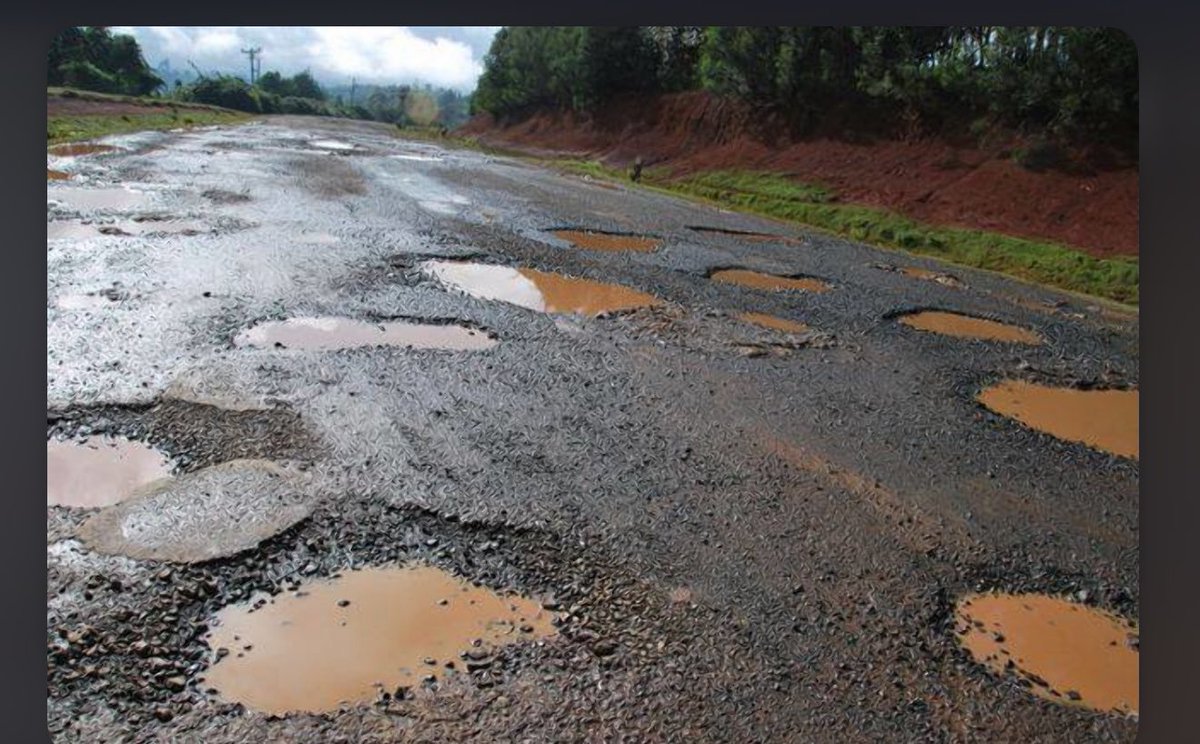
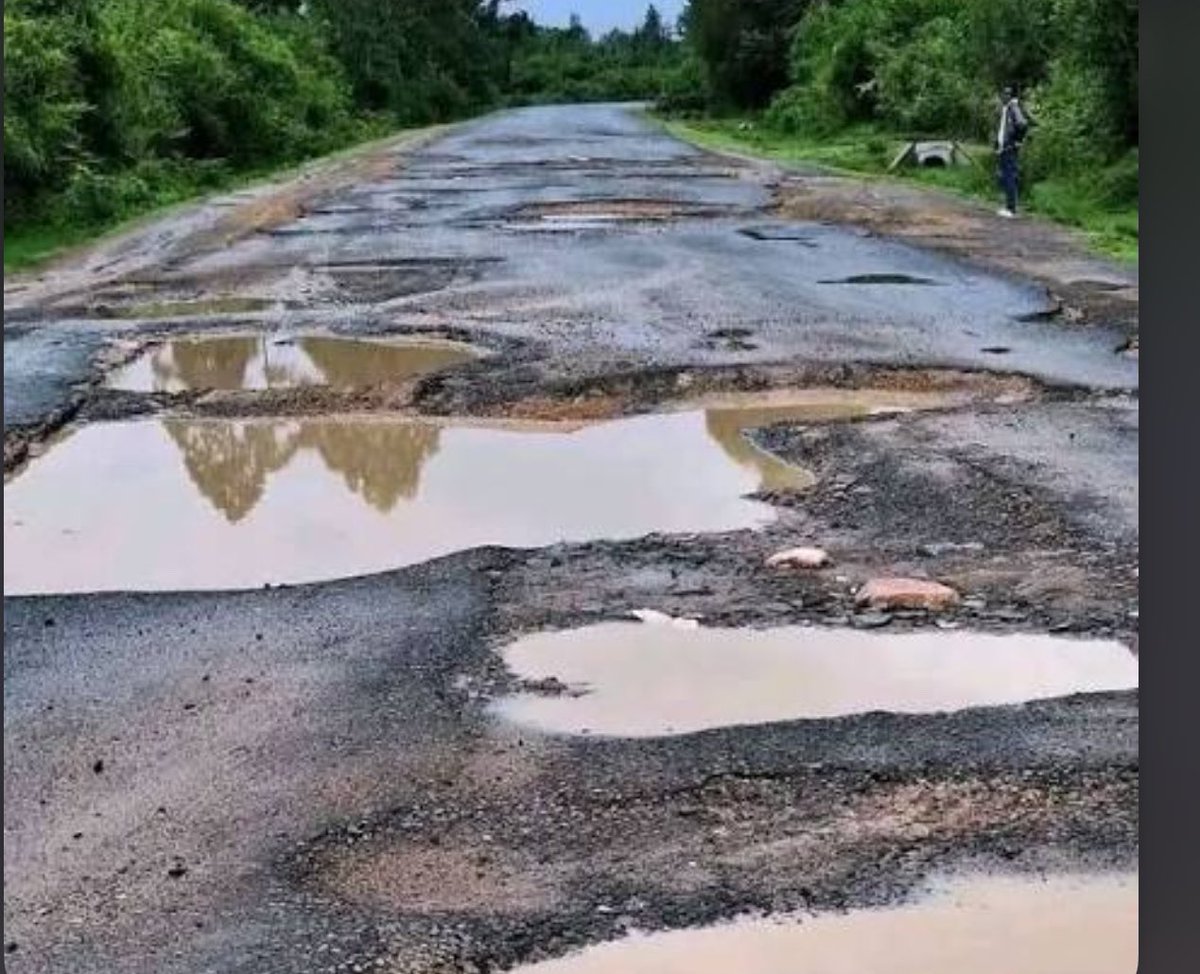
Clueless CS Mbadi; If the road maintenance levy we to be removed , would matatu operators be willing to drive on roads full of potholes?
Meanwhile the roads;
Are some people in this country considered more human than others? When ordinary citizens are struggling with rising fuel prices, high taxation, collapsing purchasing power, and an unbearable cost of living, the political class remains heavily cushioned by public money. MPs continue receiving generous fuel allowances, car maintenance allocations, and multiple taxpayer-funded privileges while the same taxpayers financing those luxuries are being told to tighten their belts and endure economic hardship “for the sake of national stability.”
That contradiction is morally disturbing.
The ordinary Kenyan pays more for transport, food, electricity, and basic survival every single month, yet leaders insulated from that suffering continue operating within a protected economic bubble financed by the very people carrying the burden. Austerity is constantly prescribed to citizens but rarely practiced by the political elite themselves.
A serious government cannot continuously demand sacrifice from the public while preserving comfort at the top. Leadership should begin with shared hardship, not institutionalized privilege.
“A society begins to decay the moment leaders are protected from the suffering they impose on the people.”
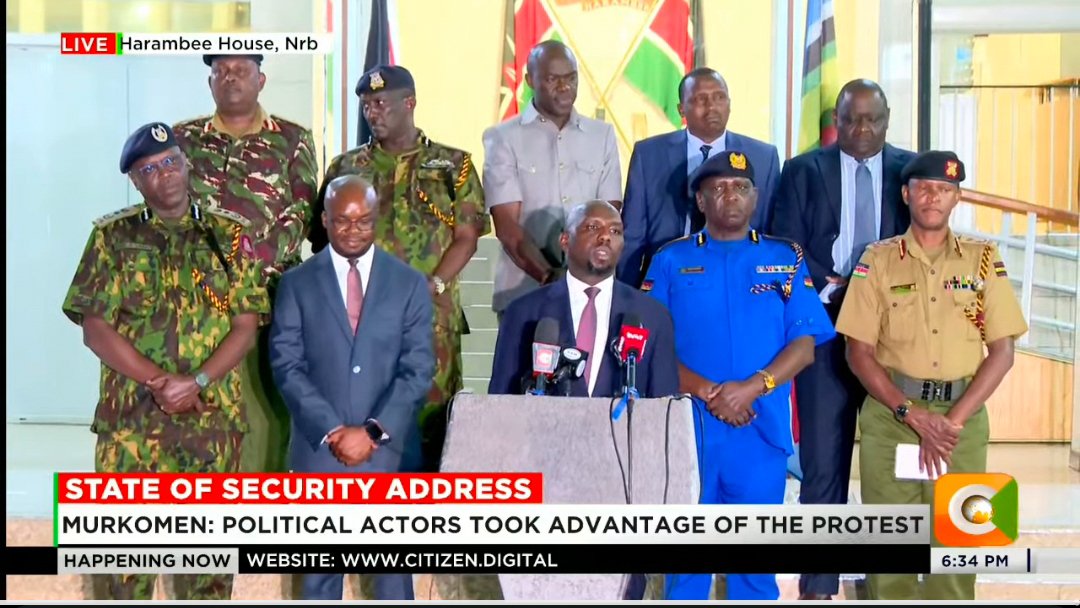
Cabinet Secretary Kipchumba Murkomen’s press conference was not only disappointing, but deeply reckless and divisive. At a time when millions of Kenyans are crying out over the unbearable cost of living and the painful rise in fuel prices, the government has chosen the dangerous path of intimidation, political blame games and tribal undertones instead of listening to the people.
Kenyans are not protesting because they have been “influenced.” They are protesting because life has become unbearable. Every increase in fuel prices pushes food prices higher, cripples businesses, burdens farmers, matatu operators and ordinary families struggling to survive. Reducing genuine public frustration into political propaganda is an insult to the suffering wananchi.
Murkomen’s attempt to ask why matatu operators and commuters did not take to the streets during the previous administration, but are doing so now, is completely beside the point. Kenyans are not engaging in protests based on nostalgia or comparison of regimes; they are reacting to the present economic pressure, the present hunger, and the present hardship. That line of argument is political deflection dressed up as reasoning, and it collapses under the weight of the real crisis Kenyans are living through.
A responsible government listens to its people. It does not threaten them with security forces simply because they have raised legitimate concerns. The solution is not intimidation or endless excuses. The government must urgently return to Parliament, remove the punitive fuel levies and consider subsidies to cushion Kenyans from this economic crisis.
Leadership is not scapegoating; it is owning the crisis, fixing the problem, and answering citizens with action, not blame.
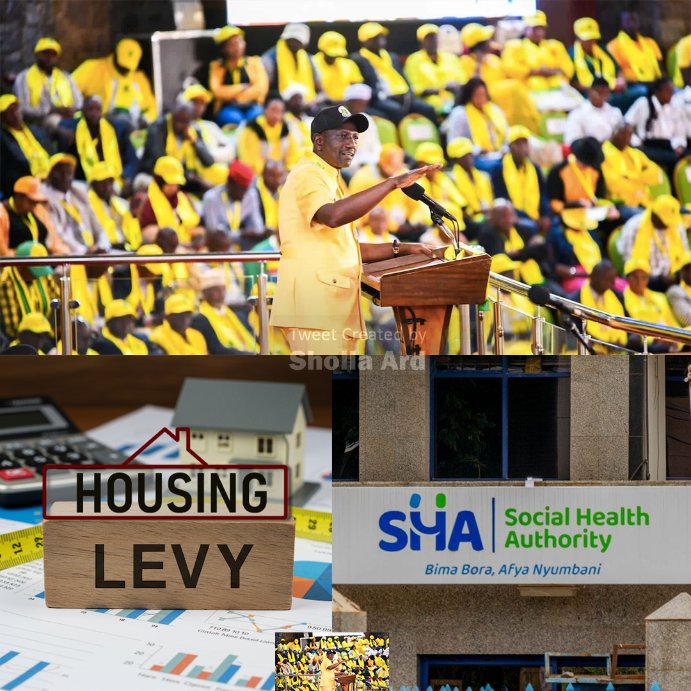
BREAKING: Today, we reveal that UDA employees have NOT been paying the SHA or the Housing Levy.
Yes, you read that right.
This is one of the clearest examples of hypocrisy in this government.
William Ruto, Hassan Omar, and UDA have been forcing Kenyans to comply.
But an audit report 2024/2025 exposes them:
👉 UDA employees were NOT having SHA, Housing Levy, and other statutory deductions made from their salaries
👉 Over KSh 60 MILLION in deductions was never remitted
So while ordinary Kenyans are being chased, threatened, and deducted at source,
The ruling party itself is NOT complying.
Think about that.
If SHA and the Housing Levy are truly beneficial, why isn’t UDA enforcing them internally?
The same people telling you “lipa SHA, lipa housing levy”,
Are NOT doing it within their own party.
They don’t trust the system they are forcing on you.
This is pure hypocrisy.
Rules for Kenyans. Exemptions for themselves.
Remember this in 2027. Evidence below
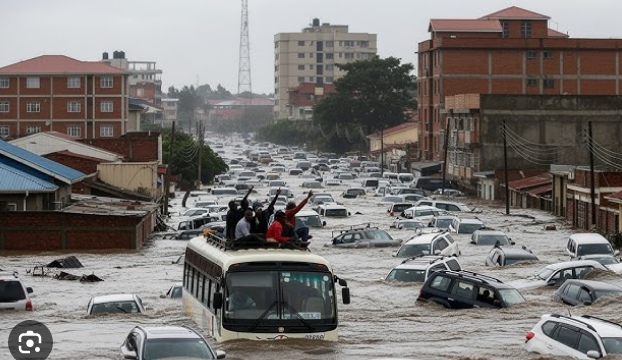
If you are wondering why @SakajaJohnson cannot manage to build effective drainage systems, consider this:
He spent KSH 6.3 billion on 4 lawyers in 2023-2024 - in cases involving corruption and incompetence.
That was 20% of the entire budget.
Think about that.
During this fiscal year, Nairobi as a county spent KSH 3.2 billion on 'development".
KSH 6.3 billion for legal fees for 4 lawyers - defending against corruption allegations.
And - KSH 3.2 billion on "development".
If you are a citizen of Nairobi - I don't what else you need to be told or shown.
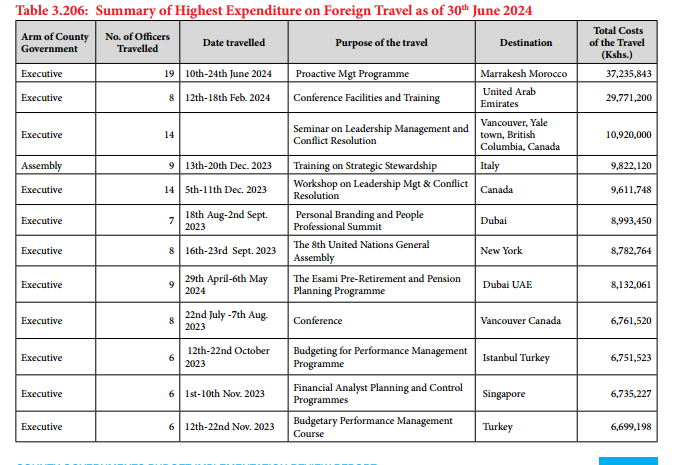
He spent KSH 1.2 billion on travel. Trips for:
Personal branding. Conflict resolution. Proactive management. Strategic stewardship.
Spend 56% of the entire revenue on 16,000 employees, who are 0.3% of the county population.
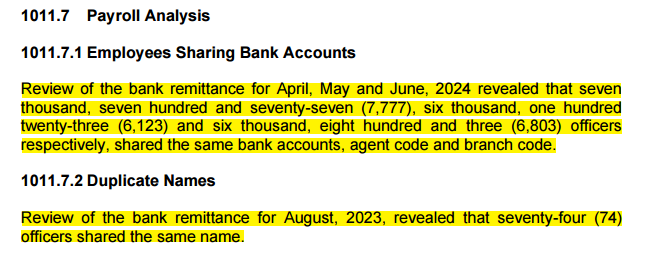
And the Auditor General found between 6,123 and 7,777 of these 'employees" in one three month period, to have shared the same bank account for payment purposes.
Let that sink in.
A county has 16,000 employees. But between 40% and 50% of them - happen to share bank accounts.
The most frustrating thing about our problems in this country is that - we cause them to ourselves.
That is the honest truth.
There is a clip of the Senate questioning @SakajaJohnson about people he has put into serious positions in his government that are responsible for disaster management.
They have qualifications such as, tours and travel management. Theological studies.
These are the people you are expecting to manage disasters.
But frankly that is a secondary issue.
What qualifications did Sakaja have?
The man who does not have the decency, or discipline to get an education - so that he can understand how his behavior, or, more appropriately, his misbehavior, impacts the ability of his office to deliver services and development to citizens, showed up with a fake diploma from a school nobody has ever heard of.
Gets caught with his hand in the proverbial cookie jar.
Lying about the most basic of things - an education.
To this day - how much do you really know with certainty about him?
Two things, I would submit.
One - he is incompetent as hell.
Two - he has dimples. Two of them.
Those are the facts, and, they are not in dispute.