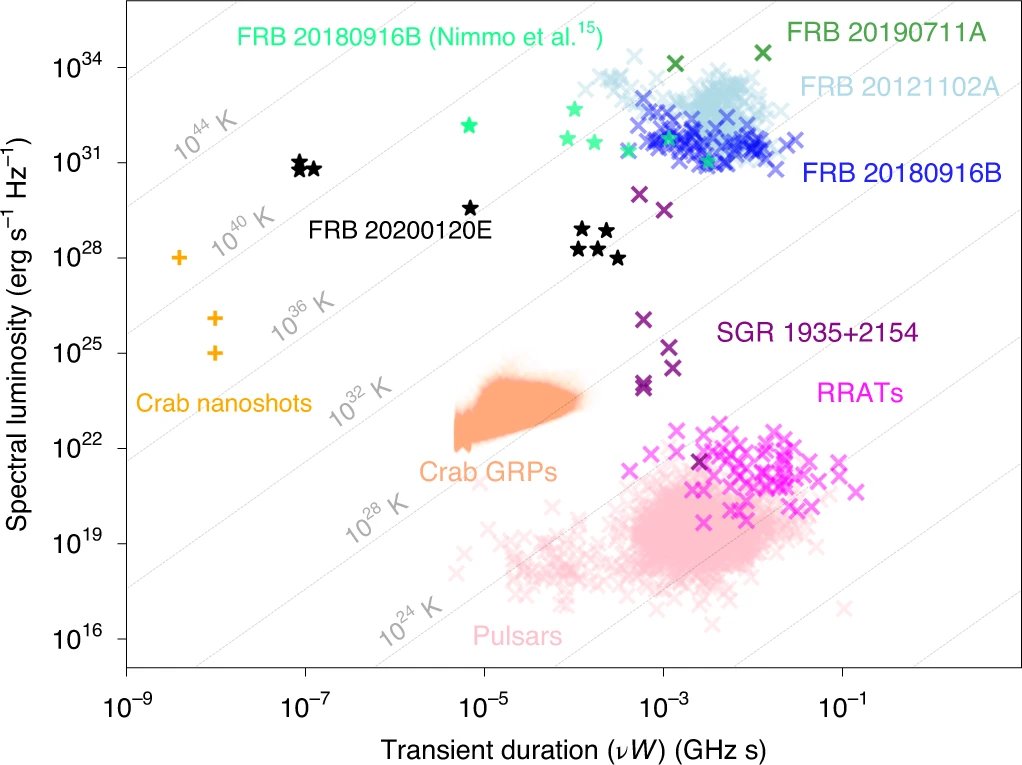
A fast radio burst that’s bridging the gap between Galactic neutron stars and the much more distant FRBs in both luminosity and duration. Read all about it today in Nature Astronomy 📡💥
High time-resolution analysis of an FRB reveals similarities in burst structure with young pulsar 'nano-shots', suggesting a similar emission mechanism. @Kenzie__Nimmo et al.: https://t.co/bGPpcV8gef
Turns out this fast radio burst comes from a region less than 30,000km in size… that’s tiny!! 🤯 read about how we used scintillation to constrain the FRB emission region size at the link below ✨
Our March issue is now available to read! https://t.co/KZ7nnoi6vU
The fabulous cover image (created by @DanielleFuts ) is linked to the Kirsten et al. paper within the issue.
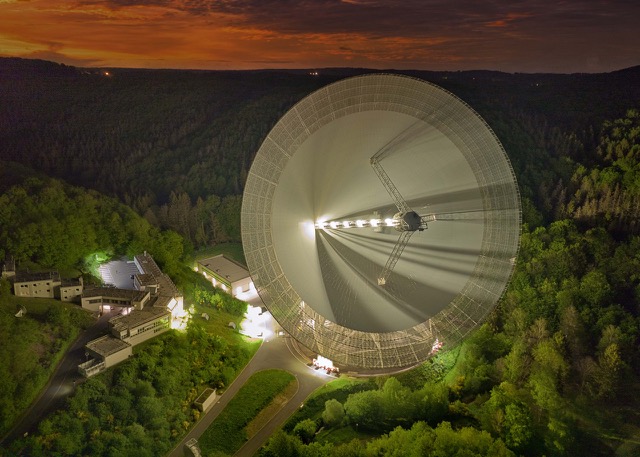
Our December issue is now available to read! The cover image features the @GreenBankObserv and is connected to the Snelders et al. paper within the issue. https://t.co/FfiwgOtsTK
Snelders et al. present the discovery of ultra-fast radio bursts (FRBs), lasting only for microseconds. This is thousands of times shorter than typical for these astronomical radio flashes and shows that they occur more frequently than initially thought. https://t.co/WWgZwbxIfE
Delighted to receive a one-line text from Dunc Lorimer this morning - "we won the Shaw prize!!!!!" - didn't even know we'd been nominated. Such an honour built on the pulsar and FRB community's amazing breakthroughs over the years. Thanks everyone!
Hey Cambridge folks! I will be giving one of the Monday Afternoon Talks on Monday April 10th @MITKavli and one of the High Energy Astro Seminars on Wednesday April 12th @CenterForAstro. Come listen to me talk about searching for magnetars after BNS mergers with @TheNRAO VLA!
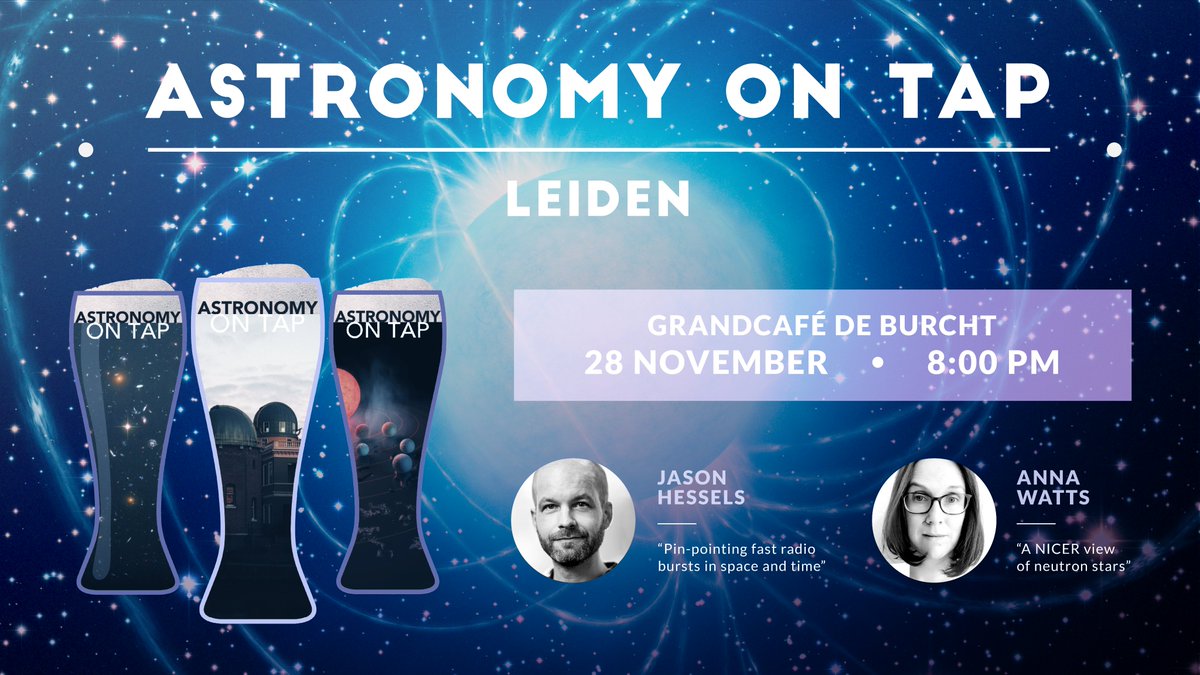
⏰ Our next #AoTLeiden event will take place on Monday 28 November at 20:00 CET! Join us for a night of astronomy with two fantastic talks from Anna Watts (@drannawatts) and Jason Hessels who will tell us about neutron star and the mystery of fast radio bursts! ✨🍻
Just to be clear, people like Tim de Zeeuw (and especially Tim de Zeeuw in specific) have no place in the astronomy community. He’s retained his research privileges with Leiden, but I hope his colleagues and collaborators will not let him keep those privileges with them.