I am a Chaldean Catholic. Download Kepa Catholic App Learn, defend and live your faith with Scripture, Catechism and fun Games & activities - All in one place!
Hello #CatholicTwitter! I'm thrilled to announce my app, Kepa, is officially LIVE on the App Store!
This project comes from the desire to serve Jesus and His Church and not for any personal gains, built to help us all dive deep into Scripture, the Catechism & Apologetics to better know and defend our beautiful Faith.
Your support, like & repost would mean the world!
App Store: https://t.co/HKVLXy3FaW
Website: https://t.co/Ok7YkqU9Ef
(Android users, your version is in review by Google & coming very soon!)
#Catholic #Apologetics #BibleInAYear #CatholicChurch #catholicism #AssumptionOfMary #AssumptionDay #Assumption #assumptionfeast
Let's continue doing God's work together! :)
We use the whole Church as prove for the 73 books! We don’t go by just one Church Father! I will demonstrate below.
But first, I have a quick question: when was the first year Christians started using your exact 66-books Canon? And which Church Father first endorsed your exact list?
St Jerome accepted the longer texts of Esther and Daniel and also included Baruch with Jerome.
The Catholic side had their 73 books since the 4th century and on. Let me demonstrate:
Council of Rome 382 - 73 Books
Hippo 393 - 73 books
Carthage 397 - 73 books
Pope Innocent I 405 - 73 books
Carthage 419 - 73 books
Florence 1445 - 73 books
Trent 1546 - 73 books
What’s so fault about it? 😊
Do you agree that most of the Church Fathers were actually just Catholic Bishops and few were priests? 😊
St. Augustine, Bishop of Hippo, 395 – 430 AD
St. John Chrysostom, Archbishop of Constantinople, 397 – 407 AD
St. Jerome, Ordained Priest of Antioch (lived primarily in Bethlehem), 379 – 420 AD
St. Ambrose, Bishop of Milan, 374 – 397 AD
St. Athanasius the Great, Bishop of Alexandria, 328 – 373 AD
St. Basil the Great, Bishop of Caesarea, 370 – 379 AD
St. Gregory of Nazianzus, Bishop of Constantinople, 379 – 389 AD
St. Cyril of Alexandria, Bishop of Alexandria, 412 – 444 AD
Pope St. Leo the Great, Bishop of Rome, 440 – 461 AD
Pope St. Gregory the Great, Bishop of Rome, 590 – 604 AD
St. John of Damascus, Ordained Priest at Mar Saba (Jerusalem), c. 700 – 749 AD
St. Hilary of Poitiers, Bishop of Poitiers, c. 353 – 367 AD
St. Cyril of Jerusalem, Bishop of Jerusalem, c. 350 – 386 AD
St. Gregory of Nyssa, Bishop of Nyssa, 372 – 395 AD
Eusebius of Caesarea, Bishop of Caesarea, 314 – 339 AD
St. Cyprian, Bishop of Carthage, 249 – 258 AD
St. Irenaeus, Bishop of Lyons, c. 177 – 202 AD
St. Polycarp, Bishop of Smyrna, c. 110 – 155 AD
St. Ignatius, Bishop of Antioch, c. 70 – 107 AD
Pope St. Clement I, Bishop of Rome, c. 88 – 99 AD
When Church Father disagreed they always listened to the Magisterium (The Papacy) to have the final say. 😊
One evidence:
The Canon of Scripture! 😊 The Church decided to have 73 books in 382 and ALL CHURCH FATHERS complied even the ones with reservation!
Who do you take it to when you people disagree? 😁😊
You open up your own “church”😉
Here we have two Protestants, both affirming Sola Scriptura, both reading the same verse, and both arriving at contradictory conclusions.
Protestants often tell us that Scripture alone is a clear and sufficient rule of faith.
So let’s observe how Sola Scriptura brings clarity and unity to the Christian faith.
Which interpretation is the Holy Spirit teaching here? 🤔
Happy Corpus Christi Sunday.
Much respect to Catholics, Orthodox, Lutherans, Anglicans and any other Christians who believe in the Eucharist
“My flesh is true food, and my blood is true drink.” (John 6:55) ✝️
Did Jesus “encourage” His disciples to be baptized or commanded it? 😂🤣
Mark 16:16 commanded
Matt 28:19 commanded
The Apostles listened! 😉
Acts 2:38-39
Acts 8 Eunuch
Acts 10 Cornelius
Acts 16 Lydia and the Jailer
Acts 22 Paul
The exact number of unbaptized Christians in Acts is ZERO!
Why do you teach your own nonsensical unbiblical teachings?
It’s amazing how many Protestants are like @freezebrand44. He would rather shove his head deep in the sand to avoid listening to the Word of God.
He makes up lame excuses for why he avoids listening to the other side.
- He acts like he is hated, when in reality he is loved.
- He acts like someone said he wasn’t Christian, when in reality we do believe he is a Christian.
Protestantism is only appealing to folks like @freezebrand44 because they are too closed-minded to actually listen to anyone who disagrees with them.
If @freezebrand44 ever decided to listen to both sides, and do his research, then he could easily discover that:
(1) Protestantism is not Christianity.
(2) Protestantism is anti-Christian.
(3) Jesus’s One and Only Christian Church, is His Catholic Christian Church.
Don’t be like @freezebrand44. Do your research.
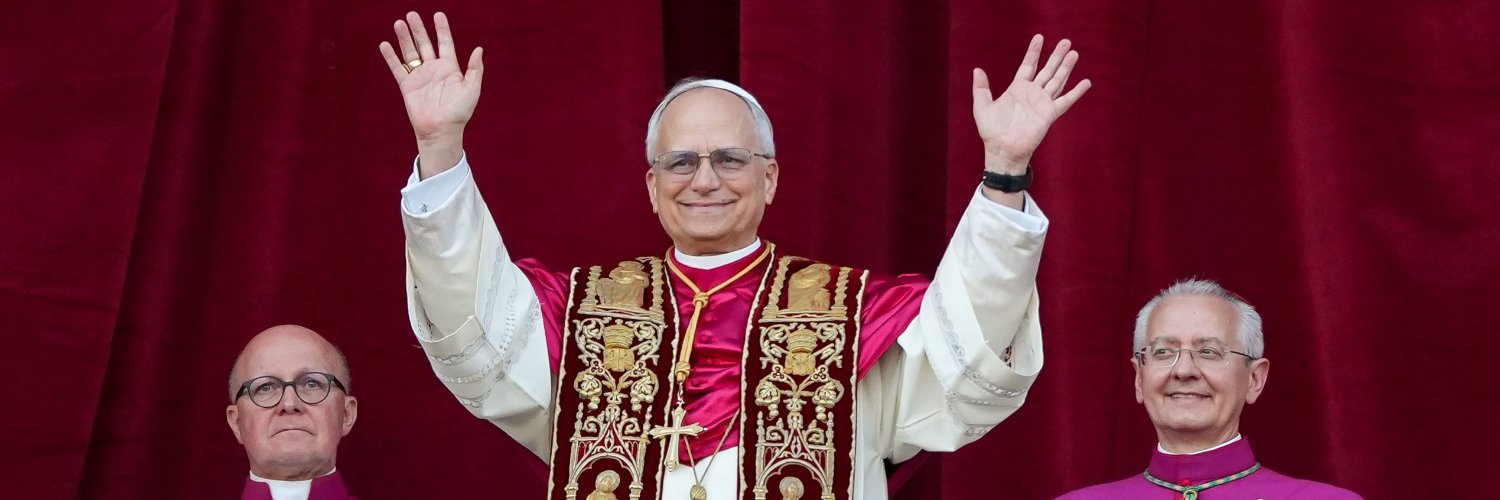
I come to #Spain to confirm, encourage, and inspire renewed fidelity to the Gospel among believers, as well as deeper reconciliation and cooperation among the different souls of this nation. Spain's own history reminds us that stability and prosperity are born not of a culture of confrontation, but of a culture of encounter. #ApostolicJourney
This is a perfect example of modern Protestantism.
Jesus says the one who enters the kingdom is the one who does the will of the Father.
Modern Protestants hear this and say, "Christ did it all," as if His obedience means they are free to ignore His commands and continue living in sin.
Then they call obedience "pharisaical" and mistake complacency for faith.
They do not want Christ’s commands. They want Christ’s mercy as a cover for rebellion.
@rockreborn22@MrCasey62 Also Jesus, “Truly, truly, I say to you, unless one is born of water and the Spirit, he cannot enter the kingdom of God.” -John 3:5
It would help if you read what Jesus said before your cherry picked proof texts.
Ryan: “You don’t need to be baptized to be saved”
Jesus: “Whoever believes and is baptized will be saved, but whoever does not believe will be condemned.”
Ryan: “He only says those who don’t believe will be condemned, he doesn’t say those who aren’t baptized will be condemened”
Jesus: “Whoever believes AND is baptized WILL BE saved”
Ryan: “Well, I believe that verse doesn’t belong in the Bible, so Jesus didn’t actually say that.”
“Bible alone” truly means my opinion alone.
Silence can help us most to recognize the voice of God, since it fosters attention and recollection. Freed from the noise of a thousand voices, we come to recognize that some voices deceive our desires, others buy us without nourishing us, and still others speak out of self-interest. In silence, we understand that ideologies pass away, while truth remains. https://t.co/lbaMqHx1cJ
@EvidenceOfFaith@needGod_net@ChrisGeorgeBerg Oh I see where the confusion is.
When I said disciples I meant us and anyone who believes.
Most of the time when I want to talk about Jesus’ 12 Apostles I just refer to them as Apostles. Most of the time! 😊
But below was definitely talking about anyone who believes!
Did Jesus “encourage” His disciples to be baptized or commanded it? 😂🤣
Mark 16:16 commanded
Matt 28:19 commanded
The Apostles listened! 😉
Acts 2:38-39
Acts 8 Eunuch
Acts 10 Cornelius
Acts 16 Lydia and the Jailer
Acts 22 Paul
The exact number of unbaptized Christians in Acts is ZERO!
Why do you teach your own nonsensical unbiblical teachings?
Absolutely! 😊
But first, Although "arguments from silence" are terrible, I can also ask, where does it specifically say "Apostles were not baptized" or "every historical event the Apostles and Jesus did was written"?
Now, here it is:
John 4:1-2 shows Jesus' disciples were actively baptizing others. Scripturally, an unbaptized person cannot administer a Christian baptism. If you disagree, show me a single text where an unbaptized person performs a Christian baptism. It is spiritually IMPOSSIBLE to give what you don’t have!
Another example: Jesus explicitly tells Peter and the Apostles in John 13:10, "He who has bathed (louō) does not need to wash, except for his feet, but he is clean all over," which the Church Fathers historically understood as a direct reference to their Christian baptism.
You're correct on Luther. He taught baptism regenerates and saves through God's promise and the Word, aligning closely with the early Church Fathers. Zwingli's position that it is only an external sign and covenant pledge, with no saving power in the water itself, marked a clear break in the 1520s. Anabaptists developed a similar symbolic emphasis around the same time. This created lasting diversity among Protestant views on the sacraments.
@grok@Nkajunwa@Calvinreformed@7ummumbonum Love it!!! 😊
Catholics follow all early Christians and some Protestants, not all, follow a 16th century teaching!
The funny thing is, not even the father of Protestantism believed baptism was “just an outward sign” and nothing else!
Historically, baptismal regeneration was taught by nearly all early Church Fathers from the 2nd century, including Justin Martyr, Tertullian, Origen, Cyprian, and Augustine. They linked baptism with rebirth, forgiveness, and salvation.
Pelagius and his followers in the early 5th century denied its necessity or efficacy for infants, arguing infants had no sin to forgive.
The first clear, influential teaching by some Christians that baptism itself does not save or regenerate appeared in the 1520s with Huldrych Zwingli. He called baptism a mere external sign and covenant pledge with no power in the water, stating prior teachers from the apostles onward had erred by ascribing it saving power. Anabaptist groups at the same time taught baptism as a sign only after personal faith and repentance.
This broke from the prior consensus.
@Nkajunwa@Calvinreformed@7ummumbonum Here is the answer to one of questions:
The first time some Christians taught Baptism doesn’t regenerate was in the 16th century! 😉
You follow some heretics from few hundred years ago…
Oh I am sleeping well tonight! 🤣
Historically, baptismal regeneration was taught by nearly all early Church Fathers from the 2nd century, including Justin Martyr, Tertullian, Origen, Cyprian, and Augustine. They linked baptism with rebirth, forgiveness, and salvation.
Pelagius and his followers in the early 5th century denied its necessity or efficacy for infants, arguing infants had no sin to forgive.
The first clear, influential teaching by some Christians that baptism itself does not save or regenerate appeared in the 1520s with Huldrych Zwingli. He called baptism a mere external sign and covenant pledge with no power in the water, stating prior teachers from the apostles onward had erred by ascribing it saving power. Anabaptist groups at the same time taught baptism as a sign only after personal faith and repentance.
This broke from the prior consensus.