VICTORY!
A judge has thrown out the case against a pro-life mom who was praying outside an abortion center.
Claire Brennan, a mother of four, became the first person convicted under Northern Ireland’s controversial abortion “censorship zone” law that bans pro-life free speech outside abortion businesses.
Claire had been charged for alleged breaches of the Abortion Services (Safe Access Zones) Act 2023 after peacefully praying and offering support to women outside Causeway Hospital in Coleraine. The hospital kills babies in abortions.
However, at her trial hearing, key charges were dropped, witnesses failed to attend, and the remaining evidence was deemed insufficient to sustain a conviction.
Claire was accused of “influencing” individuals within a 150-metre “safe access zone” around the abortion center.
Brennan has consistently denied any wrongdoing, maintaining that her actions were peaceful, prayerful, and motivated by compassion, including offering conversation to women considering abortion.
Responding to the ruling, Claire Brennan said:
“This is a huge relief, not just for me, but for everyone who believes that compassion should never be criminalized."
"I have always acted peacefully, praying, offering hope, and trying to help women who may feel they have no alternative."
"These censorship zones are unjust. They silence prayer, restrict free speech, and prevent women from hearing that there is another option besides abortion.”
This is Olivia-Jax.
Doctors told her parents to kill her in an abortion because she would die after birth.
They REFUSED and she was born healthy.
First, doctors said their unborn daughter would be born with her intestines outside of her body.
Then, they said her legs and feet were deformed.
A third time, they said the unborn baby girl had a genetic disorder and would die soon after birth.
Little Olivia-Jax’s parents said no three times when doctors encouraged them to abort her. And, as it turns out, the doctors were wrong.
Her story, which her father posted on his Facebook page, reads:
“Hi, I’m Jax. Doctors tried to bully my parents into aborting me three times. They said my intestines were out of my body – my momma and daddy wouldnt let them. They said my legs and feet were deformed and not worth the mothers risk – my momma and daddy wouldnt let them. Then they said i had Trisomy 18 and wouldnt live outside of the womb – and my mommy and daddy wouldnt let them. Daddy said he didnt believe them- he said their evidence was pathetic -daddy said I was fine. My mommy agreed. And went against the will and advice of the top doctors of their field “high risk pregnancy”. I was born a month early – i’m in the 95+% for everything – my hands and feet are perfect – my tummy is just like it is supposed to be – i dont have an extra 18th chromosome- I’m almost 7months old now because i was born a month early and – I’m fine. My name is Olivia-Jax not fetus not human tissue. I’m a little girl that my mommy and daddy didnt give up on – and I’m fine”
Targeting unborn babies with disabilities has become a pervasive problem in the U.S. With the increase in prenatal testing, parents often are encouraged to have abortions based on the results.
However, the results sometimes are wrong.
The heartbreaking results of Stanford University research found that at least three women aborted their babies after prenatal test showed the babies had disabilities – only to find out later that their babies would have been born healthy.
Even if babies do have disabilities, they still should have the right to life.
Abortion advocates try to claim that aborting unborn babies with disabilities or fatal conditions is compassionate because it prevents the child from suffering. However, they fail to acknowledge that an abortion kills that child, often brutally; and our society does not kill born children with disabilities because they are suffering. Unborn babies should be no different.
Many families are bucking the trend and refusing to abort their unborn babies, no matter what their diagnoses.
Stories like Olivia-Jax’s are shining light on the truth that every child, born and unborn, no matter what their abilities, should be granted a right to life.
Your mother’s prayers have protected you more times than you will ever realize.
A lot of people underestimate the power of a praying mother. But throughout Scripture, we see that God listens closely to the cries of those who love and intercede for others. St. Monica prayed for years through tears and suffering for the conversion of her son, St. Augustine, who eventually became one of the greatest saints and Doctors of the Church. Her prayers mattered.
Many people are alive in the faith today because a mother or grandmother refused to stop praying, even when things looked hopeless. Some prayed through addiction, rebellion, broken relationships, depression, or years away from God. And many children never fully realize how many silent sacrifices, rosaries, tears, and late-night prayers were offered for them.
The world often celebrates success, money, or status. But heaven sees hidden love differently. A faithful mother praying for her child may be doing more spiritual good than she will ever see in this life.
💬 How many times do you think someone in your life was spiritually protected because your mother never stopped praying for you?
A reminder many people need to hear while they still have time to thank her.
Kindergartens in China are increasingly incorporating hands-on cooking, cleaning, and crafting into their curricula to foster independence, responsibility, and confidence in young children.
Kids as young as 3–4 years old use specialized mini stoves to prepare food, wash dishes, and perform tasks like sewing and farming.
Before 1961, premature babies with failing lungs had almost no chance—doctors could only watch them slip away. Then one woman refused to accept that and changed medicine forever.
Picture a hospital nursery in 1960. A baby born two months early struggles to breathe. Her tiny chest rises and falls in desperate effort. Her skin turns blue. Nurses and doctors gather around her, but they have nothing to offer. In a matter of hours, maybe less, she will be gone.
This scene repeated itself thousands of times each year. Respiratory Distress Syndrome was a death sentence for premature infants. Their lungs were not developed enough to function. Medical textbooks described it as unavoidable.
But Mildred Stahlman refused to accept unavoidable.
Born in 1922 in Nashville, Mildred was not expected to become a doctor. Her affluent family imagined a traditional Southern life for her. But at eleven, she received a microscope—and everything changed.
She fought her way into Vanderbilt Medical School as one of only four women in a class of fifty. She studied abroad in Sweden at leading institutes. She returned home in 1951 and began witnessing the same tragedy again and again—infants dying because no one knew how to help them breathe.
And she made a decision: this would not continue.
In a small lab beside the Vanderbilt nursery, Stahlman began doing what seemed impossible. She took large adult breathing machines and redesigned them for the smallest patients. She created tiny airway tubes no wider than a straw. She developed methods to monitor oxygen levels in real time.
Her colleagues doubted her. The technology did not exist. The risks were severe. A single mistake could damage fragile lungs beyond repair.
Stahlman continued anyway.
October 31, 1961. A baby girl named Martha Humphreys was born two months early. She could not breathe.
Without intervention, she had only hours to live.
Dr. Stahlman placed her into the miniature respirator she had built. The machine gently expanded the baby’s chest, helping air reach lungs that could not function on their own. Then Stahlman set up a folding bed beside the machine and stayed, watching every breath.
Four days later, Martha was breathing on her own.
What had once been impossible was now real.
But Stahlman did not stop there. She established one of the first neonatal intensive care units in the United States. She trained specialists from around the world. She developed systems to transport critically ill newborns. She created standards of care that continue to guide medicine today.
"If you’re going to practice medicine," she told her students, "the first thing you must learn is charity—unconditional love."
She lived by those words. Her team tracked not only medical data but family needs—where they lived, what they could afford, what support they required. Every child mattered. Every family mattered.
Dr. Stahlman continued her work for decades. At 101, she was still advocating for premature infants when she passed away in June 2024.
And Martha Humphreys, the first baby she saved?
She grew up healthy. She married, becoming Martha Lott. And then she made a decision that brought the story full circle.
Martha became a nurse in the very same neonatal intensive care unit where her life had been saved.
The child who should have died in 1961 spent her life in that room, helping save others.
Today, hundreds of thousands of premature infants survive every year in NICUs around the world. Many of them owe their lives to the work that began with one determined doctor who refused to accept limits.
The next time you hear about a premature baby surviving against the odds, remember: someone once decided that those odds could change.
Someone refused to accept that small lives should be lost.
Someone redefined what was possible.
I am very pleased to report the birth of another beautiful baby girl in the South of England (early hours 6th May) whose mother reached out & received Abortion Pill Reversal treatment in early pregnancy after regretting she had taken Mifepristone. At least 77 UK APR babies now.
This is my mother on my wedding day. Look at how much she loved me. My life meant more to her than the trauma of the rape that produced me. She told me that the minute she held me after I was born, the trauma was gone forever and replaced by the love she felt for me. We went on to give her 2 granddaughters and 3 great grandsons. Her love left a legacy of a continuing family. Please don't abort your future happiness. No baby deserves a death sentence.
Hendré’s parents learned during an ultrasound at 13 weeks that their son did not have arms.
The doctor advised abortion.
They refused.
Regardless of disability, babies like Hendré deserve life.
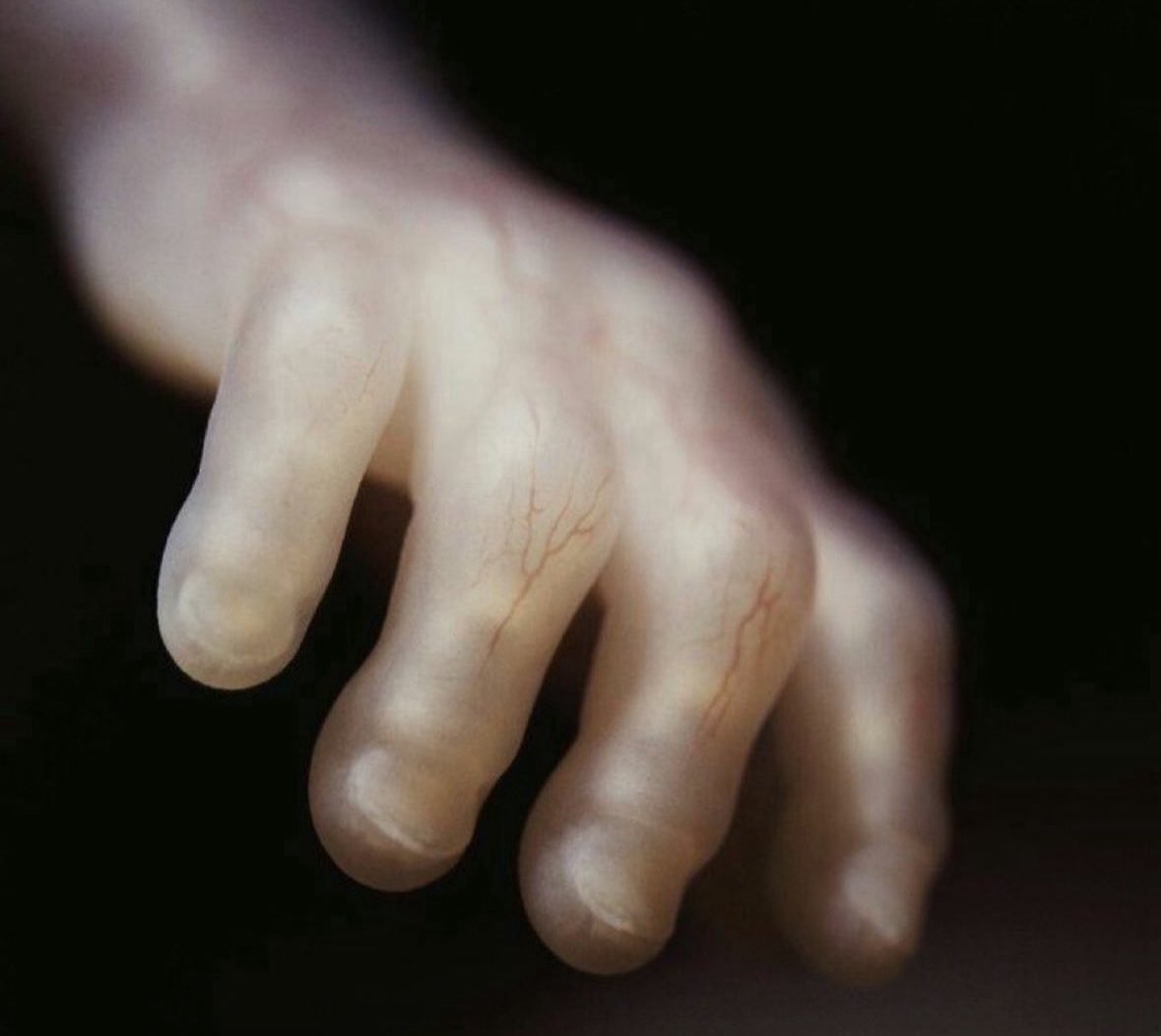
• Born at 21 weeks 6 days.
• Spent six months in the NICU.
• His parents were told that there was a 0% chance of survival.
• BUT this little fighter proved them all wrong.
📸 National Association of Pro-life Nurses
'MY NAME IS OLIVIA-JAX, NOT BLOB OF TISSUE'
"Doctors tried to bully my parents into aborting me three times. They said my intestines were out of my body - my mom and dad wouldn't let them. They said my legs and feet were deformed and not worth the mothers risk - my mom and dad wouldn't let them.
They said I had Trisomy 18 and wouldn't live outside of the womb - my mom and dad wouldn't let them. Daddy said he didn't believe them, he said their evidence was pathetic. My mom agreed,they went against the will of the top doctors of their field. I was born a month early I'm in the 95+% for everything, my hands and feet are perfect, I don't have an extra 18th chromosome, I'm nearly 7months old - and I'm fine! My name is Olivia-Jax, not fetus, not blob of tissue. I'm a little girl that my mom and dad didn't give up on - and I am fine!"
From Marshall Joyner
#compatiblewithlife