@cybrtrkguy 150KW/233 miles = 643 watts per mile or 1.55 miles per KW.
I have over 15,000 miles on my Cybertruck and my average is 394 watts per mile or 2.54 miles per KW.
Your complaint seems to be about range but it definitely is not about speed.....
@BrettLieurance @USN_Submariner My Dad was the COB (Chief of the Boat) on the USS Permit on that very dive in 1963… to see this video and know that he was there that very day is pretty darn cool…
@dictionaryhill@Tesla@elonmusk Did you try a simple reboot? The cameras along with the FSD also take 50+ miles to go through the calibration process as I recall
I often hear that driving an EV on road trips can add a lot of time and costs the same as driving an ICE. I'd like to break that down to show you how that is absolutely false!
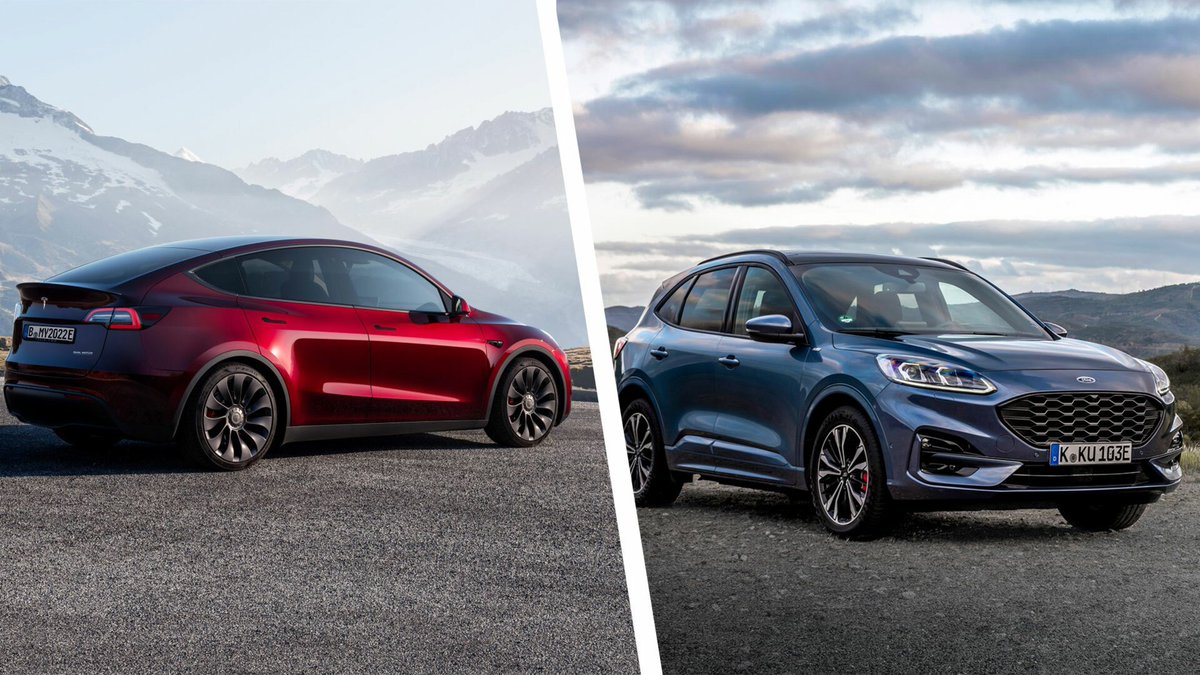
Below, we have a Tesla Model Y (76.2ft^3 cargo space) and a Ford Escape (65.4ft^3 cargo space). Although the Tesla has ~11ft^3 more cargo space, it is rated at 122MPGe compared to the Ford at 30MPG.
Do drive each under regular conditions in my area, it would cost the Tesla $30.80 and the Ford $123 to drive 1000mi - 400% cheaper to drive the Tesla Model Y!
On a 1000mi road trip, given the national average of $0.25/kWh to Supercharge, it would cost the Tesla $70 to charge. I can confirm this number with my road trip data to Florida this late Winter in our Model Y. It cost $77 to go 1082mi in cold climate conditions. This is still a 86% savings to drive electric.
During out 1082mi trip, we stopped 6 times for an average of 17 minutes, or 1:42 total. This was over 17 hours so we needed several meals and bathroom breaks over that span. So, not only did we save 86% on fuel, we added a negligible amount of time AND got to use Autopilot / FSD the entire time!