🚨 MAJOR BREAKING -
What Ontario inspectors found at 3 “career college” locations:
$219 million in OSAP, for 14,800 "students"
Every public college in Ontario combined got $385 million.
One student finished an entire course in a day, final exam in 6 minutes.
One login was used from 211 different IP addresses.
Interviewed students couldn't name their school, program, or speak English.
Three storefronts pulled over half of what every public college got.
Who signed off on this?
Who is getting fired?
Ontario taxpayers just got scammed.
Doug, what does the word "temporary" mean?
I'll give you a hint: it doesn't mean permanent.
That's why the visa was issued to them as a Temporary Foreign Worker (TFW).
I agree, that we need to keep the highest skilled & the hardest working immigrants in our country.
But we imported a lot of cheap, low skilled labour and fraudsters.
But the law, is the law, is the law.
Temporary means temporary.
🚨 MAJOR BREAKING: Carney just told the New York Times that immigration increases are coming.
His exact words: "So that will happen."
He didn't tell Parliament.
He didn't tell Canadians.
He told American media.
You found out the same way you find out everything from this government.
Secondhand.
One message for voters at home.
Another for the American press.
Joe Kernen on Squawk Box this am to Pierre Poilievre “I respect you for not saying (anything bad about the Carney government) we have our opposition party, goes abroad, trashes Trump on a daily basis, but it's nice that you actually have a little bit of class.”
Poilievre: Get back to two-way tariff-free trade. The U.S. hit first; Canada is united against the tariffs. He refused to attack PM Carney from U.S. soil — “politics ends at the border” — and said both countries have grievances that should be negotiated, not escalated. Canada could be the richest country on earth if it cut taxes, sped permits, and unleashed resources
“Politics ends at the border.” — Pierre Poilievre, @JoeSquawk
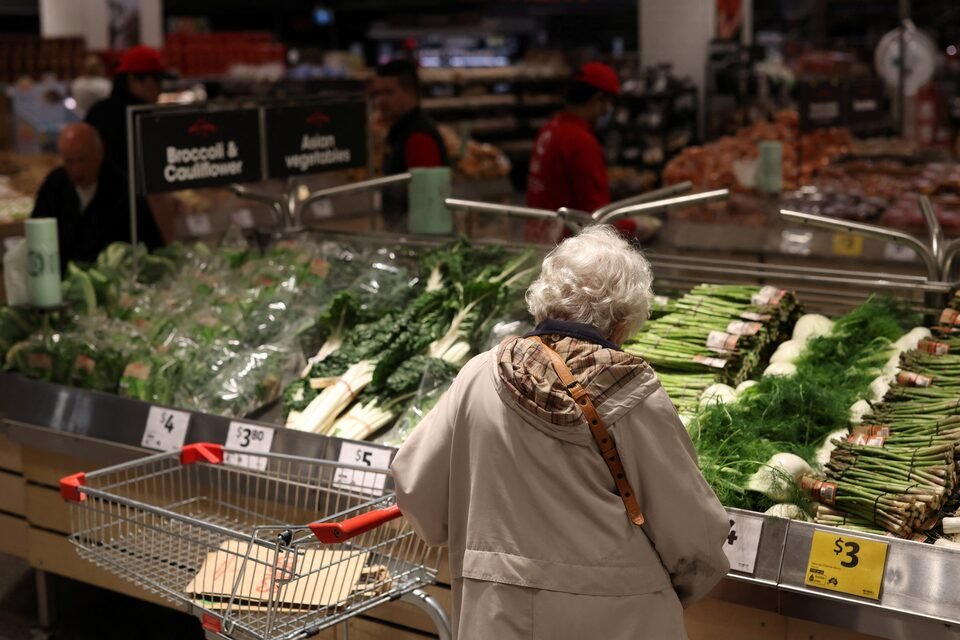
Change in global commodity prices over the past year:
• Wheat: +42.8%
• Rice: +23.8%
• Rapeseed oil: +21.5%
• Corn: +20.8%
• Soybeans: +18.4%
• Poultry: +8.4%
• Beef: +6.1%
• Sugar: +2.7%
• Barley: +2.2%
• Pork: −12.6%
Global grain and oilseed prices are rising sharply. Pork is the clear exception.
Sources: World Bank, IMF and FAO. August 2025 to August 2026; barley data through July.
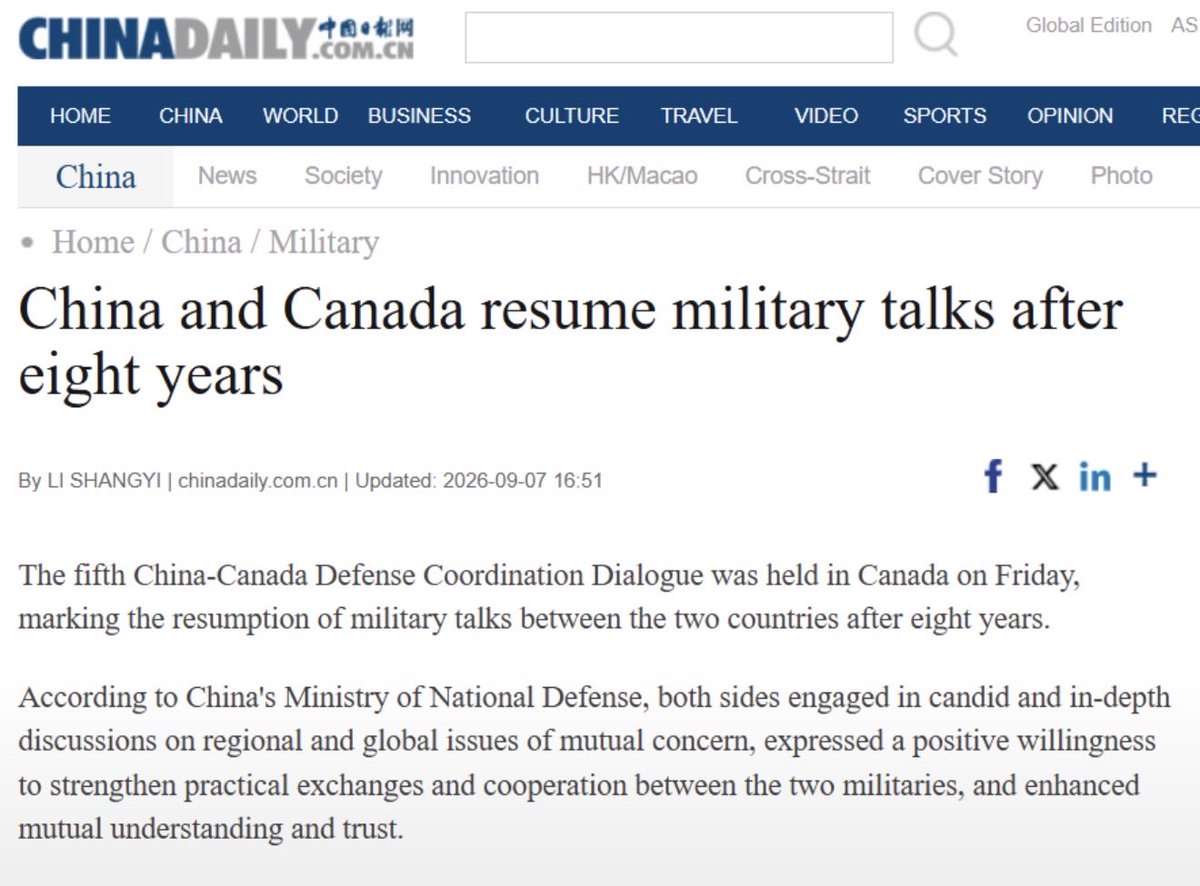
🚨 MAJOR BREAKING: Canada just resumed MILITARY talks,
WITH CHINA.
China’s defence ministry announced it.
Not Canada. China.
Our own government said nothing.
You’re learning about your country’s defence policy from Beijing’s propaganda outlets.
This is a nightmare for US-Canada trade negotiations when we’re cozying up to the same country Carney called “our biggest security threat.”
THEY INTERFERE WITH OUR ELECTIONS
Carney is talking military with China as a part of his “New World Order.”
THIS IS NO LONGER A CONSPIRACY THEORY.
Credit to @cbcwatcher for exposing this
Bessent vs Wall Street: They Don't Understand This Economy
Jobs blowout. FT/WSJ panic exposed. Red Queen economy. Foundry School. Meat cartel in the crosshairs.
Saturday Wrap with @BarbaraMBoyd ↓
JUST IN: Canada’s high speed rail estimate has DOUBLED from $60-90 to $150 BILLION
For $150 BILLION you can have any one of the following:
>No GST for 3 years
>5,000 water bombers
>3,470 new schools
>200,000 long term care beds
>28 new nuclear reactors
This is insane.
Recently sat down with @SNewmanPodcast to discuss trade and why Canada continues to fall short against the U.S.
"Mexico became the U.S.'s number one trading partner, surpassing Canada, by playing the game without emotion. Meanwhile, Prime Minister Carney is widely popular across the Western world, with significant public support for standing up to Trump. Yet Canada remains alone—so why is that?"
"Most of the issues that he's raising are traditional bipartisan trade urgency the United States has with Canada, and you can sometimes lose sight of that when you personalize everything to trump the American concerns about digital trade or Chinese auto parts coming into usmca, or steel and aluminum from non market economies leaking into their economy."
"None of those issues are going to go away just because we don't like Orange Man." (On CityTV)@MAAWLAW
Canada’s Trade-War Denial
Canada does not need “time to adjust.” It needs a political class willing to stop confusing indignation with economic policy. And it needs access to the US market.
President Trump is focused on economic sovereignty, this is not personal this is business.
I assumed Mark Carney understood that. He has spent enough time around markets and capital to know that a country cannot posture its way out of a competitiveness crisis. Yet Ottawa’s turn toward symbolism and performative retaliation suggests that faith was misplaced.
Canada does not need another era of Pierre Elliott Trudeau-style progressive theatre: moral signalling, state direction, and lofty ambition detached from the hard work of building productive capacity. It needs an adult willing to confront vested interests, make trade-offs, and put economic strength ahead of political performance. The last adult, it seems, has just left the room.
The elbows-up strategy is embarrassing and hurts Canada long term, like a teenager emotional response to the reality of the world. Carney’s use of it helps neither negotiation nor leverage, and it wounds Canada more than the U.S.
The central strategic objective is obvious: preserve access to the United States, the world’s largest and most dynamic market, Canada’s neighbour, and the foundation of its export economy. That access is not a talking point. It supports Canadian jobs, investment, supply chains, and growth.
Canada focus on China is an own goal. China cannot replace it. China is distant, strategically uncertain, and separated from Canada by geography, institutions, and infrastructure. It cannot reproduce continental integration: shared energy systems, cross-border capital, integrated factories, common standards, and decades of commercial interdependence.
Canada does not get to trade on sentiment while depending on geography.
Nor can it “win” a trade war with its largest customer. Ottawa can impose targeted costs where it has genuine leverage. It can negotiate firmly. But broad retaliation is not a strategy. It is emotional performance masquerading as economic policy.
Too many in the political and economic elite appear to believe retaliation can force the structural adjustment Canada has avoided for years. It cannot. Tariffs do not raise productivity. They do not attract investment, reduce regulatory costs, or make Canadian businesses more competitive. They raise prices for households, increase costs for manufacturers, and encourage mobile capital to locate elsewhere.
Retaliation for its own sake is an expensive expression of national frustration. Canadians pay the bill.
The deeper problem is not merely American pressure. It is Canadian failure: weak business investment, poor productivity growth, regulatory paralysis, provincial trade barriers, slow approvals, inadequate infrastructure, and a subsidy culture that protects incumbents rather than rewards builders.
Canada is rich in assets and poor in execution. It has energy, minerals, capital, skilled people, and privileged proximity to America. Yet it has made investment too slow, too risky, and too expensive.
The answer is not submission. It is reform: deregulate, accelerate approvals, remove barriers to capital and internal trade, and lower the cost of building.
Canada may need time to adjust. But first it needs to end its denial.
🚨BREAKING: Elon Musk has been nominated for a Nobel Peace Prize for protecting Free Speech.
Simple poll. Please be honest! As of today, how much do you still trust this man?
A. 100 % B. 75%
C. 50% D. 25%
E. 0%
MAKE THIS GO VIRAL ON 𝕏. LET’S GO 👏
Go
Bill Gates held a top secret Q Clearance for 7 years, through the entire pandemic. He’s not an elected official. He’s not a scientist at NIH. He’s just a very wealthy private citizen who helped shaped the government’s COVID response.
https://t.co/EAAlYr9bEH
One of the highlights of the Warsh Fed has been watching stenographers posing as journalists, like the WSJ’s Nick Timiraos, reduced to reporting Fed backroom gossip because they’re incapable of performing real economic or monetary policy analysis without being spoon-fed.