I wrote about the Pope and why Christian tech critics often have a more compelling response to the AI crisis than their secular counterparts. Simply, Christian writers aren't afraid of "human nature" talk, and they understand THE question of the AI Age is: what are people for? 🧵
Exciting news! The House is voting on a bill today to improve geothermal permitting, siting, and building. The package includes good ideas from @RepMaloyUtah@RepMikeKennedy@RepAOC.
Geothermal energy is critical to achieve energy abundance and these reforms are important parts of the path there.
" Every single day of my childhood, my parents asked the same question at dinner. Not “What did you learn?” but “Who did you serve?” "
Excellent piece by Alex Sasse, @BenSasse 's eldest daughter, one what she learned from her father
Humanity, created by God in all its grandeur, is today facing a pivotal choice: either to construct a new Tower of Babel or to build the city in which God and humanity dwell together. In Jesus Christ, this humanity in its grandeur becomes the Way, the Truth and the Life, opening the path for each of us to grow toward fullness. #MagnificaHumanitas
https://t.co/6i9MWs6LJl
The Pope is writing for the ages, not the immediate news cycle.
It’s fine to skip all analysis until you’ve had the chance to read it yourself at leisure and discuss it with friends and family.
In the words of an assistant commissioner of the Met, ‘untraceable, untaxable income in the hands of criminals is the new lingua franca of organised crime. The link between Medellín and Moscow is the $100 bill.’
Is GenAI causing the relative decline in early-career hiring? Our latest research finds that these effects may be conflated with another important driver: the rise of WFH arrangements (1/N)
McNees Wallace's new CIO's track record at two of Pittsburgh's biggest law firms "speaks for itself and it's exactly what drew us to him," COO says. https://t.co/DCfFWjZRyO
As electricity demand continues to rise, NERC’s latest Summer Reliability Assessment points to an improved reliability outlook heading into summer 2026.
Competitive power suppliers are helping meet the moment, with 12,000+ MW announced in @pjminterconnect alone since mid-2024 - including new generation investments and significant expansions to existing infrastructure.
Read more from @NERC_Official: https://t.co/CphAt2hjSL
#GridReliability #Energy #Electricity #PowerGeneration #SummerReliability #Summer
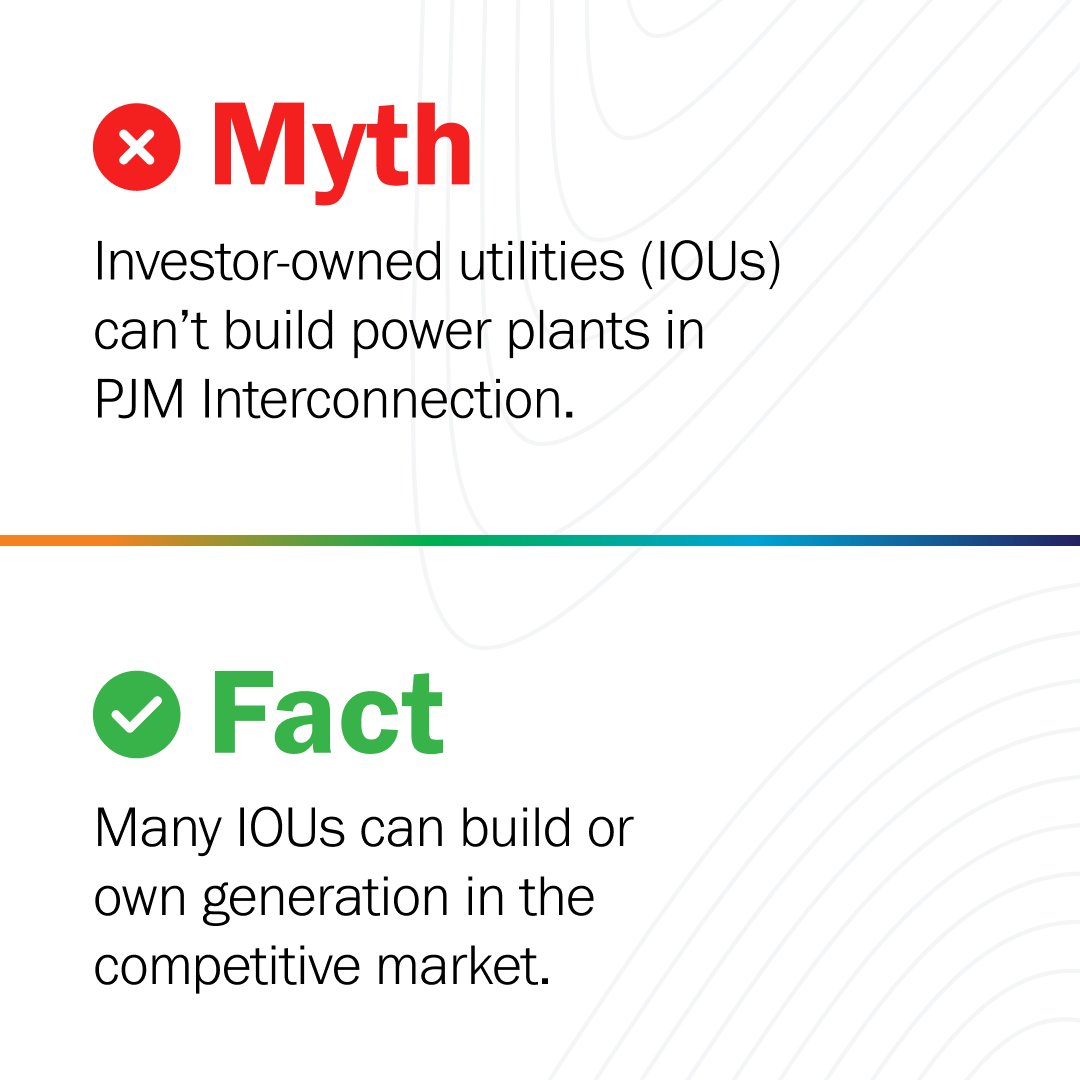
Competition drives investment and helps meet growing energy demand while protecting consumers.
Utilities want to change the rules, so they don’t have to compete.
More here: https://t.co/tNn2plcVMn
On this episode of #EnergySolutions@ChooseMyEnergy President & CEO @ChrisErcoli, explains why rising rates are not simply a short-term issue:
“We're seeing structural price escalation on the kind of poles and utilities side of the equation.”
As demand growth accelerates and infrastructure investment increases, policymakers and consumers alike are paying closer attention to the long-term drivers behind electricity costs – and the recent power supply crunch isn’t the only factor.
Chris discusses why these affordability concerns are gaining urgency — and why more energy competition can help.
🎧 Listen to the episode: https://t.co/JAe6hQaTms
📺 Watch the full episode here: https://t.co/IipEpzNYmc
#EPSA #REAL #CompetitiveEnergy #RetailEnergy #ConsumerChoice
"The public has largely blamed energy-hungry data centers for rising power bills. But from 2019 through 2024 the main culprit behind the price hikes was refurbishing or replacing existing transmission and distribution infrastructure" https://t.co/YtGBmP74HB
Thank you @JosephMajkut@DanielPalken@ts_fisher for emphasizing that historically excessive TX builds (that were viewed as gold plating at the time) created headroom that has more recently been tapped into to support significant industrial & economic growth
It’s not clear to me that the reindustrialization movement in the US appreciates how existential these transmission planning outcomes are in determining their ability to succeed
AI infrastructure growth can either be
1. An enormous tailwind for new industrial loads by enabling bulk power upgrades affording system level optionality and cost efficiency to readily serve new power-intensive applications where industrial activity is viable (in proximity to public infrastructure and resources)
Or
2. An adversarial competitive force with completely inelastic demand sucking all future productivity potential out of any transmission infrastructure growth. Siting in remote locations where alternative industrial activity is infeasible and system expansion serves a very select few organizations with little to no socialized option value. Consumer affordability, economic development, and job growth prospects all permanently worse-off due to suboptimal system topology
As you watch Aaron Rai in the PGA Championship, you might notice he uses iron covers for his clubs and wears two gloves — two habits often viewed as golf faux pas. But both are actually inspiring.
Rai grew up in a working-class family in England, where his father sacrificed heavily to support his golf career. When Aaron got an expensive set of irons as a kid, his dad would clean every groove with a pin and baby oil after practice because the clubs meant that much to them. The iron covers became a reminder to appreciate what you have.
And the two gloves? Rai started wearing them as a kid during cold-weather golf in England and eventually became so comfortable with the feel that he never stopped.
Not gimmicks. Just gratitude… and comfort.
"The Achilles’ heel of Chinese industrial policy is its cost and waste. China runs bigger budget deficits relative to economic output than the U.S. Outside advanced manufacturing, the economy is moribund, weighed down by debt, deflation and aging demographics."