People say Bitcoin has no intrinsic value, then spend $96,000 on a communications degree that qualifies them to make Canva decks about emotional intelligence.
Go against the herd. Buy Bitcoin.
A 24-year-old Polish tennis player arrived in Paris last week ranked 114th in the world, with no sponsors, no guaranteed income, and no certainty she could even pay for her hotel room.
She had to win three qualifying matches just to enter the French Open main draw. Prize money is only paid at the end of the tournament, so a Polish sports drink brand quietly stepped in and covered her hotel bill.
Her name is Maja Chwalinska. And today, she plays in the French Open final.
Before this tournament, she had won exactly one Grand Slam main draw match in her entire career. She had battled depression so severe that in 2021 she couldn't get out of bed. She underwent knee surgery in 2022. She spent years grinding through small tournaments across Europe just to stay afloat.
Then she arrived in Paris, won three qualifiers, and kept winning. Zheng Qinwen. Elise Mertens. Maria Sakkari. Diana Shnaider. Nine straight matches. One set dropped.
She is now the first qualifier in French Open history to reach the final. The last time a qualifier reached a Grand Slam final, it was Emma Raducanu at the 2021 US Open. Raducanu won.
By simply making the final, Chwalinska has earned more prize money than her entire career combined. The runner-up cheque alone is $1.6 million. If she wins today, she takes home $3.25 million.
One week ago she couldn't pay for her hotel room.
Bitcoin isn't real! It's not physical!
Yeah? Neither is the number seven, but I bet you'd notice if your bank balance dropped by seven figures.
Let me break the spell for you: money has never been "real."
Money is a collective hallucination—a social construct we all agree to pretend exists so we don't have to barter chickens for dental work.
Gold wasn't money because it fell from heaven with "LEGAL TENDER" stamped on it.
We picked gold because it was the least-bad physical object that checked the boxes:
- Scarce
- Durable
- Divisible
- Portable
- Verifiable
It was the analog solution to our shared idea.
But here's the thing about analog: it's slow, heavy, and requires armed guards.
And here's the thing about humans: we engineer better tools.
We went from abacus to iPhone. From carrier pigeons to satellites.
From gold bars locked in vaults to Bitcoin—verified by thermodynamics, secured by energy, and transmitted at the speed of light.
Bitcoin is the digital versioin of money. Just like X is the digital version of town hall.
Gold was the best we could do for many centuries.
Bitcoin is what we can do now that we have cryptography, distributed consensus, and proof-of-work anchored in physics.
Your grandpa trusted gold because he could hold it.
You trust Bitcoin because you can verify it.
One required faith in a metal. The other requires faith in math.
Guess which one has never been debased, diluted, or confiscated by executive order?
The concept of money is a human mental construct.
Always has been. Always will be.
The only question is: do you want your construct built on scarcity enforced by governments—or scarcity enforced by code?
Gold was monetary technology for the industrial age. Bitcoin is monetary technology for the information age.
Welcome to the upgrade.
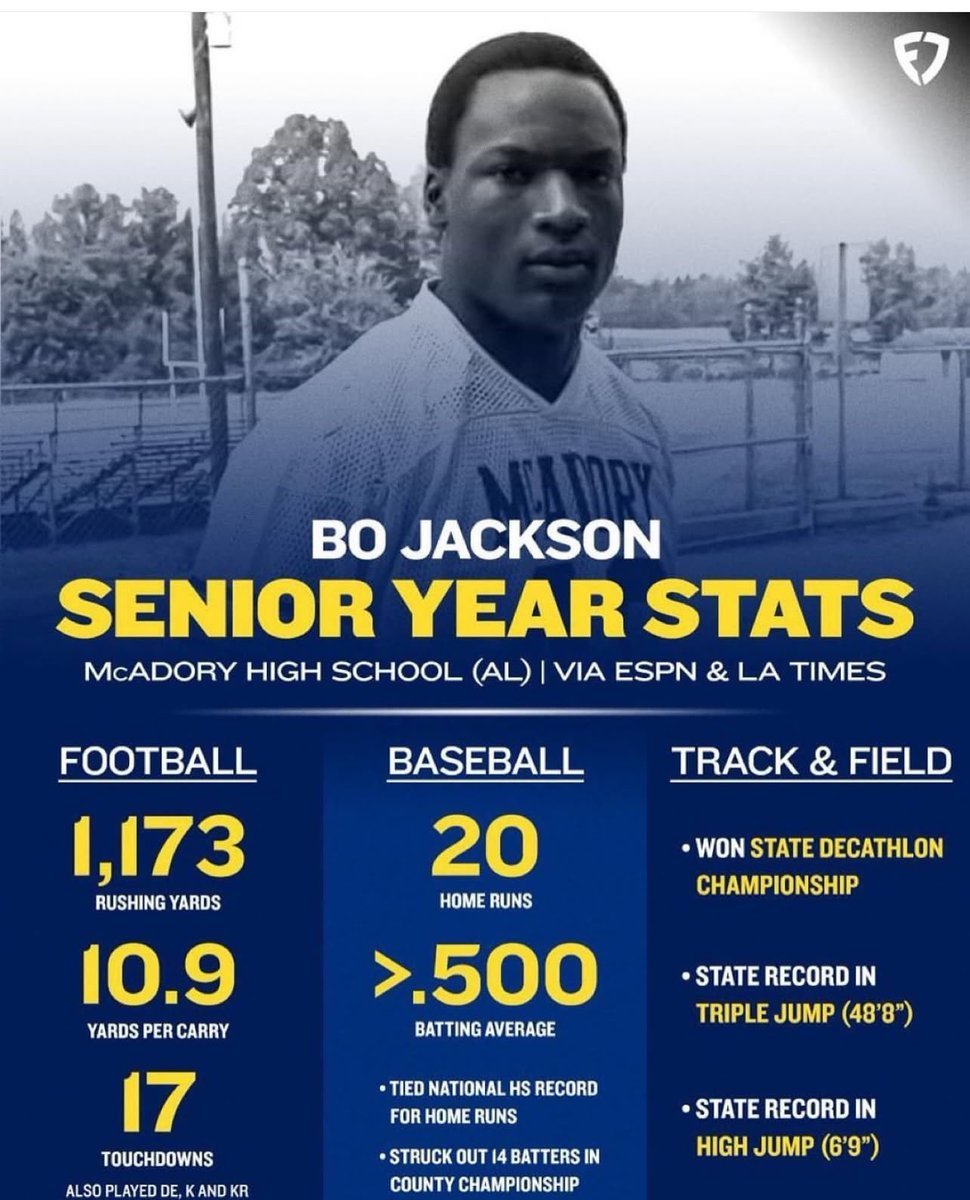
Bo Jackson on NIL:
“It's teaching young kids how to run away from their problems…It’s ruining college sports.”
Full episode ft. Bo Jackson & Barry Sanders: double check but https://t.co/s1v79jWUQw
Joe Rogan just described the average modern life in 42 seconds—and it stings because it's so accurate.
"Most people don't have that kind of self-control and discipline. They don't have to.
Alarm goes off → wash, brush teeth, eat something, go to work → do the bare minimum → sneak phone time in the bathroom → come home → Netflix → sleep → repeat.
Family problems, job stress, car broken, house issues, bills piling up… everything's always wrong, everything's distracting."
He calls it what it is: a loop most people are trapped in, not because they're lazy, but because the system doesn't demand more—and distraction is the default.
Be honest: How much of your day feels like autopilot right now?
And what (if anything) are you doing to break the cycle?