Agnes Jebet Ngetich so far...
- World Cross Country Champion
- World Half Marathon Champion
- Women-only Half Marathon World Record Holder*
- 10km World Record Holder
- Second Fastest Half Marathon Runner in History
- Third Fastest Woman Ever Over 3000m
(📸/ @WorldAthletics )
Hundreds of unveiled runners competed in Tehran in one of the largest displays of defiance since the 2022 "Women, Life, Freedom" protests. Some are calling it a tale of two cities, as veiled women marched in the capital the same day to support the government and war effort.
Fridays are for serenading! Jaber toto! Marius Ajuma performing Aheri! For those who know, please translate for the non-Luopeans. #engageke#storytelling#engagemusic
This Palestinian-Australian author made an animated film about Palestinian love and resistance.
Samah Sabawi was inspired by the steadfastness of Palestinian detainees and their loved ones to write “All We Have.”
With @gazaheart
How NHIF Was Nearer to UHC Than SHA
Universal Health Coverage (UHC) is founded on a simple principle: every Kenyan should be able to access the healthcare they need without suffering financial hardship.
Social health insurance is one mechanism through which this can be achieved. The principle is equally straightforward: we pool resources while people are healthy so that those resources are available when some of us become sick. The young and healthy contribute alongside the older and less healthy. The many subsidise the healthcare needs of the few at any particular time.
The strength of an insurance pool therefore depends not merely on registration, but on having a sufficiently broad and sustainable contribution base.
Why NHIF had an important advantage
NHIF was far from perfect. It had serious problems with governance, fraud, inadequate benefit packages, delayed payments and accumulated debts to healthcare providers.
However, its contribution structure had one important strength: it allowed large numbers of Kenyans to enter the insurance pool at relatively modest contribution levels. That included younger and healthier people who might not immediately require healthcare.
In my view, this brought NHIF closer to one of the fundamental principles of social health insurance: many people contributing relatively affordable amounts into a common pool from which the sick could receive care.
SHA fundamentally changed this financing structure.
Under the Social Health Insurance Regulations, salaried households contribute 2.75% of gross salary or wage, while households without salaried income contribute 2.75% of household income as determined through means testing, subject to the statutory minimum. 
For many households, particularly those already carrying PAYE, the Housing Levy and other statutory deductions, this represents a significant additional deduction from disposable income.
My concern is that when the cost of entering an insurance pool becomes substantial, healthier people—particularly younger people outside formal employment—have a weaker incentive or ability to contribute consistently. That threatens the broad risk pooling on which social insurance depends.
The problem of adverse selection
There is another challenge that deserves serious discussion: adverse selection.
An insurance system becomes financially vulnerable when people can remain outside the contribution pool while healthy, join when they require expensive treatment, receive the service and then cease contributing consistently thereafter.
From the patient’s perspective, immediate access to treatment is understandably attractive. From a political perspective, the ability to announce that somebody registered and immediately received an expensive procedure makes a compelling story.
But somebody must pay for that care.
If contributions and government allocations do not adequately cover the cost, and the healthcare facility provides the service but waits months for reimbursement, then the provider effectively becomes the financier of the government’s social health programme.
That is neither insurance nor sustainable UHC.
Healthcare providers cannot be the country’s involuntary bankers
This is where the experience of SHA becomes particularly troubling.
Healthcare providers entered the SHA era already carrying unpaid NHIF obligations. The existence and continuing settlement of NHIF legacy debt is not disputed. In April 2026, the Health Cabinet Secretary told the Senate that verified legacy claims were still being budgeted for settlement.
Even more recently, the The Ministry of Health reported that reconciliation had been completed for thousands of facilities with NHIF legacy claims of KSh10 million and below, with KSh3.63 billion paid to 3,058 facilities.
That progress is welcome. But it also confirms the central point: healthcare providers have carried these debts for years.
Hospitals cannot pay salaries with promises. They cannot purchase medicines with pending claims. They cannot pay suppliers, electricity bills, equipment leases or bank loans with assurances that reimbursement is coming.
When an insurer delays payment after a hospital has already treated the patient, the hospital has effectively extended credit to the healthcare financing system.
Do that for long enough and facilities scale down services, delay salaries, reduce employment, accumulate supplier debt or eventually close.
That has consequences far beyond hospital balance sheets. It affects jobs, businesses supplying the health sector and, ultimately, patients.
Rejected claims are not merely accounting entries
Claims rejection is another major concern.
Fraud must unquestionably be identified and prosecuted. Public money must be protected.
But a rejected claim for a legitimate service already provided does not make the cost disappear.
The doctor has worked.
The nurse has worked.
The medicine has been administered.
The laboratory test has been performed.
The theatre has operated.
The electricity has been consumed.
If a legitimate claim is rejected and never reimbursed, somebody has still paid for that treatment.
That somebody is often the healthcare facility.
Indeed, Parliament has heard provider concerns about claims processing, suspensions and disputed fraud allegations.  The Ministry itself has repeatedly acknowledged that timely SHA payments are essential to the sustainability of healthcare facilities.
“Free healthcare” is never actually free
This distinction is important.
Healthcare may be free to the patient at the point of service, but healthcare itself is never free.
Somebody paid for the building. Somebody bought the medicines. Somebody trained and employed the healthcare workers. Somebody purchased the equipment. Somebody paid for electricity, oxygen, laboratory reagents and theatre supplies.
Therefore, when politicians stand before wananchi and declare that healthcare is “free,” we must ask a second question:
Who actually paid for it?
If Treasury funded it, say so.
If contributors funded it through SHIF, say so.
But if a healthcare provider delivered the service and remains unpaid months later, then government should not take political credit for a service that the provider has effectively financed.
As one colleague recently put it to me:
“Social services in Kenya are provided by political propaganda.”
It is a provocative statement, but it captures the frustration increasingly expressed within healthcare circles: announcements are immediate; reimbursement is not.
UHC cannot exist without predictable financing
The Ministry says the law allows up to 90 days for claims processing and that SHA aims to pay sooner.
For healthcare providers, however, the important measure is not the promise but whether legitimate claims are actually paid predictably and on time.
A sustainable UHC system requires three things to happen simultaneously:
The patient must receive care. The provider must be paid. The financing mechanism must remain solvent.
Achieving only the first while sacrificing the second eventually destroys the first.
A hospital that continuously treats patients without adequate reimbursement will eventually become incapable of treating anyone.
SHIF cannot quietly carry PHC and emergency care
Kenya’s new architecture was deliberately designed around different financing mechanisms, including the Social Health Insurance Fund, the Primary Healthcare Fund and the Emergency, Chronic and Critical Illness Fund.
These distinctions matter.
If government allocations to the publicly financed components are inadequate, the burden inevitably shifts somewhere else — to SHIF contributors, county facilities, private and faith-based providers, patients through out-of-pocket expenditure, or some combination of them.
That would defeat the purpose of UHC.
Universal Health Coverage is not achieved by registering millions of people on a database. It is achieved when those people can actually obtain appropriate healthcare without catastrophic expenditure and without bankrupting the institutions providing that care.
SHA’s success must therefore be measured differently:
We should stop measuring SHA primarily by registration numbers, biometric enrolment, the number of procedures authorised or individual stories of patients who received expensive treatment.
Those are important outputs, but they do not by themselves demonstrate financial sustainability.
We should ask harder questions:
How much money has been collected?
How much has Treasury contributed to the various funds?
What is the actuarial cost of the benefits promised?
How much has been claimed?
How much has been approved?
How much has actually been paid?
How much remains outstanding?
How many claims have been rejected, and how many of those rejections have subsequently been overturned?
What is the average time between provision of a healthcare service and payment of the provider?
And what is happening to household out-of-pocket expenditure?
Those are the numbers that will tell us whether Kenya is actually moving towards UHC.
Healthcare providers have carried enough
Healthcare providers should not become involuntary underwriters of government policy.
A contract that makes payment for services already rendered dependent on future availability of funds would raise profound concerns for any provider being asked to sign it. Healthcare facilities have salaries, suppliers, taxes and statutory obligations that are not similarly conditional on the availability of funds.
The principle should be uncomplicated:
If government authorises a service, a healthcare provider provides that service, and the claim is legitimate, the provider must be paid fully and within a predictable contractual period.
Anything else transfers the financial risk of government policy onto hospitals and healthcare workers.
Was NHIF therefore closer to UHC?
In one important respect, I believe it was.
Not because NHIF was an excellent institution—it certainly had serious shortcomings—but because its financing structure made it easier to bring a broad population, including younger and healthier Kenyans, into a common insurance pool at relatively affordable contribution levels.
SHA promises broader benefits, stronger primary healthcare and greater financial protection. Those are worthy objectives. But aspirations are not UHC.
UHC must be financially sustainable.
It must protect patients from catastrophic expenditure.
It must adequately fund primary, emergency, chronic and critical care.
And critically, it must pay the healthcare providers who actually deliver the care.
Otherwise, we risk creating the illusion of free healthcare by transferring its cost from the patient to an unpaid hospital.
That is not Universal Health Coverage.
That is deferred payment.
And deferred payment eventually becomes denied healthcare.
Kenya needs a health financing system in which patients, healthcare workers, healthcare facilities and taxpayers can all survive.
UHC cannot be built on the financial distress of the people and institutions providing the healthcare.
Dr Simon Kigondu
Obstetrician & Gynaecologist
Health Policy Commentator
Meet our next host cities for the World Championships ‼️
Nairobi and Munich have been selected to host the 2029 and 2031 World Athletics Championships, respectively, following one of the strongest bidding processes in the history of the sport’s flagship event.
Read more in the press release 🔗 https://t.co/ajpS5RwASO
#WorldAthleticsChamps
93-year-old President Paul Biya has concluded his brief visit to Cameroon and is returning to Europe where he lives.
It was his longest stay in the country since his controversial 8th-term win.
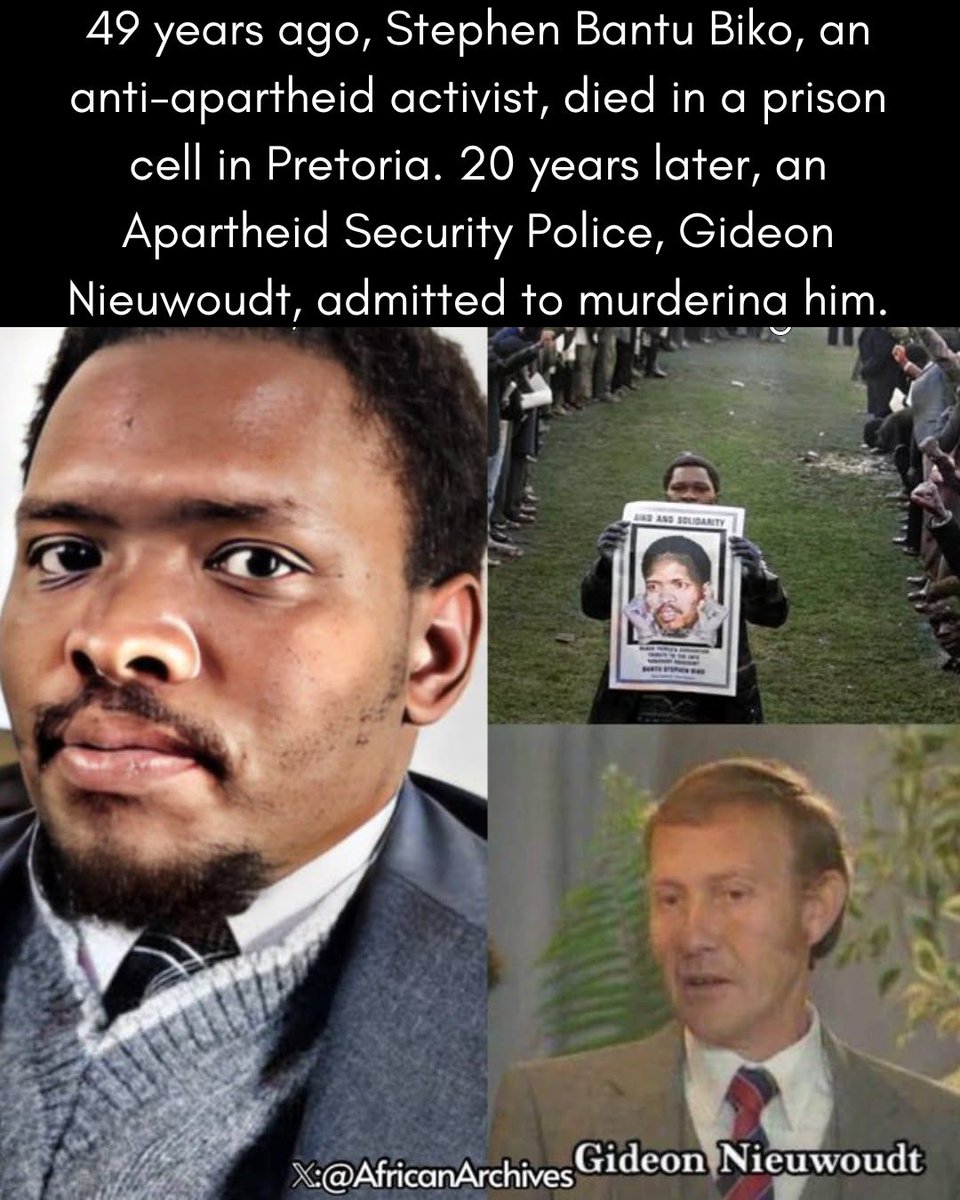
Steve Biko was born in 1946 in King William’s Town in South Africa’s Eastern Cape and became one of the most influential thinkers of the anti-apartheid struggle. While studying medicine at the University of Natal, Biko became involved with the National Union of South African Students, but grew frustrated with what he saw as the dominance of white liberals within organizations claiming to speak for Black South Africans. In 1968, he helped establish the South African Students’ Organisation, or SASO, which provided an independent political space for Black students and became one of the foundations of the Black Consciousness Movement.
Black Consciousness was about much more than opposing individual apartheid laws. Biko believed that apartheid maintained itself partly by convincing oppressed people of their own inferiority. He argued that political liberation therefore had to be accompanied by psychological liberation, self-confidence and pride in Black identity. The movement encouraged Black South Africans to organize independently, build community institutions and reject the idea that their freedom depended upon acceptance from white society. Through the Black People’s Convention and numerous community initiatives, these ideas spread beyond university campuses and helped inspire a new generation of activists during a period when the African National Congress and Pan Africanist Congress had been banned and many of their leaders were imprisoned, exiled or underground.
The apartheid government increasingly regarded Biko as a threat. In 1973, authorities placed him under a banning order that severely restricted his movement, public activities and ability to communicate with others. Although Black Consciousness strongly influenced the political atmosphere surrounding the Soweto uprising of 1976, it is more accurate to say Biko and the movement helped inspire the generation involved rather than claiming that he personally organized the uprising. The protests began after students rejected the government's requirement that Afrikaans be used as a language of instruction in Black schools, and the uprising became a major turning point in resistance to apartheid.
On August 18, 1977, Biko was arrested at a police roadblock and detained under apartheid security legislation. During interrogation in Port Elizabeth, security police severely assaulted him, causing devastating brain injuries. Despite his condition, authorities transported him approximately 1,200 kilometers to Pretoria while he was naked and lying in the back of a police vehicle. Biko died in a prison hospital on September 12, 1977, at only 30 years old. Officials initially attempted to obscure the circumstances of his death, but evidence of the brutal treatment he suffered generated outrage inside South Africa and internationally. His death in police custody turned him into one of the most enduring symbols of the brutality of apartheid.
“Yanuni” is a documentary about an Indigenous Amazonian leader who survived six assassination attempts.
It was free on YouTube for just days and passed 1 million views. So why isn’t it being distributed more widely?
Who ate the 100 billion for Mombasa-Likoni bridge that was given to Kenya by the Japanese government?
Instead of a 100 billion bridge, the government is now only buying a 3 billion ferry. Nani amekula 97 billion?
Corruption in this country is denying people development and impoverishing millions while just a few benefit. Nkt!