Are you planning to apply for an MSCA Postdoctoral Fellowship?
Revisit the webinar on how to prepare a competitive proposal, organised by @MCAA_Ireland last year!
📹 Watch the recording: https://t.co/BU3iowN3nN
🔗 Find out more about the 2026 call: https://t.co/6FfVWVlaG9
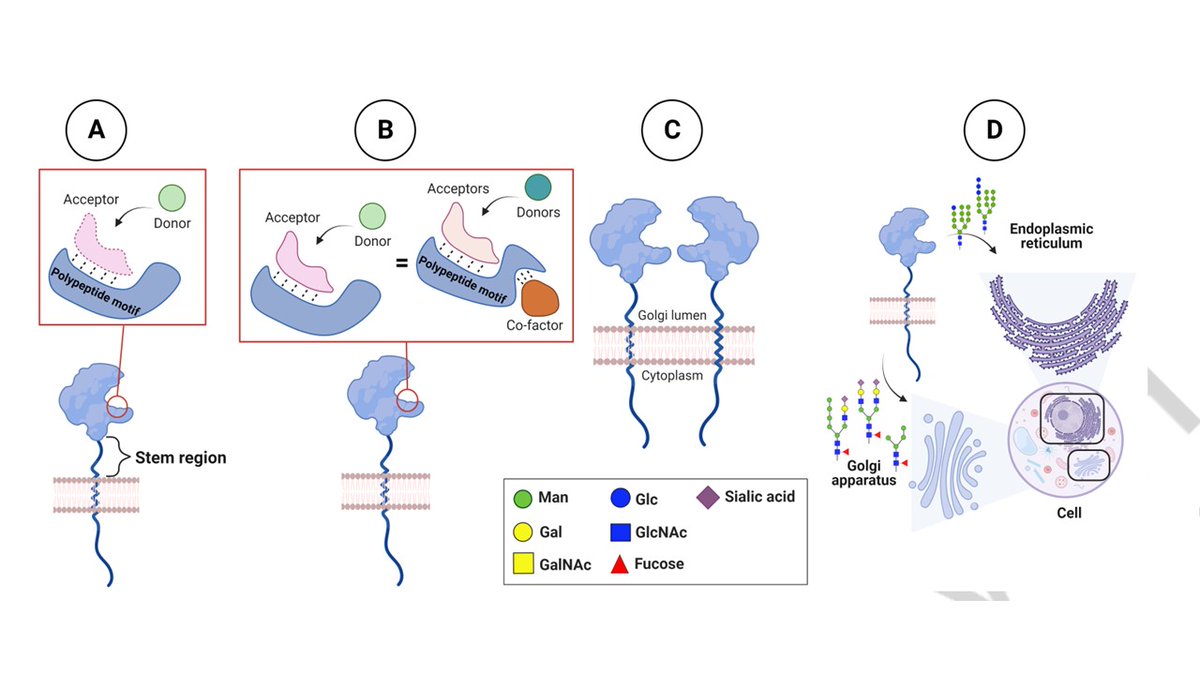
Have you ever wondered why some glycosyltransferases recognize glycoproteins, some glycolipids, and some both? Together with @k_mikolajczyk and @RKaczmarekDr, we try to answer that complicated question.
#glycotime
https://t.co/Ey2sSJ1bFN
I have been reading papers that use single-cell RNA-seq data to infer secreted proteins.
The results from this@ScienceMagazine figure suggest that such inferences should be regarded with great caution.
Thrilled to share our last work on transcriptional regulation of B4GALNT2. Thanks to F. Dall'olio and M. Duca for involving me in this collaboration. My research is available on @ResearchGate: https://t.co/Pc3Sv76hrB
Trying to learn #Blender through the Python API and Geometry Nodes to create a #dataviz. Baby steps 😅 took me 2 days to learn how to read in a CSV file and use GN to display the datapoints as spheres of different sizes. Wish me luck as I continue ;)
How to write a grant?
1. Write it for the reviewer, not you, the applicant.
2. Communicate in stories.
3. Make your story cohesive—leave no puzzling gaps.
4. Make your story resonate to keep the reviewer reading.
5. Accept chance and noise in peer-review.
https://t.co/wHZ065DNlm
#bacteria cause mutations in #cancer - but only if they stick to host cells. Brilliant study from @LarsVereecke lab in @Nature: https://t.co/WBAE3UBHqi
Our accompanying perspective with @kyannaouyang: https://t.co/HOPRduIMae
Lots of implications for new CRC prevention approaches!
Happy to share our new paper in @ChemBioChem featuring a MicroPlate Assay (MPSA) using an Alkyne‐Modified CMP‐Sialic Acid to Evaluate Human STs Specificity by Filipe C @sushmaa_dng & co-workers https://t.co/wyS2MJU0OQ #glycotime@GlyCanDrug@umr8576 @MSCActions @CNRSbiologie
Our opinion piece is out today, "The origin of novel traits in cancer"! Do the phenotypes come first and only later are they locked in by genetic or epigenetic changes? Insights from evolutionary biology are super useful for understanding cancer! https://t.co/yWLvUE0l22 #S_Frank
Ever wanted to edit a protein sequence inside a living mammalian cell? Maybe to site specifically incorporate a non-canonical residue in a cell? Perhaps you’d like to do a pull down without an antibody? Or use a small molecule fluorophore to image an endogenous protein?
What determines whether someone gets infected or not after exposure to SARS-CoV-2? A new study by Lindeboom et al examined this question with COVID-19 human challenge study. @BenIsraelow and I summarize their key findings in this News & Views 🧵 (1/)
https://t.co/11PzBqeor1
Out today in @eBioMedicine:
Sialic acid blockade inhibits the metastatic spread of prostate cancer to bone
An amazing team effort over many years. Thank you @PCR_News for believing in us and funding our idea
https://t.co/McnB4o4fLC 1/2
Hi #Glycotime! Intimidated by the complexity of O-GlcNAc dynamics? Here is #GlycoID in step-by-step format @Currentprotocol in #ChemicalBiology. @FehlLab walks users through expressing and applying GlycoID tools for live cell O-GlcNAc tracking in signaling https://t.co/tPCyobRibY
#glycotime! the 2nd edition of our GlycoScienceNL meeting is June 21st in Utrecht https://t.co/DTkPWgNP0w
If you love glyco, and you know you do, be there! Please RT! @marthewalvoort @ noortjedehaan @ thomasboltje @ sandravanvliet @UU_Glycoscience