Writing this piece took longer than I expected. Because every hospital owner I spoke to had a version of the same story. Different city, different size, same drawer. That pattern is what convinced me this wasn't anecdotal.
As clinicians, we're trained to handle emergencies. We're rarely trained to handle the emotional and administrative load that comes with them. Where do you think communication breaks down most often inside hospitals between doctors and families, or between systems and doctors?
@Vertrouehealth@WHO As clinicians,we're trained to handle medical emergencies. We're rarely trained to handle the emotional and administrative load that comes with them.Where do you think communication breaks down most often inside hospitals between doctors and families, or between systems & doctors
I have been this doctor once.
Literally standing between a patient's diagnosis and an insurance company's algorithm, wondering which one I was supposed to be fighting that day.
@Vertrouehealth@EPotterMD I have been this doctor once.
Literally standing between a patient's diagnosis and an insurance company's algorithm, wondering which one I was supposed to be fighting that day.
India has one of the lowest public health expenditures We've a private healthcare economy where access is rationed by income. a story like this surfaces not because 1 doctor went rogue but because system creates conditions where patients are grateful for discount tied to anything
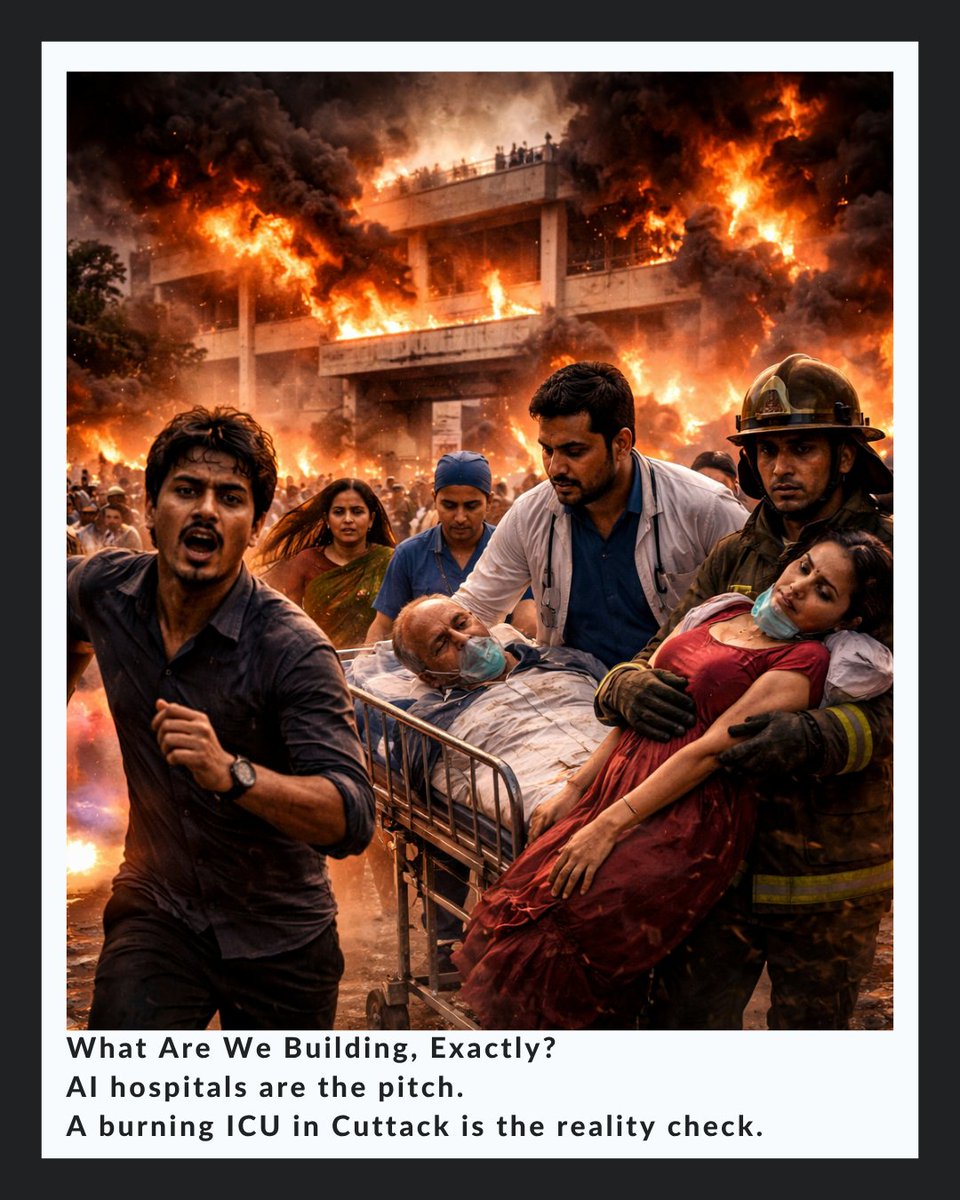
We're building AI hospitals.
We can't keep the wires from catching fire in the ones we already have.
The tech conversation and the infrastructure conversation are in completely different rooms.
https://t.co/pY8RR5e7sy
#healthcareexposed#drsamata#healthtech
The idea that constrained communities built their own documentation systems is fascinating.
Healthcare innovation often comes from necessity, not technology. Thoughts?
#healthcareexposed#foundertalk