أهنئ الشعب السوري بإزالة اسم سورية رسميًا من قائمة الدول الراعية للإرهاب، وأشكر فخامة الرئيس دونالد ترامب على هذا القرار التاريخي، وكل الأشقاء والأصدقاء الذين وقفوا مع سورية والسوريين.
@SecRubio Thank You, Secretary Rubio
Thank you, Secretary Marco Rubio, for standing with Syria and its people. Syria deserves your support, and the Syrian people—who have left a positive mark on America and the world—deserve a better future.
Today, I formally rescinded Syria’s designation as a State Sponsor of Terrorism. This action unlocks new potential for Syria’s economic revitalization and progress. The Trump Administration continues to advance U.S. national security to achieve peace, prosperity, and security in the Middle East.
بمناسبة حلول شهر رمضان المبارك، أهنئ شعبنا السوري الكريم والأمتين العربية والإسلامية، سائلاً الله تعالى أن يمن علينا وعلى وطننا بالأمن والاستقرار والازدهار.
نهنئكم بشهر رمضان المبارك، ونسأل الله تعالى أن يبارك لنا ولكم وللمسلمين في هذا الشهر الفضيل، وأن يتقبل منا ومنكم صالح الأعمال، وأن يديم على بلادنا الأمن والرخاء.
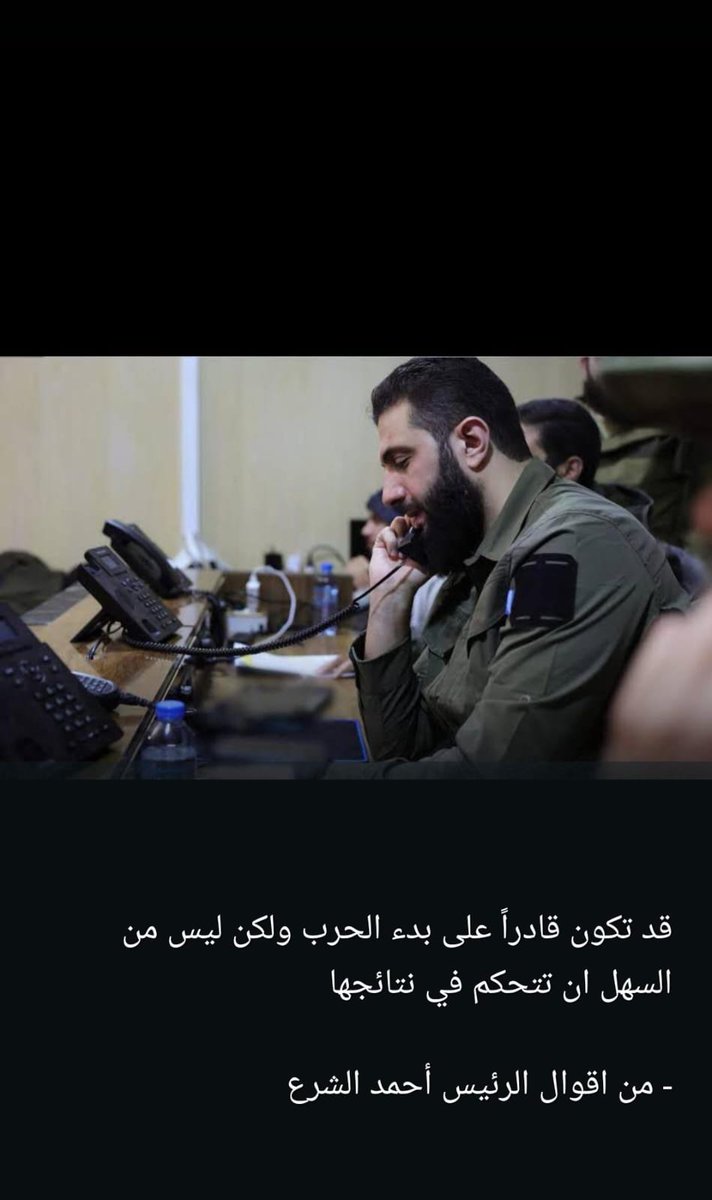
يافخامة الرئيس أحمد الشرع
لقد حركت الشراع 🇸🇾🇸🇦
وزير الاتصالات السعودي مخاطبا الرئيس السوري أثناء توقيع الاتفاقيات الاستراتيجية بين المملكة العربية السعودية و سوريا .
We commend the Saudi-Syrian investment agreements announced this week. Strategic partnerships in aviation, infrastructure, and telecommunications will contribute meaningfully to Syria's reconstruction efforts. As @POTUS has emphasized, regional stability is best achieved when nations of the region take responsibility for their own future—and this partnership delivers on that principle.
@USAMBTurkiye Thanks to Ambassador @TomBarak for his efforts. The SDF must be more realistic, abandon PKK ideology, and expel non-Syrian elements. They shouldn’t obstruct Syria’s stability and reconstruction after 14 years controlling areas far from the national project and state."
The greatest opportunity for the Kurds in Syria right now lies in the post-Assad transition under the new government led by President Ahmed al-Sharaa. This moment offers a pathway to full integration into a unified Syrian state with citizenship rights, cultural protections, and political participation— long denied under Bashar al-Assad’s regime, where many Kurds faced statelessness, language restrictions, and systemic discrimination.
Historically, the US military presence in northeastern Syria was justified primarily as a counter-ISIS partnership. The Syrian Democratic Forces (SDF), led by Kurds, proved the most effective ground partner in defeating ISIS’s territorial caliphate by 2019, detaining thousands of ISIS fighters and family members in prisons and camps like al-Hol and al-Shaddadi. At that time, there was no functioning central Syrian state to partner with—the Assad regime was weakened, contested, and not a viable partner against ISIS due to its alliances with Iran and Russia.
Today, the situation has fundamentally changed. Syria now has an acknowledged central government that has joined the Global Coalition to Defeat ISIS (as its 90th member in late 2025), signaling a westward pivot and cooperation with the US on counterterrorism. This shifts the rationale for the US-SDF partnership: the original purpose of the SDF as the primary anti-ISIS force on the ground has largely expired, as Damascus is now both willing and positioned to take over security responsibilities, including control of ISIS detention facilities and camps.
Recent developments show the US actively facilitating this transition, rather than prolonging a separate SDF role:
• We have engaged extensively with the Syrian Government and SDF leadership to secure an integration agreement, signed on January 18, and to set a clear pathway for timely and peaceful implementation.
• The deal integrates SDF fighters into the national military (as individuals, which remains among the most contentious issues), hand over key infrastructure (oil fields, dams, border crossings), and cede control of ISIS prisons and camps to Damascus.
• The US has no interest in long-term military presence; it prioritizes defeating ISIS remnants, supporting reconciliation, and advancing national unity without endorsing separatism or federalism.
This creates a unique window for the Kurds: integration into the new Syrian state offers full citizenship rights (including for those previously stateless), recognition as an integral part of Syria, constitutional protections for Kurdish language and culture (e.g., teaching in Kurdish, celebrating Nawruz as a national holiday), and participation in governance—far beyond the semi-autonomy the SDF held amid civil war chaos.
While risks remain (e.g., fragile ceasefires, occasional clashes, concerns over hardliners, or the desire of some actors to relitigate past grievances), the United States is pushing for safeguards on Kurdish rights and counter-ISIS cooperation. The alternative—prolonged separation—could invite instability or ISIS resurgence. This integration, backed by US diplomacy, represents the strongest chance yet for Kurds to secure enduring rights and security within a recognized Syrian nation-state.
In Syria, the United States is focused on: 1) ensuring the security of prison facilities holding ISIS prisoners, currently guarded by the SDF; and 2) facilitating talks between the SDF and the Syrian Government to allow for the peaceful integration of the SDF and the political inclusion of Syria’s Kurdish population into a historic full Syrian citizenship.
@EmmanuelMacron Syria is a sovereign state. Extending state authority and ending armed factions outside the official army is a legitimate right of any country. The aim is stability and completing Syria’s reconstruction, not targeting any Syrian component or fueling conflict.