@heaven_rayy I feel deeply saddened for Arif Uncle and his family. I can still vividly recall those mornings when his warm smile would brighten my day, and his kind words would cheer me up on my way to school. I truly miss him and pray that Allah grants him good health and abundant blessings.
Med Students!🚀
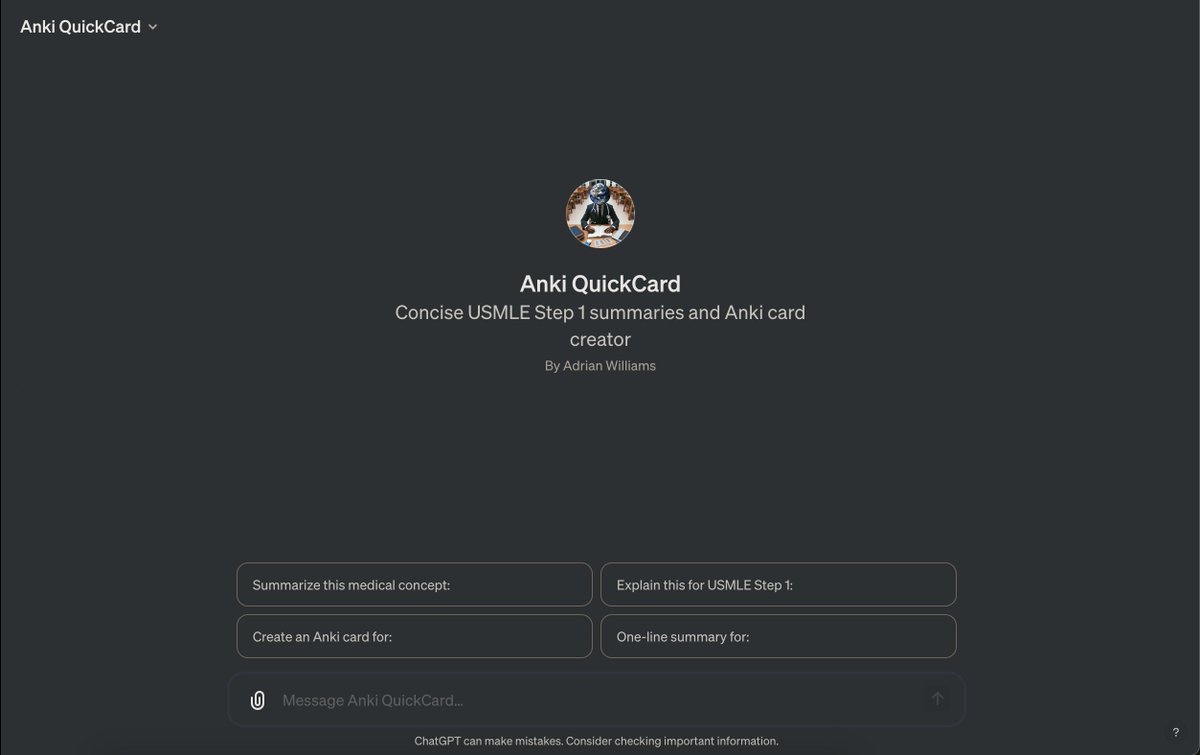
I made a ChatGPT tool to help with USMLE studying.
It is called "Anki QuickCard". Just screenshot a question from UWrld, AMBOSS, etc, paste into the chat, & it automatically generates 2 Anki cards + key points instantly.
Its saved me so much time.
#MedTwitter
@CryptoWorldJosh I only hold 1 Ethereum @CryptoWorldJosh , I don't think I will be able to become a millionaire at least but I will keep holding it till the next bull run! 😅
How and when to look out for Postdoc Research Fellowship positions in 🇺🇸 as an IMG - A thread 🧵
I have been getting a lot of questions regarding this. I will try to explain as much as I can in this thread.
Usce:
Kindly try contacting the hospitals for observerships / externships well in advance.
An inpatient in hospital rotation is far far better than an out patient clinic.
You get to understand the whole workflow of a hospital like what's in patient , floors , consults and all.
.
IRISH MEDICAL COUNCIL GENERAL REGISTRATION WITHOUT PRESS EXAM EXPLAINED STEP BY STEP:
Eligible Countries:
The following countries' medical graduates can register with the Irish Medical Council under the "General Registration Category"
I’d be happy to do a FREE call with you to give some personalized advice based on your situation (eg, goal score, knowledge base, schedule)
But some generalized advice:
1) While on rotations, prioritize weekly question goals over daily ones. It takes pressure off you and gives you the ability to not study when you have a busy day
2) Questions are key. I’ve had many students score > 250 only using Qbank(s)
Prioritize Q banks plus any reading that you need to do for the clinical aspect of the rotation
3) Learn how to maximize question review
You should ask yourself the following with each question:
-what did I need to know in order to answer correctly? This could be 1-3 things and represents the learning objectives
-if I missed it, why did I miss it? This could be related to any part of the learning objectives
-Correct why you missed it. This could be fixing misinformation, filling in a knowledge gap, etc
-could I have used better critical thinking to work through this question? How could I have used test taking skills to answer correctly? Are there issues with my test taking process that need to be corrected
-why were the wrong answers incorrect? What would have made them correct
-are there any topics DIRECTLY related to this question that I need to review later
This seems daunting at first but you can do it in 3-4 minutes once you practice working through learning this way
4) Be efficient with your time
To improve efficiency, I suggest the following while doing questions:
-Minimize note taking. You shouldn’t take notes on every question but when you do, they should only be 1-2 bullet points directly related to the learning objective and easy to review
-keep review to 4-5 minutes per question. You can use a timer if needed to enforce this. When the time is up, you can write down the question ID or a note if you need to come back for review later
-don’t bounce between resources
5) Look at the % correct for each question.
Anything > 55% correct is very HY and worth spending the time to learn
Topics < 40% correct should not receive as much of your time due to the low ROI
6) Consider getting a 2nd Q bank if you have the time to work through it and need to work on test taking skills.
No one bank perfectly matches the exam, so there is a benefit to seeing multiple styles of questions on the same topic
Medical Triad's
Charcot's Triad: Right upper quadrant pain, fever, and jaundice. This triad is indicative of acute cholangitis.
Cushing's Triad: Hypertension, bradycardia, and irregular or abnormal respirations. This triad is indicative of increased intracranial pressure, often due to a brain injury or other neurological condition.
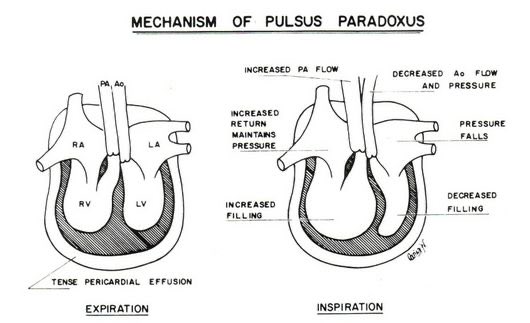
Beck's Triad: Hypotension, distended neck veins, and muffled heart sounds. This triad is indicative of cardiac tamponade, a serious condition where fluid accumulates around the heart.
Whipple's Triad: Symptoms of hypoglycemia, low plasma glucose, and resolution of symptoms after glucose is given. This triad is indicative of insulinoma, a tumor of the pancreas that produces excess insulin.
Triad of Unhappiness or Miserable Malalignment Syndrome: Femoral anteversion, genu valgum, and external tibial torsion. This triad is indicative of a specific type of lower limb malalignment.
Hutchinson's Triad: Hutchinson's teeth (notched incisors), interstitial keratitis, and deafness. This triad is indicative of congenital syphilis.
Virchow's Triad: Hypercoagulability, stasis of blood flow, and endothelial injury. This triad is indicative of thrombosis, the formation of a blood clot inside a blood vessel.
Saint's Triad: The presence of hiatal hernia, colonic diverticula, and gallstones. This triad is indicative of these three conditions, but they are not necessarily related.
Roussy-Levy Syndrome: Unsteady gait (ataxia), tremors, and muscle weakness. This triad is indicative of Roussy-Levy syndrome, a hereditary neurological disorder.
Hemobilia Triad (Sandblom's Triad): Gastrointestinal bleeding, biliary colic pain, and jaundice. This triad is indicative of hemobilia, bleeding into the biliary tract.
Wernicke's Encephalopathy Triad: This includes confusion, ataxia, and ophthalmoplegia. It's associated with thiamine (vitamin B1) deficiency, often seen in chronic alcoholism.
Horner's Syndrome Triad: This includes ptosis (drooping of the upper eyelid), miosis (constriction of the pupil), and anhidrosis (lack of sweating). It's associated with disruption of the sympathetic nerves to the face.
Reiter's Syndrome Triad (Reactive Arthritis): This includes non-gonococcal urethritis, arthritis, and conjunctivitis. It's often triggered by an infection in another part of the body, commonly the urogenital or gastrointestinal tract.
Dieulafoy's Triad: This includes severe hematemesis, stable vital signs, and lack of identifiable cause on initial endoscopy. It's associated with Dieulafoy's lesion, a rare but potentially life-threatening cause of gastrointestinal bleeding.
Grey Turner's Sign Triad: This includes flank pain, flank mass, and gross hematuria. It's associated with severe pancreatitis or pancreatic necrosis.
Pancoast's Syndrome Triad: This includes shoulder pain, Horner's syndrome, and atrophy of hand muscles. It's associated with a Pancoast tumor, a type of lung cancer that grows at the top of the lungs.
Alport Syndrome Triad: This includes hematuria, sensorineural hearing loss, and lens dislocation. It's associated with Alport syndrome, a genetic condition characterized by kidney disease, hearing loss, and eye abnormalities.
Meigs' Syndrome Triad: This includes ovarian fibroma, ascites, and pleural effusion. It's associated with Meigs' syndrome, a rare condition that often resolves after the ovarian tumor is removed.
Kartagener's Syndrome Triad: This includes situs inversus, chronic sinusitis, and bronchiectasis. It's associated with Kartagener's syndrome, a type of primary ciliary dyskinesia, a group of disorders characterized by chronic respiratory tract infections, abnormally positioned internal organs, and the inability to have children (infertility).
Lemierre's Syndrome Triad: This includes recent oropharyngeal infection, clinical or radiological evidence of internal jugular vein thrombosis, and isolation of anaerobic pathogens. It's associated with Lemierre's syndrome, a rare but serious condition often caused by Fusobacterium necrophorum.
Tip to excel in your USCE:
Tip for new interns:
Good case presentation is the key to good treament plan. Always present case systematically in chronologic manner. An example of a case presentation plot is below: (1/4)
USCE: continued
The number of your USCE does not matter. 1-2 meaningful experiences are enough to match. It does not matter if you have 6 months or 1 yr of USCE. What matter is that have you developed on 6 core competencies of ACGME. Have you served the purpose of USCE (1/2)
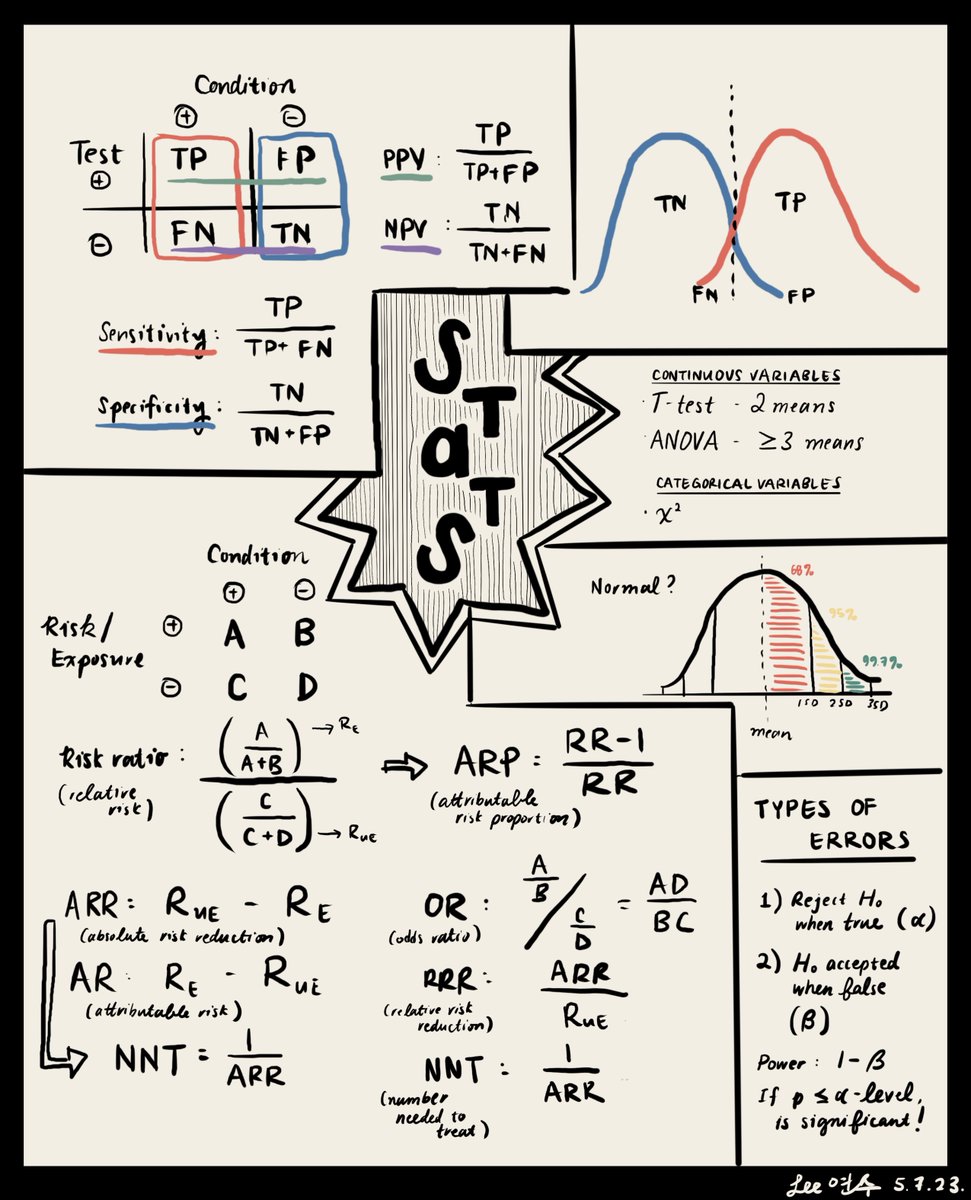
A thread of study guides for STEP 2 I am making/made during dedicated:
Kicking it off with biostats - a topic I think is easy to gloss over but might be helpful to draw out/think through (or jot down quickly at the beginning of the exam, which is what I did for stats exams).
What is Cryotherapy (also known as Cryoablation or Cryosurgery)?
Cryotherapy is a medical technique that uses subzero temperatures achieved through the application of liquid nitrogen, oxygen, or hydrogen to destroy abnormal or diseased tissue.
Cryotherapy can be used to treat various skin imperfections, including warts, moles, skin tags, solar keratoses, and Morton's neuroma.
Credits: Prof. Dr. Richard P. Usatine / The Journal Of Family Practice
#surgmedia #medical #cryotherapy #MedEd
1/ #HFpEF treatment algorithm #tweetorial. This is the algorithm I currently use to treat HFpEF based on evidence we have thus far and my anecdotal experience treating patients over the past 16 years in the @NMCardioVasc HFpEF Clinic.
My personal statement for #Match2023
I din’t use any editing services, just got it proofreaded with an attending internist
Feel free to take insights for your #Match2024