Riding the Storm: My experience in a VT Storm...
I’m usually the one looking at squiggly heart tracings or talking about critically ill patients and resuscitation techniques. It’s a strange twist of fate when you find yourself becoming the subject of your own professional discussions.
In a recent article I penned for the Journal of Emergency Nursing, I delve into a personal journey that's quite different from my usual topics of heart rhythms, waveforms, or advanced medical technology. This piece is about my harrowing experience with a VT (Ventricular Tachycardia) Storm, an event that nearly cost me my life. It's a recount of what I went through as a patient, including the many moments I ‘slept through’ during this critical time.
This experience has not only deepened my understanding as a healthcare professional but also given me a new perspective on patient experience in emergency and critical care settings. I believe it's crucial for us, as medical professionals, to sometimes step into our patients' shoes, to truly comprehend the impact of our care and interventions.
I invite you to read my story https://t.co/CFdNI82FT7 . It’s a reminder of the unpredictability of life and the importance of empathy in healthcare. I hope it resonates with you, whether you're a fellow healthcare professional or someone who's ever found themselves on the other side of the hospital bed. Your thoughts and reflections on the article are most welcome.
@sholarichards
After the Storm | Reflections on Survival and Gratitude
As December 2 approaches, I find myself reflecting on a date that forever changed my life.
On December 2, 2020, my journey through a life-threatening ventricular tachycardia (VT) storm began. As an emergency nurse accustomed to caring for critically ill patients, I suddenly found myself on the other side of the bed.
This is a difficult time of year for me. The memories of what happened, particularly my experiences with ICU delirium, the physical and emotional challenges that followed, remain deeply personal. It took me about 3-4 years even to be able to talk about them.
As I approach the sixth anniversary, I've decided to share a series of reflections about survival, gratitude, the psychological impact of critical illness, and the remarkable people who helped me along the way.
Some of these memories are painful. Others remind me how fortunate I am to be here.
My hope is that sharing my experiences will help healthcare professionals better understand what their patients endure, while offering some understanding to fellow survivors and their families.
I previously shared part of my journey in a presentation I did at Langone Critical Care Cardiology Symposium called Riding the Storm.
https://t.co/VqJF8t68oA
SIGN asks clinicians to use the word delirium instead of acute confusional state, acute confusion or acute encephalopathy.
Its reasons are clearer communication between professionals, more accurate information for patients and carers, and more consistent use of detection tools and treatment.
Older patients who had delirium in an emergency department were more likely to die within six months.
In one US hospital, 628 patients aged 65 and over were followed. 108 of them had delirium. 37 in every 100 of those with delirium died within six months, against 14 in every 100 of those without.
The gap was still there after allowing for age, other illnesses, how ill people were, dementia and care home residence. The study was too small to show by how much the risk was raised.
This shows a link, not a cause (Han et al., 2010).
https://t.co/lXL0Uoh7u9
@CrashCall@A_MacLullich i disagree. As someone that spent a decent amount of time in delirium (~30 days), I think it is at least as important. We have protocols for respiratory failure, liver failure, kidney failure, heart failure... What do you do when the brain is failing?
https://t.co/LNkcDWs11h
HCA Sunrise Children’s Hospital knows the value of being pediatric ready. For one Las Vegas family, that readiness helped give a 10-year-old girl a second chance.
KTNV recently shared Erin Harris’s story. After collapsing in the hospital parking lot and going into cardiac arrest, Erin received emergency care from Dr. Jacob Snow and the Sunrise Children’s team. Today, she is back in school and playing outside. Her mother credits the hospital’s specialized pediatric emergency care with helping save her life.
Sunrise Children’s Hospital recently earned Pediatric Ready Recognition from the Nevada Division of Public and Behavioral Health Emergency Medical Services. The recognition acknowledges its ability to care for children with appropriately trained staff and equipment suited to their needs.
At ResusMed, we are proud to support Sunrise Hospital as a corporate client through Trauma Nursing Core Course (TNCC) and Emergency Nursing Pediatric Course (ENPC) training for its nurses.
Congratulations to the Sunrise Children’s team on this recognition and the care you provide to children like Erin. Your commitment gives families so much to celebrate.
Read Erin’s story from KTNV:
https://t.co/3P4VVGIpS2
#PediatricReadiness #HCA #SunriseChildrensHospital #ENPC #TNCC #EmergencyNursing #ResusMed
Trauma care begins at the crash scene.
New NHTSA data show that 31,448 people who died in motor vehicle crashes from 2020–2024 required extrication: equipment used to remove someone from a vehicle. That represents 15.3% of all crash fatalities.
Among those fatalities requiring extrication:
• 65.3% died at the scene or during transport.
• 52.6% occurred in rural areas, where distance can complicate access to emergency care.
These findings reinforce the importance of coordination between rescue personnel and clinicians throughout the patient’s care.
Advanced Automatic Crash Notification can provide crash location and severity information to support emergency response. Prehospital blood transfusion brings treatment for severe bleeding to the scene or transport setting.
For emergency nurses, the connection is immediate. Understanding the care already delivered helps the receiving team continue resuscitation, while a clear EMS handoff supports timely decisions.
What has helped your ED strengthen coordination with local EMS?
Source: NHTSA, Fatalities Requiring Extrication: State Rates per 100,000 Licensed Drivers, 2020–2024 (October 2026). https://t.co/fsHyvFQnq8
#TraumaNursing #TNCC #ENPC #ENA #EmergencyNursing #ResusMed
At ResusMed, we help nurses prepare for trauma care through live virtual Trauma Nursing Core Course (TNCC) education.
Explore upcoming classes: https://t.co/4pwEY0BKGo
@IM_Crit_ After 23 days of delirium in CV ICU on vent, hypoactive delirium is a thing!!!! I looked like I was resting quietly but my brain was on fire.
Today @TheLancet published our AMIE study with @BIDMC_Medicine, the first prospective study of patient-facing conversational diagnostics in a real clinic.
AMIE is a research system people can chat with before doctors appointments. Testing AMIE outside the lab with real urgent care patients showed how technology can help gather medical histories safely. Clinicians reported that the summaries helped them prepare for visits in 75% of cases and influenced their approach to care in more than half. AMIE’s differential diagnoses also matched the doctors’ final diagnoses 90% of the time giving clinicians more time to focus on patient care.
It’s Google’s first-ever paper in The Lancet’s main journal!
SNAP-3: 7,128 UK patients aged 60 and over having surgery in 214 hospitals. Median hospital stay was 12.5 days with delirium and 1 day without.
After adjusting for age, frailty, multimorbidity and type of surgery, delirium added 5.2 days (95% CI 3.8 to 6.5), and the odds of death within a year doubled. Observational, so some influences were not measured.
https://t.co/uv2BuIMTLX
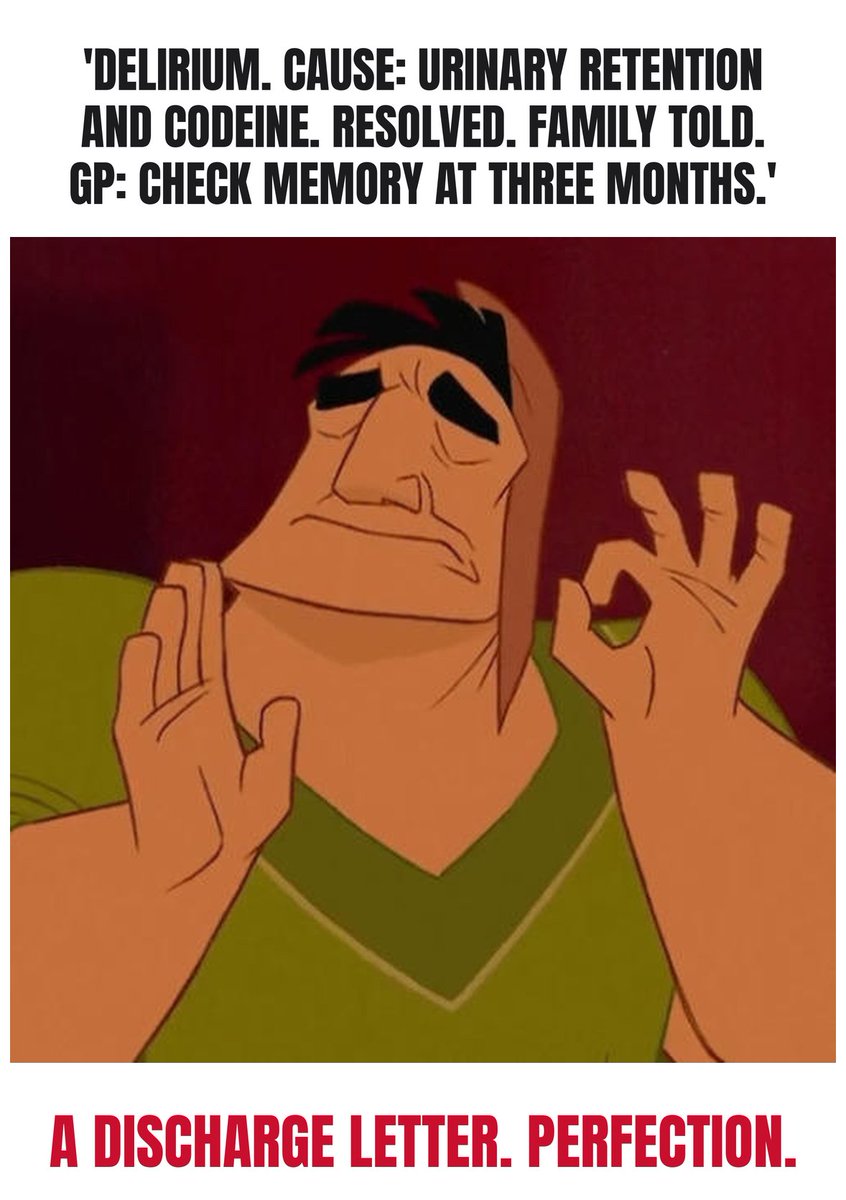
NICE says the diagnosis of delirium should be written in the person's notes and in their GP record. SIGN says the discharge letter should say the person had delirium, and that everyone who has had delirium should be reviewed by the primary care team.
A letter that names the delirium, its cause, whether it has cleared and what the family were told gives the GP something to act on.
I'm amazed at how many providers in the ICU still think about shock with approaches learned in pre-clinical med school...
its 2026, lets move away from
"Distributive, Hypovolemic, Cardiogenic, Obstructive" or "Pumps tubes pipes"
To:
Stroke Volume
Minute VTI
Congestion (right and left)
Fluid responsive
Fluid tolerant
Microcirculation
Hemodynamic Coherence
SVR
MAP responsive
LV-Arterial coupling
RV-PA coupling
Admittedly, the above is more complicated, but so is the physiology of a patient dying of shock! These patients are hard, but don't start shackled by mental frameworks that don't allow you to actually think about these issues.
Phoenix roll call: Who’s going to EN2026?
Emergency Nursing 2026 is coming to Phoenix, Arizona, September 28–October 1, and we want to hear who’s packing their bags!
Somewhere in Phoenix, a restaurant is about to learn what emergency nurses consider appropriate dinner conversation.
What’s the ONE thing you’re most looking forward to? Is there a session we should have on our radar, or are you counting down to seeing your nursing friends?
Drop your state and your conference must-do in the comments. Tag someone you’re hoping to see there so they know to find you!
#EN2026 #EmergencyNursing #ENA #ResusMed #TNCC #ENPC
ENPC 7th Edition is here!
Pediatric emergencies can arrive on any shift. ENA’s updated Emergency Nursing Pediatric Course brings new content and learning activities to help nurses prepare for those moments.
What’s new in the 7th Edition?
• A dedicated “The Child in Shock” chapter.
• The new PNP Primary Assessment Algorithm to guide assessment and interventions.
• Expanded coverage of tuberculosis, brief resolved unexplained events (BRUEs), and emergencies involving heat or cold.
• Practical strategies throughout the course to help strengthen pediatric readiness.
• Fresh interactive activities for virtual and in-person learning.
• Updated global child health content addressing cultural humility and health equity.
The full provider course offers 19 CNE hours, with four-year ENPC provider verification earned upon successful completion.
Whether you work in a pediatric ED or care for children in a community emergency department, this education applies to the patients who come through your doors.
ENA says 7th Edition courses are coming soon. Follow ResusMed for updates on course availability.
Ask use about our corporate programs and discounts.
https://t.co/4pwEY0BKGo
#ENPC #PediatricEmergencyCare #EmergencyNursing #ResusMed #TNCC
"Hospitals are being cited for violating the federal emergency-care law more often than at any point in more than a decade, according to a Becker’s analysis of CMS inspection data.
Deficiencies under the Emergency Medical Treatment and Labor Act — the law requiring hospitals to screen and stabilize anyone who arrives at the emergency department, regardless of ability to pay — appeared in 422 hospital inspections in 2024, the most in a public dataset spanning 2010 to 2026. "
https://t.co/HtVXAWw2Zr