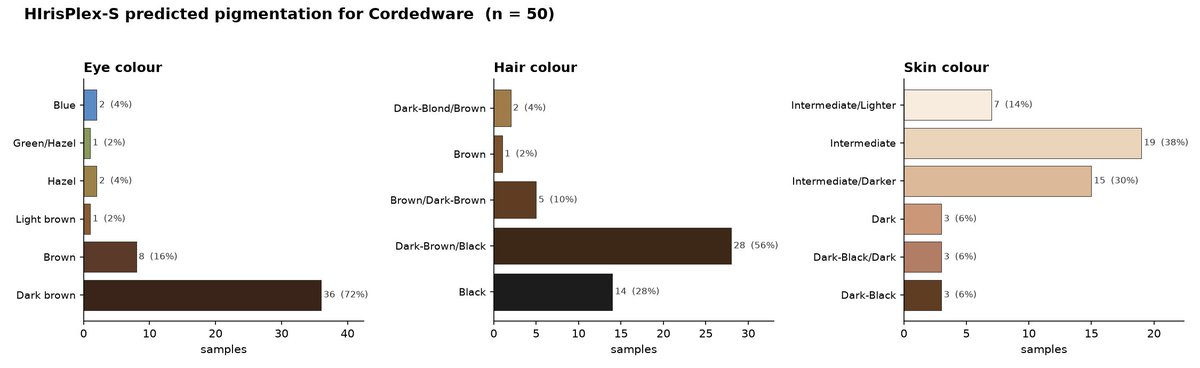
رنگ مو، چشم و پوست قدیمیترین نیاکان شناختهشدهی آریاییها (مردم یامنایا). فنوتیپی که بهسادگی میتونه اهل نیمه شمال ایران یا اناتولی باشه (با وجود فاصله ژنتیکی با مردم خاورمیانه).
فنوتیپ نوردیک یک پدیده متاخر، تازه و حاصل عصر مفرغ و نابودی نوسنگی اروپاست.
Skin, eye and hair color in BA Western Steppe Genomes overtime, Broadly the coloring lightens overtime with farmer admixture. Who I've added in for comparison.
داشتم میرفتم سمت، کنج پارک پشت درخت یه مرد با صورت دفرمه داشت سیگار میکشید.
رسیدم نه برق بود نه کسی بود پشت پیشخوان.
یهو همون مرده اومد. هایپرتلوریک، بینی پهن، میانسال. با شرم، صدای زیر و آهسته یه تراکت تبلیغ داد و رفت.
تا وقتی چنین کسی با چنین درجه بدبیاری هست واقعا شادی گناهه
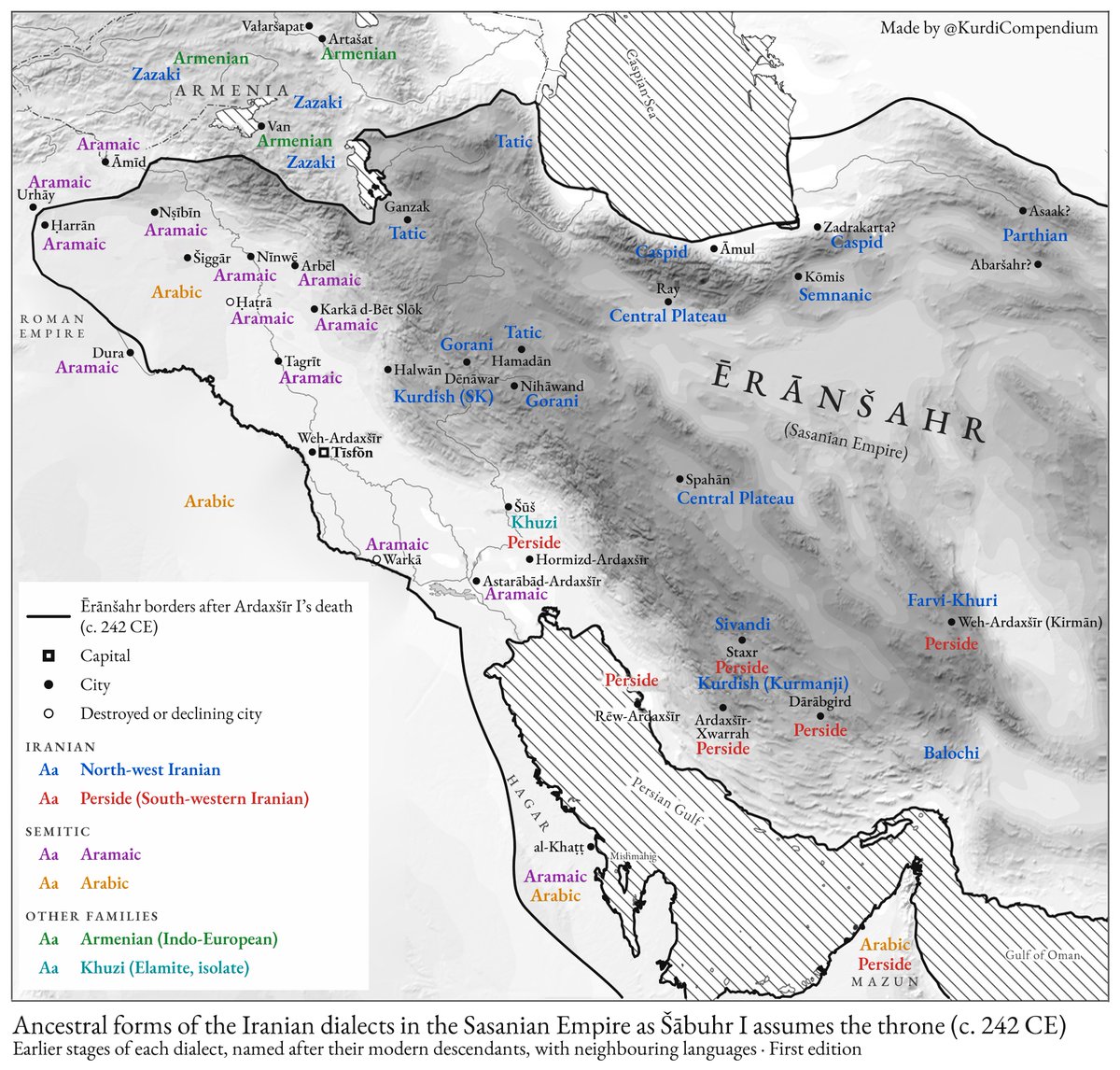
بعید میدونم نقشهای بهتر از این درباره زبان ایرانیان پیش از اسلام بیابید.
بسیار هم جزیی، از بلوچی و کرمانی و فارسی تا تبری و تاتی و مرکزی و کرمانجی و سورانی و زازاکی.
خیلی خوبه
I created a map that reconstructs the approximate distribution of the ancestral forms of languages and dialects across the Sasanian Empire (Ērānšahr) c. 242 CE, at the accession of Šābuhr I following the death of his father, Ardaxšīr I. Particular attention is given to the Iranian dialect continuum. The reconstruction is based on the historical dialectology of each variety, for example the shared innovations, diagnostic isoglosses and contact-induced features preserved in each. These features help us understand how the speakers of these languages migrated over the course of history. Historical sources were used as supplementary evidence where possible.
What is immediately noticeable is that speakers of Persian were largely confined to what is now south-western Iran. North-western Iranian languages dominated most of the Iranian Plateau, and some like Kurdish also had a presence in the province of Persis. Mesopotamia at this time was still dominated by Aramaic speakers despite centuries of Iranian rule, due to factors like Aramaic being the historic lingua franca of Iran up until that time. The association of Corduene and the Carduchii with the Kurds is largely rejected in modern scholarship, and it is also completely inconsistent with the linguistic history of Kurdish. Sometime during the Parthian era, the first wave of Kurdish speakers migrated out of Persis into the area around Dēnāwar and the surrounding regions. The bulk of Kurdish speakers did not leave Persis until much later.