Initially I faced issues searching for Cybersecurity relevant Discord servers, most of them were "native - user" based community servers, and often not active. The list below can skyrocket anyone who wishes to network and learn more via exploring different domains of Cybersec
I have curated a long list of amazing discord servers which feature plentiful of domains in Cybersecurity, ranging from Threat Hunting & Incident response, penetration testing, bug bounties and so on
https://t.co/pGBgPph262
Feel free to join them!
I get what Google is trying to do, but I don't agree with it at all. Sure, there are some vendors who just sit on bugs forever and don't make any effort to patch them. But there's way more overworked & underpaid teams, non-profits, and solo projects who are patching bugs as fast as they physically can.
The number of CVEs found in 2026 is double that of 2025, so double the workload for anyone doing security fixes. Then on top of that, reducing the disclosure time from 90 to 60 days gives them 2/3 of the time to do double the work.
At some point the dam is going to break. You have vulnerability researchers and AI companies burying software maintainers under an endless torrent of bug reports, while doing little to nothing to help with actually fixing the bugs. Eventually, the software maintainers are just going to burn out and give up.
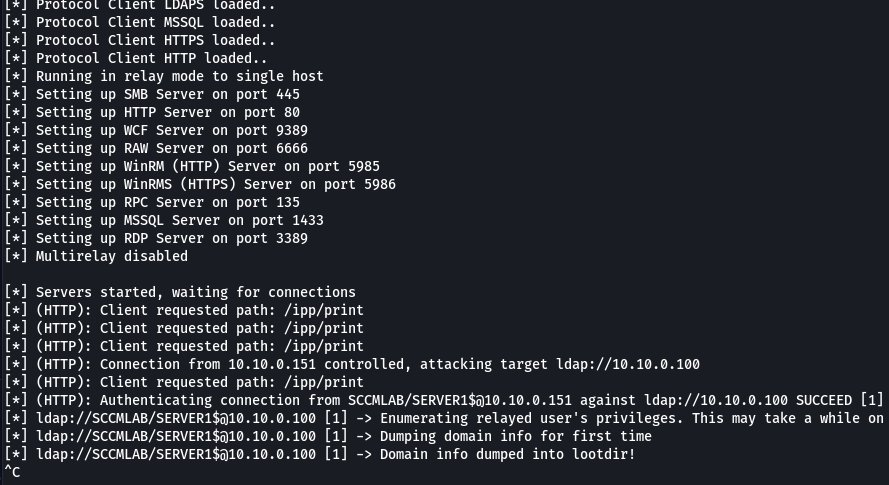
You can now coerce HTTP authentication from Windows targets that are running MS-RPRN, using impacket with PR #2361!
The PR added a new opnum from the MS-RPRN spec, OPNUM 88 and an example script to make the process straight forward. Letting you now coerce and relay HTTP authentication from remote machine targets
Shoutout to sudonoodle for the BOF that inspired this and for the technique(at least I think it was them who found it) :3
Enter NetSnitch. a channel for harvesting live credentials and session cookies on Windows engagements. It drives HTTP Debugger's headless capture engine from PowerShell
Article: https://t.co/kchoKIFgIm
Repo: https://t.co/H8GbtyjbBV
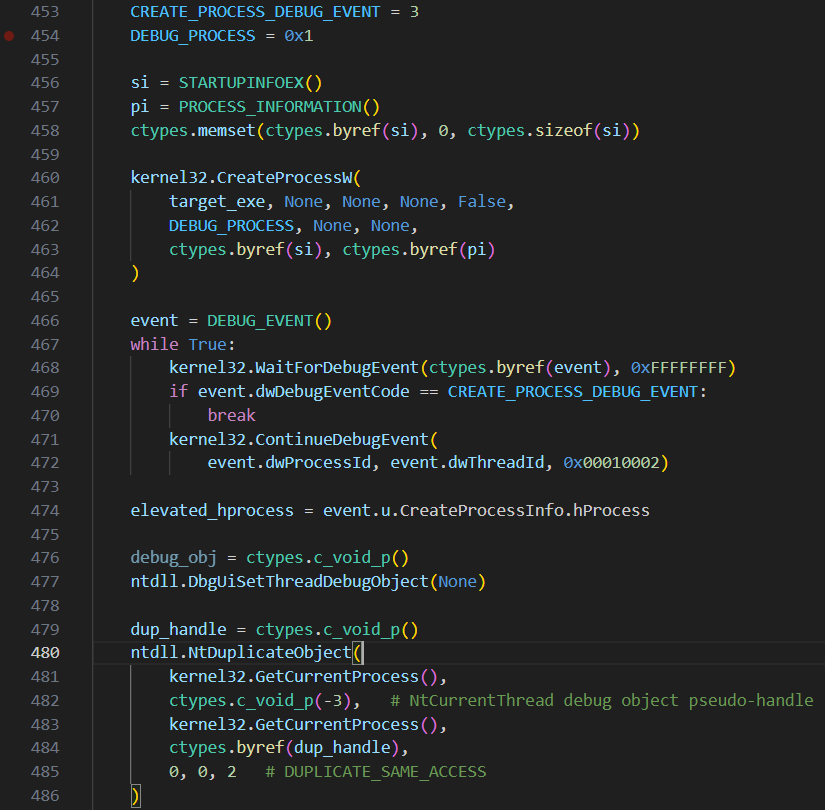
Today we released WhisperHijack, a stealthy process injection PoC that uses thread descriptions to inject payloads into remote processes, then patches a waiting thread's return address for execution.
Every memory op happens in-target via Queue APCs, with zero NtWriteVirtualMemory or NtSetContextThread calls.
Based on @hasherezade TNC + WTH research.
https://t.co/lyUQciKEbx
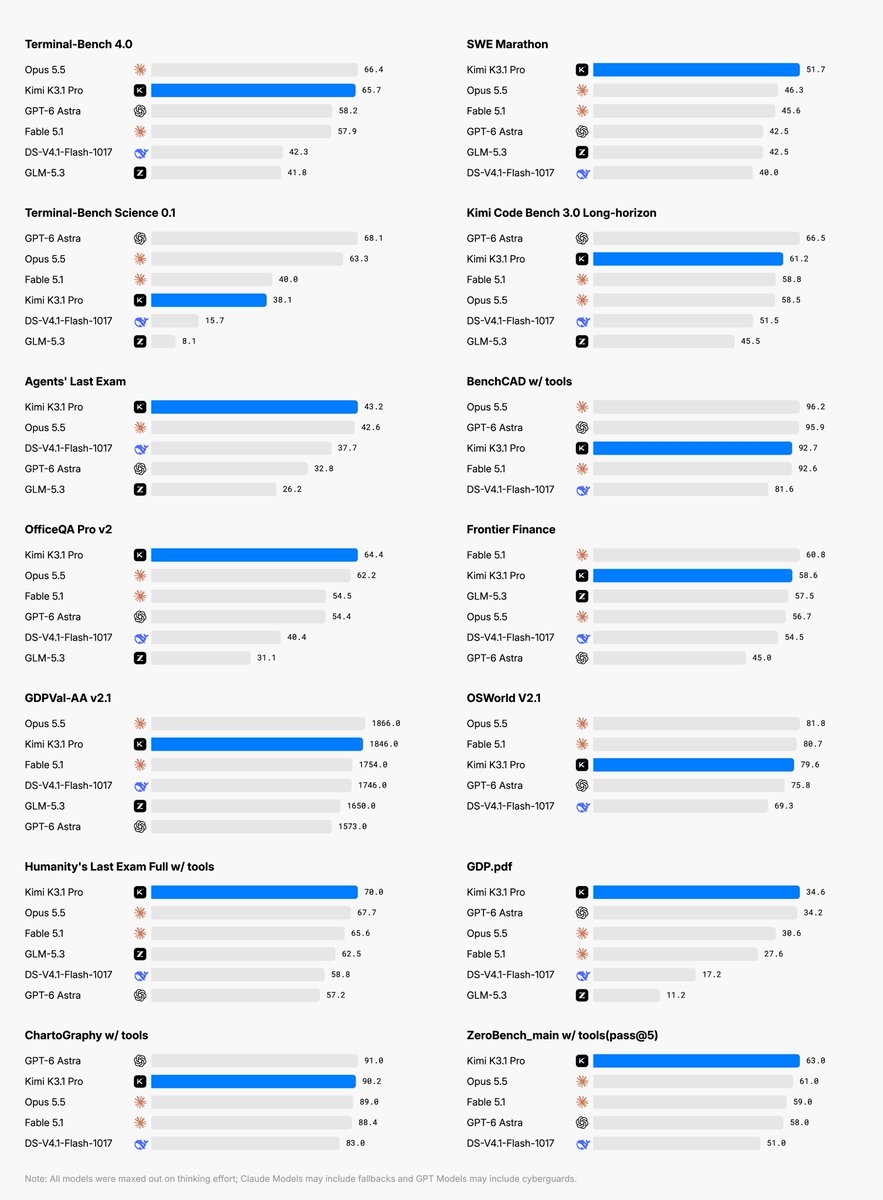
Introducing Kimi K3.1 Pro: our most capable 3T-class open-weight model.
🔹 1M-token context, 2.8T total / 104B active params (MoE), Multimodal.
🔹 Full-project coding: games in Unreal, Unity & Godot.
🔹 Excels at parametric 3D modeling in Blender & CAD.
🔹 More reliable at finance work: Accurate modeling with hallucination down by 65%.
🔹 Matching the strongest proprietary models across coding, agentic and knowledge benchmarks.
Kimi K3.1 Pro and K3.1 Pro Highspeed (2–3× faster) are now live on https://t.co/85jA71X9gw, Kimi Work, Kimi Code, and the Kimi API.
Open weights by Nov 4, 2026.
🔗 API: https://t.co/XCrgjXAqMw
🔗 Tech blog: https://t.co/5iPP0MBej6
Current information I have on php2Shell:
- The RCEs requires the attacker to obtain memory addresses which are typically protected by ASLR.
- I suspect the original author (lcfr_hax) likely has a reliable exploit which leads to stable code execution.
- Most of the PoCs being posted are completely non-functional AI slop.
- There is at least 1 working non-slop exploit being passed around, but it's reliant on bruteforcing for ASLR bypass, so not particularly impactful.
- Rumor of ITW exploitation are patchy. There are attempts being seen using the non-functional leaked RCE, or variants that are config / system specific.
- Some rumors point towards a known-working exploit being used by threat actors (I've personally confirmed this specific exploit works, but the ASLR bypass technique is unreliable at best and massively limits the potential impact).
- I'd expect heavy ITW exploitation in the next few weeks based on how many people are looking at this. Though, success rates will vary heavily based on the specific exploit chain.
🚩 Cling IoT Malware Uses Google STUN Traffic to Hide C2
https://t.co/YbtBg9260E
Cling is a newly observed IoT botnet exploiting exposed devices through flaws including CVE-2021-35394.
For C2, it sends repeated STUN requests to public servers and uses the STUN transaction ID field to receive commands.
Those commands can trigger payload downloads, scanning, exploitation, TCP tunneling, proxying, or DDoS activity.
Some packets even appeared to come from Google STUN infrastructure, likely through UDP source spoofing.
#ThreatIntel #Botnet #CyberSecurity
Module stomping is a popular choice for modern C2 implants and stagers, but why?
In our latest blog post we break down how the technique works, why commercial C2 frameworks use it and how defenders can detect it!
https://t.co/KVhntNjwWn
New video:
Breaking Obfuscated Binaries with AI Agents: An Attacker's Playbook
I'll showcase my strategies for attacking strong protections that cannot be one-shotted.
https://t.co/ac8fQoi1pT
Slides & samples:
https://t.co/mFO9V5zOjv
Unit 42 continues to track network infrastructure likely associated with Com-affiliated threat actors. One of these domains (my-passkeys[.]com) is likely being used to target organizations operating with the healthcare and pharmaceutical sectors. Details: https://t.co/kHD9zFLVTM
PavokwiLoader buries its logic in an 80,000-instruction function and uses custom API hashing to slow analysis. Malbear Labs links the loader to an intrusion chain that also deployed RMMCRAT. https://t.co/5rnWVDdUXt
Its been a while since I've posted anything about VanguardC2. We are doing some crazy development day to day.
I've been trying to stop myself from adding more features + improvement to it, but every time i implement something, new challenges comes up. Those challenges turn into R&D, R&D leads to new ideas, and then I'm back at it again. 😂
That's pretty much how the last couple of weeks have been going.
I've been focusing heavily on improving post-exploitation success rates in vendor environments and making it flexible to support those scenarios.
To achieve that, I've totally re-architected Vanguards core from the ground up, making it significantly more modular and flexible to use. Thanks to the modified version of LLVM😭.
You don't have to worry about lateral movement or recon stuffs, because most of the high-quality custom BOFs are already ported by default on Vanguard.
our goal is simple. build a high quality framework that remains affordable and actually delivers what operators actually need.
So Vanguard will be available in two subscription mode, which we'll be disclosing over the next couple of weeks.
Quick snap about the pic. webcam bofs, an stealthy way to take shots.
Note: Please note that the below screenshot it an demo and taken during sec vendor testing. texts in bofs are for demo references only.
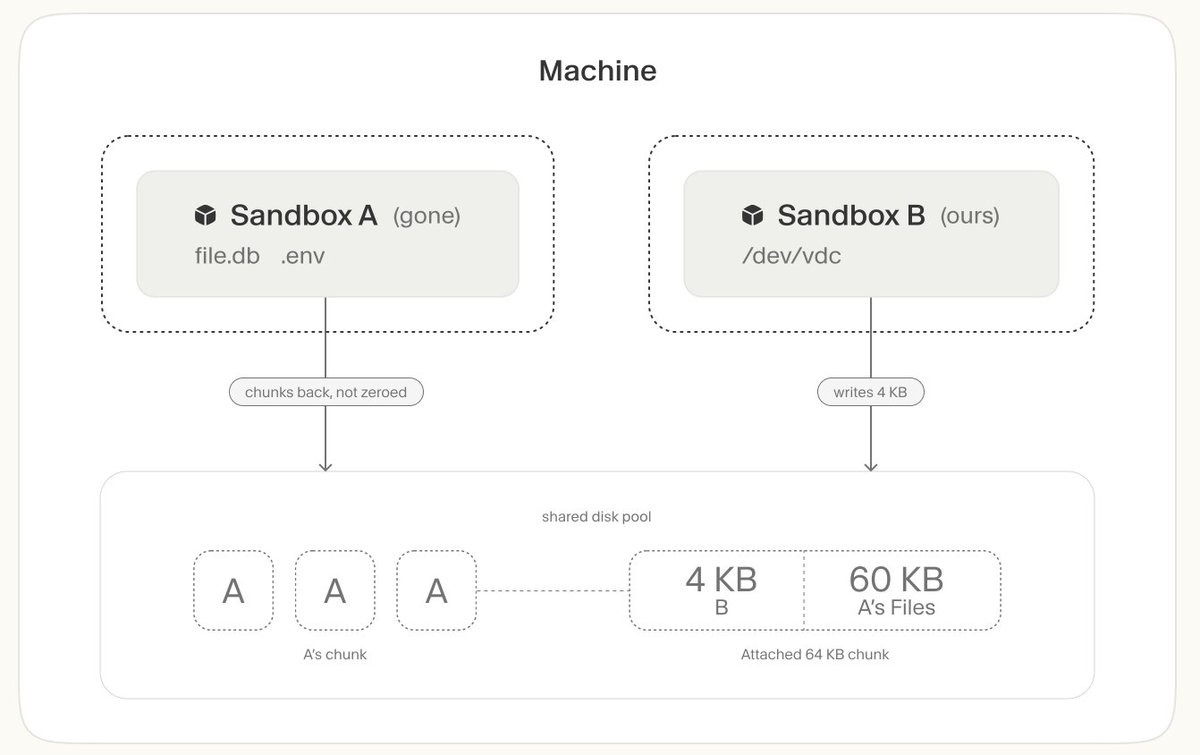
Our craziest escape yet:
The @Accomplish_ai research team was able to exploit a vulnerability in Cloudflare Containers that let a sandbox read other customers' files - SQLite DBs, Chromium profiles, .env files etc,
Cloudflare Sandboxes and Browser Run run on the same disk implementation and were affected too.
We reported this to @Cloudflare, who super quickly fixed it.
Read @CloudflareDev post in collaboration with Accomplish researcher @orenyomtov on their official blog:
https://t.co/qFikf9UXX7
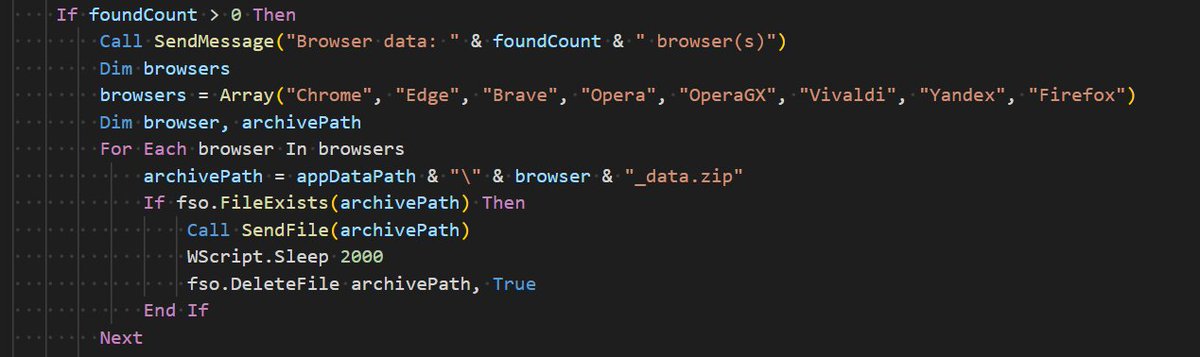
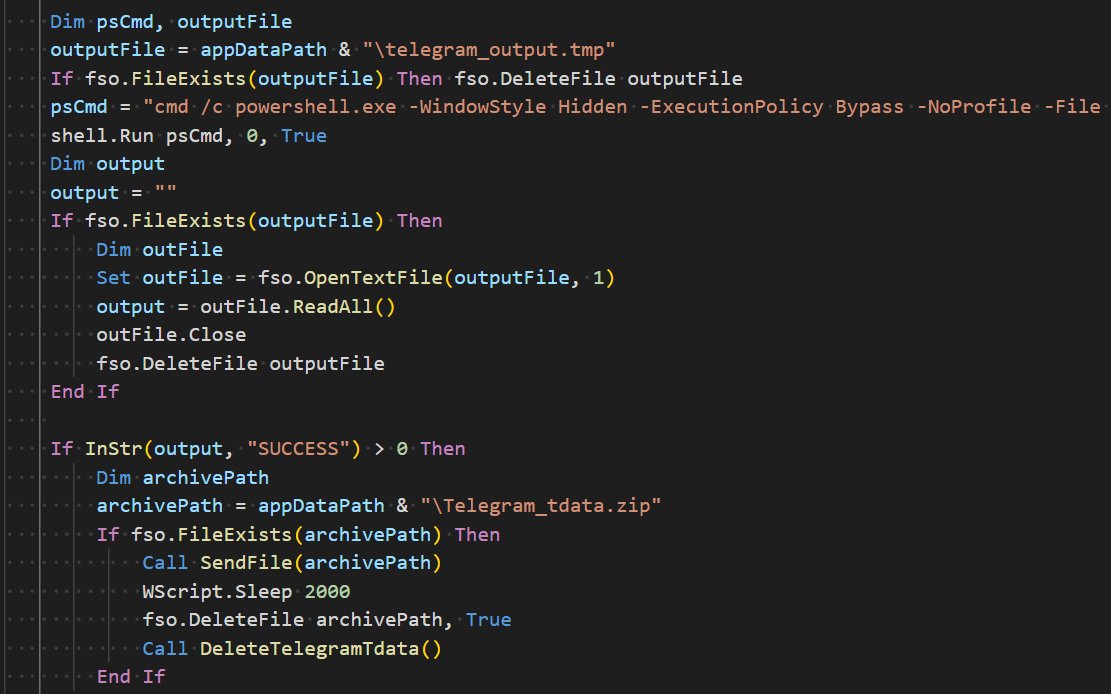
We found a Ukraine-targeted campaign using two very different lures: an “air raid alert” document aimed broadly at Ukrainian users, and a military-specific unit property inventory.
Both lead to a Telegram-controlled VBScript RAT capable of credential theft, screenshots, command execution and targeted file collection.
The second lure pushes the campaign back to at least 26 August 2026. What stands out is the collection focus: CAD, BIM, GIS, LiDAR and weather-model data, combined with per-host tasking and date-based file harvesting.
Full technical analysis + IOCs:
https://t.co/YVqFy7PXTX
Last February, I published a blog saying, “Malware RE is no longer a human problem.”
I am glad we are now coming to a consensus on this across the security industry! 😁
Cc: @moyix@UnpromptedAU
Just released ntlmscout, a single-file, zero-dependency recon tool for internet-exposed NTLM endpoints. Combines the best parts of several tools all in one.
Decodes the Type-2 challenge across HTTP/SMB/MSSQL/mail/LDAP/RDP, recovers the internal IP (OXID, IIS host-header, cert SANs), flags DCs, and sprays lockout-safe.
Hack the Planet!
https://t.co/8V8tJM9bzi
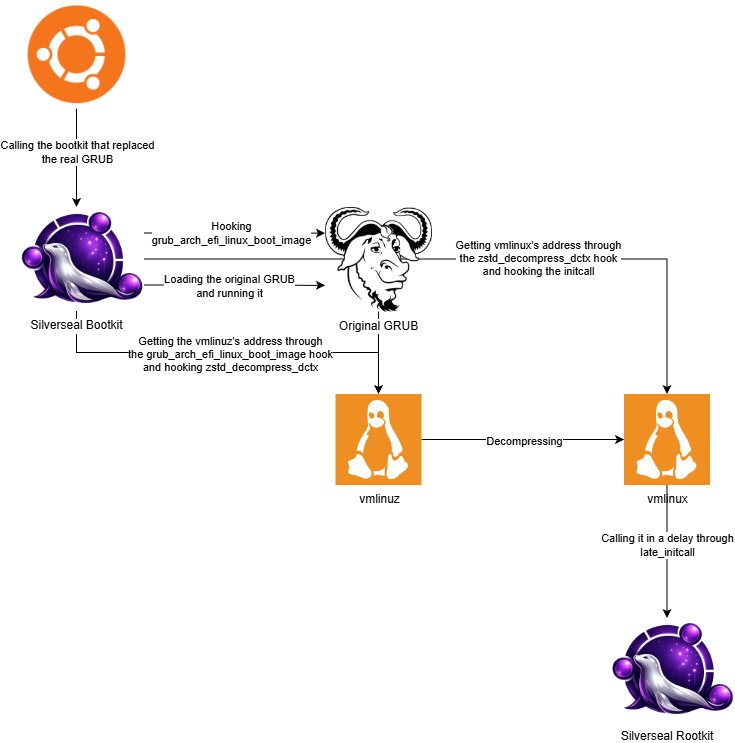
Silverseal is a Linux post exploitation framework that demonstrates the ability of a UEFI bootkit to persistently and stealthily load a Rust-based kernel module rootkit on modern Linux systems. by @Idov31.
Github: https://t.co/iZYuLS17Jb