Literally nothing can happen in the world today that isn't a "staged event"....isn't there something said somewhere when you can't tell whats real and whats fake then here comes the end days?
You’re treating intelligence like it requires perfect originality and zero blind spots. Humans do not meet that standard either. The question is not whether AI will magically know what it does not know. The question is whether it can build systems that expose its errors, test new ideas, and improve through feedback faster than humans can. That is exactly how human science works, just slower.
Also, calling AI “statistical regurgitation” ignores examples where AI systems have discovered strategies and algorithms humans had not found, like AlphaTensor in matrix multiplication. That does not prove superintelligence is here, but it does disprove the idea that AI can only remix text from training data.
The strongest argument is not “AI definitely becomes god.” The strongest argument is that once AI can automate enough of research, coding, testing, and model improvement, the ceiling may stop being human creativity and start being compute, feedback loops, and verification. That is a very different world.
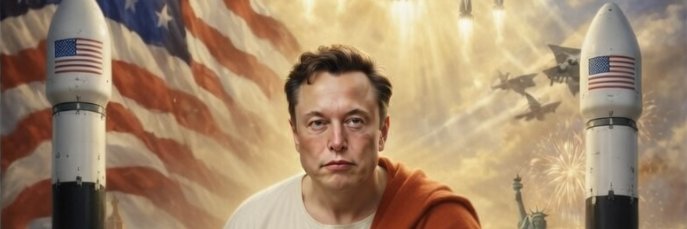
make me a visual time line of AI in the united states in the next 10 years and the advancements if the pace continued and fastened made with @ChatGPTapp
Yes, human polymaths exist. Yes, interdisciplinary scientists exist. But they are still bottlenecked by human memory, human speed, human lifespan, human coordination costs, and human attention.
That is the point.
The claim is not that “mixing domains = superintelligence.”
The claim is that a system that can integrate vast numbers of domains, hold them active at once, test combinations rapidly, and iterate continuously without normal human bottlenecks can cross into something functionally beyond human cognition.
Leonardo was extraordinary.
But Leonardo could not ingest all published physics, biology, code, economics, engineering, history, and lab results in days, then recombine them instantly.
No human polymath can.
So this is not “moving the goalposts.”
It is recognizing that capability can become superhuman through scale, speed, parallel synthesis, and persistence, even before some mystical alien reasoning appears.
And on “superintelligence should perform beyond human capacity in any given task”:
that standard is too absolute to be useful.
A system does not need to exceed every human at every single task to become civilizationally dominant.
It only needs to outperform humans across enough economically, scientifically, strategically, and organizationally important tasks, consistently and at scale.
That would already be a practical superintelligence, even if a few edge cases remain human-favored.