This is what a communal brain—a central tenet of the IPD approach—looks like in action. 🧠
We're thrilled to present RFD4-Proteina, co-developed with @NVIDIAHealth! Can't wait to see what you build: https://t.co/ezw5LPM0Bf
most protein design focuses on using the 20 amino acids for protein function. in biology, post-translational modifications such as glycosylations are essential to function. we program protein function through glycosylation👇
@biorxivpreprint These glycoproteins engage immune lectins and pathogenic bacterial adhesins through their #glycans, showing that we can now design functional glycoproteins.
🚨 pre-print alert 🚨
Glycosylation has remained outside the reach of biomolecular design, but with new all-atom methods we are now able to control the types of glycans displayed on our de novo proteins.
In our newest @biorxivpreprint, we present multiple structurally-encoded oligomannose-type glycoproteins, establishing glycans as a designable parameter!
https://t.co/PLHMh0Ci0H
🚨 new paper alert 🚨
Here we apply our protein nanoparticle vaccine platform toward a bacterial indication: uropathogenic E. coli, the primary causative agent of UTIs:
https://t.co/LO3JG5iHnT
Excited to share our new preprint:
“Computational design of membrane fusion proteins”
Huge thanks to all collaborators, co-authors, @KingLabIPD, and everyone at @UWproteindesign who contributed to this work.
Preprint:
https://t.co/5TDujafHJ9
A team presents vaccines for H5 clade #influenza based on a stabilized H5 hemagglutinin stem, which improves the breadth and depth of antibody responses and protects against #H5N1 challenge in immunized mice. @KingLabIPD@anniedosey@UWBiochemistry https://t.co/pWKNjg8lGL
🚨 new paper alert 🚨
Here we demonstrate increased anti-RBS neutralizing responses elicited by stabilized influenza H5 immunogens:
https://t.co/fmPddt0PoO
Happy New Year! We are delighted to share with you our newest @biorxivpreprint, in which we describe the de novo design of protein nanoparticles with structures tailored to specific applications. Long a dream, it is now reality!
https://t.co/ofL0Fzalmj
🚨new paper alert🚨
Here, we show how recently developed ML tools can be leveraged to design self-assembling protein nanoparticle immunogens in the absence of experimentally determined structures of the oligomeric building blocks.
Read more @PNASNews: https://t.co/ZTaO9m1X4x
🚨 new paper in @ScienceTM 🚨
Here, we describe and evaluate a "best-of-both-worlds" vaccine technology platform that combines the benefits of mRNA vaccines and computationally designed protein nanoparticle immunogens: https://t.co/E7jl0fYInN.
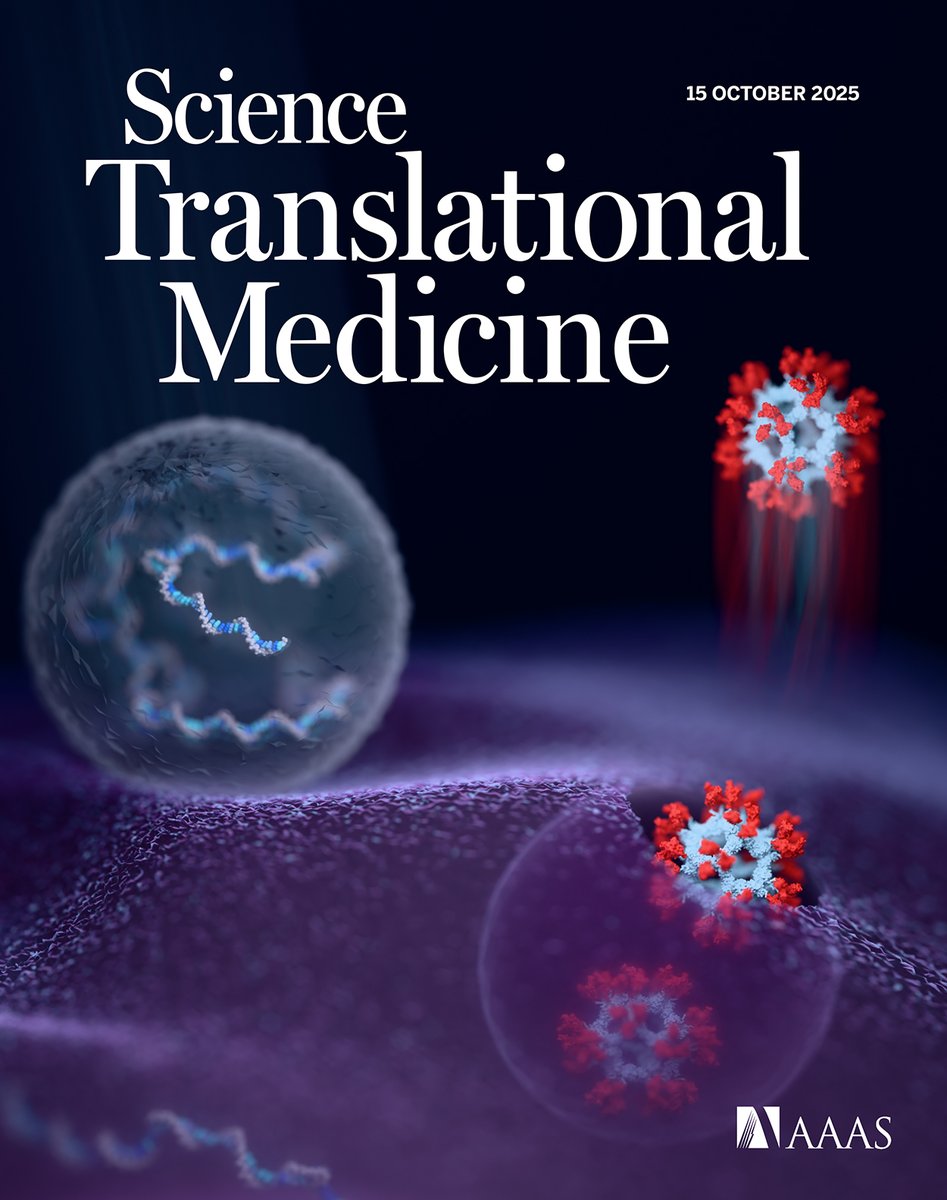
This week's issue of #ScienceTranslationalMedicine has arrived!
New mRNA vaccines generate self-assembling nanoparticles to enhance immunity, dual-targeting "decoys" prevent metastasis and potentiate immunotherapy against melanoma in mice, and more. https://t.co/mfA8HqzCYv
Thanks to Aia, Syed, Dixie, and James for joining us this summer as Rosetta Commons Undergraduate Researchers! We loved working with you these past 10 weeks and wish you the best as you head back home!
🚨 New paper alert! 🚨
Here we show that stabilized influenza hemagglutinin HPAI H5 immunogens improve the quality of elicited antibody responses. Thank you to @open_phil for funding this work! https://t.co/pariwhAwGN
🚨 new paper alert 🚨
We present a method for designing protein nanoparticles with two unique faces that can bring together distinct biological targets at controlled distances!
This project was led by Dr. Sanela Rankovic is out now in Nature Materials: https://t.co/Vkxk9N9wfT