If any of you are planning to read, or re-read, “The Odyssey” now, I cannot recommend strongly enough Elizabeth Vandiver’s audio course on it from the Great Courses series. It opened the epic up for me. Planning to re-listen: https://t.co/3oE4epbrFe
Richard Feynman stood at a Cornell blackboard in 1964 and explained the problem every AI lab is fighting in 2026. The BBC filmed it. Almost nobody watches it.
The lecture is about why nature only answers in mathematics. Every team forcing language models to reason is hitting the wall he mapped 62 years ago.
He was 46. The Nobel Prize came 11 months later. The footage survived on film reels and now sits free on YouTube with fewer views than a keyboard unboxing.
Watch the blackboard section near the middle. He takes 1 of Kepler's laws and rebuilds it from nothing, with notation a 12-year-old can follow.
No slides. No jargon. 1 piece of chalk.
An ML engineer I know paused it 4 times and made his whole team watch it before standup.
You're 62 years late. The lecture is still free.
Someone on Reddit built an open-source canvas where you handwrite math and physics on a whiteboard, and Claude responds right next to your handwriting. In real time.
It's called PenEcho. You sketch equations, draw diagrams, scribble notes wherever they make sense. When you pause, it sends that region to the model. The response appears beside your work. Not in a chat window.
On the whiteboard itself.
The canvas is 20,000 x 20,000 pixels but only loads tiles where ink exists. Each request costs a few cents. Runs locally. Supports Claude, OpenAI, and Codex.
The builder said something that stuck with me: six months ago, no model could have done this. Not the handwriting recognition.
The fact that it understands unfinished equations, rough diagrams, and the spatial relationship between them. It infers what you meant from incomplete marks.
This is how research should work. Think on a whiteboard. AI thinks with you. No copy-pasting into a chat box. No breaking your train of thought.
The faster technology moves, the more I think about Bezos' question
What won't change in the next 10 years?
Things I've been writing down over time:
- Humans will always need shelter, food, energy, and healthcare.
- The desire for ownership and the accumulation of wealth.
- The physical world will move more slowly than the digital one.
- Every increase in technological capability, especially AI, will require more energy.
- People and businesses will continue to need access to capital.
- Capital will continue to seek returns that exceed inflation.
- Underwriting methods evolve, but demand for credit (loans) is persistent.
- Trust remains scarce and becomes increasingly valuable as content, code, and fraud become cheaper.
- Verified identities and reputation becomes more important as information becomes abundant and synthetic.
- Long-term wealth creation and dynastic (multi-generational) thinking predate modern technology, and will persist.
- Coordination and transaction costs never fully disappear; market friction will continue to justify the existence of firms and intermediaries.
- People will continue to compete for status.
- Consumers will pay a premium for products and services that confer status.
- Time remains fixed at 24 hours per day.
- But attention is a finite resource and an enduring constraint.
- Products that credibly save time (or enable delegation) have a perpetual market.
- Inaccessible, proprietary data will be a persistent moat. The more inaccessible and difficult to aggregate, the deeper the moat.
- People want accountability, recourse, and clearly identifiable responsibility when things go wrong.
- Regulation consistently lags technological innovation.
- Compliance requirements, licensing, and regulatory moats persist even when machines can perform the underlying task.
- Local knowledge remains valuable and difficult to replicate.
- Heterogeneous markets (like real estate) continue to reward people with deep contextual understanding.
- Incumbent organizations tend to underinvest in disrupting their own businesses, which always creates opportunities for challengers.
Bezos' insight on what wouldn't change in 10 years was "Customers will always want lower prices and faster delivery."
It's boring/ true, but I think that's the point.
Everything we build today can and will be rebuilt more cheaply, faster by someone else.
Build on the invariants, not the trends.
What have I missed?
Today we're launching Inkbox: the identity and communication layer for AI agents. We give agents their own email, phone, iMessage, and an internet address. Install @inkbox_ai identity with one command: allow anyone to reach your Claude Code, Codex, or Hermes from anywhere, and let it reach anyone.
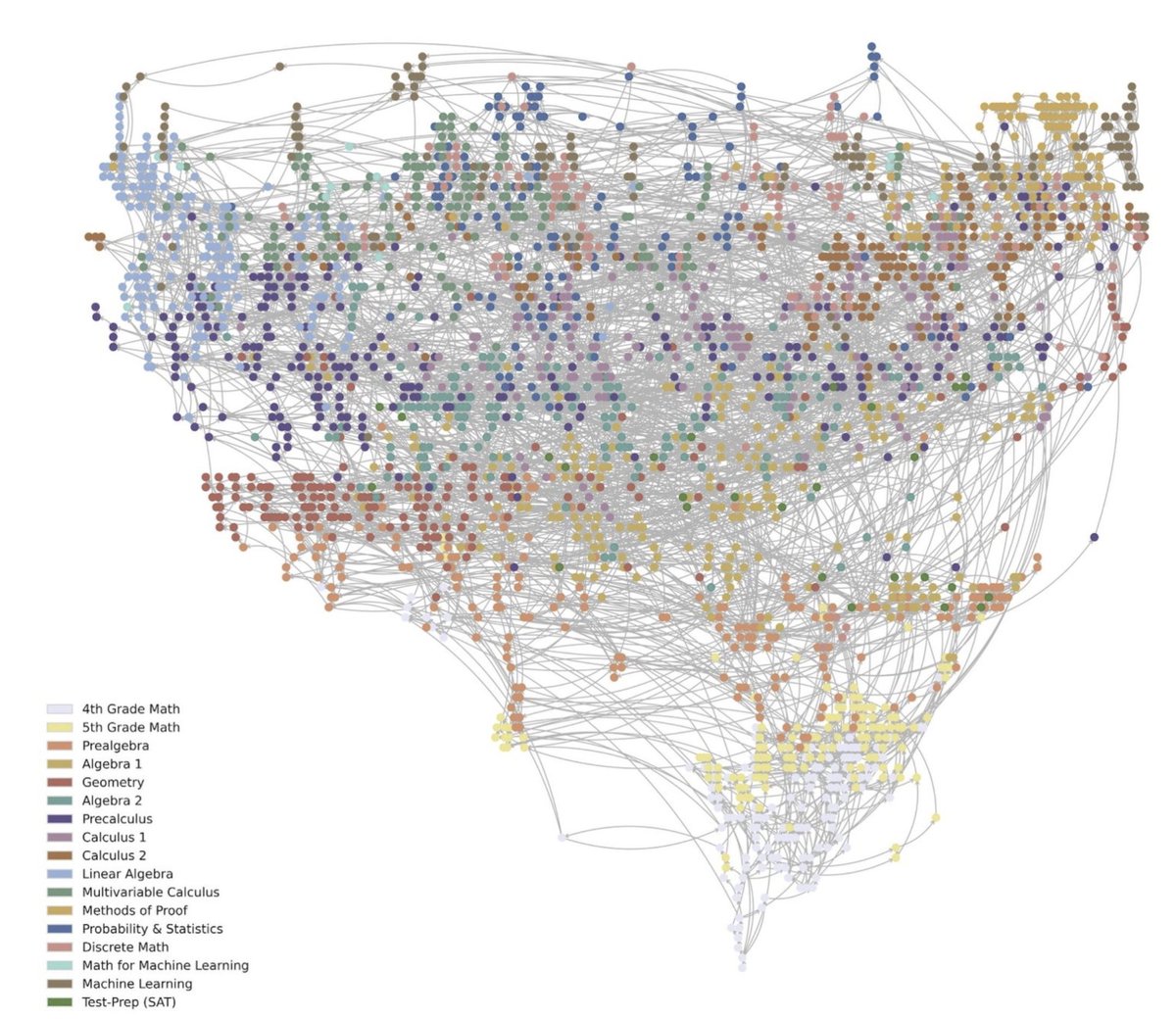
For anyone wondering how a third-grader can complete six years' worth of math in a single year AND score a 5 on the AP Calculus exam.
This knowledge graph spans 3,000 math topics, from 4th grade to the university level, providing the perfect basis for mastery learning.
Students can go as fast or far as they want! There are no restrictions whatsoever. The only requirement is that they must demonstrate mastery of each topic before moving on to the next.
Kids are capable of incredible things when given that kind of freedom and support.
Following the amazing reaction to the Marble Curriculum yesterday, we've decided to make it open source 🛰️👇
Everything a child learns in primary school. 1,590 concepts. 3,221 connections across 8 subjects, from Math and Science to Computing and Life Skills. Anchored in the US and UK curriculums, standard by standard (NGSS, Common Core, DfE).
What you will find in the repo: every concept as structured JSON with its age band and the evidence a child must show to master it. Every prerequisite link marked hard or soft, with a written rationale. It's a true DAG you can compute learning paths on. Open license, you can build whatever you want with it.
Now is a unique time in history to be building in education. Getting AI and kids education right is likely one of the hardest and most important problems to crack over the next decade and we need as many smart and creative minds behind it.
We think a common solid basis, accessible to all and that can be built upon, is critical to move fast. That's why we're making this curriculum open source.
It's not perfect but we know it's a robust basis, and we believe that sharing it openly is the fastest way to progress in this field. If you're building in education, share this around you and tell us in comments if you find this useful and if you want to contribute.
We'll keep working and investing on it @withmarbleapp. Credit goes to @guillaume_boni for building this. I just made it look pretty.
Links below 👇
I predict 50% of companies will need new leadership, because the old management style won't work in the era of AI. That's exactly why I'm seeing 95%+ of so-called "AI Transformation" initiatives fail. Most are bolting on AI pilots for functional tasks, but never touching the business core.
https://t.co/5Nq9vwwj3V just launched TrueNorth AI Decision platform for executives (Boss AI, TopSales AI, Investor AI agentic products) https://t.co/EkZj5WVEze
More on enterprise AI transformation in this interview with @aimcgarry: https://t.co/7cYa6RFIY9
my friends, it is time:
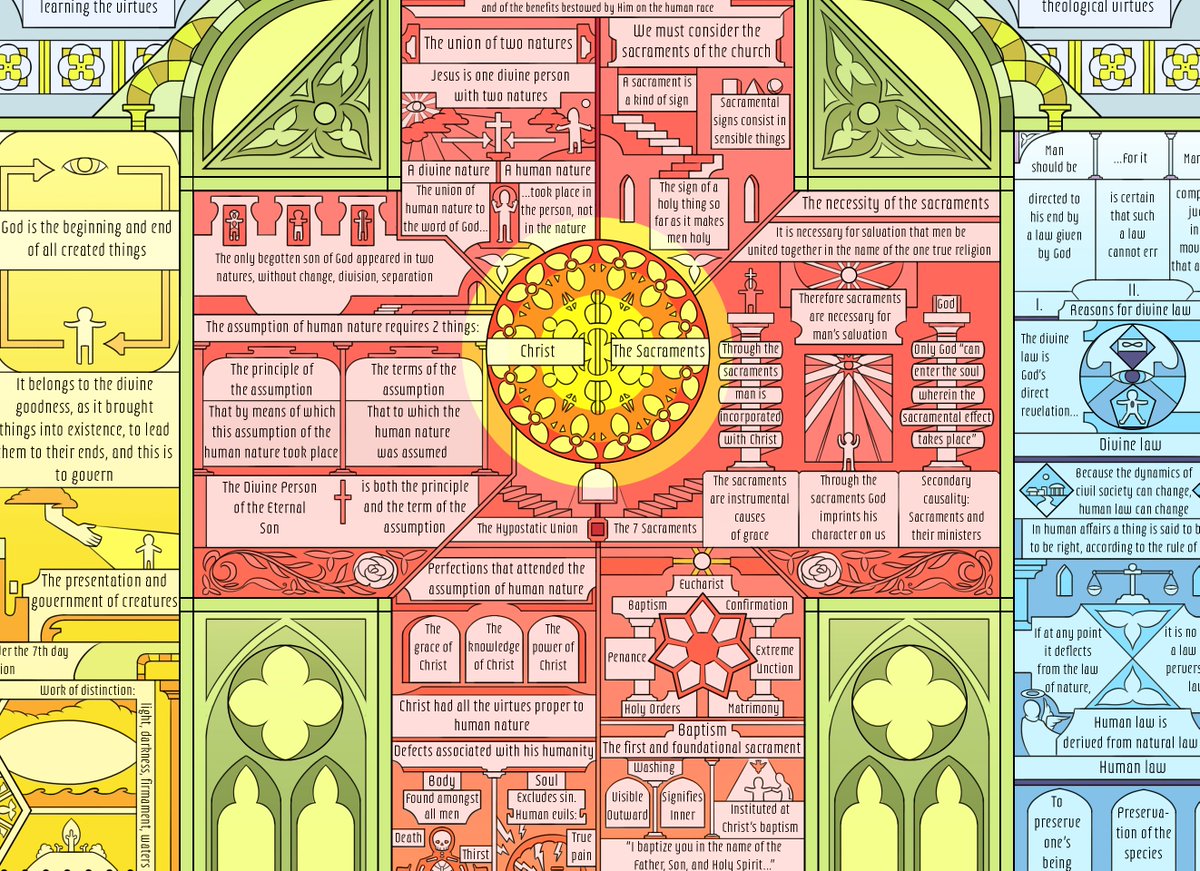
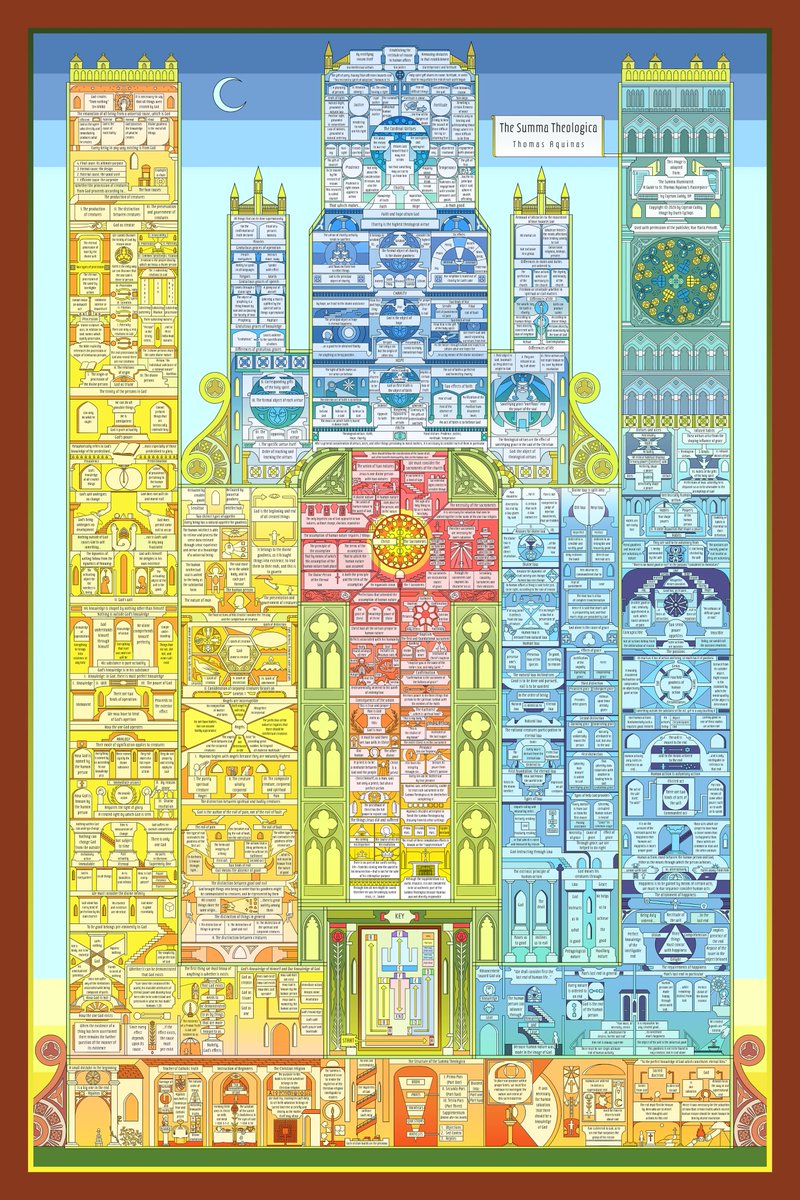
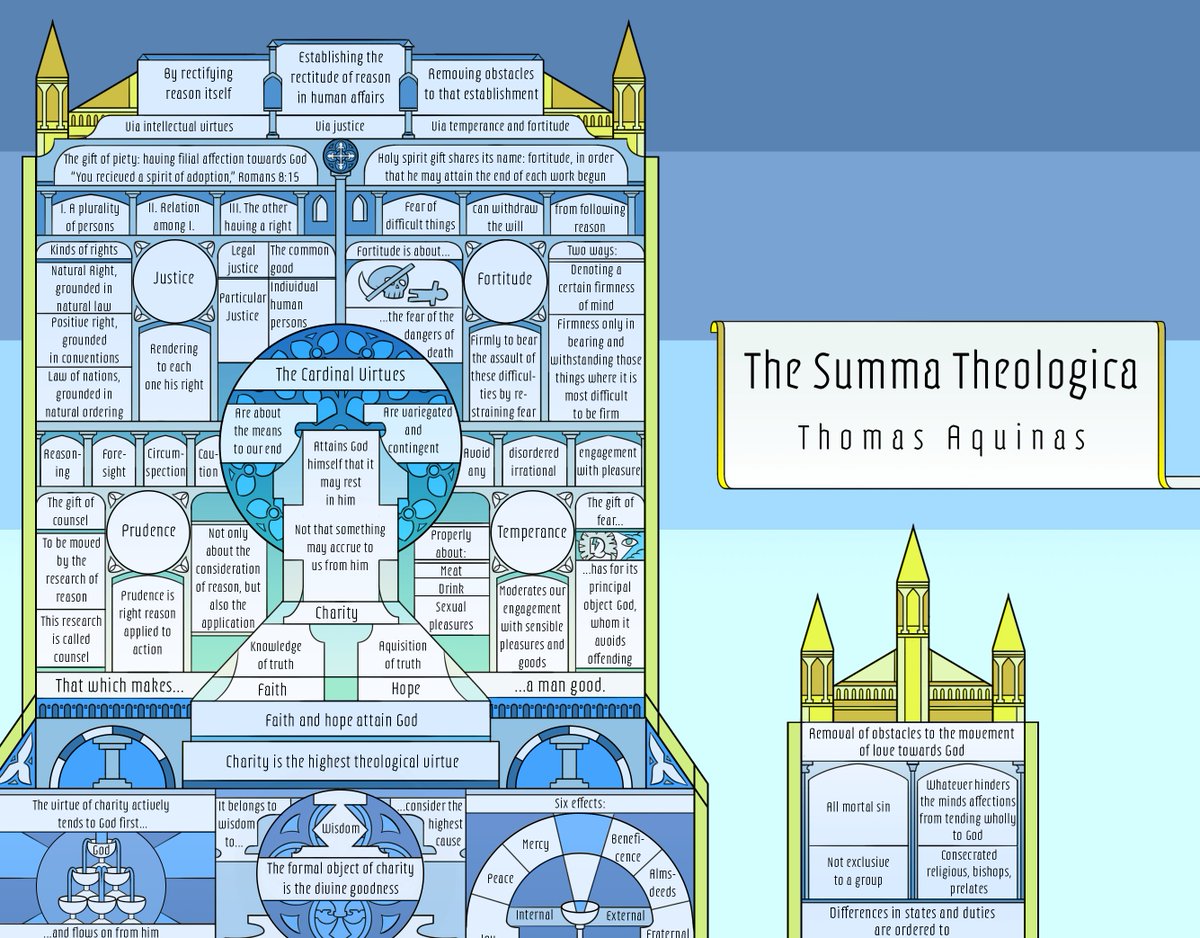
in conjunction with @avemariapress and a new book they released, i spent the last few months illustrating the entire structure of the summa theologica, by thomas aquinas.
in my shop here: https://t.co/7BXaOV3Uv7
can i show and tell you, in this thread:
Anthropic just killed one of the biggest excuses people had about AI agents.
"Setting them up is too complicated."
Not anymore.
A few months ago, building an AI agent that could actually work for you meant hours of coding, APIs, servers, and endless debugging.
Today?
One GitHub link.
That's it.
Anthropic just open sourced Launch Your Agent.
It interviews you, figures out what you want to build, deploys the agent to the cloud, tests its performance, improves weak spots, and schedules it to keep working even after you close your laptop.
No demo.
No fake showcase.
A real cloud deployment inside your own account.
The crazy part is what happens next.
Your agent doesn't live on your computer.
It runs inside Claude Managed Agents, works 24/7, and costs only cents per run.
I already know people building research agents, lead generation systems, content pipelines, and customer support workflows that replace hours of manual work every single day.
The gap between people who use AI and people who build workers with AI is getting bigger every week.
And that's exactly where the biggest opportunities usually appear.
The question isn't whether AI agents are coming.
The question is:
How many opportunities will you watch other people automate before you build your first one?