Scrap Agbero? Then Scrap the Political Structure That Depends on Agbero.
When Seun asked Hamzat, “Are you scrapping Agbero?”, Hamzat bent his head. The audience burst into laughter.
But I don't think that question was funny. It was probably one of the most important questions asked during that governorship debate.
Because the question is bigger than Agbero; it is about the political economy of Lagos. It is about the relationship between political power, transport unions, street-level control, intimidation, and the deliberate preservation of disorder.
Let's be honest: Agbero is not just a transport problem in Lagos. It is a political institution.
And that is why scrapping it has not been easy. We all remember what happened to Ambode when he tried to scrap the Agbero.
The entire political structure of Lagos, particularly the grassroots mobilisation machinery that has sustained APC's dominance, is tied to this system. The motor parks, the union networks, the street bosses(Egbon Adugbo), the collection points, and the people who control them are not operating in isolation from politics.
They are part of a much bigger ecosystem.
Chaos is not a bug. It is part of the business model.
I have written about this before. One of the biggest misconceptions about Lagos is that its dysfunction is simply the result of poor planning, incompetence, or an inability to govern.
I think we need to look deeper.
Sometimes, what we call dysfunction is actually a system working exactly as certain interests want it to work.
Think about it.
Why would a government genuinely interested in modernising public transportation continue to tolerate a system where commercial drivers are subjected to multiple collections, intimidation, and unofficial levies?
Why would a state that prides itself on being Nigeria's commercial capital allow non-state actors to exercise so much control over its roads, motor parks and transport economy?
Why does the disorder persist despite successive administrations?
Because wahala creates middlemen. And middlemen create political networks.
The motor parks are not merely places where buses load passengers. They are centres of influence. They provide access to thousands of transport workers, street-level operators, collectors and enforcers.
These networks can be useful during elections, political mobilisation, crowd control and, allegedly, the intimidation of political opponents.
A system that provides this much political utility is not easily dismantled.
Follow the money.
In July 2021, the International Centre for Investigative Reporting (ICIR) published an investigation titled Money for the Boys: How Agberos Pocket Billions of Lagos Transport Revenue.
The investigation estimated that Agberos collected approximately ₦123.078 billion annually from commercial buses, tricycles, and motorcycles in Lagos.
Let that sink in.
That figure represented approximately 29.4% of Lagos State's internally generated revenue in 2020.
The investigation also found that much of this money did not enter government accounts. In some cases, local councils reportedly received as little as ₦100 or ₦200 per vehicle daily, while the bulk went elsewhere.
This is not just street-level extortion. It is a parallel economic structure.
And where there is money on this scale, there are beneficiaries, protectors, and people with a vested interest in preserving the arrangement.
The political value of Agbero
There is something else we must understand about the Lagos political system.
Political power is not sustained by election-day voting alone. It requires structures that operate between elections.
You need people who can mobilise crowds, organise communities, enforce instructions, establish territorial influence and make things happen at street level.
The Agbero ecosystem provides some of these capabilities.
This is why the relationship between politicians and Agbero power brokers deserves serious scrutiny.
Look at the history of Lagos politics. Look at the influence of transport union leaders, particularly the emergence of personalities such as MC Oluomo.
These are not simply people who understand transportation. They have built enormous grassroots networks, with political relevance extending beyond the motor parks.
And this is where my argument becomes uncomfortable.
If you dismantle the Agbero system without dismantling the political patronage structure that sustains it, you are only treating the symptom.
The people who benefit from it will find another arrangement.
Even Hamzat has told us something important before.
In a 2020 interview, Hamzat was asked about the government's inability to address Agbero extortion.
His response was revealing.
He argued that the NURTW was a legally recognised union and compared banning it to banning the Nigerian Medical Association. He also described its members as "our brothers and cousins."
He preferred engagement and reforming the union's leadership rather than banning it.
That position tells us something about how deeply the union ecosystem is embedded in the political and social arrangement of Lagos.
But the question is: at what point does engagement become an excuse for preserving an arrangement that continues to hurt ordinary Lagosians?
Drivers are paying. Passengers are paying. Businesses are paying. The entire transport economy bears the cost.
Yet the ordinary Lagos resident has very little power over the people collecting money on the roads.
You cannot modernise Lagos while protecting the architecture of its disorder.
This is the fundamental problem.
You cannot build an efficient public transportation system while maintaining the informal power structures that profit from an inefficient one.
You cannot eliminate road extortion while protecting the networks that make extortion possible.
You cannot promise a modern Lagos while treating political loyalty as more important than institutional reform.
And you cannot separate the Agbero question from the bigger question of how Lagos politics works.
This is not an argument against transport workers. Many people in the transport sector are simply trying to survive. Nor is it an argument for throwing thousands of people out of work without alternatives.
A serious government should formalise transport operations, establish transparent revenue collection, create decent employment opportunities, professionalise park management and enforce the law without political exemptions.
But it must also confront the people who benefit from the existing arrangement.
That is the difficult part.
Because the people who stand to lose from genuine reform may be more politically powerful than the people who stand to gain from it.
So, Seun's question deserves an answer.
Are you scrapping Agbero?
The real question is not whether Hamzat can scrap Agbero.
It is whether the political establishment that benefits from the Agbero system is willing to scrap the machinery that gives it power.
Because if you remove Agbero but retain the political patronage, the street-level enforcement networks, the informal revenue economy and the culture of political intimidation, you have changed nothing.
And if the APC's grassroots political machinery in Lagos is as dependent on these networks as the evidence and history suggest, then genuine reform could have consequences far beyond transportation.
You cannot dismantle a system that sustains your political power and expect your political structure to remain untouched.
That, perhaps, explains why the question was so uncomfortable.
And why the audience laughed.
“The agbero situation is a multi-dimensional problem. The first step is: a government has to be elected outside of the agbero network that is not a holding to the agbero network, and then you will have the political will to deal with it…”
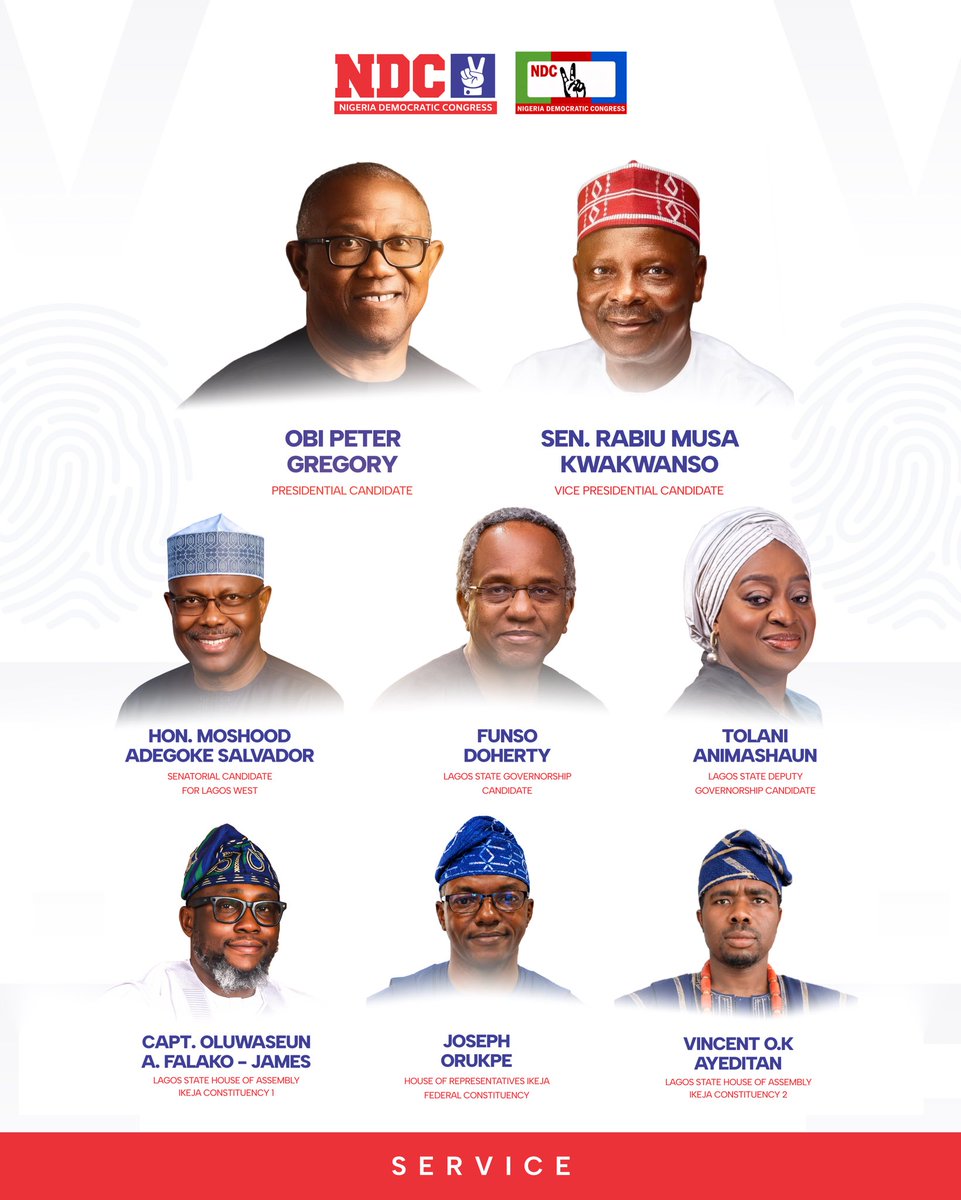
Funso Doherty understands the problem.
@confindence24 It has to be a rage bait sha….we all know what we are doing ….and one day….you will also be a victim of this govt u are supporting….till then….enjoy