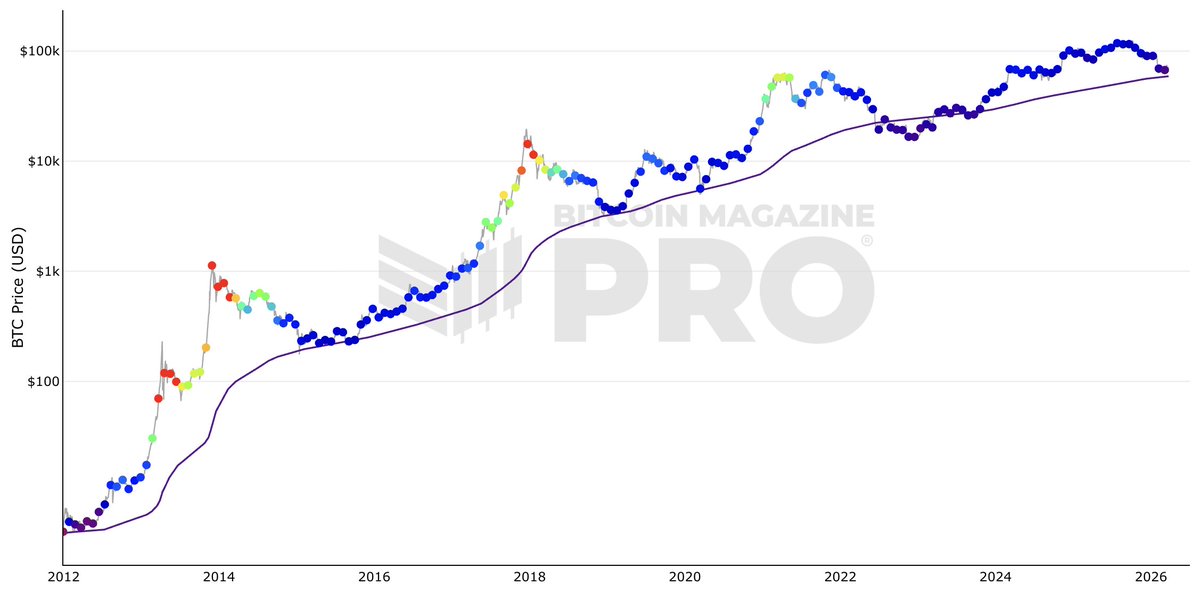
"Technically we front-ran it by a hair earlier so would not be surprised if it gets properly tested in the coming days but this is looking very healthy right now."
And here is that proper re-test!
Moment of truth fam, if we hold this retest then things are about to change in a big way imo.
$BTC
@Sykodelic_ Big red flag: he bragged about not monetizing his X (even at 1M followers) because he “just wants to help.” Then launches a paid service (advertised heavily on his same X account) with urgency tactics (“window closing soon”). That contradiction is telling.
There's a surah in the Quran that was revealed for one specific feeling.
Not grief. Not fear.
Not loneliness.
It's the feeling you get when you're doing everything right, and nothing is working. And Allah's response will break you.
Newborns are fairly easy. They sleep most of the day. They are only awake for a few hours, and while they are awake they are eating and being changed, then they go back to sleep again.
Babies are a little more work, but they still sleep most of the day.
What is really difficult is toddlers. As soon as they become mobile, as soon as they can crawl, they get into everything. If they are awake you have to be watching them, or you have to put them in a playpen, which I do not like. I prefer not to restrict my children’s movement like that. I prefer to prepare the house so it meets their needs.
Then they start walking and it becomes even harder.
Around five or six years old, something changes. If you have been teaching them, they can begin doing a lot of chores. They can clean up after themselves, get dressed, feed themselves properly, and handle many small responsibilities. Children can begin learning these things earlier, but around that age they usually become good enough that you do not need to intervene very much.
After that point it gradually becomes logistically easier to take care of them. It may become more expensive in some ways, but it becomes easier from a logistical standpoint. Your focus shifts more toward moral training, bonding, and guiding them.
What this means is that if you have children under the age of five, especially multiple children, it can be very difficult. The good news is that this phase only lasts for a certain period of time. After that it becomes easier again, assuming you train your children well.
All of this assumes the children are healthy. If a child has serious health issues, that is a completely different situation.
The key to getting through the under five stage is to simplify everything. Everything needs to be as simple as possible and as organized as possible, and ideally you should do that before you get yourself into that position. I would say the period when you have a newborn at home is when you should begin simplifying everything.
What does that mean?
First, have a simple roster of meals that repeat. Cook the same things every week or every two weeks in a cycle. Choose easy meals. One pot meals, or meals you can put in the oven and let them cook. They can still be homemade, nutritious, and very tasty. The point is to choose meals with very little preparation. Ideally something that takes fifteen to twenty minutes to prepare. The cooking time does not matter because the oven handles that, not you.
Second, remove everything from your house that is not required for raising your children, at least from the areas where the kids spend their time. This way you do not have to worry about them breaking things or getting into things they should not touch. Empty space is perfectly fine. If the floor is cold, put down some mats so they have a place to play. A simple open area and a few toys is all they need.
One small box of toys is enough. A two or three foot wide box with perhaps a dozen toys inside. A box of Duplos, a couple of stuffed animals, a few balls, maybe a few soft books. You may own more toys than that, but only keep a small number out at any one time. That way cleaning up after them takes five minutes at most.
You also need to set up your bathing and changing stations so that everything follows an efficient pattern of movement. You move from one step to the next and it is done. You should be able to change your baby half asleep in the middle of the night. The only way that works is if everything is laid out very clearly. Nothing to trip over, nothing to bump into, and everything kept simple.
One smart idea my wife came up with was to buy LED candles and place them in the areas of the house where you need to go at night to care for the baby. That way she could wake up half asleep, change the baby, and not need to switch bright lights on and off. She could stay half asleep and do everything almost on autopilot. That helped us tremendously.
Our challenge was that we live in a small apartment and it is easy to accumulate too many things. Even so, simplifying the space helped a great deal.
If you have older children when you have younger ones, that can make a big difference. For example, if you have a ten year old and new babies, that ten year old can be very helpful if they have been well trained. They can handle all of their own responsibilities, keep their own toys and mess organized, and help with things like loading and unloading the dishwasher, running the washing machine and dryer, folding clothes, or watching the baby for a moment while you step away. Those small contributions make a real difference.
At this stage your biggest problem is not necessarily the amount of work. There is not actually that much total volume if you have simplified things properly. If you find there is a huge amount to do, it usually means you did not simplify earlier.
The real challenge is interrupted sleep. You may lose two or three hours of sleep each night, and that loss adds up if you do not make it up during the day.
The good news is that small children sleep a lot. Babies sleep a lot, toddlers sleep a lot. If you organize things properly, when your toddler sleeps, you sleep as well until you catch up. Then you can use some of their sleep time to get other things done.
The whole approach is about reducing overhead as much as possible while still caring properly for yourself and for the children.
Even if you do everything well, you will probably become more and more tired during the stage when your children are very small. The good news is that it does not last forever. Once they grow older you recover.
Sometimes you simply have to endure the season. It passes, and you will make it through. Everyone else does. You can too.
Mises obliterated the entire socialist project in 1920 with one devastating insight: "Where there is no free market, there is no pricing mechanism; without a pricing mechanism, there is no economic calculation." The socialists spent the next century pretending this problem didn't exist while their economies collapsed around them.
And yet here we are, watching politicians promise they can "fix" healthcare, housing, and energy markets through central planning. They can't even calculate the cost of their own programs correctly — how exactly are they going to allocate resources across an entire economy?
Every Venezuelan breadline, every Soviet grain shortage, every Chinese famine was just Mises being proven right in the most brutal way possible. But sure, let's try democratic socialism this time. What could go wrong?
@CanyonMimbs Please do look into it. Follow your inner guiding light, follow reason, and follow the logic of the Qur’an—which explicitly encourages seeking understanding. Put every claim under scrutiny, and trust your own judgment.
The Hollow Men
American capitalism is rotting from the head down. We have replaced the "Owner-Operator"—the risk-taker-with a new, parasitic class of corporate bureaucrat: The Risk-Free Insider.
By "Insider," I am not referring to a specific title. I am referring to the entire administrative state that has captured the modern corporation. This includes the Directors who exist solely to collect fees, the Executives who exist solely to collect bonuses, and the Managers who exist solely to hire consultants.
These are the hollow men of the boardroom. They are masters of PowerPoint. They wear the right suits. They say the right buzzwords about "governance" and "ESG." But they are mercenaries fighting a war with someone else’s ammunition.
In a functioning economy, authority is tied to liability. If you make a bad decision, you lose your own money. That fear of loss is the only thing that keeps a business honest. It forces you to cut waste, obsess over the customer, and stay late to fix what is broken.
Today, we have severed that link.
We have rigged the game so that heads, the Insider wins; tails, the shareholder loses.
If the stock goes up, the Insider collects a massive performance bonus. If the stock crashes due to their own incompetence, they are fired with a "Golden Parachute" worth tens of millions. They are gambling with the house’s money, and they never leave the table poorer than they arrived.
This looting starts in the boardroom.
We have normalized a "Country Club" culture where directors are selected based on social profiling rather than their ability to build a business. The modern board member is often a professional tourist—paid an average of $350,000 a year.
Let’s be brutally honest about what that number represents. The average director is paid nearly five times the GDP per capita of the United States. They earn more for attending four quarterly lunches than the vast majority of Americans earn in five years of hard labor.
And for what?
Most of these directors are "over-boarded," sitting on three or four boards simultaneously. They treat directorships as a gig economy for the elite. They fly in, rubber-stamp a compensation package they didn't read, and fly out. They collect checks from companies they do not understand, do not use, and certainly do not love.
They are not there to ask hard questions. They are there to be collegial. They are there to protect the other Insiders.
And what happens when these boards hire executives who also have no personal capital at risk?
We get the Delegation Economy.
When a Risk-Free Insider faces a crisis—bloated expenses, a broken supply chain, or a stale product—they do not roll up their sleeves. They hire a consultant. They pay a strategy firm millions of shareholder dollars to produce a 100-page deck telling them what they already know.
This is not management. It is intellectual money laundering.
They use shareholder capital to buy an insurance policy for their own careers. If the plan fails, they can blame the consultants. They delegate the work because they are terrified of the responsibility. They would rather preside over a slow, comfortable decline than risk a bold mistake.
While American Insiders are busy optimizing their severance packages, our global competitors are optimizing their products. They are not slowed down by bureaucracy. They are not waiting for a slide deck. They are outworking us.
If we continue to fill our C-suites with administrators instead of operators, we will lose our edge. We will see iconic American franchises hollowed out by fees, managed for the benefit of the Insiders, while the true owners—the shareholders—are left holding the bag.
The time for polite governance is over.
If we want to save the American economy from mediocrity, we must demand a return to the "Owner’s Mentality." We need leaders who treat shareholder capital with the same reverence they treat their own savings. The era of the Risk-Free Insider must end.
We are born into a world of slavery.
But the slavery is not of the physical, but of the financial. The mental. The spiritual.
They shove us into little rooms, training us to read and study, becoming good little soldiers for their industrial economy.
The warriors are sent to die in foreign lands, the poets forced to work in cubicles, the philosophers become sycophants.
Logic and reason become qualities of infamy. Propaganda and memorization are the software of the mind.
Like sheep to the slaughter, we are led to live unfulfilling lives, making just enough to survive but never enough to escape.
Trapped within Desert of the Real.
So, you're listening to Roger Ver and, as a anti-establishment skeptic, you think his "bitcoin is hijacked" spiel makes a lot of sense?
You've heard that Bitcoin was "co-opted" by Epstein, powerful corporate elites, the deep state or the US government?
Listen to this.
Early on in the genocide, many Muslim friends would often comment on my posts 'Allah is the best planner', meaning all the elaborate schemes and stratagems conducted by evil actors will be made null and void by divine intervention.
I'm reminded of this saying these days, as wicked Western powers conspired for the world to talk about the supposed evils of Iran, but instead find themselves swimming neck-deep in the Epstein affair, that overshadows everything else.
The people who would have us blindly hate Iran and Islam, and prepared to use this hate for a fake-legitimate war against Iran, are being exposed as the absolute scum of humanity at the worst timing for them: just when they geared up to employ their false righteousness for incredible evil.
I think this is a beautiful live demonstration of 'Allah is the best planner'.
THE GOLDEN AGE
The fiat crisis has begun. So what wins in the end: gold, digital gold, or some other kind of precious metal or cryptocurrency? Only time will tell, and different assets have different failure modes, but here are some thoughts.
(1) First: remember that Bitcoin's value proposition is seizure resistance. Not your keys, not your coins.
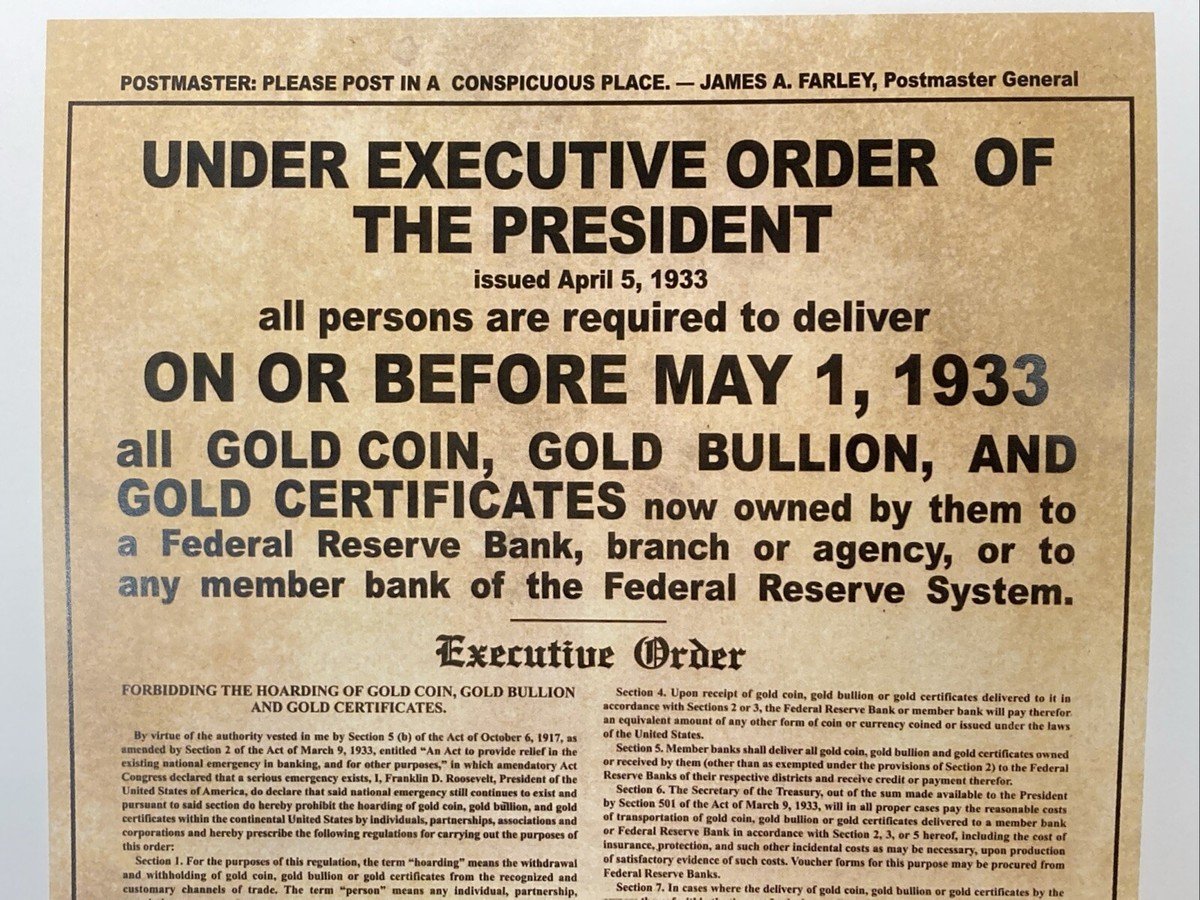
(2) To explain what that means, think through the mechanics of physical gold. It's great...if you can buy it, transport it, secure it, and sell it safely. But it's much easier to do that when you live in a highly organized state, like China. However, such a state can also track you to your doorstep to seize the gold, once it runs up in price. That's what FDR did in the 1930s and what China is fully capable of doing in the 2020s:
(3) So when you think through the game theory, as the price of gold rises, the cries to tax (or seize!) the physical gold will also rise. Note: we need not even mention paper gold here. In a true crisis, such claims are not worth the paper they're printed on. That's why many countries are repatriating their gold. Not your bricks, not your gold!
(4) By contrast to physical gold, digital gold (and cryptocurrency more generally) can be securely bought, sold, sent, and received at any time, in any amount, and in any location. It is invisible, international, instantaneous, and internet-native. And it is transportable, programmable, and easily verifiable in a way gold bricks simply aren't.
(5) In particular, digital gold is seizure-resistant in a way that physical gold is not. The same holds true for cryptocurrency as a class. Go back to the fundamentals: seizure resistance is part of why cryptocurrency was invented as an alternative to precious metals.
(6) This is not to say that physical gold won't have its day. If you live in a safe, small country like the United Arab Emirates, you may be able to buy your gold and eat it too. They probably won't expropriate property there.
(7) Moreover, it is quite likely that many countries (particularly in the East) will soon re-standardize their currencies on gold, or digital gold, or some mixture of precious metals and digital assets. As I've been noting for years, BRICs has been stacking gold bricks:
(8) However, don't overreact towards gold. The successors to the American Empire are China and the Internet. You should think of this as the past and the future replacing the present. China will replace the dollar with gold, along with physical commodities that it can touch, feel, and control. Meanwhile, the Internet will replace the dollar with digital gold, along with digital assets that it can encrypt, script, and verify.
(9) So: feel free to hedge as you see fit between the physical past and the digital future, with just one caveat: namely, you may not want to buy physical precious metals unless you're in a financially and physically secure region of the world. That probably means being outside North America and Western Europe. Because those countries are in the midst of sovereign debt crisis. And as that crisis deepens, both their failing states and their angry mobs are going to be hunting for whatever they can steal.
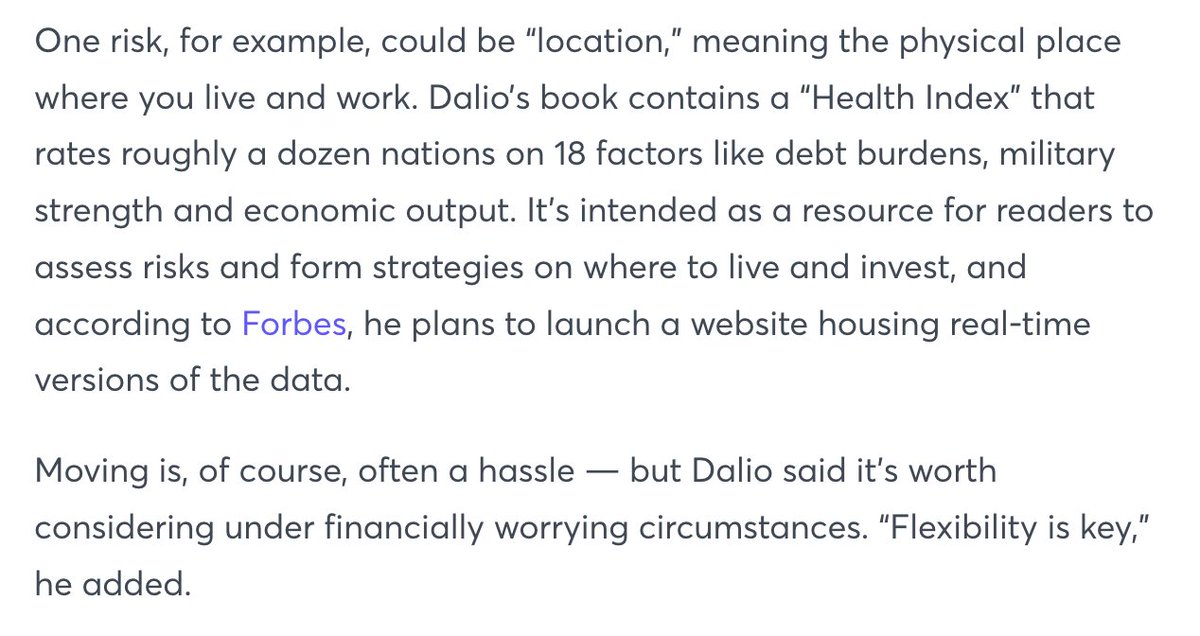
(10) In other words, what's much more important than allocation is location. Ray Dalio expressed this obliquely in one of his earlier interviews, where he said that "location" is a risk:
What Ray actually meant is: if you live in a jurisdiction that heavily depends on the dollar (which includes the entire G7), you want to get out. Because the total pauperization that follows the end of the dollar may mean that angry mobs (or government agents, or both) may come to your home, steal your assets, and perhaps rip you limb-from-limb in the process.
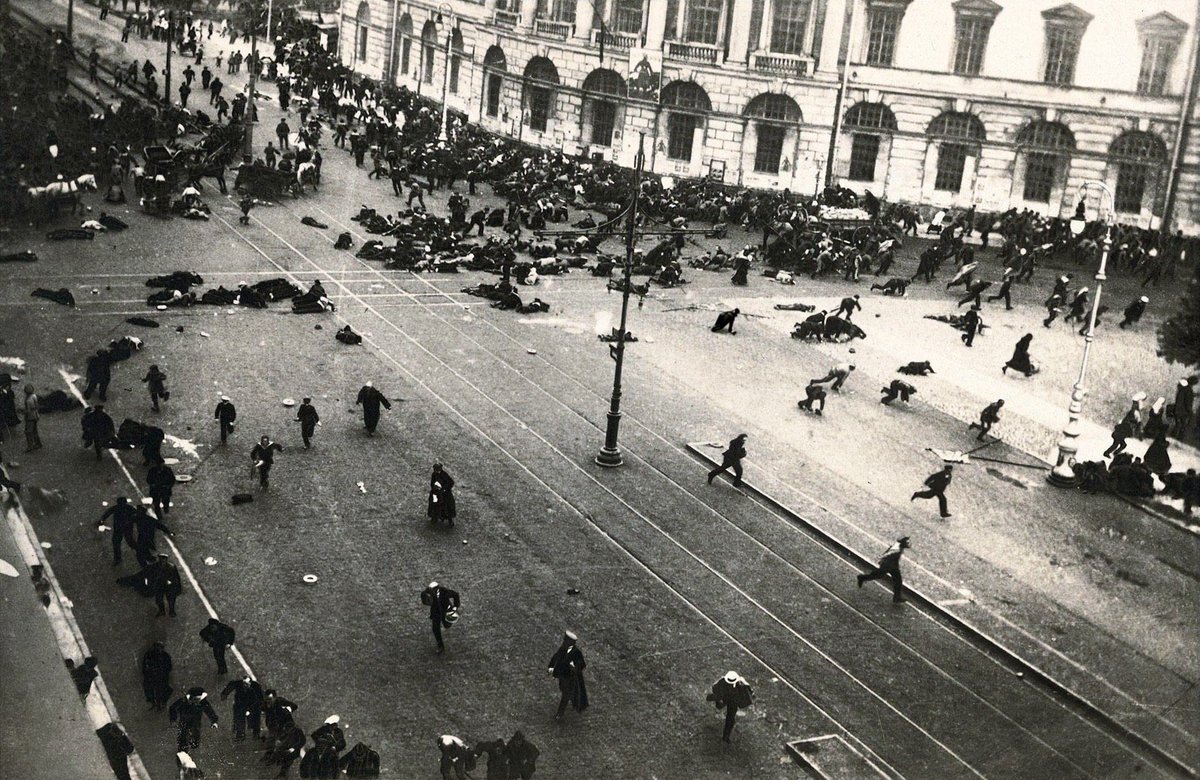
A cheery thought...yet also historically precedented. That's what came to Eastern Europe and Asia in the 20th century during the rise of communism. And that's what may come to North America and Western Europe after the end of Keynesianism.
Prior to such a situation, you really do not want to buy gold bricks, which you can't transport through an airport. You want to hit the bricks. You want to move faster, escape things. Get as far away from the dollar zone as you can...but physically first, rather than financially.
After all, "staying and fighting" a sovereign debt crisis caused by decades of money printing is like staying and fighting a volcanic eruption caused by decades of earth moving. You didn't cause it, and you can't stop it, but you can easily be wrecked by it. So emigrate just as the early Americans emigrated from Europe. Unless you believe the Irish Americans "betrayed" Ireland by leaving, unless you really want to spend the rest of your life paying down welfare and warfare debts you didn't incur, you should change your location out of the G7. And then do whatever allocation you like.
Or just ignore this analysis and do what you see fit. Your call, of course. If so, I really do hope my MAGA friends are right that "The Golden Age of America Begins Right Now." Because I also think we are on the verge of a type of Golden Age, and a Bitcoin Age...but in a very different way.
BREAKING: Spot gold prices extend gains to +$500/oz over the last 72 hours, now above a record $5,500/oz.
Gold just added +$3.5 TRILLION of market cap in 72 hours.
الذهب لا يرتفع…
الذي ينهار هو الدولار.
أكبر خدعة في الأسواق
أن يُقال لك إن الذهب استثمار.
الذهب لم يكن يومًا أداة نمو،
ولا وسيلة مضاربة،
ولا مشروعًا لزيادة الثروة.
الذهب ثابت.
الذهب معيار.
الذهب مرآة.
عندما ترى سعر الذهب “يرتفع”،
فهو لا يفعل شيئًا في الحقيقة.
الذي يحدث ببساطة أن
الدولار يفقد جزءًا من قيمته
فتحتاج إلى عدد أكبر منه
لشراء الشيء نفسه.
قبل 50 عامًا
كان الدولار أقوى،
وكانت أونصة الذهب أرخص.
ليس لأن الذهب كان أضعف،
بل لأن العملة كانت أقل تآكلًا.
اليوم:
الدولار يُطبع بلا سقف
الديون تتراكم بلا خطة
والقوة الشرائية تتآكل بلا اعتراف
ثم يخرجون ليقولوا لك:
“الذهب حقق قممًا تاريخية”.
لا.
العملة حققت قيعانًا جديدة.
الذهب لا يربحك،
هو فقط يمنعك من أن تخسر.
ومن لا يفهم هذه النقطة
سيبقى يطارد العائد،
بينما ثروته تُستنزف بهدوء
على يد التضخم.
الذهب لا يتحرك،
النظام النقدي هو الذي يترنّح.
#الذهب #الدولار #التضخم #القيمة_الحقيقية #الأسواق
#Gold #Dollar #Inflation #StoreOfValue #Macro