India is the 4th-largest economy, 3rd by PPP & 1 out of 5 nations to land on Moon than merely a poor country.
Coexistence with nature and respect for all living beings is millennia old Indian thought.
Corporates paying @TheEconomist for India insights should think twice.
It is extraordinary that India, still a relatively poor country, can achieve something as selfless as protecting other creatures. We explain how it became remarkably good at animal conservation https://t.co/TP0ik9s4AT
It would be great if we had an international system that could handle a potential conflict between India and Pakistan or what's going on in Sudan or Rwanda, says US Secretary of State Marco Rubio
In less than 2 days, countries are reassessing their security, alliances and strategic interests as the global order continues to shift. We still have an entire day to pass in the US. Let’s wait to see what it brings.
It’s an interesting weekend for #geopolitics, and it’s only Sunday afternoon in Europe. It started on Friday with Switzerland releasing its new Security Policy Strategy, saying the security environment has “drastically deteriorated”.
So in less than 48 hours, the developments have moved almost from West to East. Friday started in Switzerland, then Greenland and NATO, followed by Saudi Arabia and Yemen and now North Korea and Japan. These are different developments and not necessarily connected.
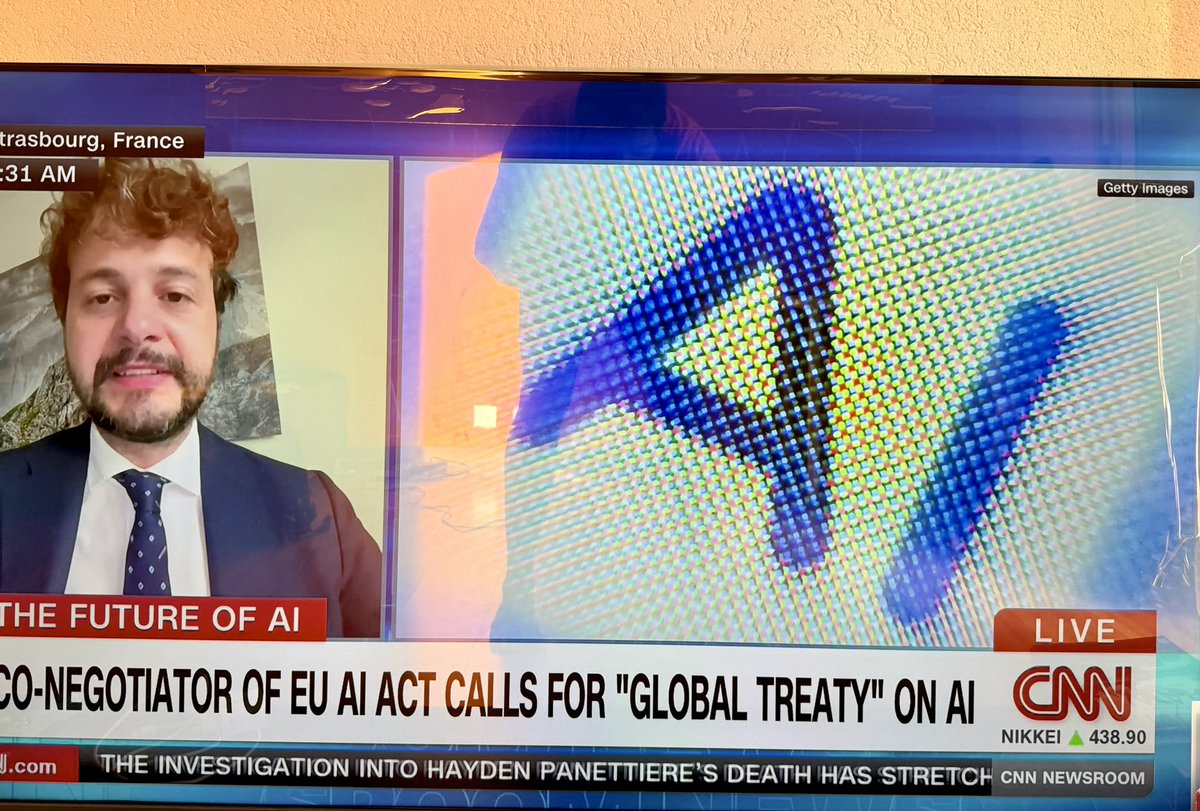
As EU AI Act is almost live, there is an ambition from @EU_Commission to make it a global AI regulation. However, it will be interesting to see how will cross-border AI models and data transfers be regulated when AI operates beyond national boundaries?
#AIGovernance#EUAIAct
I am attending the @UN and @UNIDIR’s Global Conference on AI, Security and Ethics in Geneva.
The conference brings together public sector, military, academia, and private industry to AI opportunities and risks.
If you’re here as well, feel free to say hello.
#AIEthics
As highlighted by @DattaHosabale, @RSSorg's long-term vision is to contribute to building sustainable societies at every level, from families to societies, alongside environmental responsibility, grounded in shared universal values. @SunilAmbekarM
https://t.co/pX9qEGEyw5
Participated in a 1.5-track dialogue in Berlin with leading German think tanks and policy institutions alongside @RSSorg General Secretary @DattaHosabale, engaging on societal structures, sustainability, and global cooperation frameworks. @SunilAmbekarM
https://t.co/6nQ45dKCg0
A key theme across discussions: Indian and German societies share structural similarities in community orientation to family systems and social cohesion.
The exchange focused on cultural perspective on sustainability and governance frameworks to changing societal realities.
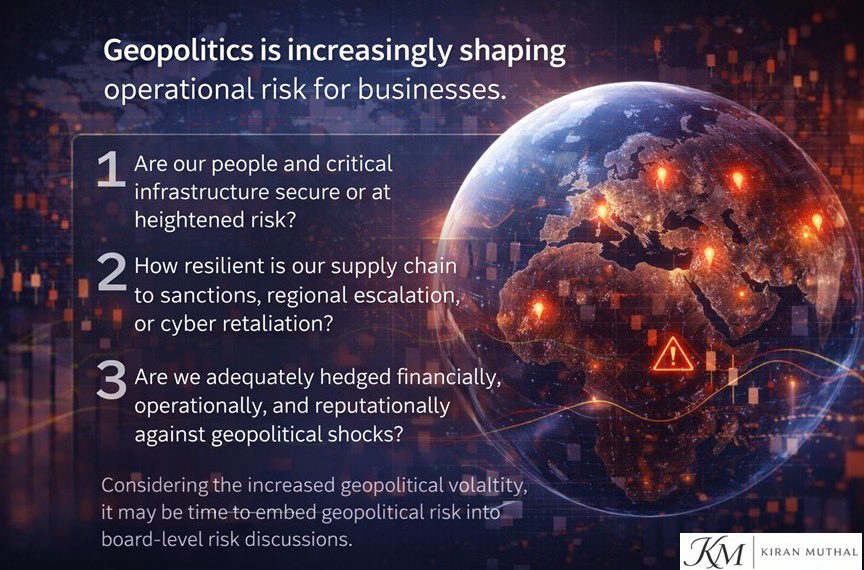
As geopolitical shocks become more frequent, embedding geopolitical risk into board-level discussions may become more necessary. The real challenge is not recognizing the risk, but understanding how organizations should structure their response.
#BoardroomDiscussion
I wrote below note about a year ago during the Red Sea shipping crisis, when attacks on commercial vessels began disrupting global trade. I never published it. Now reading it again today amid another escalation in the region and the point remains the same.
#GeopoliticalRisk
What once appeared as distant political developments can quickly translate into supply chain disruption, financial exposure, and security concerns across sectors. Here are top three questions CEOs and boards should be asking their teams.
#BusinessContinuity