In my paper with @sotarokita and @MarcusPerlman (published in Gesture last week https://t.co/7wPMZgl17i…) we show that infants can create their own iconic gestures, producing their first iconic gesture between 12 and 20 months! Gestures varied in level of conceptual difficulty.
@sotarokita Infants have impressive representational abilities and it is important to consider the interactional context when researching the development of gesture!
@sotarokita Although gestures were sometimes imitated or derived from adult models, most gestures were not. Infants' creativity and innovativeness in producing iconic gestures led us to believe that they may understand the link between the form and meaning of the gestures they produce.
@sotarokita There was mixed evidence for the symbolic distancing hypothesis (that conceptually less-challenging gestures would be produced earlier). Children used more object-in-hand gestures to depict transitive actions but also more imagined object than body-part-as-object gestures.
@sotarokita We identified the first 10 iconic gestures produced by 5 English-speaking infants in a naturalistic video corpus and analysed their form and context. The great majority of gestures depicted actions.
Our new paper by my PhD student Kirsty Green @KirstGreen on iconic gestures produced by infants. Infants are not just imitating their parent's gestures, but they often use interactional materials from preceding contexts to create iconic gestures. https://t.co/54QTApgC6O
My first article has been published online in Gesture today. Take a look if you're interested in iconic gestures and caregiver- infant interactions 😁 https://t.co/OMZYIo6EP3 @MarcusPerlman @sotarokita
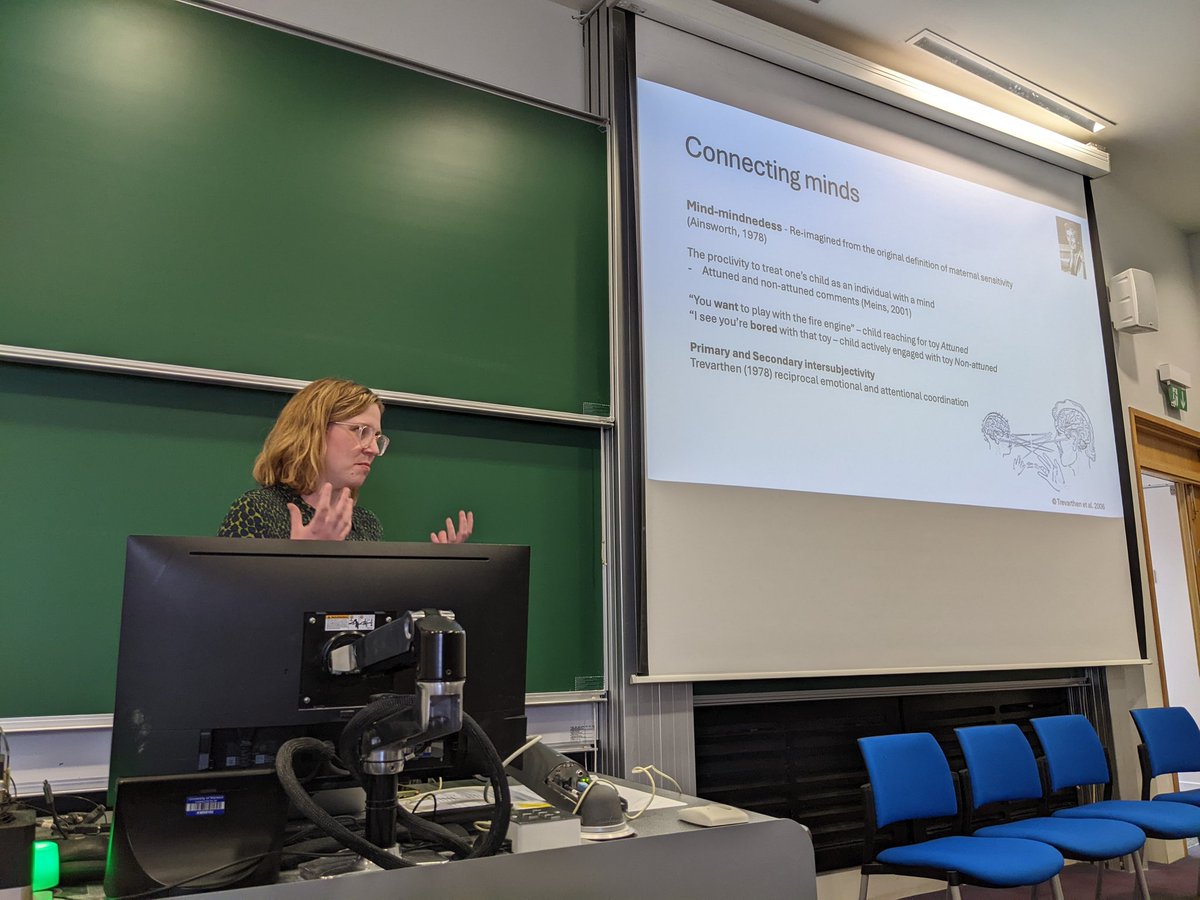
Our final keynote speaker is @DrLizKirk who is talking to us about how gesture in parent/ child interaction allows us to use the hands to read minds. What a privilege to have the three fantastic keynote speakers we've had today! #comein2024
Our final ECR talk is by Sofia Russo on the relationship between rhythm perception and language development in infancy. A really diverse range of topics this afternoon, thanks to all our speakers! #comein2024
Unfortunately our first ECR presenter of the afternoon cannot join us in person but we welcome Jiayu Jiang remotely, presenting on what children's gestures reveal about their mental mappings of spatial and temporal distances #comein2024
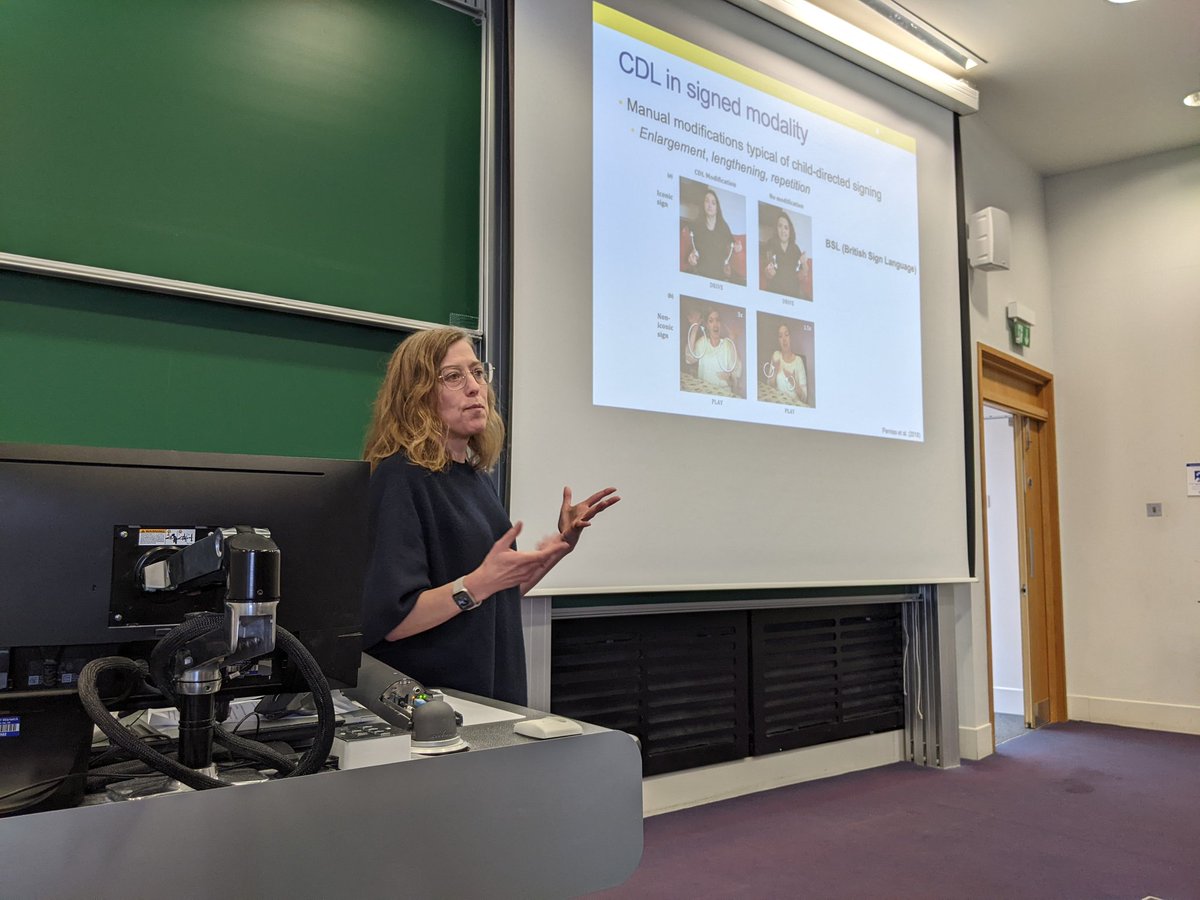
Our second keynote speaker is @pernipa who is speaking about the potential for harnessing iconicity in the visual modality for language learning. Really fascinating stuff! #comein2024
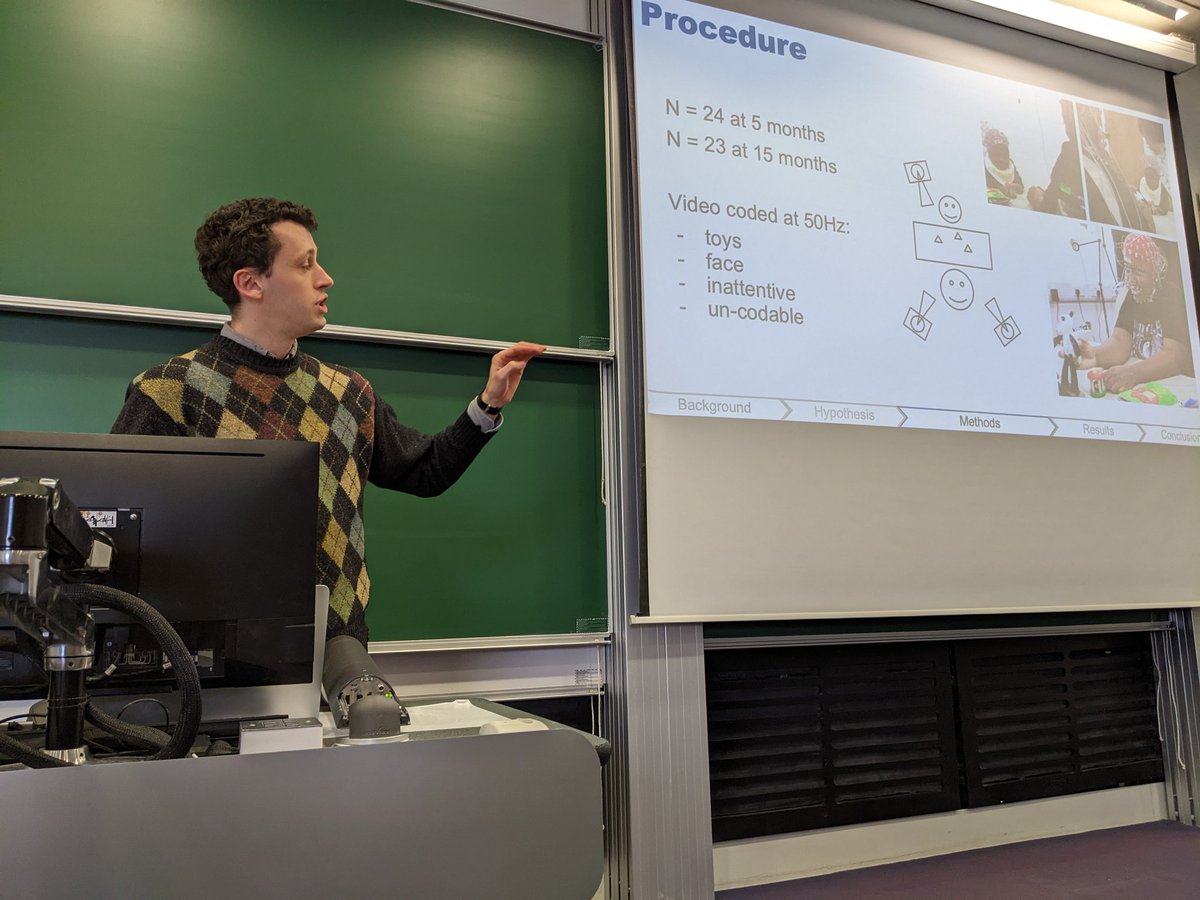
Our final talk of the morning is by Pierre Labendzki on the dynamics of multimodal interaction between infants and caregivers and how caregivers adapt their salience to reflect infants' attentional states. #comein2024
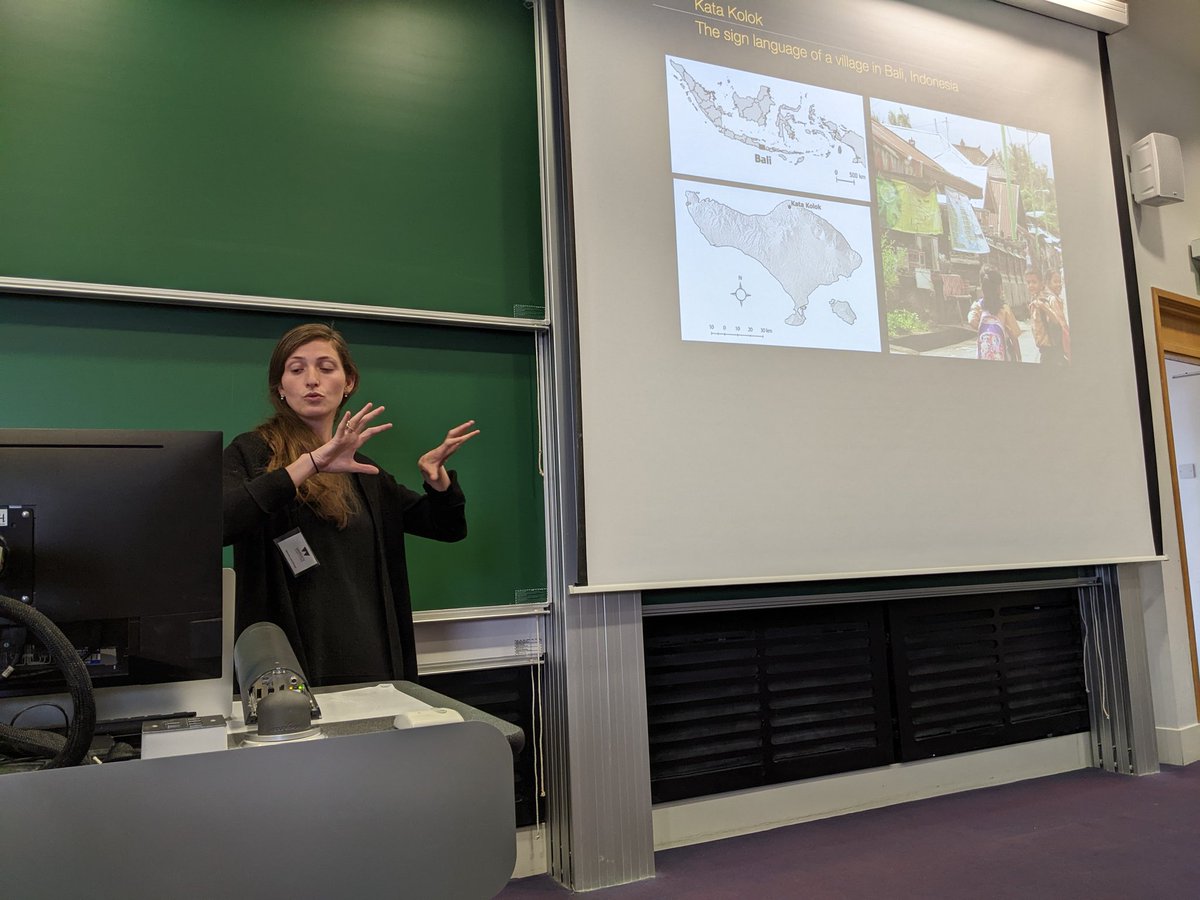
Our first ECR presenter Hannah Lutzenberger is presenting a case study of deaf children learning Kata Kolok, a Balinese sign language where input is more typical to hearing children in the West. Really interesting research! #comein2024
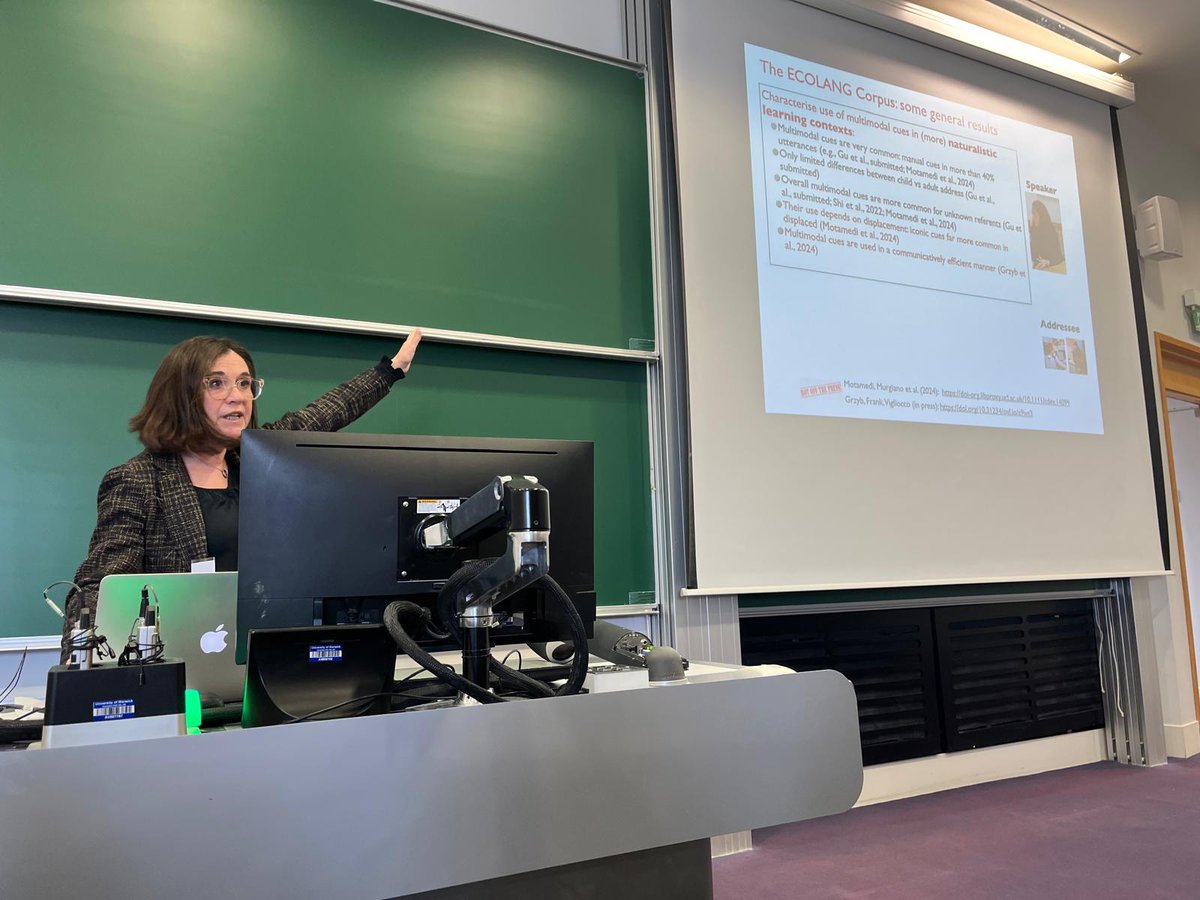
Our first keynote tale is underway. UCL's @vigliocco_g is presenting insights from the ECOLANG corpus on 'Learning from others in childhood and adulthood: the role of multimodal input'. Looking forward to the publication of this Corpus soon! #comein2024
We are thrilled to announce that registration for CoMEIn2024 is now open! ECRs interested in multimodality in infant and child interactions - don't miss out! We have a fantastic line up of speakers and poster presentations, lunch, refreshments - all free! https://t.co/CS7Xf86LPu