Europe's Top Human Rights Court Rules Against Azerbaijan for Torture and Killing of Armenian Officer in First April 2016 War Ruling
➖➖➖
The European Court of Human Rights (ECHR) has found Azerbaijan responsible for the torture and unlawful killing of 30-year-old Armenian officer Major Hayk Toroyan during the April 2016 Four-Day War in and around Artsakh (Nagorno-Karabakh), where Azerbaijani soldiers killed him after he had been wounded and could no longer defend himself, in the first ruling the Court has issued among the cases of that war, reports Zartonk Media.
The significance of the ruling extends far beyond this single case. By holding that Azerbaijan exercised jurisdiction over Toroyan through its soldiers' authority and control over him, the Court rejected the kind of evasion Baku has long relied on to escape accountability, and established a legal foundation that Armenian advocates can now invoke in the 21 related April 2016 cases still pending before it. The precedent reaches further still, offering a basis for future claims arising from Azerbaijan's wider pattern of violence against Armenians, from the 2020 war to the September 2023 ethnic cleansing of Artsakh.
In its judgment in V.T. and Others v. Azerbaijan, delivered on June 18, the Court ruled against Azerbaijan, finding violations of Article 2 (right to life) and Article 3 (prohibition of torture and inhuman or degrading treatment) of the European Convention on Human Rights.
The case concerns Major Hayk Toroyan, born in Yerevan in 1985, who served in the armed forces of the then Artsakh Republic as head of the rocket and artillery armament service of his unit in Mataghis. The Court anonymized the proceedings, referring to him by his initials and withholding the names of the applicants, his parents and sister. The Court found that Azerbaijani forces captured him during the four-day clashes, tortured him, severed his hands, and beheaded him while he was still alive.
According to the case file, Toroyan and his driver left their unit on the morning of April 2, 2016, to deliver ammunition to a post north of the village of Talish when their truck was ambushed and came under heavy fire. At 11.25 that morning, Toroyan sent a text message to a fellow soldier that read, "They shot me." His driver was found decapitated near the vehicle. A forensic examination concluded that Toroyan remained conscious for up to two hours, that his hands were severed seconds before his death, and that he was beheaded while still alive. His head and hands have never been returned, and he was buried without them.
The Court found that Azerbaijan had jurisdiction over the killing through its soldiers' "State agent authority and control" over the victim, rejecting Azerbaijan's argument that it bore no responsibility because the events occurred on territory outside its control. The Court held that Toroyan was killed after he had been wounded and could no longer defend himself or move on his own, conduct it found incompatible with international humanitarian law, and that the severe violence inflicted on him amounted to torture.
The Court also found a separate violation of Article 3 in relation to the suffering of his family, noting that they were unable to recover his remains or carry out a proper burial, which caused them profound and continuous distress.
Although Azerbaijan denied responsibility, the Court drew on evidence originating from Azerbaijani sources. A photograph of Toroyan's severed head was posted to a Facebook page by a soldier presumed to be Azerbaijani, alongside the caption "I have got one"; an Armenian forensic bureau later matched the face in the image to Toroyan. The Court found that this and other material publicized by Azerbaijani officials corroborated the family's account.
A ceasefire ended the fighting at noon on April 5, 2016, four days after it began. In its aftermath, the bodies of fallen servicemen were returned, some mutilated and missing heads, hands, or ears.
Anna Melikyan, a lawyer who worked on the case, said the ruling came at last, nearly ten years after the April War, in the matter of one of the Armenian servicemen killed and beheaded during the fighting. She noted that the Armenian government had not filed an interstate complaint over these cases, which were instead pursued by a group of human rights advocates, among them her colleagues Ara Ghazaryan, Haykuhi Harutyunyan, Hasmik Harutyunyan, and Araks Melkonyan. Armenia did intervene in the proceedings as a third party in support of the family.
The Court ordered Azerbaijan to pay €60,000 jointly to Toroyan's parents and €30,000 to his sister in non-pecuniary damages, along with €14,210 in costs and expenses to be paid to the Yerevan-based NGO Rule of Law, which represented the family.
Toroyan had been due to be presented for promotion to lieutenant colonel that month. He was posthumously awarded Armenia's Combat Cross, First Degree.
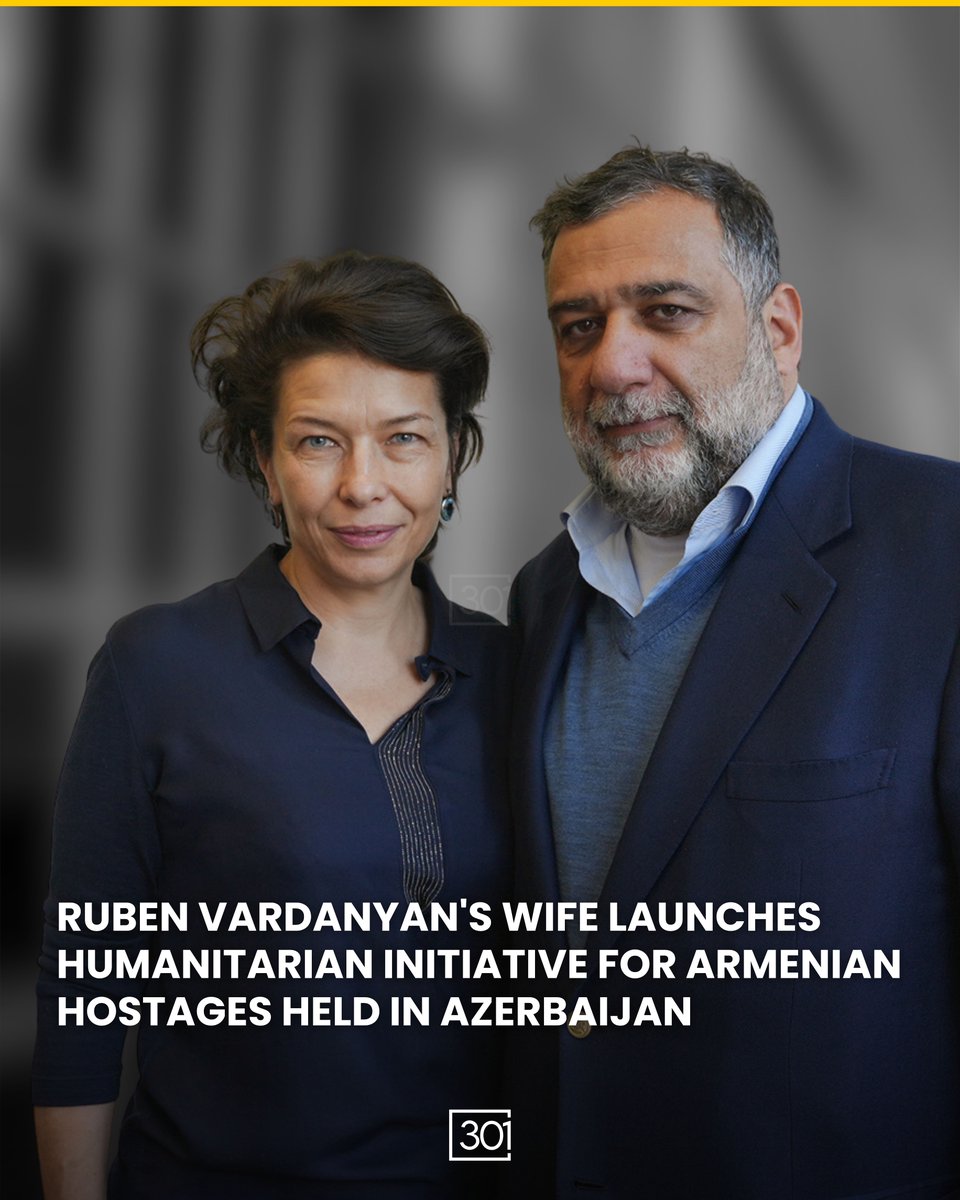
As Armenian hostages remain imprisoned in Azerbaijan, a new humanitarian initiative launched by Veronika Zonabend, the wife of Ruben Vardanyan, is seeking to deliver messages of solidarity from around the world to those being held in detention.
The campaign aims to ensure that Armenian hostages remain connected to the outside world and know they have not been forgotten, while providing a channel for supporters to express solidarity with those still being held in captivity.
According to Zonabend, maintaining such connections is essential to preserving the dignity of those being held.
“It is an attempt to restore at least a minimal connection between those in detention, their families, and all those who care about their fate. Such a connection helps a person preserve their dignity, and without dignity, it is impossible to speak of genuine and lasting peace between neighbouring peoples,” she said.
Over the next two weeks, organizers will collect letters of support and seek to deliver them alongside family care packages as part of the humanitarian initiative.
Letters may be submitted in any language by email to [email protected] with the subject line: “Letter of Support – Armenian Detainees.”
Those writing to a specific hostage are asked to include the individual's name in the subject line.
Zonabend also announced that the names of the women who will participate in the delegation responsible for delivering the letters and care packages will be made public at a later date.
Merci d'envoyer une lettre de soutien aux prisonniers politiques arméniens détenus en Azerbaïdjan depuis 2023.Initiative de Veronika Zonabend, femme de Ruben Vardanyan, condamné à 20 ans de réclusion, et d'autres en février 2026 par le tribunal de Bakou.
https://t.co/WC6zStt9YZ
Congress moves to ban shipping US tax dollars to oil-rich Azerbaijan until all Armenian hostages are freed.
After nearly 1,000 days in captivity.
1,000 days too long.
#FreeArmenianHostages
✝️🇦🇲 #Armenia became the first nation in the world to adopt #Christianity as its official state religion. In the early 4th century (301 AD), long before the Roman Empire, the Kingdom of Greater Armenia made #history.
Saint Gregory the Illuminator returned to Armenia to preach the faith. Gregory refused to participate in pagan rituals honoring the goddess Anahit. As punishment, the Armenian king ordered him thrown into a deep pit (now the site of Khor Virap Monastery), where he survived for 13 years, sustained by a widow who secretly fed him.
Later, the king fell gravely ill. His sister had a vision that only Gregory could heal him. Gregory was released, cured the king through prayer and faith, and Tiridates III converted to Christianity. The king, his court, and eventually the entire nation followed this decision. In 301 AD, Tiridates declared Christianity the state religion of Armenia. Gregory became the first Catholicos (head) of the Armenian Church and began baptizing the Armenian people.
This bold move happened while Christians were still widely persecuted elsewhere. Armenia's conversion helped preserve its unique identity and culture through centuries of invasions and hardship.
Khor Virap Monastery – The site of Gregory's imprisonment later became one of Armenia's most sacred and visited monasteries. Today, the Khor Virap Monastery stands there, with the historic pit still accessible under the Church. It offers one of the most iconic views of Mount Ararat.
Etchmiadzin Cathedral – After the conversion, Saint Gregory had a divine vision: Christ descended from heaven with a host of angels and struck the ground with a golden hammer, marking the exact spot where the cathedral should be built. Built between 301–303 AD in Vagharshapat (now Etchmiadzin), it is considered the oldest cathedral in the world and remains the spiritual center of the Armenian Apostolic Church to this day.
These holy sites symbolize the deep roots of our faith – a faith that helped our people survive centuries of trials while preserving the Armenian identity, language, and culture.
Today, over 1,700 years later, the Armenian Apostolic Church remains one of the oldest Christian institutions in the world, and faith continues to be a cornerstone of Armenian identity.
Assyrian children in Baghdad learning how to pray in Aramaic at the St Elia Chaldean Church. Christians in Baghdad are hanging on by a thread. They live in constant fear as militias remain active. The US destroyed Baghdad and, accidentally or not, emptied it of Christians.