The protocol burned more kVCM than it minted last month, with 13,965tCO2e carbon credits retired! Total supply fell by about 30,401 kVCM. Read how it works at https://t.co/8GO1QfmAhX
Klima’s incentive rates aren’t fixed, and nobody sets them.
They respond to where participants stake, directing incentives toward the durations and market functions needing support.
Since February, the peak has moved out by ~2 years.
1/5 AI agents are starting to transact on their own: reading data, weighing options, and completing purchases within limits their operators set. Carbon markets now have an interface built for exactly that. 🧵
The new era of token transparency and onchain trust is here with @Blockworks' Token Transparency Framework.
Including @KlimaDAO.
Now on Bloomberg Terminals.
TTF is now live across 350K+ Bloomberg Terminals world wide.
The token transparency framework is for projects bringing trust to onchain markets.
Now these projects get free perks when they file.
RWA tokenisation matters because it changes what can be kept opaque.
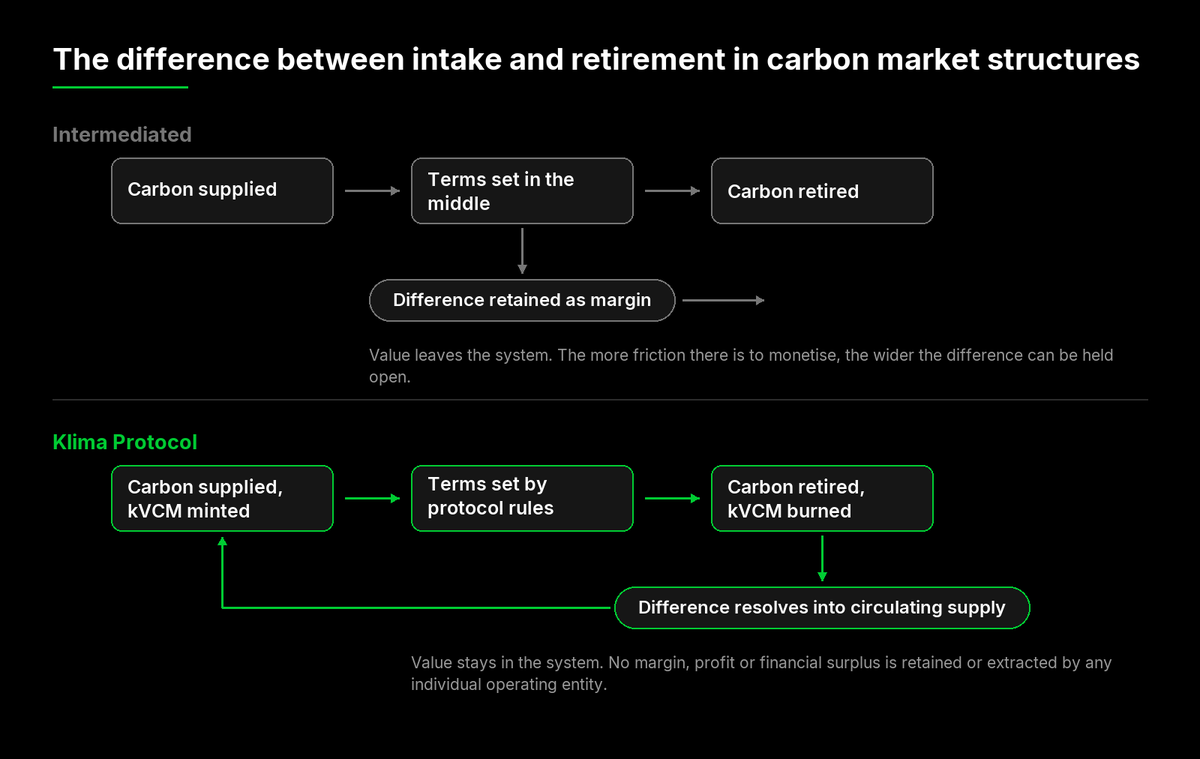
Friction in carbon markets persists because someone is paid by it. The structure rewards it.
With Klima Protocol, the difference between intake and retirement resolves into supply, with value retained by no single entity.
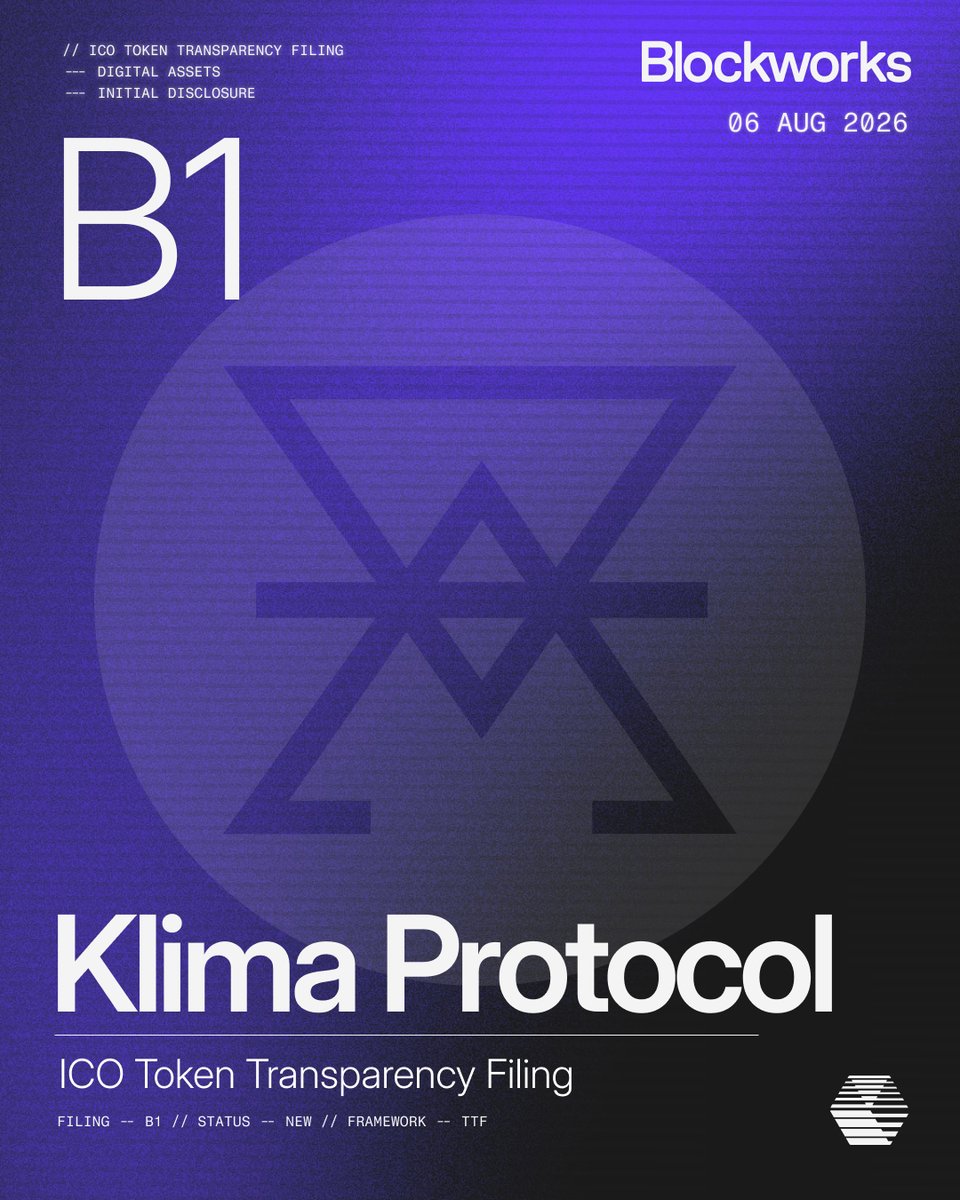
Our B1 Token Transparency Filing closed with zero gaps, and this @Blockworks thread walks through what that covers: pricing, supply, governance, and funding history, all on the record.
Infrastructure should be legible before you rely on it.
Klima Protocol brings rules-based pricing to the voluntary carbon market, with contracts that publish execution rates in real time.
They completed a B1 Token Transparency Filing with zero gaps.
$kVCM live on Base since October 2025.
Recorded carbon-credit retirements through Klima Protocol infrastructure reached 1,776.49 tCO2e over the last two weeks, across 1,246 retirement records. The retired credits were permanently taken out of circulation.
Want to take part by retiring credits yourself? Retire carbon credits immediately through the retirement flow: https://t.co/zPrV7Qw71H
Carbon credit retirement can now be embedded into external applications as a granular, programmable action.
Hackathon winner Vealth shows how: completed ecological work triggers small retirements through Klima Protocol’s x402 endpoint and Retirement Aggregator, with settlement on Base and public @carbonmarkcom records.
The relay path uses a signed USDC or kVCM authorisation—without requiring ETH for gas or prior token approvals—making integration simpler for builders.
Read how Vealth turned Klima infrastructure into a working model: https://t.co/Ez0qp3q4g6
Klima Protocol Update
🌿 Protocol & Partnerships
• Klima Protocol will soon be made fully open-source software, enabling other developers to build on the existing foundation.
• An upcoming blog post will highlight the winner of our recent hackathon and the project they created - and thereby also reveal the winner of the 70,000 kVCM price!
• In an effort to improve transparency, Klima has participated in Blockwork's Token Transparency Framework and received a perfect score. Read more at https://t.co/cnLpe7FjEP.
⚙️ Software
• Some minor fixes have been implemented to improve smart contract security.
Over the last 28 days, 504.24 tCO2e in carbon credits were retired through the Carbon Impact Strategy. It operates through @HydrexFi, automatically routing weekly voting rewards into retirements via Klima Protocol.
Track the strategy’s impact: https://t.co/QaF49fPX03
This year, no DEX has distributed more revenue back to holders than Aerodrome.
$38 million and counting.
And with Aero, new revenue streams are coming 🛫