Even though I usually avoid Action Network petitions, I signed this one calling on Maryland Public Television to Open Up The Debates. MD voters should be able to hear from all ballot-qualified candidates!
Can you join me and take action?
Thanks!
https://t.co/fMmWaKo47C?
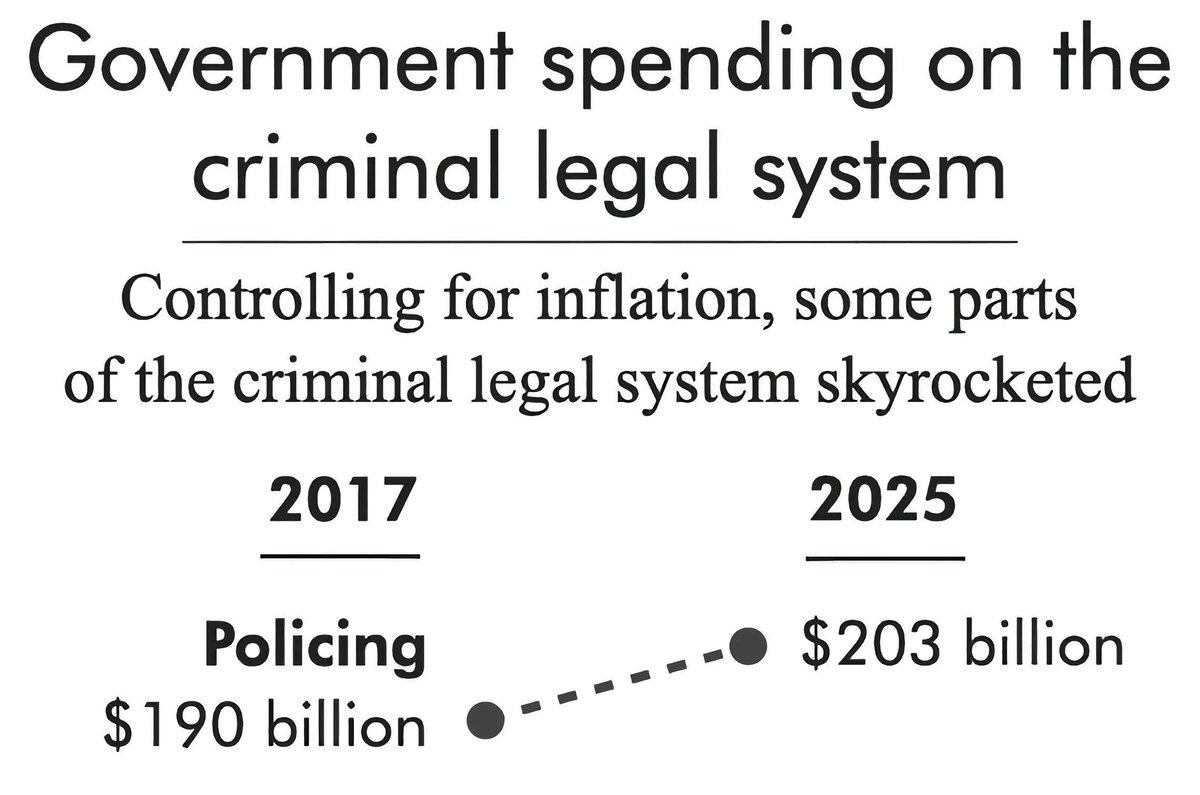
💰Since 2017, police funding has increased rapidly, now costing the U.S. more than $200 billion a year.
Keep that in mind the next time somebody tries to use calls to "defund the police" as a scapegoat.
Finishing Line Press @FLPress authors Jenny Isaacs and Ann LoLordo will read together from their debut chapbooks on Wednesday, August 19 at Maryland Hall in Annapolis.
Event is free, please RSVP here: https://t.co/B1pnkiMwEo
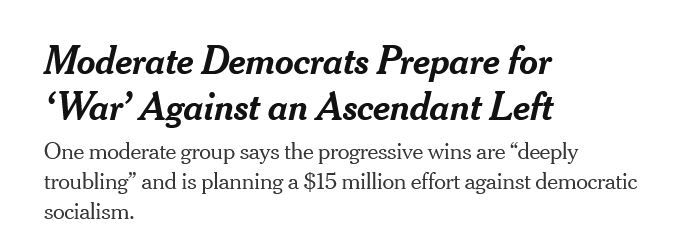
THREAD. The New York Times just published a propaganda piece that portends dangerous trends in the coming months. Corporate media wants to help a group of sociopathic monied interests (called "moderates" here) to boost fascism by deceiving people about their true motives.
Who Opposed Nuking Japan?
“The Japanese were ready to surrender and it wasn’t necessary to hit them with that awful thing.” —Gen. Dwight D. Eisenhower
“In 1945 Secretary of War Stimson, visiting my headquarters in Germany, informed me that our government was preparing to drop an atomic bomb on Japan. I was one of those who felt that there were a number of cogent reasons to question the wisdom of such an act. … The Secretary, upon giving me the news of the successful bomb test in New Mexico, and of the plan for using it, asked for my reaction, apparently expecting a vigorous assent. During his recitation of the relevant facts, I had been conscious of a feeling of depression and so I voiced to him my grave misgivings, first on the basis of my belief that Japan was already defeated and that dropping the bomb was completely unnecessary, and secondly because I thought that our country should avoid shocking world opinion by the use of a weapon whose employment was, I thought, no longer mandatory as a measure to save American lives. It was my belief that Japan was, at that very moment, seeking some way to surrender with a minimum loss of ‘face.’ The Secretary was deeply perturbed by my attitude.” —Gen. Dwight D. Eisenhower
“The use of the atomic bomb, with its indiscriminate killing of women and children, revolts my soul.” —Herbert Hoover
“[T]he Japanese were prepared to negotiate all the way from February 1945 … up to and before the time the atomic bombs were dropped; … [I]f such leads had been followed up, there would have been no occasion to drop the bombs.” —Herber Hoover
“I told [Gen. Douglas] MacArthur of my memorandum of mid-May 1945 to Truman, that peace could be had with Japan by which our major objectives would be accomplished. MacArthur said that was correct and that we would have avoided all of the losses, the Atomic bomb, and the entry of Russia into Manchuria.” —Herbert Hoover
“MacArthur’s views about the decision to drop the atomic bomb on Hiroshima and Nagasaki were starkly different from what the general public supposed. When I asked General MacArthur about the decision to drop the bomb, I was surprised to learn he had not even been consulted. What, I asked, would his advice have been? He replied that he saw no military justification for the dropping of the bomb. The war might have ended weeks earlier, he said, if the United States had agreed, as it later did anyway, to the retention of the institution of the emperor.” — Norman Cousins
“General MacArthur definitely is appalled and depressed by this Frankenstein monster. I had a long talk with him today, necessitated by the impending trip to Okinawa. He wants time to think the thing out, so he has postponed the trip to some future date to be decided later.” — Gen. Douglas MacArthur’s pilot, Weldon E. Rhoades
“[General Douglas] MacArthur once spoke to me very eloquently about it, pacing the floor of his apartment in the Waldorf. He thought it a tragedy that the bomb was ever exploded. MacArthur believed that the same restrictions ought to apply to atomic weapons as to conventional weapons, that the military objective should always be limited damage to noncombatants…MacArthur, you see, was a soldier. He believed in using force only against military targets, and that is why the nuclear thing turned him off…” — Richard Nixon
“The Japanese were ready for peace, and they already had approached the Russians and the Swiss. And that suggestion of giving a warning of the atomic bomb was a face-saving proposition for them, and one that they could have readily accepted. In my opinion, the Japanese war was really won before we ever used the atom bomb.” —Under Secretary of the Navy, Ralph Bird
“The Japanese position was hopeless even before the first atomic bomb fell, because the Japanese had lost control of their own air.” — General “Hap” Arnold
“[Gen.] Arnold’s view was that the dropping of the atomic bomb was totally unnecessary. He said he knew the Japanese wanted peace. There were political implications in the decision, and Arnold did not feel it was the military’s job to question them. … [Arnold’s view was]: when the question comes up of whether we use the atomic bomb or not, my view is that the Air Force will not oppose the use of the bomb, and they will deliver it effectively if the Commander-in-Chief decides to use it. But it is not necessary to use it in order to conquer the Japanese without the necessity of a land invasion.” — General Ira Eaker, Deputy Commander of U.S. Army Air Forces
“The Japanese had, in fact, already sued for peace. The atomic bomb played no decisive part, from a purely military point of view, in the defeat of Japan.” — Fleet Admiral Chester W. Nimitz, Commander in Chief of the U.S. Pacific Fleet
“The Japanese had, in fact, already sued for peace before the atomic age was announced to the world with the destruction of Hiroshima and before the Russian entry into the war.” — Adm. Nimitz
“The use of this barbarous weapon at Hiroshima and Nagasaki was of no material assistance in our war against Japan. The Japanese were already defeated and ready to surrender because of the effective sea blockade and the successful bombing with conventional weapons … The lethal possibilities of atomic warfare in the future are frightening. My own feeling was that in being the first to use it, we had adopted an ethical standard common to the barbarians of the Dark Ages. I was not taught to make war in that fashion, and wars cannot be won by destroying women and children.” —Fleet Admiral William D. Leahy, Chief of Staff to President Truman
“Truman told me it was agreed they would use it, after military men’s statements that it would save many, many American lives, by shortening the war, only to hit military objectives. Of course, then they went ahead and killed as many women and children as they could, which was just what they wanted all the time.” —Adm. Leahy
“The war would have been over in two weeks without the Russians entering and without the atomic bomb. … The atomic bomb had nothing to do with the end of the war at all.” — Major General Curtis LeMay, XXI Bomber Command
“[LeMay said] if we’d lost the war, we’d all have been prosecuted as war criminals. And I think he’s right. He, and I’d say I, were behaving as war criminals. LeMay recognized that what he was doing would be thought immoral if his side had lost. But what makes it immoral if you lose and not immoral if you win?” —Robert MacNamara
“The first atomic bomb was an unnecessary experiment … It was a mistake to ever drop it … [the scientists] had this toy and they wanted to try it out, so they dropped it.” — Fleet Admiral William Halsey Jr.
“I concluded that even without the atomic bomb, Japan was likely to surrender in a matter of months. My own view was that Japan would capitulate by November 1945. Even without the attacks on Hiroshima and Nagasaki, it seemed highly unlikely, given what we found to have been the mood of the Japanese government, that a U.S. invasion of the islands scheduled for 1 November 1945 would have been necessary.” — Paul Nitze, director and then Vice Chairman of the Strategic Bombing Survey
“[E]ven without the atomic bombing attacks, air supremacy over Japan could have exerted sufficient pressure to bring about unconditional surrender and obviate the need for invasion. Based on a detailed investigation of all the facts, and supported by the testimony of the surviving Japanese leaders involved, it is the Survey’s opinion that certainly prior to 31 December 1945, and in all probability prior to 1 November 1945, Japan would have surrendered even if the atomic bombs had not been dropped, even if Russia had not entered the war, and even if no invasion had been planned or contemplated.” — U.S. Strategic Bombing Survey, 1946
“Just when the Japanese were ready to capitulate, we went ahead and introduced to the world the most devastating weapon it had ever seen and, in effect, gave the go-ahead to Russia to swarm over Eastern Asia. Washington decided it was time to use the A-bomb. I submit that it was the wrong decision. It was wrong on strategic grounds. And it was wrong on humanitarian grounds.” — Ellis Zacharias Deputy Director of the Office of Naval Intelligence
“When we didn’t need to do it, and we knew we didn’t need to do it, and they knew that we knew we didn’t need to do it, we used them as an experiment for two atomic bombs. Many other high-level military officers concurred.” — Brigadier General Carter Clarke, the Military Intelligence officer in charge of preparing summaries of intercepted Japanese cables for President Truman and his advisors
“The commander in chief of the U.S. Fleet and Chief of Naval Operations, Ernest J. King, stated that the naval blockade and prior bombing of Japan in March of 1945, had rendered the Japanese helpless and that the use of the atomic bomb was both unnecessary and immoral. — Carter Clarke
“I proposed to Secretary Forrestal that the weapon should be demonstrated before it was used… the war was very nearly over. The Japanese were nearly ready to capitulate… My proposal… was that the weapon should be demonstrated over… a large forest of cryptomeria trees not far from Tokyo… Would lay the trees out in windrows from the center of the explosion in all directions as though they were matchsticks, and, of course, set them afire in the center. It seemed to me that a demonstration of this sort would prove to the Japanese that we could destroy any of their cities at will… Secretary Forrestal agreed wholeheartedly with the recommendation… It seemed to me that such a weapon was not necessary to bring the war to a successful conclusion, that once used it would find its way into the armaments of the world.” — Special Assistant to the Secretary of the Navy Lewis Strauss
“In the light of available evidence I myself and others felt that if such a categorical statement about the retention of the dynasty had been issued in May 1945, the surrender-minded elements in the Japanese government might well have been afforded by such a statement a valid reason and the necessary strength to come to an early clear cut decision. If surrender could have been brought about in May 1945, or even in June, or July, before the entrance of Soviet Russia into the Pacific war and the use of the atomic bomb, the world would have been the gainer.” — Under Secretary of State Joseph Grew
And for what it’s worth, then-Army Chief George Marshall wanted only to hit military facilities with it, not cities.
“It will not be long before we are reduced to savagery. We are the barbarians within our own empire.” — Russell Kirk, author of The Conservative Mind
“This doctrine of progress is a most interesting instance of the blind and foolish confidence of Americans in the God Progress. … Thus far, apparently, it has been progress toward annihilation, an end to be accomplished, perhaps, by the improved atomic bomb? We have dealt more death and destruction in the space of ten years than the men of the Middle Ages, with their Devil, were able to accomplish in a thousand.” —Russell Kirk
“The atomic bomb was a final blow to the code of humanity. I cannot help thinking that we will suffer retribution for this. For a long time to come I believe my chief interest is going to be the restoration of civilization, of the distinctions that make life intelligible.” — Richard Weaver, author of Ideas Have Consequences
"The prize for asking for less is less."
Came here to share some of the bangers in this @hamiltonnolan essay and ended up putting "Fortunately, the future is a renewable resource" in my bio as well.
https://t.co/6leBFo4wna
Lol you guys the @DNC -- alert to the existential threat posed by a modest election reform that gives more choice and weight to voters' preferences in 6 states -- is busily trying to stamp out #RankedChoiceVoting in presidential primaries!
https://t.co/MSiASuECDu
@ReichlinMelnick Man, they stiffed him on an S visa! I encountered this status (complete with path to citizenship) while training as an accredited DOJ rep and the lawyer I was working with cheerfully referred to it as the "snitch visa"
To understand the stakes of the progressive vs. centrist fight to control the Democratic Party, just compare Zohran's term so far with Spanberger's.
Zohran:
- Free childcare for 2-year-olds
- Banned junk fees
- Filled 100,000 potholes
- New bike and bus lanes across the city
- Wealth tax on luxury second homes
- Millions of dollars won for tenants and thousands of apartments repaired
Spanberger:
- Vetoed bill to let public workers unionize
- Vetoed bill allowing class-action lawsuits
- Vetoed bill to stop warrantless arrests by ICE
- Vetoed bill legalizing cannabis sales
- Vetoed bill to lower prescription drug prices
Trump was defeated in 2020, only to return in an even more dangerous form four years later. So we already know that it is not enough to beat MAGA once at the ballot box.
If Dems don't pair their next electoral victory with Mamdani's commitment to positively improving people’s lives, rather than Spanberger's model of selling out to corporations, we are going to be right back in the maws of fascism one election later. And this time, we might not be facing an authoritarian as incompetent and self-defeating as Trump has been.
https://t.co/TugdQiSj73
Went to see #ILoveBoosters at the 90% dead Marley Station Mall in Glen Burnie MD, perfect metaphor for the dead husk of capitalism in which a better world is growing. Great flick as expected, kudos to @BootsRiley for the tireless promotion -- he organized me right out the house
Skipping my usually ironclad commitment to yoga & going to see I Love Boosters tonight *even though I have to leave for the airport at 5 am tomorrow* because I'm so grateful that my timeline is half-filled with exultant celebration of this movie instead of the usual dire content
Oh hey SO EXCITED to learn that Chris Rabb won in PA-03! Back in 2018 he came all the way out to Chambersburg to give a barnburner of an address to MILPA & the PA Forward coalition that (then as now) was championing #DriversLicenses4All -- here he is with me & my IRAGdA comrades
Obligaron a Correa a exiliarse, secuestraron a Maduro, encarcelaron a Lula, juzgaron a Férnandez, y ahora intentan detener a Morales. Es evidente que jugar bajo modelos políticos que dan libertad de movimiento al imperialismo y las oligarquías no hacen sostenible una Revolución
Lol the "ban" on surveillance pricing that @iamwesmoore and that rude state Senator who dissed @ZephyrTeachout were bragging about is a TERRIBLE law as detailed here
To be precise:
It is not a surveillance pricing ban because it allows surveillance pricing for “promotional offers” “temporary discounts,” and “lower prices" (but w/surveillance there's no reference price), automatic enrollment schemes, unsolicited marketing emails, subscriptions, and anything where a shopper "consented" (you know what consent means with terms of service!).
It is worse than nothing because prevents consumers from bringing lawsuits under ANY law, creating NEW immunity from MD's consumer protection law and therefore a total shield for businesses that use surveillance pricing for “promotional offers” “temporary discounts,” and “lower prices" (but w/surveillance there's no reference price), automatic enrollment schemes, unsolicited marketing emails, subscriptions, and anything where a shopper "consented" (you know what consent means with terms of service!).
WIth all those exemptions, the seller can just say they were giving you, who did not have a sick child at home, a "lower" price from the baseline price of the person who then pays their definition of baseline, the parent who does have a sick child at home-- or they could call the sales promotional, or temporary, etc etc.
Now you see it!?
Maryland did not ban surveillance pricing. it passed a bill it calls a “surveillance pricing bill” but it doesn’t stop companies from using personal data to give different people different prices. So it just doesn’t do what it says and actually will make it harder to use existing laws to stop the practice.



![scotthortonshow's tweet photo. Who Opposed Nuking Japan?
“The Japanese were ready to surrender and it wasn’t necessary to hit them with that awful thing.” —Gen. Dwight D. Eisenhower
“In 1945 Secretary of War Stimson, visiting my headquarters in Germany, informed me that our government was preparing to drop an atomic bomb on Japan. I was one of those who felt that there were a number of cogent reasons to question the wisdom of such an act. … The Secretary, upon giving me the news of the successful bomb test in New Mexico, and of the plan for using it, asked for my reaction, apparently expecting a vigorous assent. During his recitation of the relevant facts, I had been conscious of a feeling of depression and so I voiced to him my grave misgivings, first on the basis of my belief that Japan was already defeated and that dropping the bomb was completely unnecessary, and secondly because I thought that our country should avoid shocking world opinion by the use of a weapon whose employment was, I thought, no longer mandatory as a measure to save American lives. It was my belief that Japan was, at that very moment, seeking some way to surrender with a minimum loss of ‘face.’ The Secretary was deeply perturbed by my attitude.” —Gen. Dwight D. Eisenhower
“The use of the atomic bomb, with its indiscriminate killing of women and children, revolts my soul.” —Herbert Hoover
“[T]he Japanese were prepared to negotiate all the way from February 1945 … up to and before the time the atomic bombs were dropped; … [I]f such leads had been followed up, there would have been no occasion to drop the bombs.” —Herber Hoover
“I told [Gen. Douglas] MacArthur of my memorandum of mid-May 1945 to Truman, that peace could be had with Japan by which our major objectives would be accomplished. MacArthur said that was correct and that we would have avoided all of the losses, the Atomic bomb, and the entry of Russia into Manchuria.” —Herbert Hoover
“MacArthur’s views about the decision to drop the atomic bomb on Hiroshima and Nagasaki were starkly different from what the general public supposed. When I asked General MacArthur about the decision to drop the bomb, I was surprised to learn he had not even been consulted. What, I asked, would his advice have been? He replied that he saw no military justification for the dropping of the bomb. The war might have ended weeks earlier, he said, if the United States had agreed, as it later did anyway, to the retention of the institution of the emperor.” — Norman Cousins
“General MacArthur definitely is appalled and depressed by this Frankenstein monster. I had a long talk with him today, necessitated by the impending trip to Okinawa. He wants time to think the thing out, so he has postponed the trip to some future date to be decided later.” — Gen. Douglas MacArthur’s pilot, Weldon E. Rhoades
“[General Douglas] MacArthur once spoke to me very eloquently about it, pacing the floor of his apartment in the Waldorf. He thought it a tragedy that the bomb was ever exploded. MacArthur believed that the same restrictions ought to apply to atomic weapons as to conventional weapons, that the military objective should always be limited damage to noncombatants…MacArthur, you see, was a soldier. He believed in using force only against military targets, and that is why the nuclear thing turned him off…” — Richard Nixon
“The Japanese were ready for peace, and they already had approached the Russians and the Swiss. And that suggestion of giving a warning of the atomic bomb was a face-saving proposition for them, and one that they could have readily accepted. In my opinion, the Japanese war was really won before we ever used the atom bomb.” —Under Secretary of the Navy, Ralph Bird
“The Japanese position was hopeless even before the first atomic bomb fell, because the Japanese had lost control of their own air.” — General “Hap” Arnold
“[Gen.] Arnold’s view was that the dropping of the atomic bomb was totally unnecessary. He said he knew the Japanese wanted peace. There were political implications in the decision, and Arnold did not feel it was the military’s job to question them. … [Arnold’s view was]: when the question comes up of whether we use the atomic bomb or not, my view is that the Air Force will not oppose the use of the bomb, and they will deliver it effectively if the Commander-in-Chief decides to use it. But it is not necessary to use it in order to conquer the Japanese without the necessity of a land invasion.” — General Ira Eaker, Deputy Commander of U.S. Army Air Forces
“The Japanese had, in fact, already sued for peace. The atomic bomb played no decisive part, from a purely military point of view, in the defeat of Japan.” — Fleet Admiral Chester W. Nimitz, Commander in Chief of the U.S. Pacific Fleet
“The Japanese had, in fact, already sued for peace before the atomic age was announced to the world with the destruction of Hiroshima and before the Russian entry into the war.” — Adm. Nimitz
“The use of this barbarous weapon at Hiroshima and Nagasaki was of no material assistance in our war against Japan. The Japanese were already defeated and ready to surrender because of the effective sea blockade and the successful bombing with conventional weapons … The lethal possibilities of atomic warfare in the future are frightening. My own feeling was that in being the first to use it, we had adopted an ethical standard common to the barbarians of the Dark Ages. I was not taught to make war in that fashion, and wars cannot be won by destroying women and children.” —Fleet Admiral William D. Leahy, Chief of Staff to President Truman
“Truman told me it was agreed they would use it, after military men’s statements that it would save many, many American lives, by shortening the war, only to hit military objectives. Of course, then they went ahead and killed as many women and children as they could, which was just what they wanted all the time.” —Adm. Leahy
“The war would have been over in two weeks without the Russians entering and without the atomic bomb. … The atomic bomb had nothing to do with the end of the war at all.” — Major General Curtis LeMay, XXI Bomber Command
“[LeMay said] if we’d lost the war, we’d all have been prosecuted as war criminals. And I think he’s right. He, and I’d say I, were behaving as war criminals. LeMay recognized that what he was doing would be thought immoral if his side had lost. But what makes it immoral if you lose and not immoral if you win?” —Robert MacNamara
“The first atomic bomb was an unnecessary experiment … It was a mistake to ever drop it … [the scientists] had this toy and they wanted to try it out, so they dropped it.” — Fleet Admiral William Halsey Jr.
“I concluded that even without the atomic bomb, Japan was likely to surrender in a matter of months. My own view was that Japan would capitulate by November 1945. Even without the attacks on Hiroshima and Nagasaki, it seemed highly unlikely, given what we found to have been the mood of the Japanese government, that a U.S. invasion of the islands scheduled for 1 November 1945 would have been necessary.” — Paul Nitze, director and then Vice Chairman of the Strategic Bombing Survey
“[E]ven without the atomic bombing attacks, air supremacy over Japan could have exerted sufficient pressure to bring about unconditional surrender and obviate the need for invasion. Based on a detailed investigation of all the facts, and supported by the testimony of the surviving Japanese leaders involved, it is the Survey’s opinion that certainly prior to 31 December 1945, and in all probability prior to 1 November 1945, Japan would have surrendered even if the atomic bombs had not been dropped, even if Russia had not entered the war, and even if no invasion had been planned or contemplated.” — U.S. Strategic Bombing Survey, 1946
“Just when the Japanese were ready to capitulate, we went ahead and introduced to the world the most devastating weapon it had ever seen and, in effect, gave the go-ahead to Russia to swarm over Eastern Asia. Washington decided it was time to use the A-bomb. I submit that it was the wrong decision. It was wrong on strategic grounds. And it was wrong on humanitarian grounds.” — Ellis Zacharias Deputy Director of the Office of Naval Intelligence
“When we didn’t need to do it, and we knew we didn’t need to do it, and they knew that we knew we didn’t need to do it, we used them as an experiment for two atomic bombs. Many other high-level military officers concurred.” — Brigadier General Carter Clarke, the Military Intelligence officer in charge of preparing summaries of intercepted Japanese cables for President Truman and his advisors
“The commander in chief of the U.S. Fleet and Chief of Naval Operations, Ernest J. King, stated that the naval blockade and prior bombing of Japan in March of 1945, had rendered the Japanese helpless and that the use of the atomic bomb was both unnecessary and immoral. — Carter Clarke
“I proposed to Secretary Forrestal that the weapon should be demonstrated before it was used… the war was very nearly over. The Japanese were nearly ready to capitulate… My proposal… was that the weapon should be demonstrated over… a large forest of cryptomeria trees not far from Tokyo… Would lay the trees out in windrows from the center of the explosion in all directions as though they were matchsticks, and, of course, set them afire in the center. It seemed to me that a demonstration of this sort would prove to the Japanese that we could destroy any of their cities at will… Secretary Forrestal agreed wholeheartedly with the recommendation… It seemed to me that such a weapon was not necessary to bring the war to a successful conclusion, that once used it would find its way into the armaments of the world.” — Special Assistant to the Secretary of the Navy Lewis Strauss
“In the light of available evidence I myself and others felt that if such a categorical statement about the retention of the dynasty had been issued in May 1945, the surrender-minded elements in the Japanese government might well have been afforded by such a statement a valid reason and the necessary strength to come to an early clear cut decision. If surrender could have been brought about in May 1945, or even in June, or July, before the entrance of Soviet Russia into the Pacific war and the use of the atomic bomb, the world would have been the gainer.” — Under Secretary of State Joseph Grew
And for what it’s worth, then-Army Chief George Marshall wanted only to hit military facilities with it, not cities.
“It will not be long before we are reduced to savagery. We are the barbarians within our own empire.” — Russell Kirk, author of The Conservative Mind
“This doctrine of progress is a most interesting instance of the blind and foolish confidence of Americans in the God Progress. … Thus far, apparently, it has been progress toward annihilation, an end to be accomplished, perhaps, by the improved atomic bomb? We have dealt more death and destruction in the space of ten years than the men of the Middle Ages, with their Devil, were able to accomplish in a thousand.” —Russell Kirk
“The atomic bomb was a final blow to the code of humanity. I cannot help thinking that we will suffer retribution for this. For a long time to come I believe my chief interest is going to be the restoration of civilization, of the distinctions that make life intelligible.” — Richard Weaver, author of Ideas Have Consequences](https://pbs.twimg.com/media/HPDPksWWQAE3eOs.jpg)





