"Inertial sensor systems can feasibly be used in a patient’s home or workplace, rather than its use being confined to the laboratory or clinical environment. Inertial sensors are useful to assess the impact of treatment modalities"
@KobeHipDoc et al.
https://t.co/J1e6YgYZew
Llongyfarchiadau mawr, huge congratulations to @EngineeringCU alumnus Vikas Khanduja (MSc 2005). @CambridgeHipDoc has been awarded the prestigious Hunterian Professor Award for 2021 by @RCSnews - congratulations from @cardiffuni Vikas! https://t.co/VR8Vtdv9WW
Obesity is associated with less favorable outcomes following hip arthroscopic surgery: a systematic review and meta… https://t.co/qMu50UXHkr
@KSSTA@TokyoHipDoc
This is our new systematic review. Please use for informed consent to obese patients!!
This is a very informative paper.
I'm going to start paying attention to the Cleft sign for groin pain in athletes! @CambridgeHipDoc@kumarkhs @NonArthHipReg
Our new study!
Cleft Sign (Superior or Secondary cleft sign) of MRI may be an independent factor of predicting a delayed time to RTP among young athletes with groin pain!
@KSSTA#CleftSign#GroinPain#GroinInjury
https://t.co/I11zV1bfa7
@TokyoHipDoc@KSSTA This is a very informative paper.
I'm going to start paying attention to the Cleft sign for groin pain in athletes!@CambridgeHipDoc @kumarkhs @NonArthHipReg
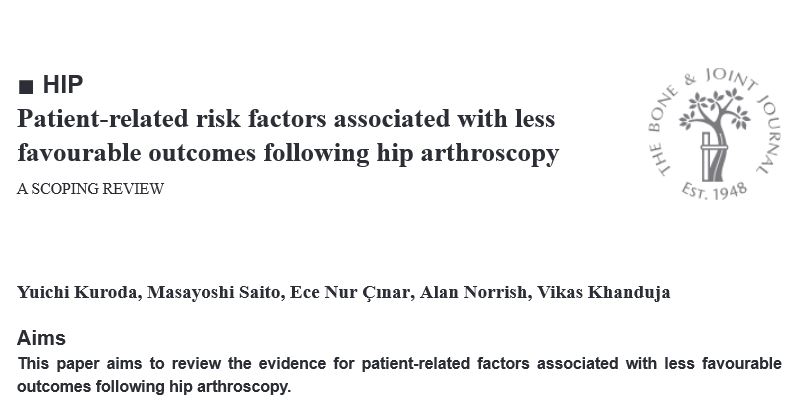
"Certain patient-related risk factors are associated with less favourable outcomes following hip arthroscopy. Understanding these will allow appropriate surgical indications to be further refined" https://t.co/cPvdh4cKTq @KobeHipDoc@TokyoHipDoc@Alan_Norrish@CambridgeHipDoc
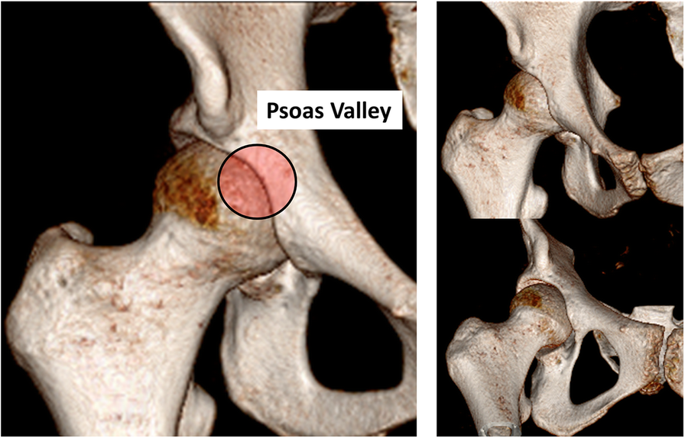
Anatomy of the psoas valley unraveled! Read our recent publication https://t.co/WmlGaufqzc to answer:
1. What is the definition of the psoas valley?
2. What are its dimensions i.e. depth, width, shape and location?
3. What are the factors which influence its anatomy?
@BMC_series