“If you think the world is selfish and rotten, go to the cemetery at Colleville-sur-Mer overlooking Omaha Beach. See what one group of men did for another on D-Day, June 6th, 1944.” — Andy Rooney
Andrew Jackson destroyed the Second Bank of the United States in 1836, delivering the single greatest blow to financial tyranny in American history. You won't hear this story told correctly in any economics textbook, because it reveals how central banking works: as a government-sponsored cartel that redistributes wealth from productive citizens to politically connected bankers.
The Second Bank held a 20-year federal charter starting in 1816. It controlled the money supply, issued currency, and held government deposits. Sound familiar? Nicholas Biddle, the bank's president, wielded more economic power than any elected official. He could trigger financial panics at will by restricting credit. He bought newspapers and bribed congressmen. When Jackson opposed recharter in 1832, Biddle deliberately crashed the economy to punish him.
Jackson called it "a hydra of corruption" and he was right. The bank created artificial booms through credit expansion, then triggered busts when politically convenient. Biddle openly bragged about manipulating markets. Free market economists and Jackson both recognized the core insight: this was legalized counterfeiting with government backing, not free market banking.
The political establishment united against Jackson. Henry Clay, Daniel Webster, and the entire Whig Party defended the bank. Biddle spent millions buying influence. The press attacked Jackson as an economic ignoramus. Every "respectable" voice supported recharter. Jackson stood alone with the American people.
After Jackson killed the bank, the country experienced the strongest economic growth in its history. From 1837 to 1862, America operated without a central bank. Industry flourished. Wages rose. Innovation exploded. This wasn't coincidence. When you stop subsidizing financial speculation and let productive capital find its natural home, prosperity follows.
Central banks don't stabilize economies: they destabilize them for private gain.
Rick Rule: Gold will do well over the long term, but expect short-term volatility.
In the short term, as a consequence of the Iran war:
- Countries have to sell gold to fund domestic needs
- Higher interest rates make the USD more attractive vs gold
In the long term:
- The US can't afford high rates
- Debt-to-GDP is too high
- Deficits are surging
Which will result in massive money printing and a severe loss of purchasing power for the USD in the coming years, reminiscent of the 70s, which will be bullish for gold and other hard assets.
Short term pain, long term gain
The 1920-21 depression was the sharpest economic contraction in American history, yet you've probably never heard of it. Industrial production collapsed 32%. Unemployment spiked from 4% to 12% in twelve months. By every measure, this downturn dwarfed the initial shock of 1929.
President Warren Harding faced enormous pressure to "do something." Labor leaders demanded public works programs. Businessmen begged for bailouts and trade protection. Treasury Secretary Andrew Mellon advised Harding to slash government spending and let wages fall. Commerce Secretary Herbert Hoover (yes, that Hoover) pushed for massive federal intervention.
Harding chose Mellon. The federal budget dropped from $6.4 billion to $3.2 billion in two years. No stimulus packages. No bailouts. No alphabet soup of new agencies. Government employment fell 40%. When you let markets clear, they clear fast.
The recovery started in July 1921. By 1923, unemployment had dropped to 2.4% and industrial production reached new highs. The entire episode lasted eighteen months from peak to full recovery. Compare that to Japan's lost decade of intervention, or the European debt crisis that dragged on for years, or our own jobless recovery after 2008.
Most economics textbooks omit this episode because liquidating malinvestments and allowing price adjustments works exactly as free market theory predicts: a fact that destroys the Keynesian narrative that government must spend its way out of recessions. Politicians today claim they learned the lessons of the 1930s, but they studiously ignore the more important lesson of 1921.
The Fed should not raise rates in the teeth of a supply-side oil shock.
Back in 2006, when tensions with Iran pushed oil prices higher, Ben Bernanke understood that demand-pull inflation is very different from supply-shock inflation. He didn't raise rates then, and the same logic applies today.
Food for thought
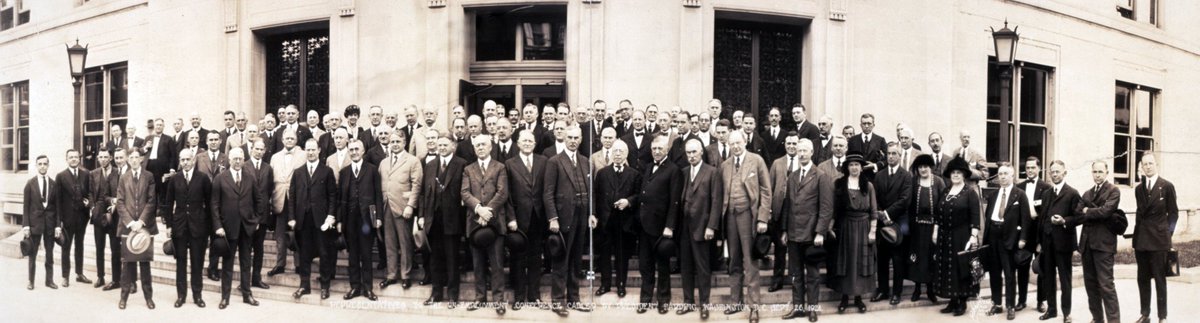
We are running 21st‑century monetary policy on a 1913 operating system. It is time to scrap the Federal Reserve’s regional offices and their presidents and admit that a map drawn for the age of railroads has no place in a world of real‑time data.
The 12 regional banks were a political compromise, not a sacred design.
They were built for localized banking, slow communication, and expensive travel. Today, the Fed does not need a president in Minneapolis or St. Louis to tell it what credit markets are doing; markets and payment systems report conditions to Washington in milliseconds. The “regional voice” rationale has become nostalgia masquerading as governance.
Worse, the current structure diffuses responsibility while adding noise. Regional presidents give speeches, move markets, and sometimes dissent, yet they are neither consistently Senate‑confirmed nor clearly accountable when policy errors pile up. Their research shops largely share the same academic priors as the Board in Washington, so the supposed decentralization mostly produces duplication, not diversity of thought.
A cleaner model is straightforward: a single, nationally accountable central bank with a smaller, clearly identified policy committee and a professional staff. Preserve regional information channels, surveys, business contacts, outreach, without propping up 12 quasi‑independent fiefdoms invented to pass the Federal Reserve Act.
If we were designing a central bank from scratch today, no serious planner would reproduce this sprawl. We would not outsource key votes to lightly scrutinized local presidents or confuse blurred lines of authority with checks and balances. Streamlining the Fed, eliminating regional offices and their president is the necessary first step toward a central bank that is both more limited and more accountable.
In Jaws, Robert Shaw was drunk in the first take of this intense monologue.
He struggled with alcoholism and was a heavy drinker during Jaws production.
He suggested to Spielberg that, since the characters were drinking in the scene, he should have a few real drinks to get into character.
Spielberg agreed but then regretted it.
On the first take, Shaw got very drunk.
Crew members had to carry him onto the boat. He slurred lines, wandered off-script, and the filming was halted.
He had a blackout and didn’t remember much.
Early the next morning, Shaw called Spielberg to apologize and begged for a reshoot. He showed up sober, nailed it.
And that take was used.
Trump's New Bretton Woods is here:
— Shelton attacks Fed Keynesianism on MSNBC
— Warsh sworn in for "regime change"
— $210B Pentagon investment bank
— Quad critical minerals framework
— Core Five alignment vs. London
The 1944 fight Keynes lost is back.
Check this out. Hoover Dam launches ‘Road To America 250’
This flag is the length of a football field and it will be on display every day through July 4th #RoadToAmerica250#HooverDam
Executive Mansion, Washington, Nov. 21, 1864.
Dear Madam,--
I have been shown in the files of the War Department a statement of the Adjutant General of Massachusetts that you are the mother of five sons who have died gloriously on the field of battle.
I feel how weak and fruitless must be any word of mine which should attempt to beguile you from the grief of a loss so overwhelming. But I cannot refrain from tendering you the consolation that may be found in the thanks of the Republic they died to save.
I pray that our Heavenly Father may assuage the anguish of your bereavement, and leave you only the cherished memory of the loved and lost, and the solemn pride that must be yours to have laid so costly a sacrifice upon the altar of freedom.
Yours, very sincerely and respectfully,
A. Lincoln
I have immense respect for the Guardians of our fallen heroes that stand guard at Arlington Cemetery!
May our heroes rest in eternal peace! 🫡🕊️🇺🇸 God bless! 🙏