Studying DNA-modifying enzymes & pathways that add complexity to genomes. Tweets crowdsourced from overworked lab members & not Rahul Kohli unless tagged #RMK.
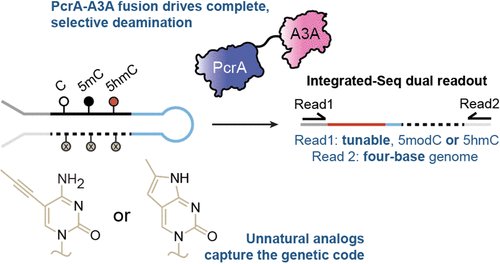
Detecting #cytosine mods like 5mC & 5hmC often comes at the cost of info about the underlying #DNA sequence. Our new Integrated #Sequencing strategy resolves that trade-off, reading both #genome *and* #epigenome.
@cenmag: https://t.co/aG4Ne0XJkO
@J_A_C_S: https://t.co/QAoJchcj2l
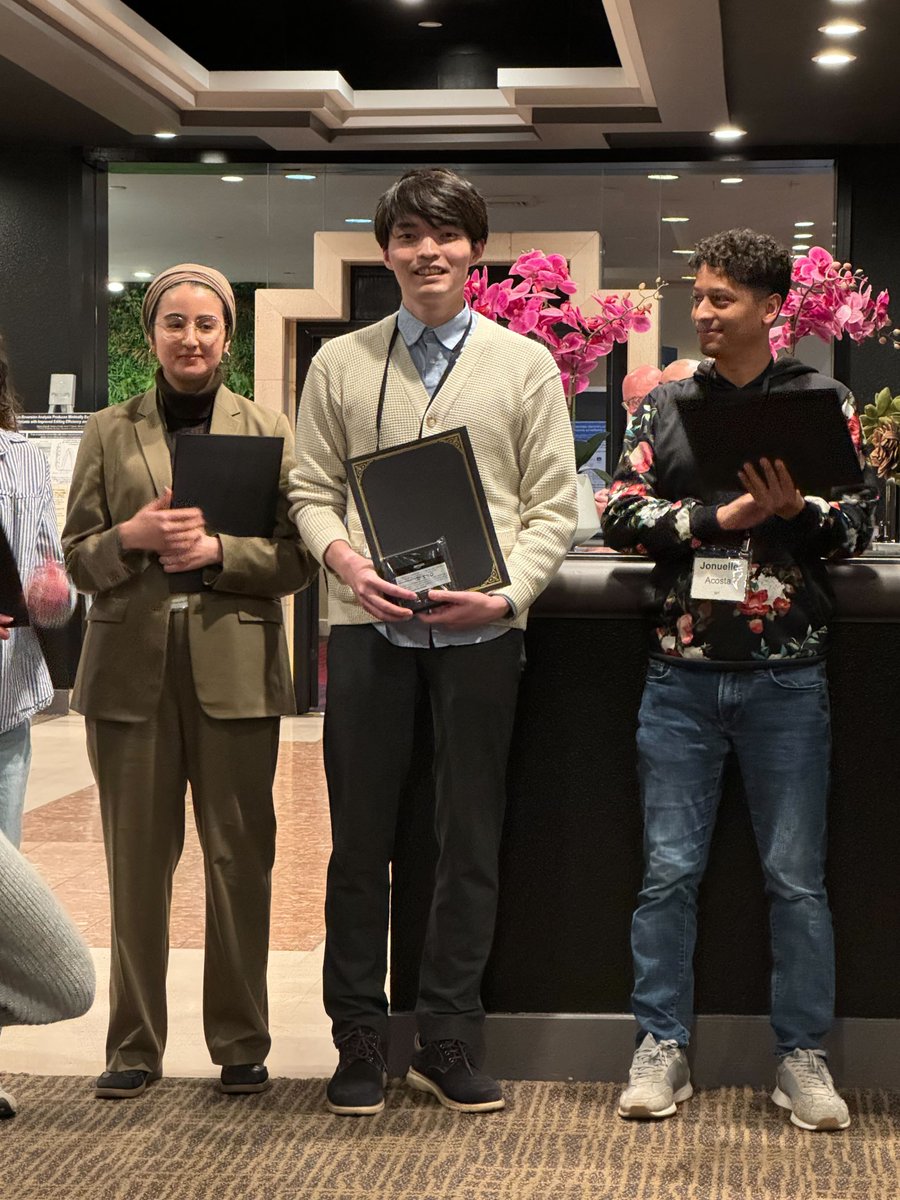
Big congrats to Keisuke Yamada (@KohliLab/@ShiLab_UPenn grad student) for winning the 1st place poster award at last week's Deaminet 2025 6th International Conference on Base Editing, Prime Editing & Related Enzymes!
Thanks to @PennMedBench for featuring our research on structural insights into the SOS response, a key pathway in the evolution of antibiotic resistance in bacteria. Check out the June 2024 Benchmarks issue & lead author @michael_cory22's tweetorial below!
https://t.co/VYYXDDOqxY
Congrats to Michael! With thanks to great collaborators & the kind reviewer who echoed our excitement saying, “After ~50 years of study, we finally have a detailed model for how RecA catalyzes the autocleavage of LexA…” @BMBGGUPENN@PennChemistry@BB_UPenn
@wmwuest @doc_jlmeier @FCBIS_MidAtl What can I say? I enjoy the topological mystery that is the frontier of an interface between chemistry and biology.
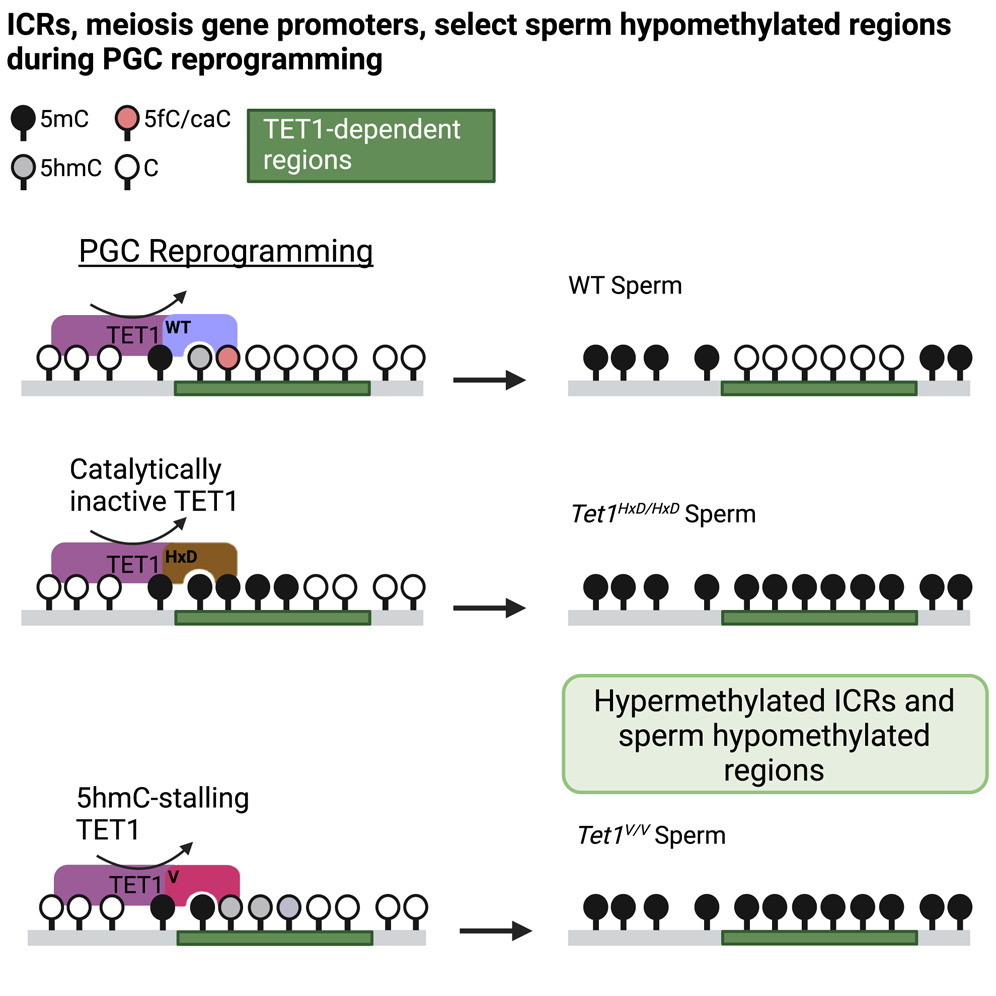
TET1-mediated germline reprogramming & sperm methylome patterning ft. Rexxi Prasasya, Blake Caldwell, Zhengfeng Liu, Songze Wu, @Marisa_S_B (@PennCDB), Johanna Fowler, Steven Cincotta, Diana Laird, @KohliLab (@PennMedicine) & N. Adrian Leu (@PennVet) https://t.co/E5r1u2AWLP
Congrats to Rexxi Prasasya on work showing importance of TET1 to germline reprogramming beyond imprinted & meiosis genes--sperm HMRs. Thanks to collabs-@KohliLab & Diana Laird Iterative oxidation by TET1 is required for reprogramming of imprintin..https://t.co/LFOagqvCCe
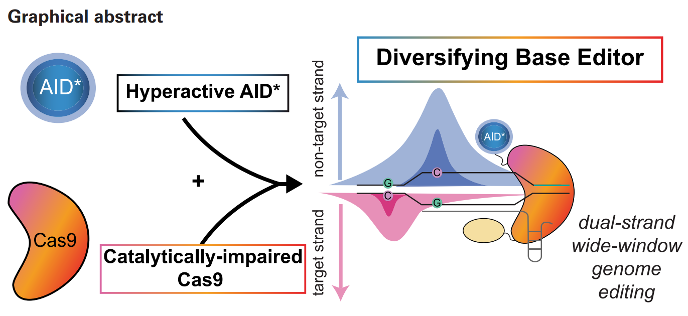
Base editors are transformative precision genome editing tools. But do we really understand how Cas9 & DNA deaminases work together to shape editing outcomes? See how Kiara tackled this Q below to introduce both a powerful diversifying editor & new mechanistic model for BEs! 🧵👇
The last lead author article from my PhD is out! In @NAR_open, we report our mechanistic study on how Cas9 and AID enzymes collaborate to shape base editing outcomes. Leveraging these insights, we create hyperactive BEs with the potential for targeted gene diversification. 1/
It was a joy to be part of this collaborative effort and expand our own interest in base editors to the world of RNA BEs. Congrats to @HugoMedinaMunoz and all the other authors!
Read about using rBEs in PRINTER to study RNA-protein interactions 👇
https://t.co/gvLTXz0mY7
This work involved talented young scientists like @EricKofman and @pratibhajagann_ and was a collaboration with @KohliLab and @KomorLab. It allowed me to apply mentoring skills gained through my @SD_IRACDA training while supervising undergraduates who made valuable contributions.
Registration is now open for the 5th International Conference On Base Editing, Prime Editing & Related Enzymes (aka Deaminet 2024), held January 17- 19, 2024, in San Diego, California at the Estancia La Jolla Hotel.
Precision gene editing + San Diego =✌️
https://t.co/hByxOl5I2r
Congrats to @michael_cory22 for being awarded the Kanefield Prize for Research @pennbgs! Michael’s dissertation work on bacterial DNA repair via the SOS response pathway provides key insights to help combat antibiotic resistance, a major concern among #CysticFibrosis patients.
Joint-snhmC-seq adapts a dual-sequencing pipeline method to obtain base-resolution readouts of both 5mC and 5hmC in single cells. Big congrats to @hao_wu_7 who led this work! See our recent @NatureBiotech paper for more details: https://t.co/TT3AYhEaZx
(2/2)
Excited to see Joint-snhmC-seq (led by @hao_wu_7 of @PennEpiInst@PennGenetics) featured alongside DARESOME in this @epigenie spotlight on novel single-cell methods for the detection of 5hmC!
https://t.co/3J8HF3L3vt
(1/2)
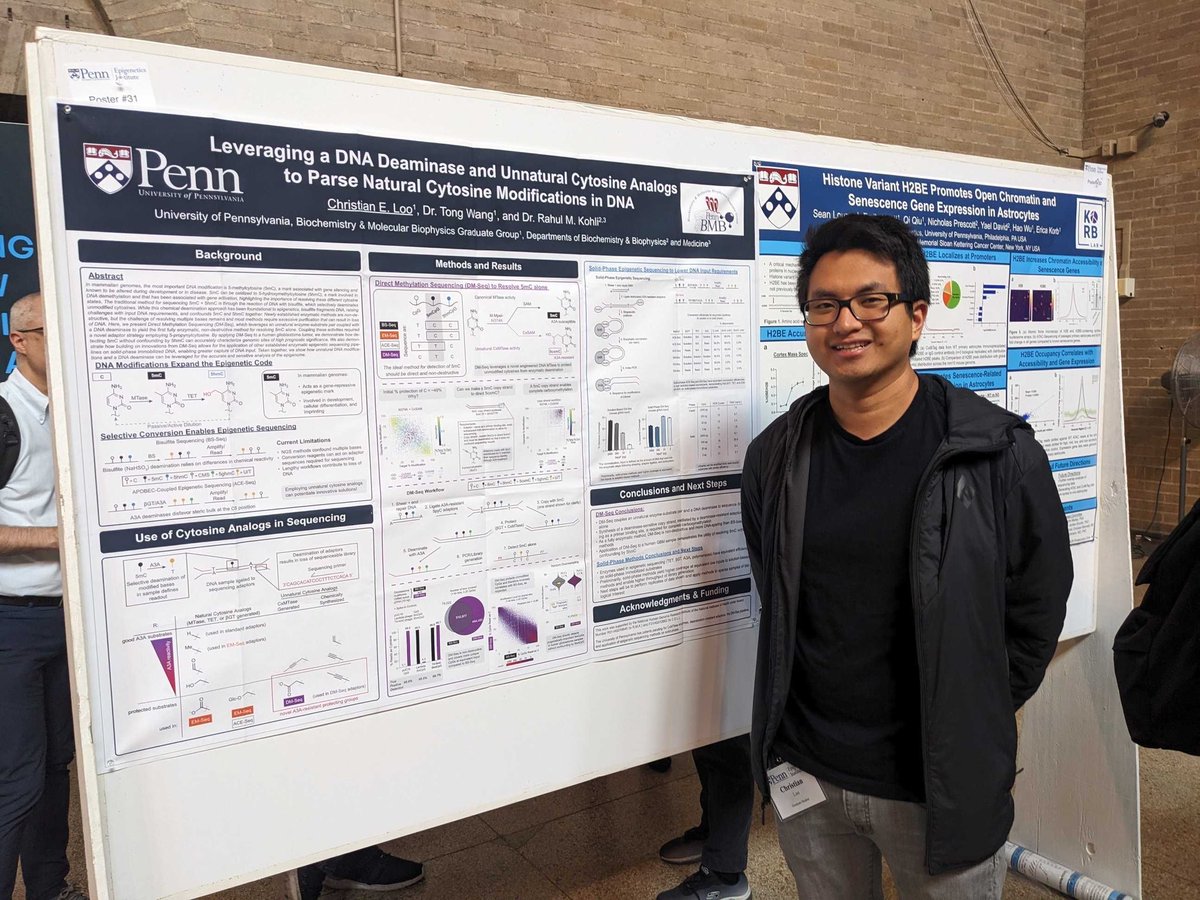
We had a wonderful time at this year’s @PennEpiInst retreat! So very many great talks and posters 🤩 Shoutout to @ChristianLoo_ on winning a poster prize!
Loving this @epigenie feature on our new DM-Seq method for direct enzymatic sequencing of 5-methylcytosine..."a DM you'll want to slide into." We agree! Slide on over to the link below 🛝👇. And then go #RunDMSeq🧬!
https://t.co/LMqckdtVwh
Congrats to @PennSAS rising senior & Kohli lab undergraduate researcher Jasleen Gill for being chosen as a Roy and Diana Vagelos Science Challenge Award recipient! This award is a testament to her outstanding work in the sciences. We’re super proud of you, @jasgiill! 🏆🎉👩🔬
Congratulations to our newest PhD candidate @AleksiaBarka for successfully passing her @BMBGGUPENN prelim exam (and doing it before officially starting grad school, no less)!
Being able to limit the size & control the copy number of genomic information in a human artificial chromosome would be a major step forward...and here it is! 🧑🦰🤖🧬 See below for must-read work from the lab of Ben Black @BB_UPenn@PennGenomeInteg 👇 https://t.co/WN4Tt9gAXc
Excited to share our new paper @ACSPublications! We melded our biochemistry expertise + @CisnerosRes computational expertise to turn a natural DNA methyltransferase (MTase) into a neomorphic DNA carboxy-MTase with novel substrate selectivity🧬. See the tweetorial below for more👇
(1/5) Delighted to share my work in concert with co-first author @MarkAHix where we used combined computational and biochemical approaches to interrogate the active site of a carboxymethyltransferase (CxMTase) out now @ #ACSChemBio (DOI: https://t.co/P38LdJoAlq).